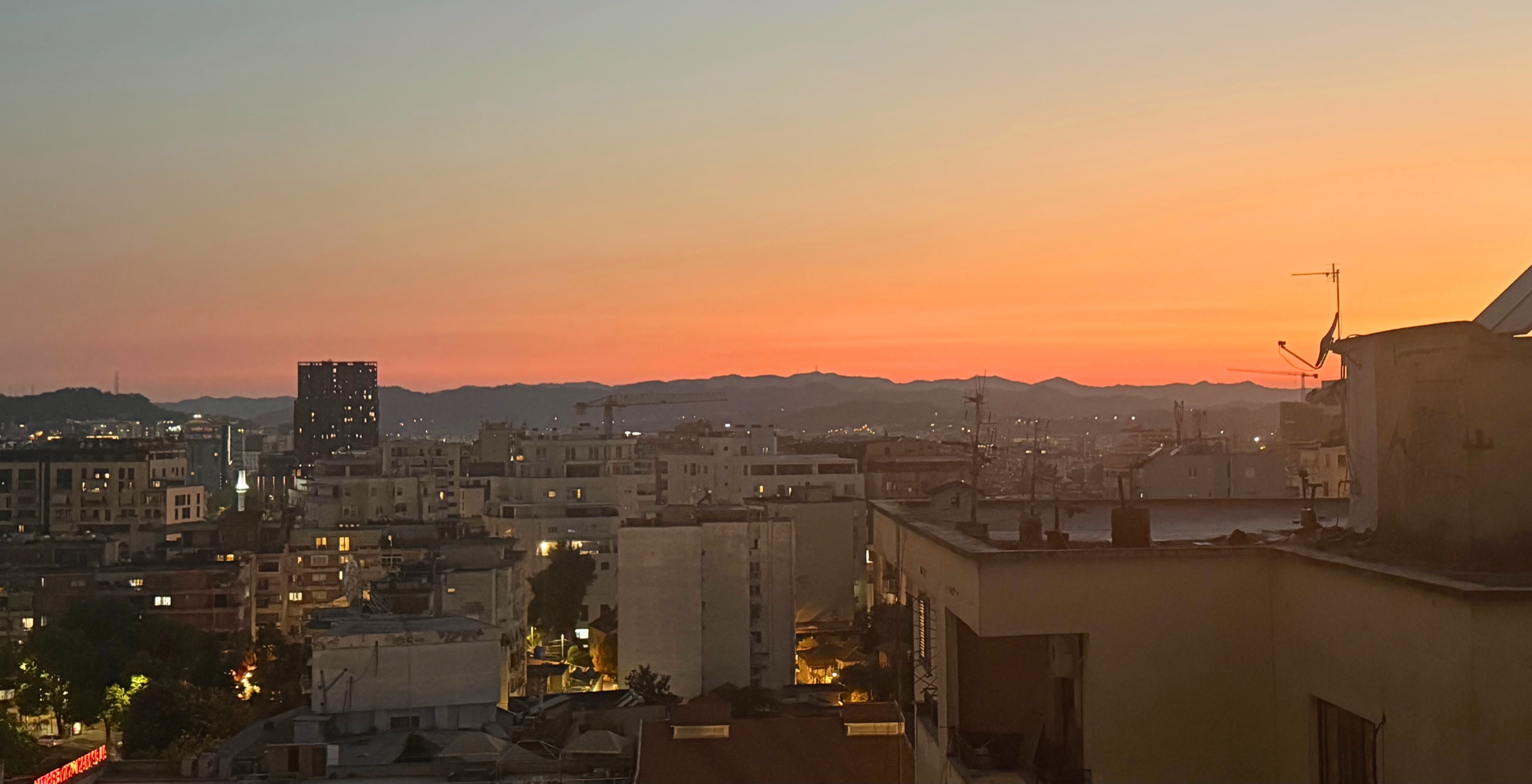
 One final Tirana sunset, with the city and mountains settling into the evening light.
This week marks a useful midpoint.
On Tuesday, we closed the door on our apartment in Tirana after thirty-four nights, loaded our bags onto another intercity bus, and headed south toward Sarandë. We have now spent just over a month living in Albania, with another month ahead of us on the Ionian coast.
The two halves could hardly look more different.
Tirana gave us a dense inland capital surrounded by mountains, busy sidewalks, extensive café culture, contemporary construction, neighborhood routines, and easy access to nearly every corner of the country. Sarandë opens directly onto the Ionian Sea, with Corfu sitting across the water and the Albanian Riviera extending north along one of the most dramatic stretches of coastline in the Balkans.
The town itself carries its own layered history, the kind we have come to expect from this country. Ancient Greek colonists called it Onchesmos. Byzantine monks later renamed it for the Forty Saints, the origin of the name Sarandë itself. Ottoman administrators rendered that as Sarandoz, Venetian traders knew it as Santi Quaranta, and Mussolini’s occupying government briefly rebaptized it Porto Edda, after his eldest daughter, before Albanian independence restored the name that endured. A sixteenth-century Ottoman castle still looks down over the bay from Lëkurësi hill, built by Suleiman the Magnificent to keep watch on Venetian Corfu just across the strait.
We have not seen much of Sarandë yet beyond the view from the bus window and the immediate area surrounding our apartment. That will have to wait for next week.
For the moment, we are between chapters. Bags are being unpacked again. Grocery stores need to be found. A new gym awaits. New streets have to become familiar.
Before Sarandë takes over the story, Tirana deserves a proper conclusion.
📍 This Week in Tirana
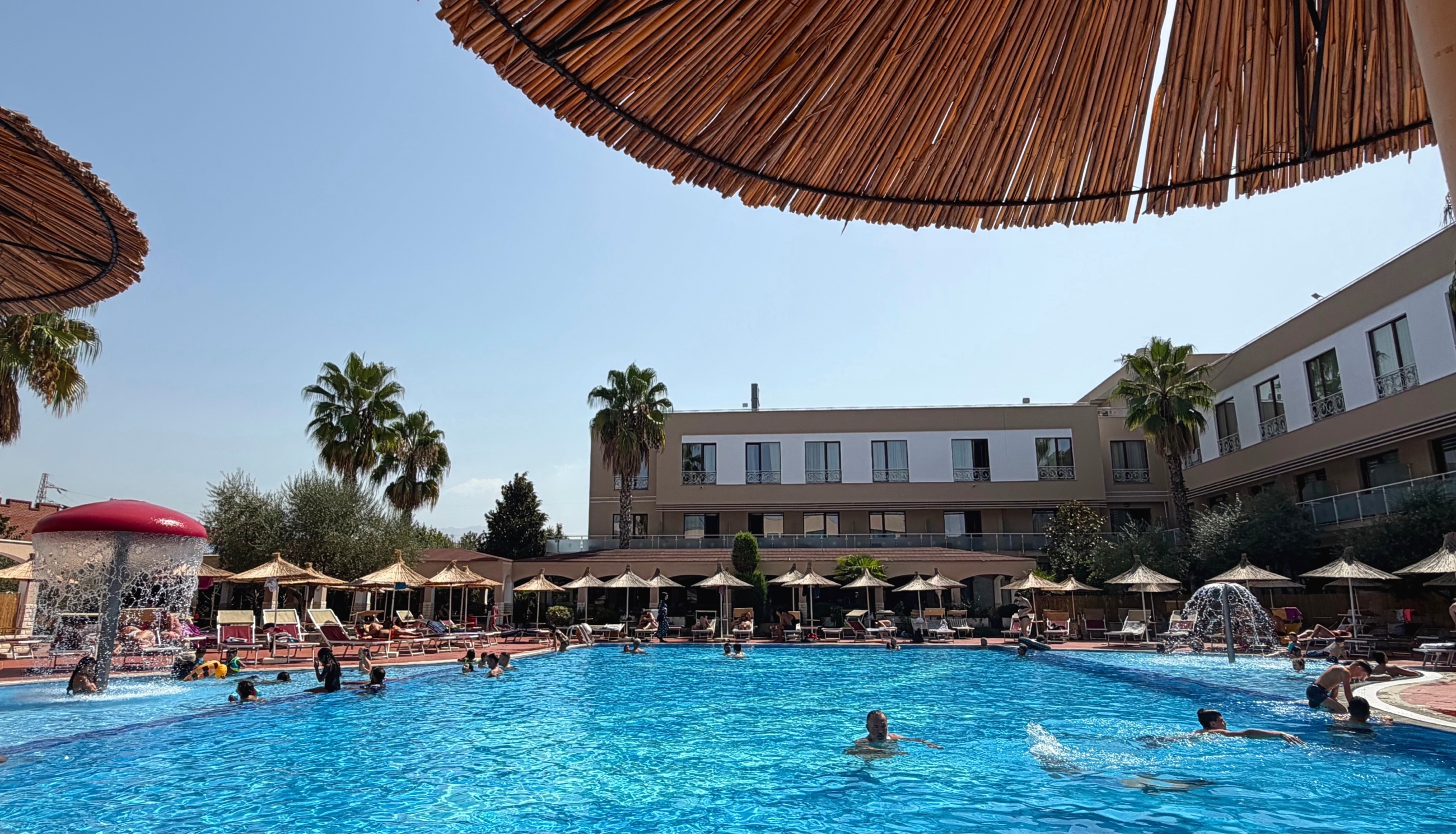 Our final days in Tirana included one small indulgence: an afternoon beside the pool at Te Stela Resort.
Our final days in Tirana were deliberately unremarkable.
After five weeks of day trips, museums, mountain trails, overnight excursions, family visits, and long walks across the city, we had no interest in engineering a grand finale. We went to the gym. We bought groceries. We stopped for coffee. We ate some meals out and others at home. We walked streets we no longer needed a map to navigate.
Then we gave ourselves one small indulgence.
Te Stela Resort sits just off the highway toward Durrës on the western edge of the city, roughly a thirty-minute bus ride from the center followed by a short walk. For €15 each, we spent the day beside the outdoor pool with loungers, lunch on-site, and nowhere else we needed to be.
The resort belongs to the company behind Birra Stela, one of Albania’s better-known domestic beers, founded in 1994 and now operating under the broader name Iliria Brewery. What began as a modest local operation has grown into one of the country’s larger breweries.
We tried the beer over lunch. Ours was smooth and mildly yeast-forward, finishing cleanly enough for a hot afternoon beside the pool.
Mostly, though, we did very little.
That felt appropriate. Long stays do not need ceremonial endings. By the final week, a successful month abroad should look less like a vacation and more like a life you temporarily learned how to live.
Tirana reached that point for us.
🎨 Cultural Deep Dive
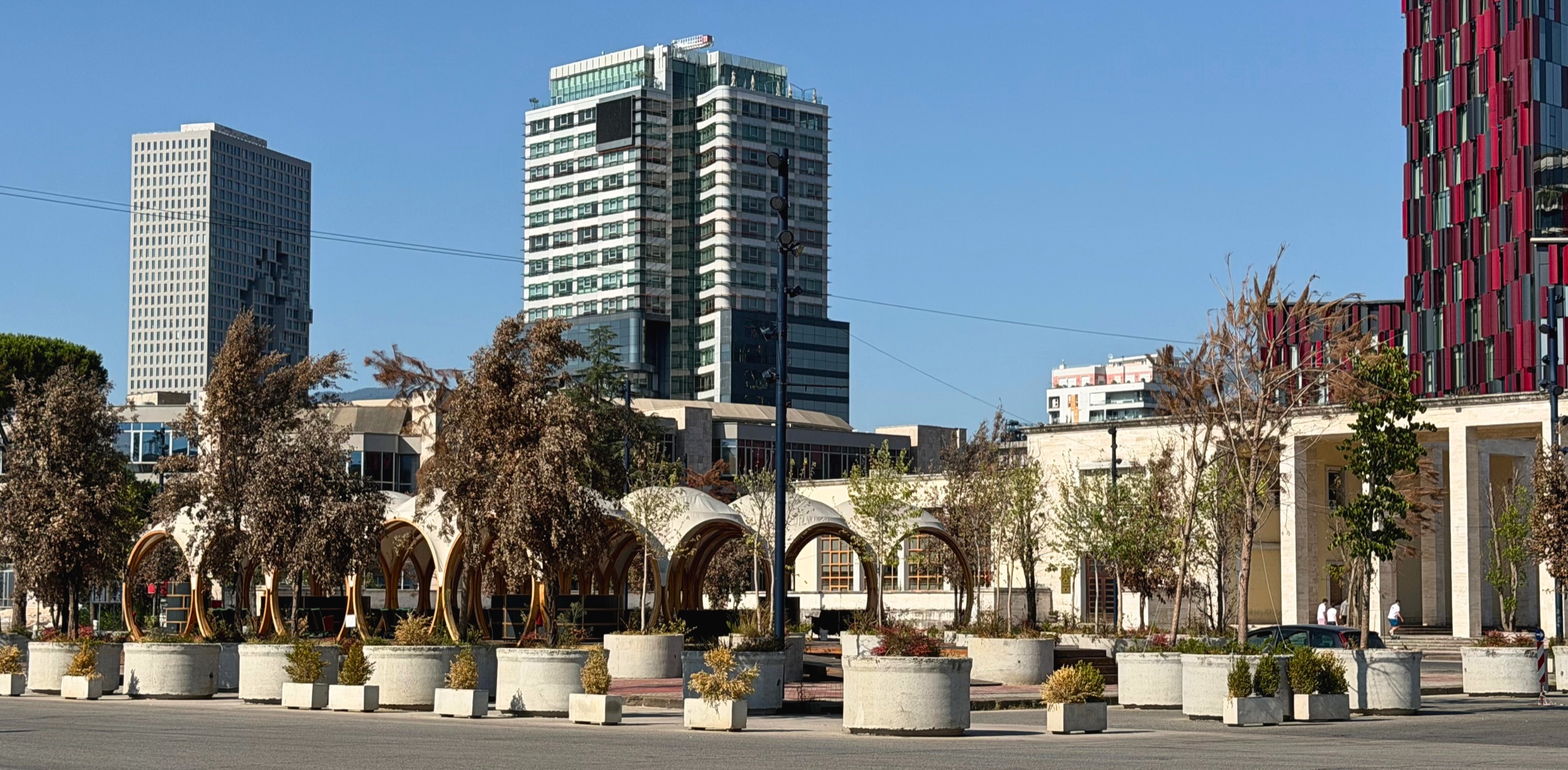 Downtown One, designed by MVRDV, is part of the ambitious new skyline reshaping central Tirana.
One of Tirana’s greatest surprises was overhead.
We arrived expecting the colorful apartment blocks, socialist-era buildings, Ottoman fragments, Italian boulevards, and construction cranes that appear in nearly every description of the Albanian capital. We were less prepared for the architectural ambition now changing its skyline.
Tirana is building upward quickly, and many of its new towers appear designed to function as objects as much as buildings: irregular balconies, offset blocks, deep recesses, planted façades, and geometric forms that change depending on the direction from which they are viewed.
Downtown One provides perhaps the clearest example. Designed by the Dutch firm MVRDV for Kastrati Group, the 459-foot (140-meter), 37-story tower on Bajram Curri Boulevard uses cantilevered apartments and offices to create a pixelated relief resembling a map of Albania. Each projecting block stands in for a different town or village, so residents can locate their homes by the region they represent: someone lives in the Tirana pixel, someone else in the Durrës pixel. It is now the tallest building in the country, a short walk from Skanderbeg Square and from the Pyramid, another MVRDV project we mentioned two weeks ago.
The vertical growth follows the Tirana 2030 general local plan, developed by the Milanese firm Stefano Boeri Architetti and approved by the city, which concentrates new construction along the capital’s existing boulevards and ring roads rather than allowing the city to sprawl outward across farmland. In exchange, the plan calls for an “orbital forest” of roughly two million trees encircling the metropolitan area, new ecological corridors along the Lana, Tirana, and Erzeni rivers, and green space the plan’s authors expect to triple over time.
Boeri’s studio has also designed a Vertical Forest apartment tower for the city center, its three street-facing façades wrapped in more than three thousand shrubs and over a hundred trees. Herzog & de Meuron, the Swiss firm behind Beijing’s Bird’s Nest stadium, is now redesigning Tirana’s communist-era Palace of Congresses into a cultural hub with a tower of its own.
Whatever else Tirana is these days, it is not short on internationally known architects.
The result on the ground is complicated. New apartments on the capital’s outskirts now list for close to €2,000 per square meter, while prime addresses in Blloku, the district once reserved for the communist elite, have climbed past €5,500. Average gross wages in the country remain well under €800 a month. Local reporting has documented rents consuming well over a third of household income in the capital, alongside enough unsold inventory that some observers describe entire new towers standing largely empty, built as stores of capital as much as places to live.
A rapidly modernizing skyline is being built for a version of Tirana that not everyone currently living there can afford to occupy.
That tension may be more revealing than the buildings themselves.
Tirana is no museum city. Its physical form remains unsettled. Ottoman, royal, fascist, communist, post-communist, and contemporary Albania can occupy the same few blocks, and the skyline suggests that the next version is already under construction.
Even the coast we are now moving toward is drawing its own share of internationally known architects. Bofill Taller de Arquitectura, the Barcelona studio behind some of that city’s best-known postmodern housing blocks, is building a red-clay resort called Red Sol in Dhërmi, on the same stretch of Riviera where we will be living for the next month.
Tirana’s ambitions, it turns out, do not stop at the mountains that ring the city.
After thirty-four nights, the modernity of the city was one of the things we least expected and will remember most.
🍽️ Local Flavor
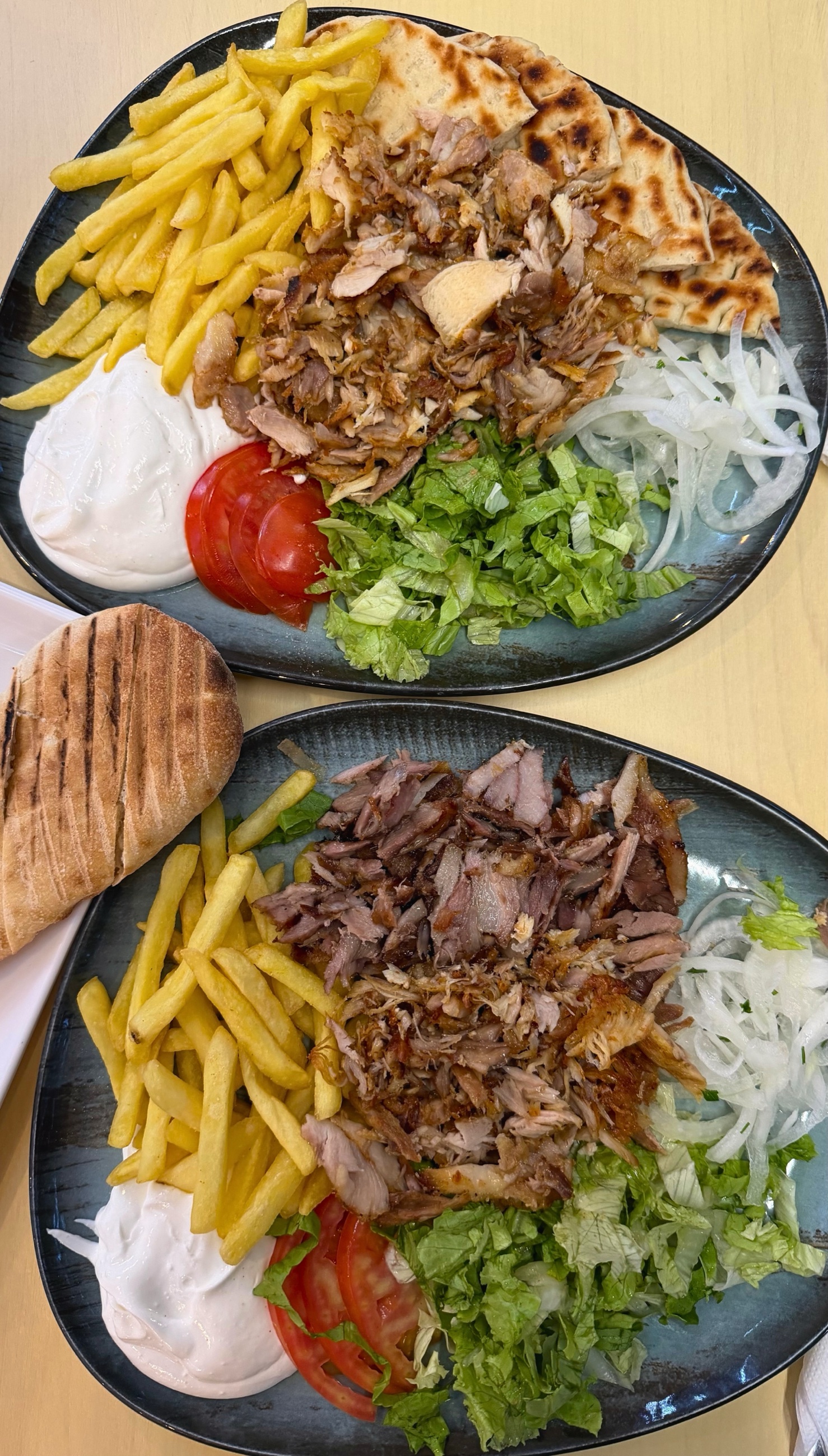 Our last distinctly Tirana meal was sufllaqe e hapur, the familiar street-food combination opened onto a plate.
For our last distinctly Tirana meal, we went almost to the opposite end of the architectural spectrum.
Fast Food Albania sits just off Skanderbeg Square on Rruga e Kavajës, brightly lit, busy, inexpensive, and largely uninterested in design theater. The restaurant dates its history to 1998, a year that carries more significance in Albania than it might elsewhere.
Only a year earlier, the collapse of a nationwide wave of financial pyramid schemes had pushed the country into disorder. More than two-thirds of Albanians are estimated to have invested in the schemes, according to the International Monetary Fund, with total exposure approaching half the country’s annual economic output. When the schemes collapsed in early 1997, the government fell, armed unrest spread through the country as looted state armories put weapons on the street, and roughly 2,000 people died before order was gradually restored later that year.
A business opening in 1998 was therefore entering a market economy that was still very young and recovering from an extraordinary national crisis.
Today, none of that weight is immediately obvious from the table.
The kitchen works quickly behind an open counter as meat rotates on spits and orders move continuously through the room. We ordered the sufllaqe e hapur, essentially the familiar Albanian street-food combination opened onto a plate rather than wrapped for carrying.
Ours arrived with shaved chicken and pork, tomatoes, onions, lettuce, fries, charred pita, and a generous serving of salcë kosi, the tangy yogurt sauce that ties much of the plate together.
There is a useful distinction here between Albanian fast food and the American form the term often brings to mind.
The speed feels modern; the food remains rooted in older Balkan and Mediterranean habits: grilled meat, bread, vegetables, yogurt, minimal seasoning, and ingredients assembled in plain view. It is inexpensive and efficient without feeling especially industrial.
Even the eating remains social. We sat outside, talked, and watched people move through the center of the city.
Fast food, Albanian style. The kitchen moves quickly. The table does not necessarily have to.
💰 Nomad Real Talk
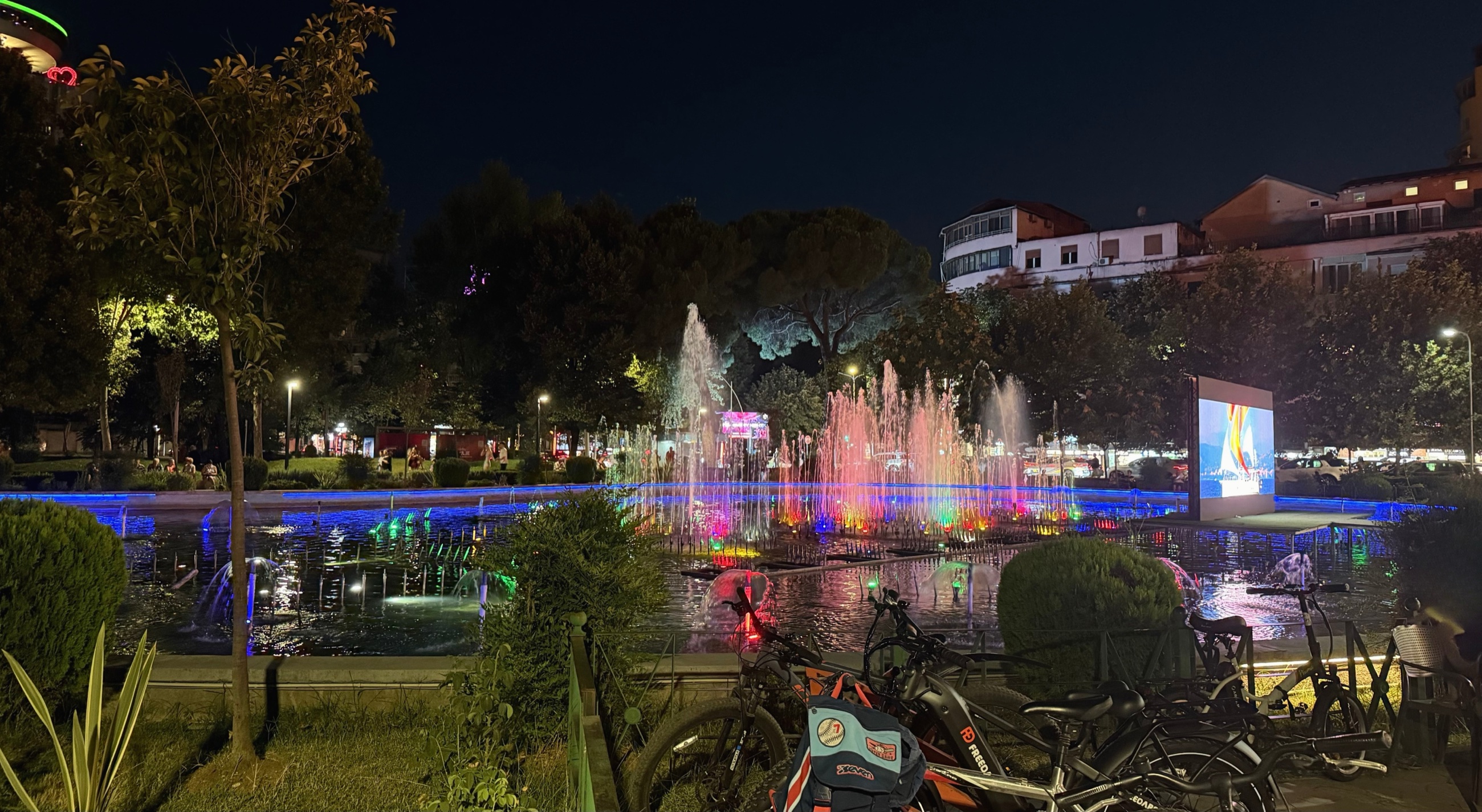 Rinia Park after dark, part of the central Tirana we came to know through everyday evening walks.
Thirty-four nights is the longest we have lived anywhere since beginning this journey, and Tirana made a persuasive case for why the month-long model works.
The first several days in any new city require administrative energy. You locate groceries. You test transportation. You join a gym. You learn which café is actually good rather than merely attractive. You determine which streets are safe and easy to navigate after dark, where household items are sold, and how long supposedly short trips really take.
Then those questions disappear.
By our final weeks in Tirana, daily life had become remarkably easy. The public bus network carried us across the city for 40 lek per ride. Most of our normal needs were walkable. The city center remained active late into the evening, yet we consistently felt comfortable walking through it. Parks and the Artificial Lake gave us accessible green space when central Tirana felt too dense.
Affordability mattered, too. Albania allowed us to maintain the daily routines that make extended travel sustainable without treating every coffee, meal, bus ride, or weekend excursion as a financial decision.
Tallied up, the month ran close to what we have come to expect in the lower Balkans: roughly $1,070 for the apartment, about $43 for a three-visit-per-week gym membership, most meals out landing well under $20 for the two of us, and bus fares cheap enough that we rarely thought twice about the ride.
Tirana’s other advantage became clearer over time: it is a strong base for seeing the rest of Albania.
During the stay, we reached the Adriatic coast, traveled through the Albanian Alps from Lake Koman to Valbona and Theth, and crossed the country eastward to the Albanian shore of Lake Ohrid. Each became its own story during previous weeks. Together they changed our understanding of Tirana.
The capital is valuable partly because of what exists inside it and partly because so much of Albania remains within reach.
Tirana never impressed us as conventionally beautiful. It became one of the easiest cities in which we have built a satisfying daily life.
We would return.
🏠 Behind the Nomad Curtain
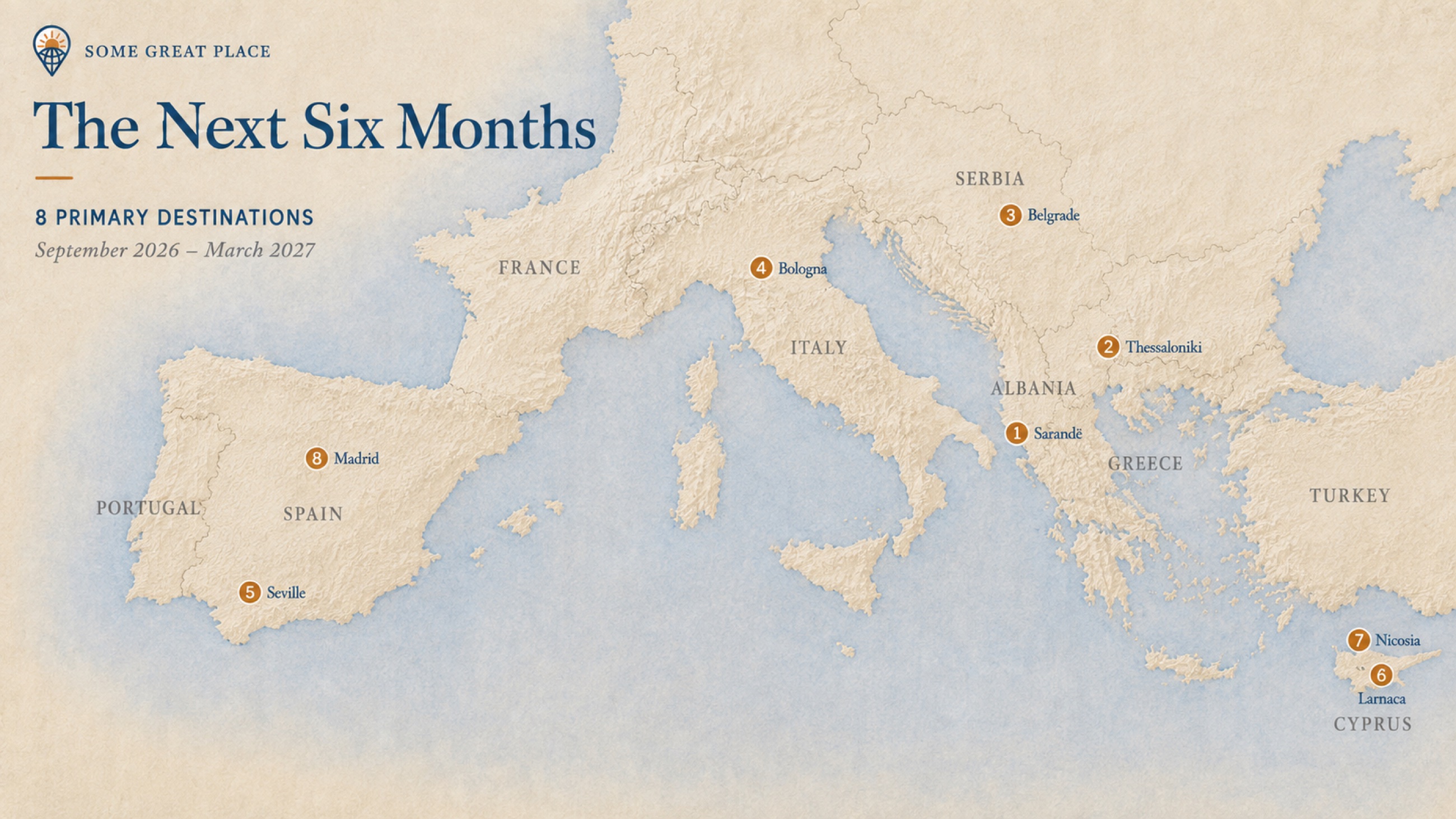 The next six months now have a defined route, ending with our return to the United States in March 2027.
This transition also comes with a larger one.
For most of this journey, we have been unable to answer one basic question with much precision: How long are you going to keep doing this?
We finally know.
Our international nomadic chapter will end on March 6, 2027, when we fly from Madrid back to Dallas-Fort Worth before settling in the Durham-Raleigh area of North Carolina.
When we left the United States in February, we did not have a thirteen-month master plan. We had an itinerary, a budget, and enough flexibility to keep adjusting as circumstances changed. The broader strategy was simpler: live well on less money, remain open to what came next, and avoid making long-term decisions before we had enough information to make them intelligently.
Seven months later, we have lived across eight countries and twelve destinations on three continents. More importantly, the uncertainty that shaped the beginning of the journey has started to resolve.
So we have decided to stay abroad for another six months and finish this chapter properly.
From Sarandë, the route continues through Greece, Serbia, Italy, Spain, Cyprus, and finally back through Spain and Portugal before our March departure. The coming months include Thessaloniki, Belgrade, Bologna, Christmas and New Year in Seville, winter in Cyprus, and a final stay in Madrid, with a short administrative trip to Porto.
After that, life changes substantially.
Full-time nomadic travel will no longer organize the calendar. We will return to the United States and begin the next chapter from a settled home base while we pursue our next career paths.
We still have six months to go.
📸 Photo Story
This week’s photographs sit naturally on both sides of the move.
The Tirana images close a month that gradually shifted from exploration into familiarity: everyday streets, familiar tables, summer afternoons, the city’s contemporary skyline, and one final day by the pool.
Then the geography changes.
The road bends south through Albania toward the Ionian coast, our bags are unpacked in another apartment, and Sarandë appears below the mountains with Corfu sitting offshore.
One Albanian chapter closes. Another begins.
For the first time since arriving in the country, we are looking west toward Greece rather than north toward where we came from.
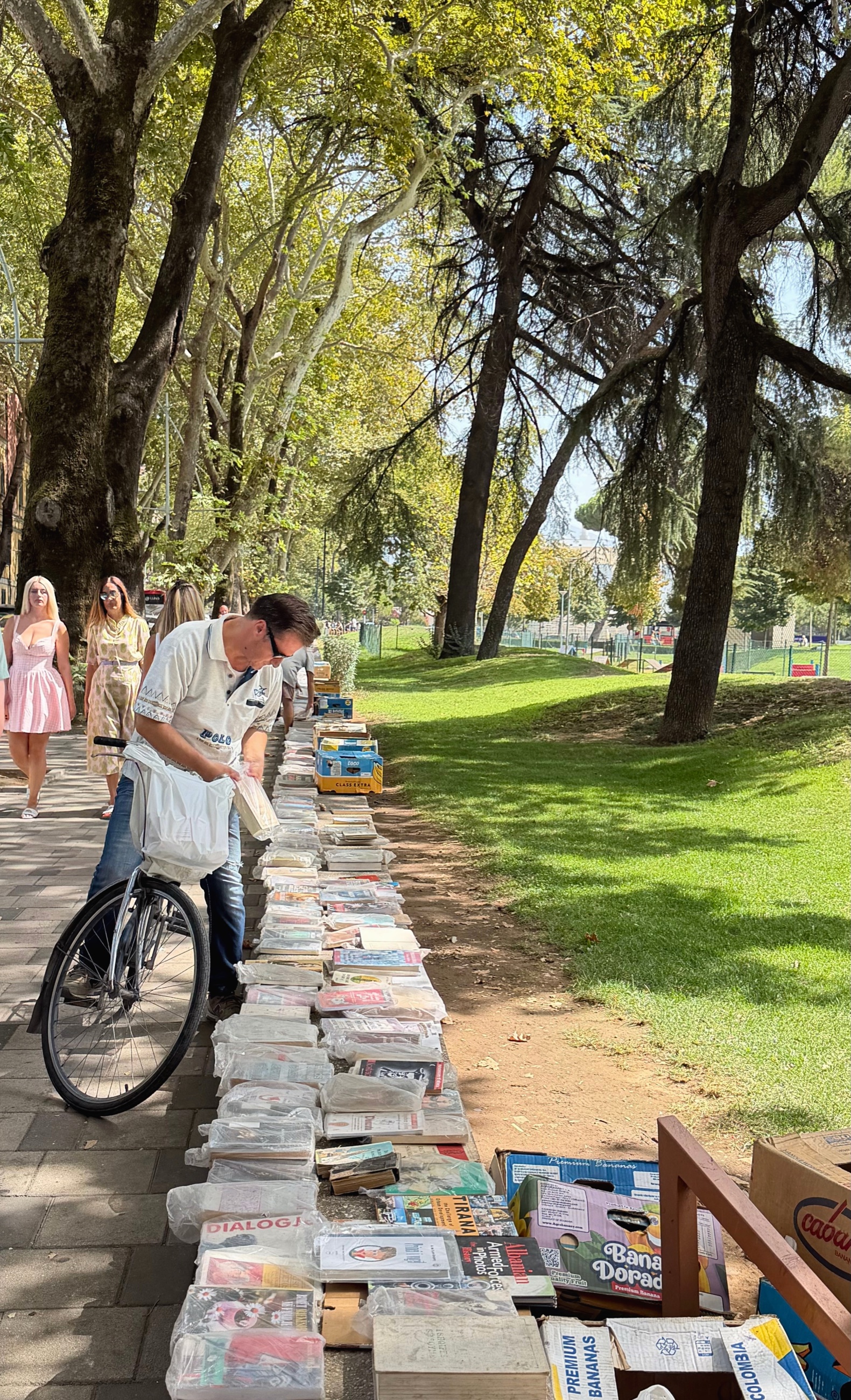 Books spread beneath the trees, one of the small everyday scenes we came to associate with walking through central Tirana.
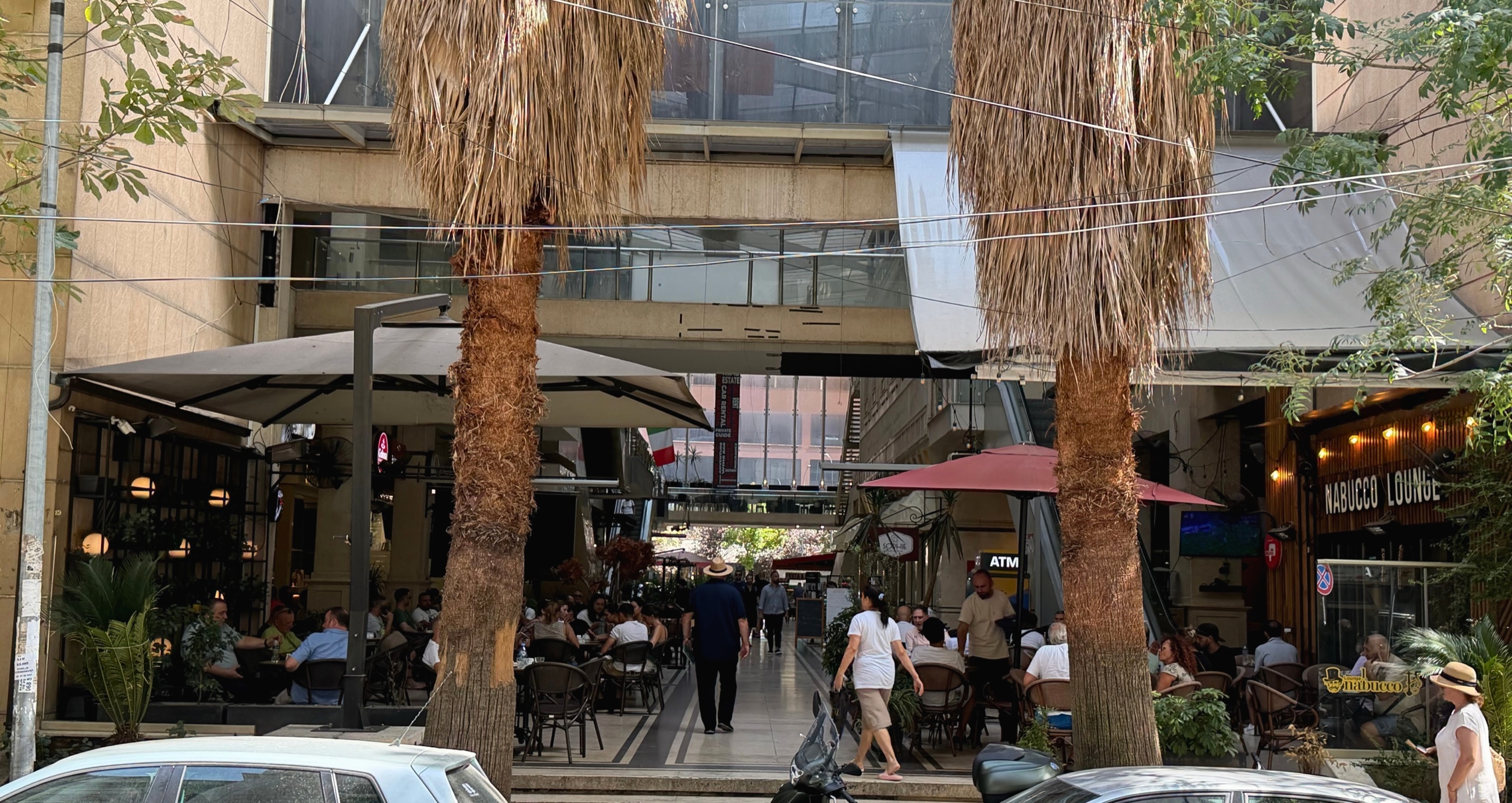 The Galleria across the street from our apartment, where we frequently stopped for coffee at one of its Italian cafés.
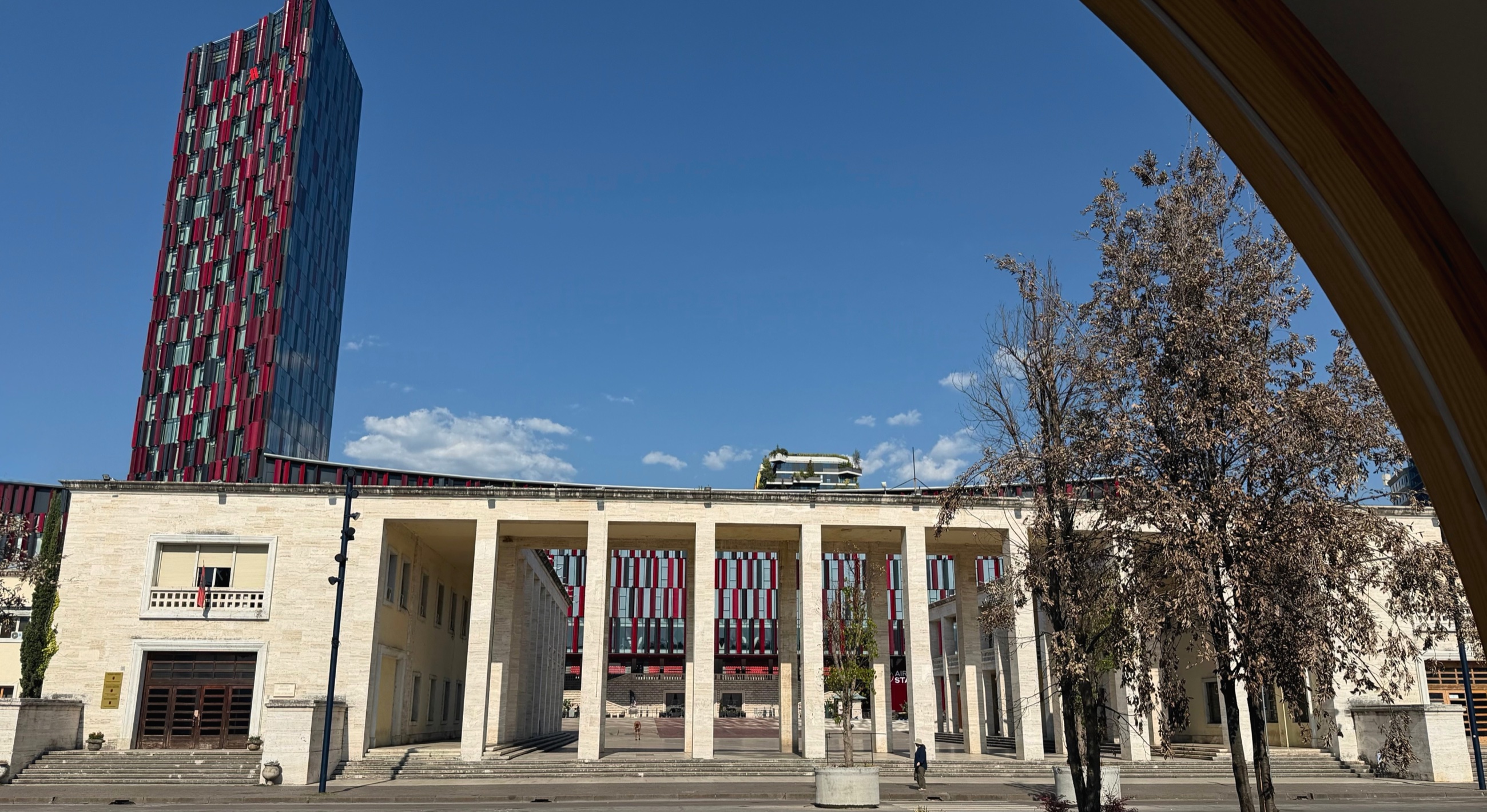 Tirana’s Air Albania Stadium, with its distinctive red-and-black façade and tower looming over the surrounding streets.
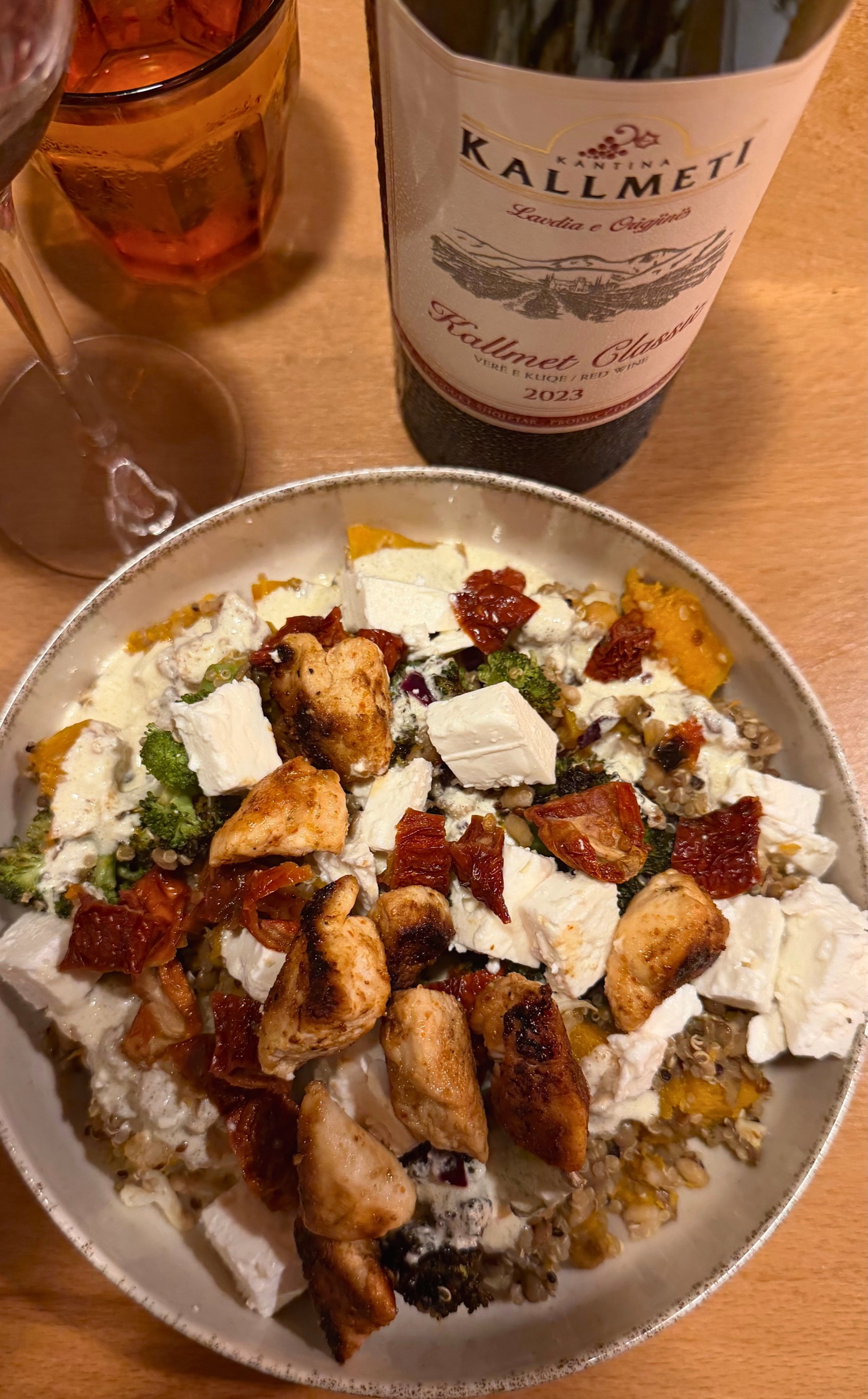 Dinner at home: a bowl assembled from local ingredients, accompanied by a bottle of Albanian Kallmeti wine.
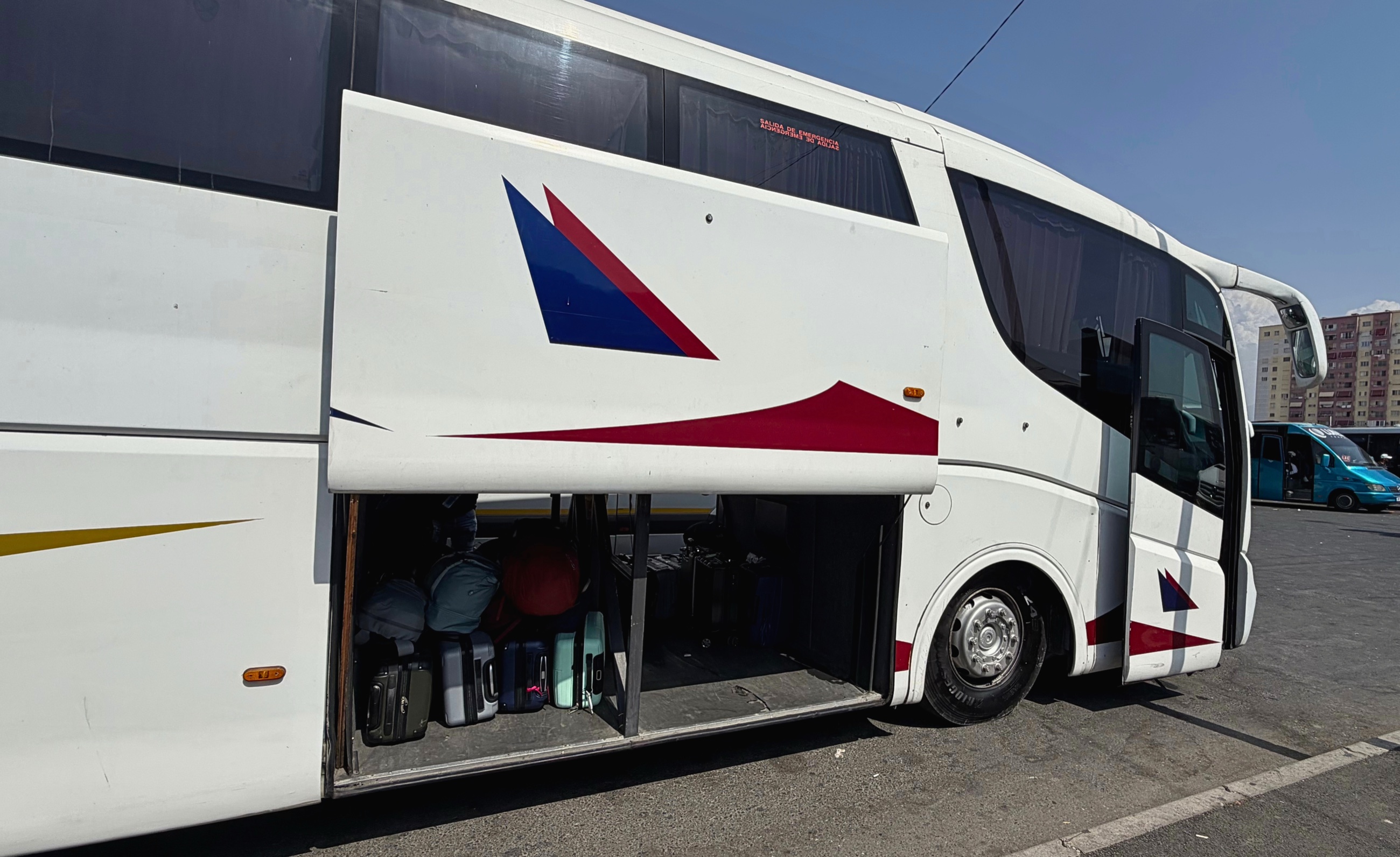 Moving day again, with our luggage loaded beneath the bus for the journey from Tirana to Sarandë.
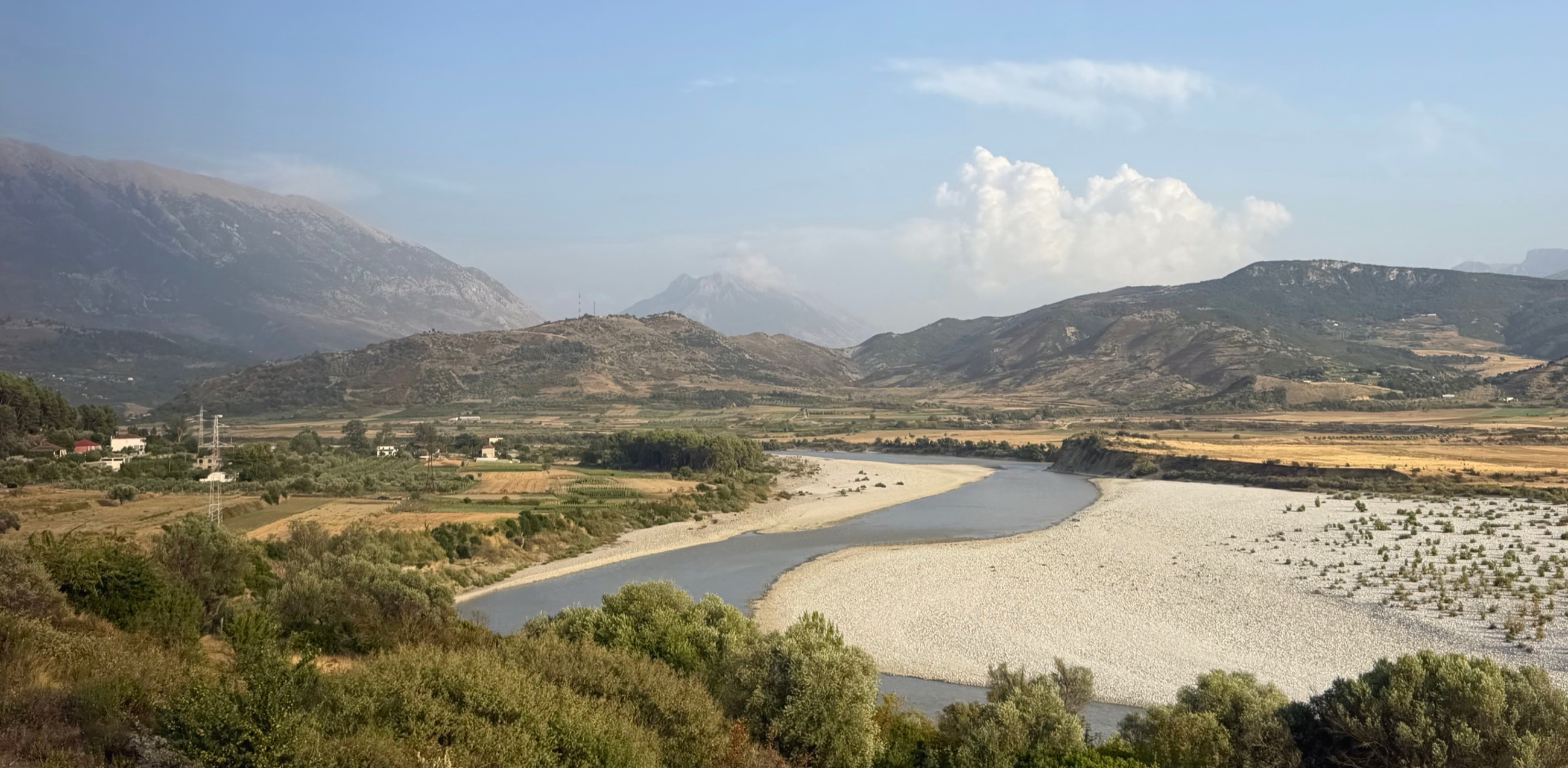 The road south revealed another Albania entirely: broad riverbeds, cultivated valleys, and mountains fading into the distance.
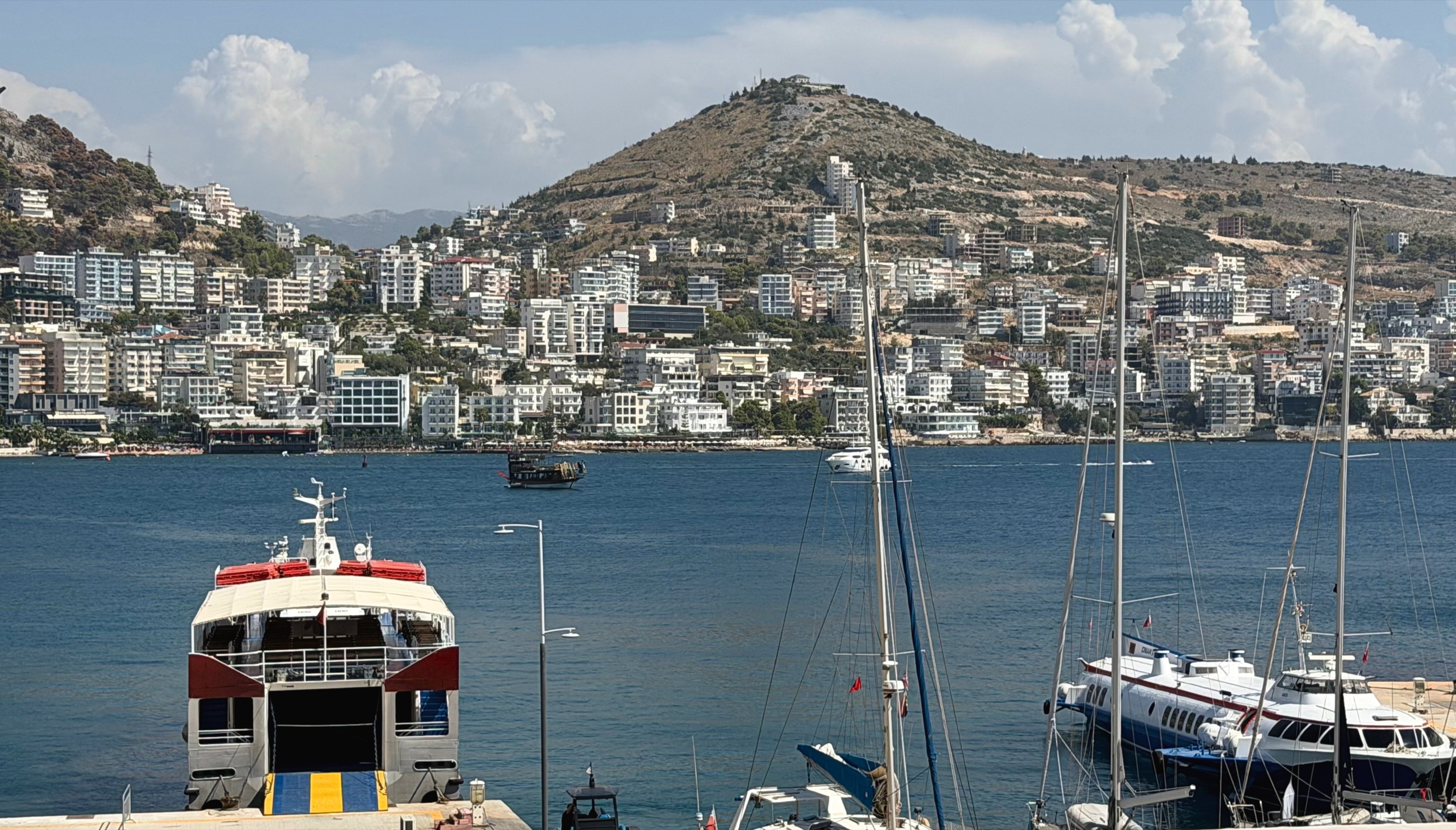 Our first look across Sarandë’s harbor, with ferries and sailboats below a city climbing steeply into the hills.
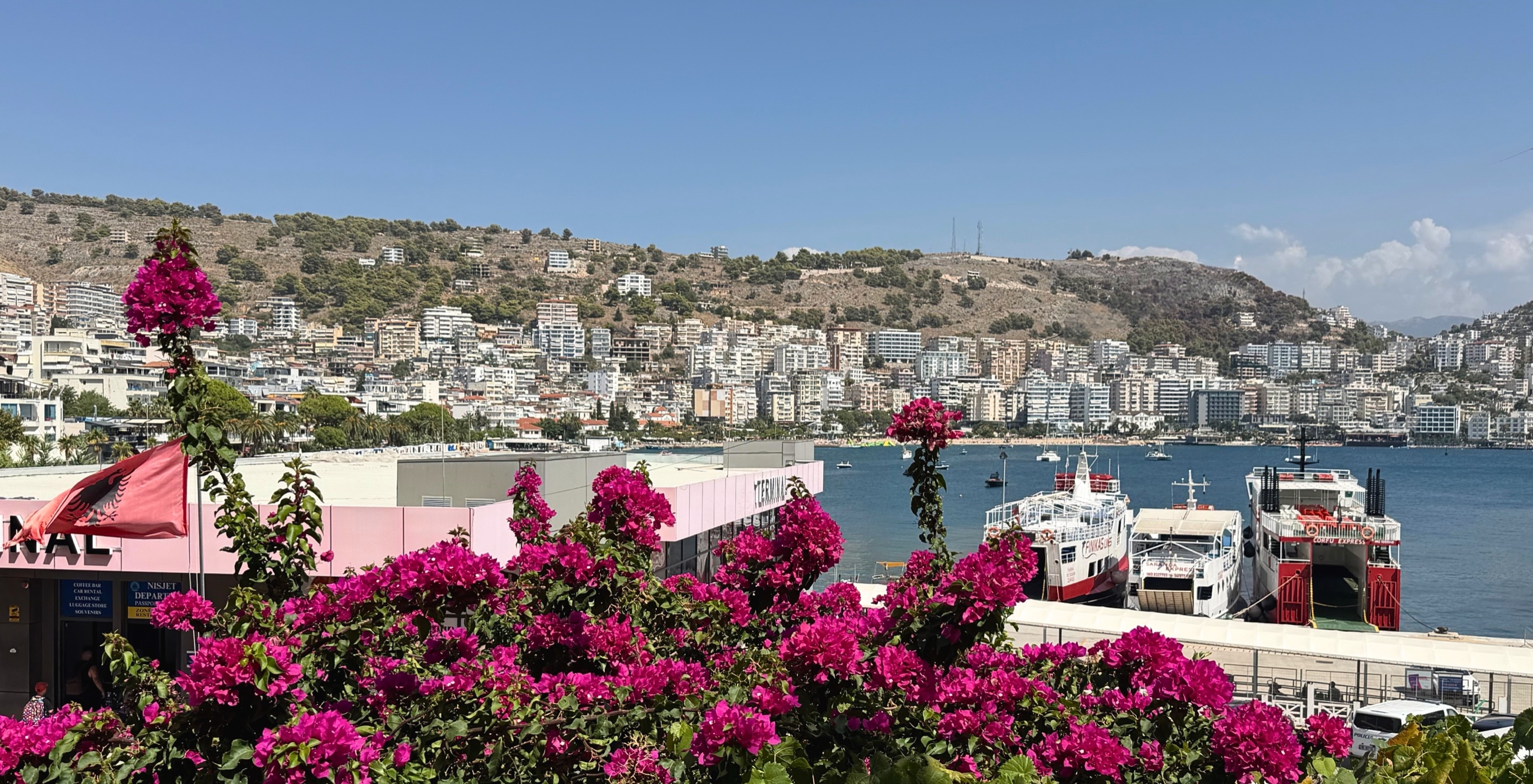 Bougainvillea above the port and Sarandë spread across the bay, our new home for the month.
🎯 Next Week Preview
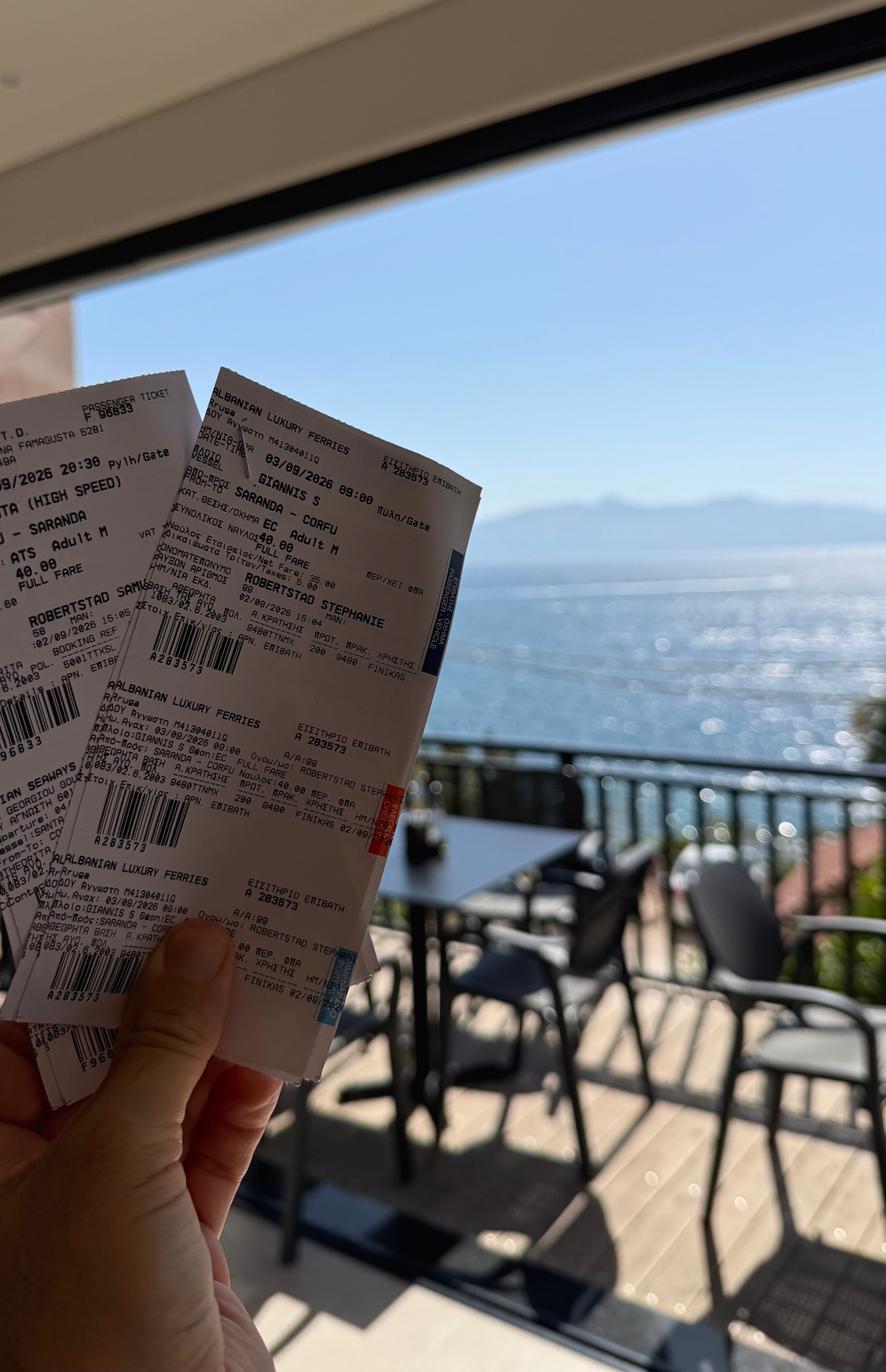 From Sarandë, Corfu sits just across the narrow channel and becomes our next short excursion.
We will not remain entirely in Albania this week.
Our daughter has returned, this time with two friends, and we plan to take the passenger ferry across the narrow channel from Sarandë to Corfu for an overnight trip.
We will begin in Corfu Old Town before continuing north to Kassiopi, a coastal village beneath Mount Pantokrator with a compact harbor, beaches, tavernas, and a long history tied to the strategic channel between Corfu and the mainland.
Then it is back across the water to Sarandë, where the work of learning our new home properly begins. We will save the fuller introduction to the town, its Ottoman castle on the hill above the bay, and the ruins of Butrint down the coast for a future dispatch.
💌 Personal Connection
There was a moment during our final weekend in Tirana when we realized we no longer felt as though we were exploring it.
We were simply living there.
We knew where we wanted coffee. We knew the walk to Blloku. We knew which bus to catch across town. We had favorite grocery stops, familiar streets, places we intended to revisit, and enough experience with the city to recognize when advice about it matched the reality we had lived.
That is what we expected slow travel to provide: comfort, familiarity, and a lived sense of place.
Now we get to begin the process again, roughly 175 miles (280 km) south, in a town that wore at least five different names before settling on the one we will learn to use.
We are halfway through our time in Albania, seven months into life abroad, and finally know when this journey will end. For the moment, though, the bags are unpacked, family is present, the Ionian Sea is outside, and September belongs to Sarandë.
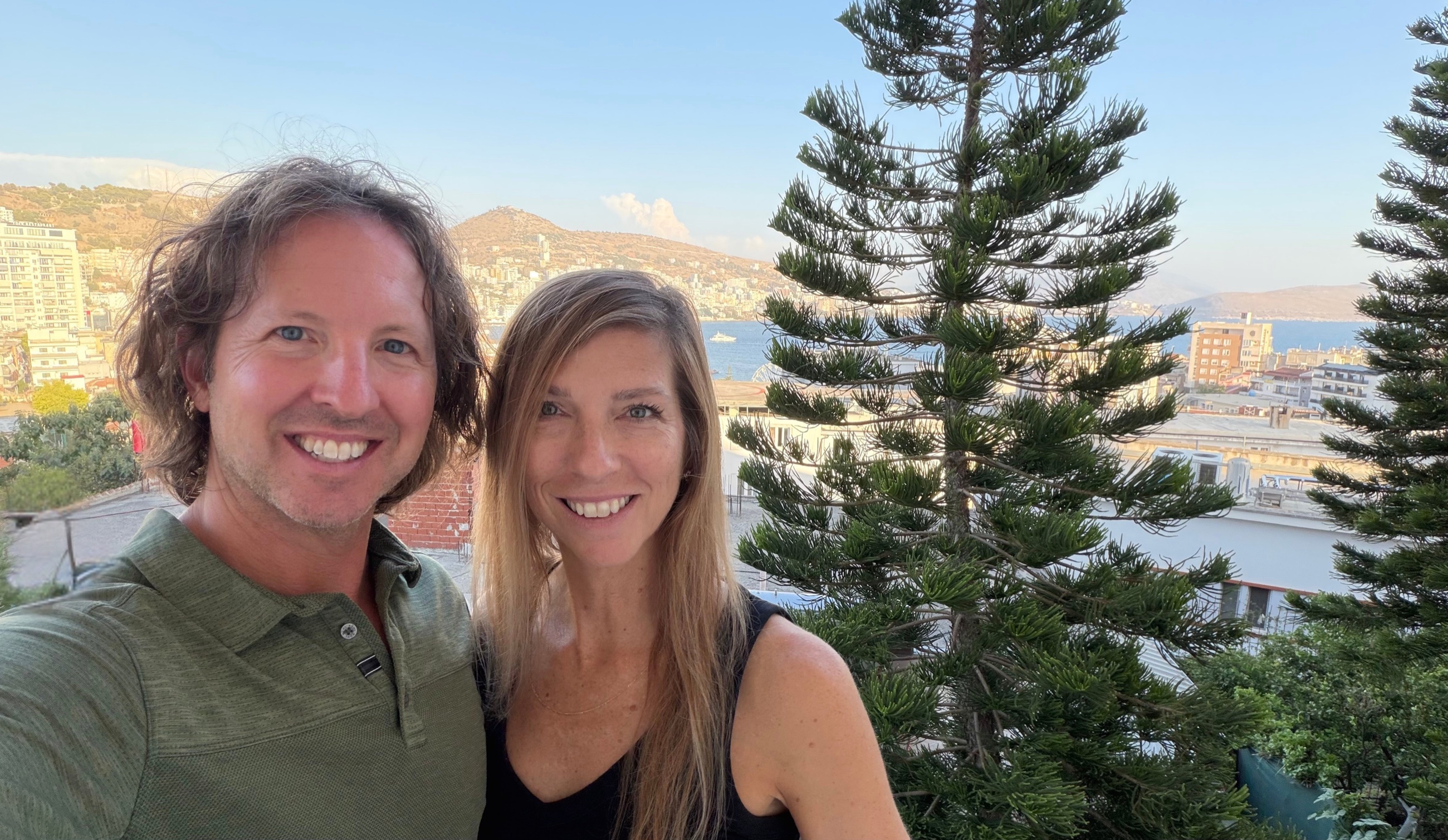 From our apartment in Sarandë, with the hillside city and Ionian Sea behind us as the next month begins.
Until next week,
S&S
Some Great Place · Living Local in a Global World · somegreatplace.com