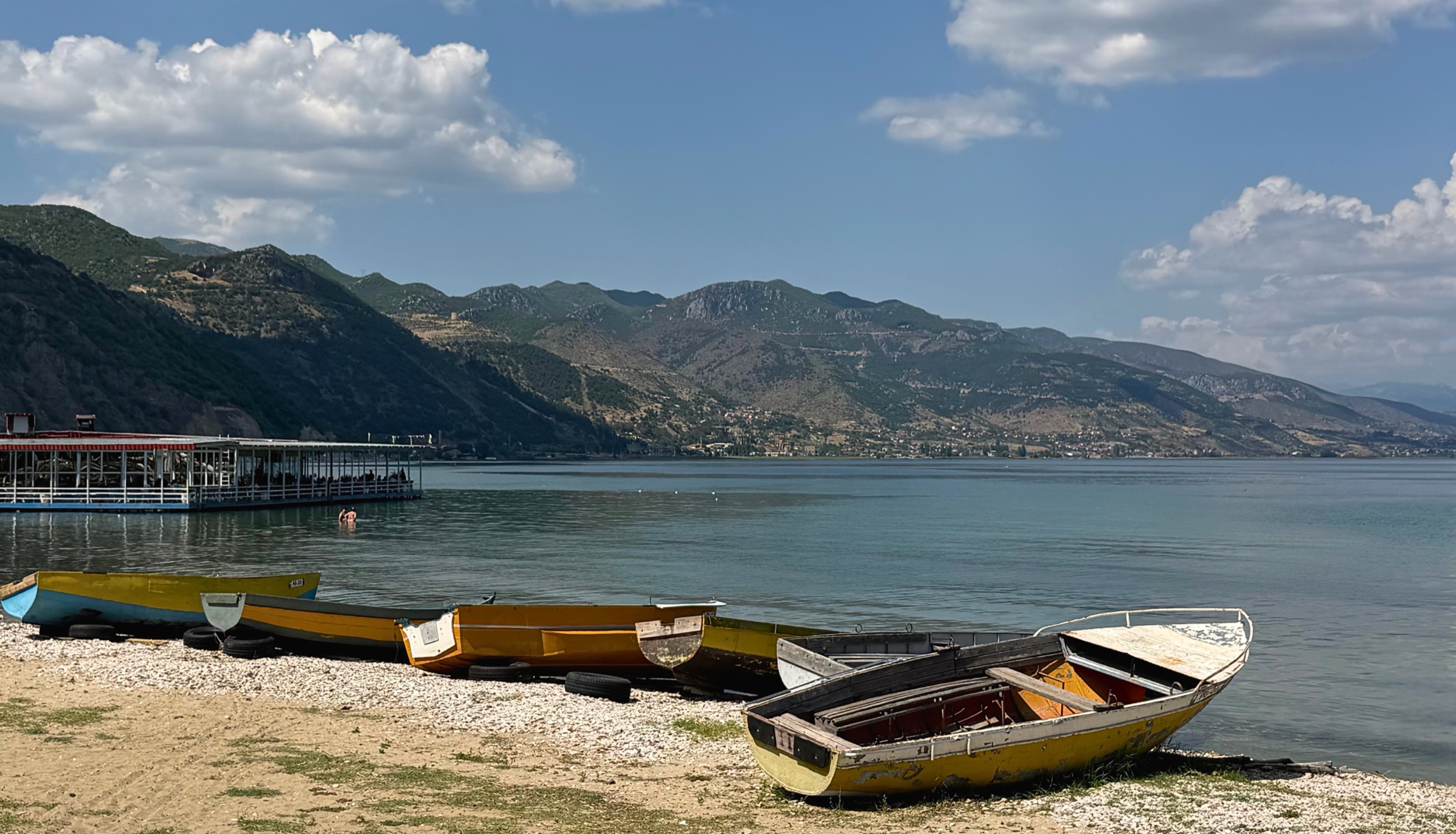
 Weathered fishing boats line the shore in Pogradec, with Lake Ohrid stretching toward the mountains beyond.
Four months ago, Lake Ohrid was home.
We spent April living on its eastern shore in North Macedonia, where the city of Ohrid gradually became familiar through repetition: the promenade, the bakeries, the churches above the water, the cafés where we returned often enough to be known. We traveled south to Saint Naum, north toward Struga, and climbed into Galičica National Park for views across the lake toward Albania.
This week, we finally approached that landscape from the other side.
From Tirana, an early morning bus carried us east across Albania to Pogradec, following mountain valleys before joining the western shore of Lake Ohrid just south of Lin. The water was immediately recognizable. The setting was too. Yet the experience belonged distinctly to Albania.
That is one of the privileges of traveling slowly through a region rather than collecting isolated destinations. Places begin connecting to one another. A mountain seen from one country becomes the mountain you later walk beneath in another. A distant shoreline becomes the place where you order lunch. Geography stops being abstract.
After a month in Ohrid, North Macedonian and this weekend along the Albanian shore, we have now traced much of the lake from both countries. It feels less like returning to a destination than filling in another part of a landscape we already knew.
📍 This Week in Tirana
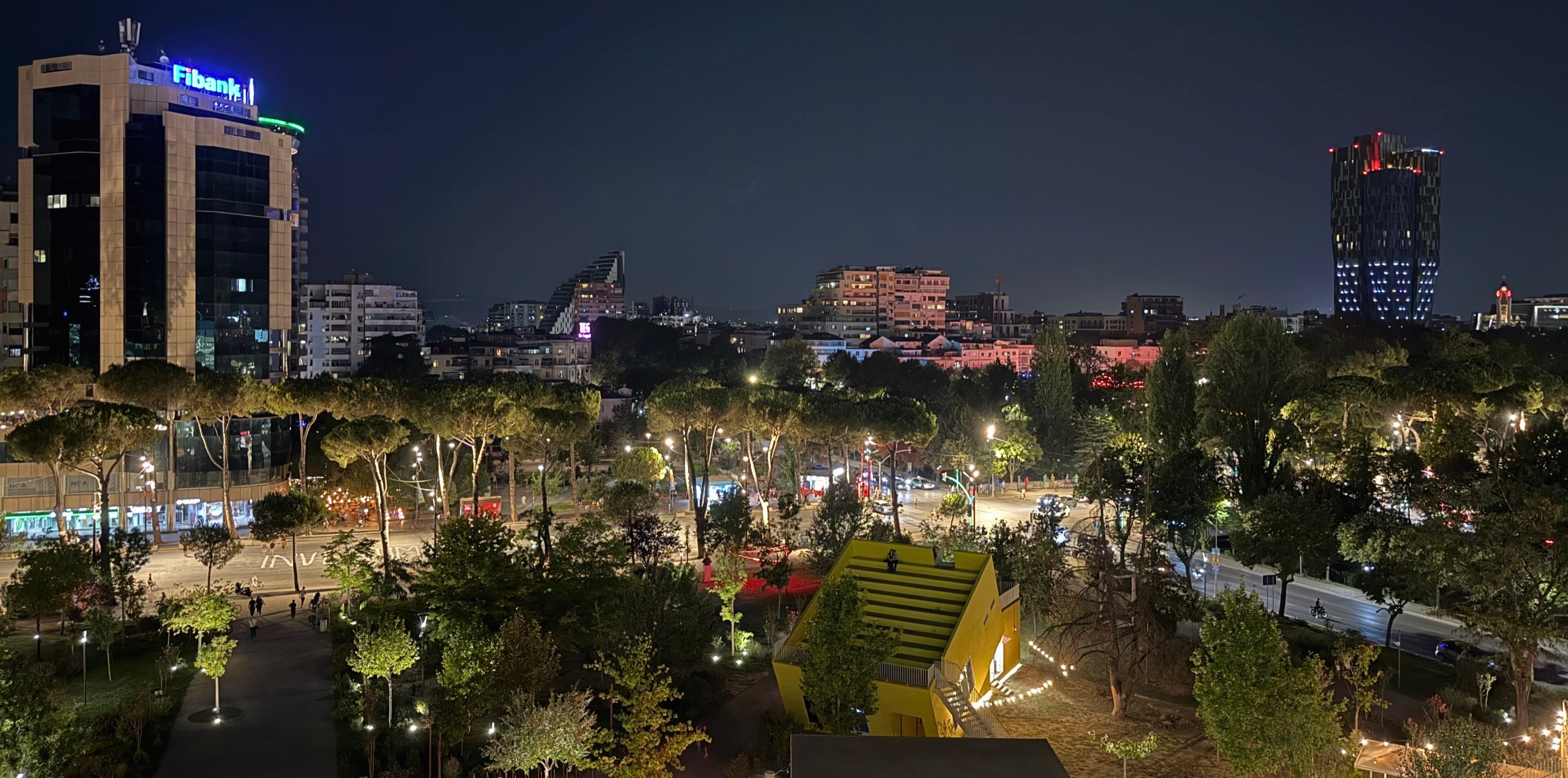 Tirana after dark, with the city’s tree-lined streets and modern buildings illuminated below.
Before leaving town, the week settled easily into the routines that now define our fifth and final full week in Tirana.
We returned to Artificial Lake for another long walk around the water, followed by gelato from Sorrento Naturale. Shiro Bar Coffee and Mulliri remained our reliable stops for macchiatos. Three gym mornings provided their usual structure. At the New Bazaar, we picked up fresh figs, honey, and a small coin purse, the sort of modest purchases that rarely figure into travel itineraries but increasingly define what living somewhere actually looks like.
We also tried petulla, Albania’s fried dough, at Mimoza Bar & Cocktails, served with jam and cheese. One evening we traded our normal routine for a drink at Komiteti Kafe Muzeum, where rooms filled with objects from Albania’s communist era turn a night at the bar into an encounter with the country’s recent history.
Then the weekend arrived, and with it a trip we had been anticipating since our month across the lake in North Macedonia.
Getting from central Tirana to Pogradec begins with getting out of Tirana. We caught an early city bus to the East Bus Terminal, about thirty minutes from the center, and arrived well ahead of our planned departure. Our furgon was already waiting.
Albanian intercity transport often operates according to a logic that is perfectly understandable once you accept that the printed timetable is only part of the equation: a driver may wait for the remaining seats to fill before leaving, so arrive too late and there may be no seat, arrive early and you may spend a while watching the van slowly acquire its passengers. We did both the waiting and the watching. About thirty minutes later, every seat was occupied and we were on our way.
The drive took us across inland Albania through mountains, valleys, and river country before reaching the lake near Lin and continuing south through Udenisht to Pogradec. As happens on many longer Balkan bus journeys, the driver eventually pulled into a roadside café for espresso and a restroom break before everyone climbed back aboard. Three hours after leaving Tirana, Lake Ohrid was in front of us again.
🎨 Cultural Deep Dive
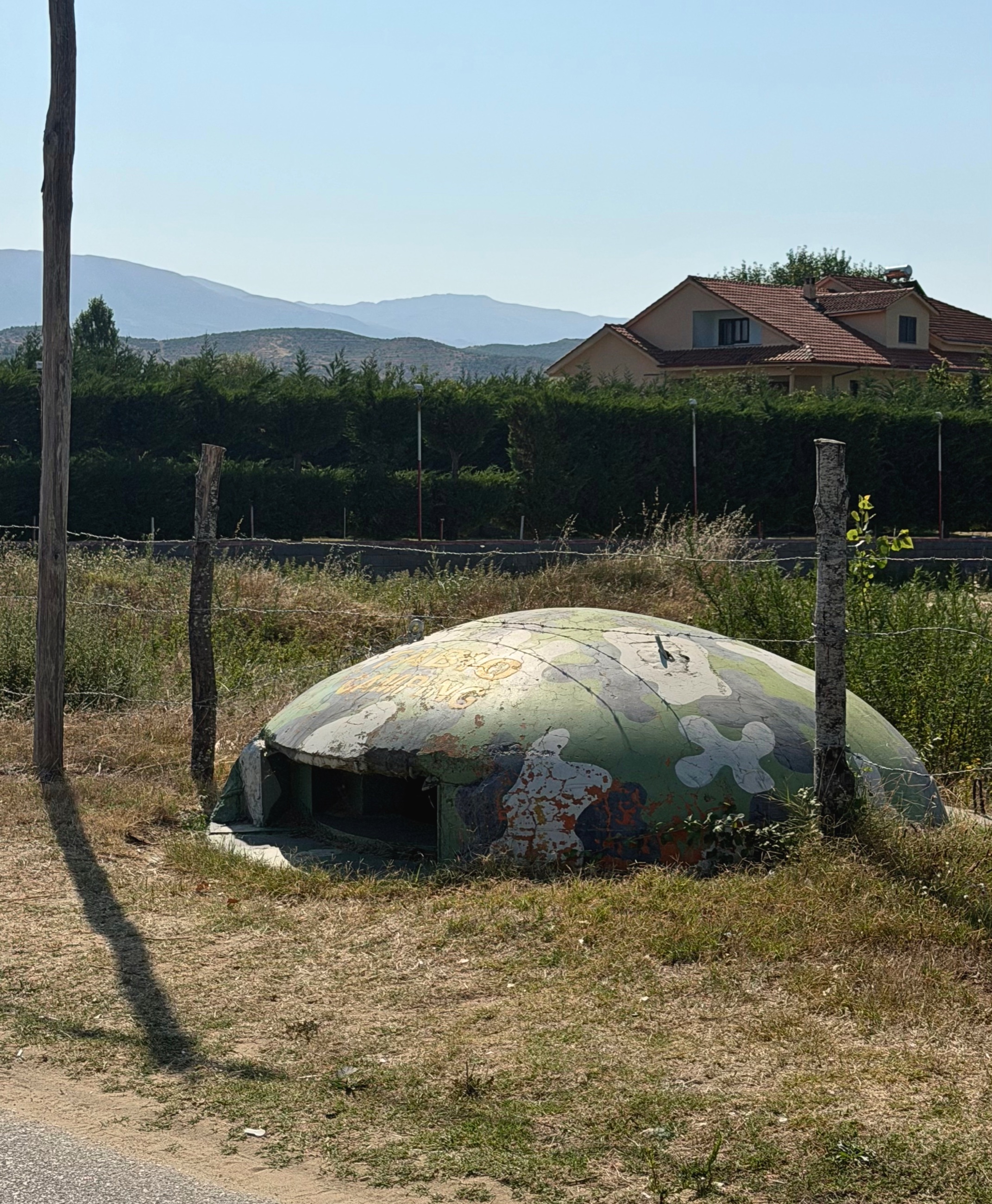 Cold War-era bunkers still sit beside the lakeside road near Pogradec, one of thousands built across Albania during the communist period.
Lake Ohrid sits along the border between Albania and North Macedonia, an ancient tectonic lake whose age, isolation, biodiversity, and surrounding cultural heritage have made the entire region significant far beyond either country. UNESCO inscribed the North Macedonian portion for its natural heritage in 1979, adding cultural criteria a year later.
In 2019, the property was extended into Albania, adding the Albanian shoreline and the small Lin Peninsula, where the remains of a sixth-century basilica sit on a promontory jutting into the lake.
That extension makes sense once the lake is experienced from both sides. The political border is real, and the towns have distinct languages, histories, architecture, and national identities. The landscape itself is continuous.
Pogradec occupies the southwestern shore, backed by mountains and organized around a long waterfront. Compared with the monumental concentration of Ohrid across the lake, its pleasures are more dispersed: a broad promenade, beaches woven into the city, restaurants facing the water, and the evening xhiro, when people emerge for the customary walk that remains one of the most persistent forms of public life across the Balkans.
The next morning, we followed the shoreline east on foot toward Drilon and Tushemisht, a walk of roughly three and a half miles (5.7 kilometers).
Drilon lies about two and a half miles (four kilometers) from Pogradec, where clear karst springs, fed underground from Lake Prespa through the Galičica mountains, surface beneath willows and small wooden bridges before flowing into Lake Ohrid. During the communist era, the site’s beauty made it a favored retreat for Albania’s ruling elite.
Enver Hoxha kept a villa here, built in the 1970s specifically for his summer visits and guarded accordingly, and it is not the only government property still standing along this stretch of shore.
Our timing added another layer. This happened to be the exact weekend Prime Minister Edi Rama convened his full cabinet in Pogradec for a two-day retreat, one of the informal gatherings his government holds most years before the new parliamentary session opens. Security along the road was correspondingly conspicuous. Police and official vehicles moved through an otherwise leisurely weekend morning, positioned around the same government villas that trace their use back to Hoxha’s era.
We were simply walking to the next village with backpacks and beach clothes. Around us, the machinery of the Albanian state was gathering for its own reasons, on the same lakeshore a dictator once claimed for his own.
Along the way, the road also passed a string of old bunkers, small concrete domes half sunk into the grass and long since abandoned. Albania built 173,371 of them by 1983, out of 221,143 originally planned, in a decades-long defense program against an invasion that never came. They remain scattered across the entire country today, in fields, on beaches, and, here, along a lakeside road leading to a village most visitors come to see for entirely different reasons.
From there, the road continues into Tushemisht, an old lakeside village close to the North Macedonian border. Water runs through parts of the village beside traditional houses and beneath small crossings, giving the settlement a physical character unlike Pogradec only a few kilometers away.
Tushemisht also occupies an affectionate place in Albanian popular culture. Much of Zonja nga Qyteti (The Lady from the City), a beloved 1976 comedy, was filmed here, and the film’s central character, Teto Ollga, played by actress Violeta Manushi, is commemorated today with a bronze statue in the village square. The house used in the film still stands nearby, and locals will point it out to anyone who asks.
🍽️ Local Flavor
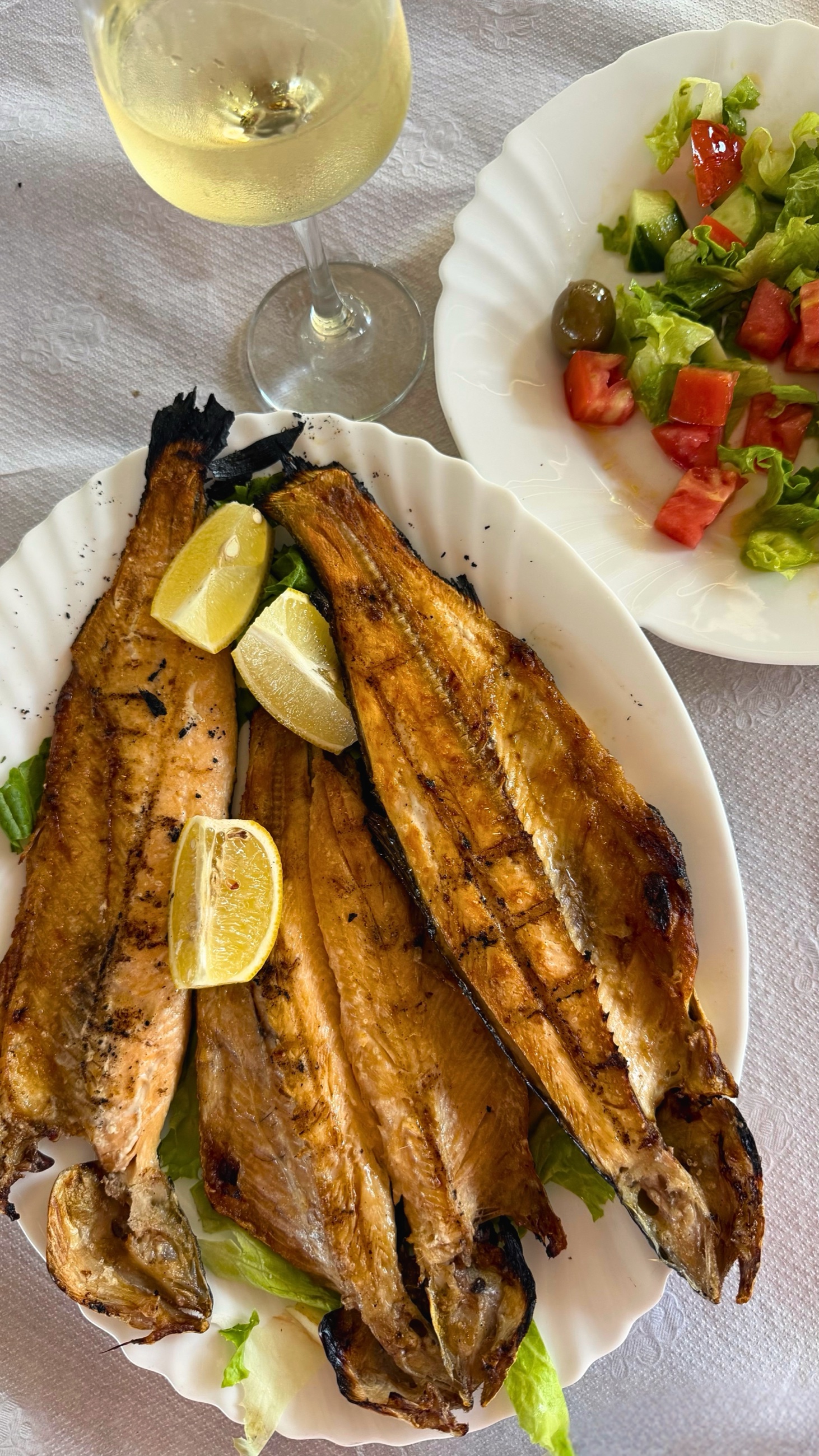 Grilled koran, Lake Ohrid’s endemic trout, served with lemon, salad, and local white wine in Pogradec.
Our first priority in Pogradec was lunch. We walked directly toward the waterfront and found Fish Taverna Ladi, where the reason for choosing the restaurant was simple: koran.
Koran, the Ohrid trout, is endemic to the lake and closely associated with Pogradec’s culinary identity. It is also increasingly scarce; decades of overfishing pushed the population low enough that both Albania and North Macedonia now run hatcheries to restock the lake, and the fish carries protected status on both sides of the border. We ordered it grilled, accompanied by a house white wine from the surrounding hills.
The fish was delicate and clean-tasting, with the sort of meal-place connection that needs little embellishment. Fresh lake fish, local wine, and the water itself just beyond the table were enough.
Later that evening came something considerably different: French tacos. Despite the name, these are closer to a grilled burrito than anything typically associated with Mexican tacos. Ours was filled with chicken döner, French fries, and cheese sauce, folded inside a tortilla and pressed on the grill. We shared additional chicken döner on the side.
Travel meals do not always need to carry cultural significance. Sometimes dinner is simply what sounds good after an afternoon along the shores.
The following morning began more conventionally with burek from a neighborhood bakery, eaten in a nearby park before our walk to Tushemisht.
There, we returned once more to petulla. At a restaurant with tables extending over the water, we ordered macchiatos and another plate of the fried dough, this time with cheese and gliko, a sweet preserve made from local cherries or plums.
By Sunday evening we were back in Tirana, tired and hungry enough to finish the weekend with Neapolitan pizza at Pomo D’Oro: blistered crust, tomato, familiar toppings, and no further ambition required.
💰 Nomad Real Talk
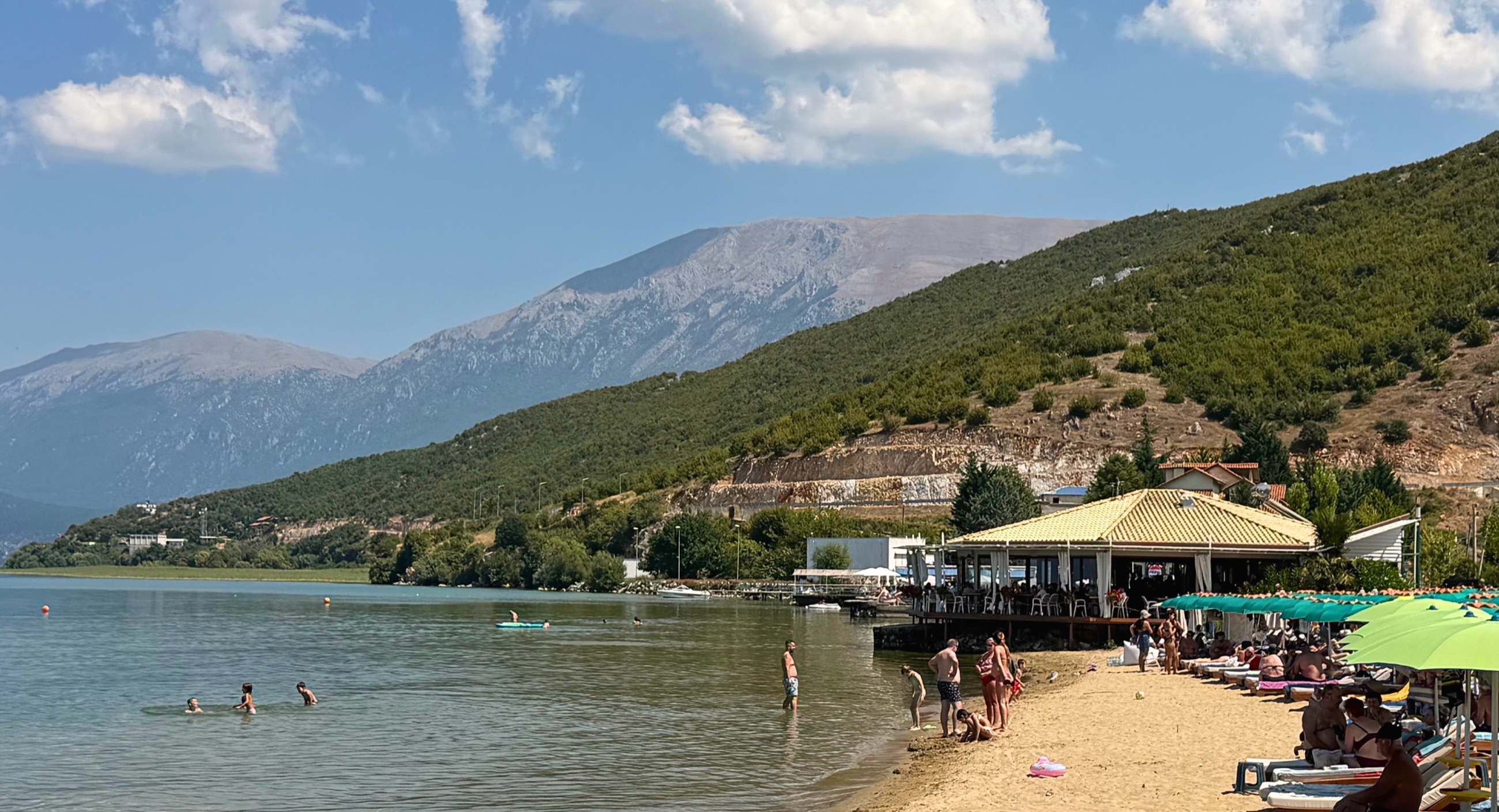 A summer morning in Tushemisht, along the Albanian shore of Lake Ohrid.
Pogradec taught us something useful about the difference between a trip that is technically possible and one that is actually well designed.
From Tirana, the furgon costs about €7 (roughly $8) per person each way and takes three to three and a half hours depending on traffic and stops. That makes Pogradec possible as a day trip.
We would not recommend doing it that way if you want to experience much beyond the waterfront.
Our original plan was to arrive in the morning, eat lunch, swim, explore, and return to Tirana that evening. Once we were standing beside the lake, the problem was obvious. The return timetable would have forced us to leave just as the afternoon became pleasant.
So we changed the plan: for €36 (roughly $42), we booked a room for the night.
That small decision changed the weekend completely. Instead of watching the clock, we found an umbrella on the public beach and spent several hours swimming and wading in the clear lake. The temperature had climbed into the 80s (upper 20s Celsius), but Pogradec was noticeably more comfortable than Tirana, with cooler air moving off the water. We stayed until the sun disappeared behind the mountains.
The overnight also made Drilon and Tushemisht practical the following morning. After breakfast, we walked the roughly 3.5 miles (5.7 kilometers) from Pogradec through Drilon and onward to Tushemisht, spent more time enjoying the water, and then took a taxi back to the Pogradec bus terminal rather than retracing the entire route in the afternoon heat.
That final taxi also bought us something more important than distance: a seat home. We arrived in time for the 2:00 p.m. furgon, which filled quickly. Several people arriving afterward had to wait for the later departure.
The useful lesson is straightforward. Intercity furgons are inexpensive and effective, but they reward flexibility. Arrive early. Do not assume a listed departure guarantees available seats. Build in extra time. And when a €36 room turns a rushed six-hour transportation day into a thoroughly enjoyable weekend, changing the plan can be the more economical choice in every way that matters.
📸 Photo Story
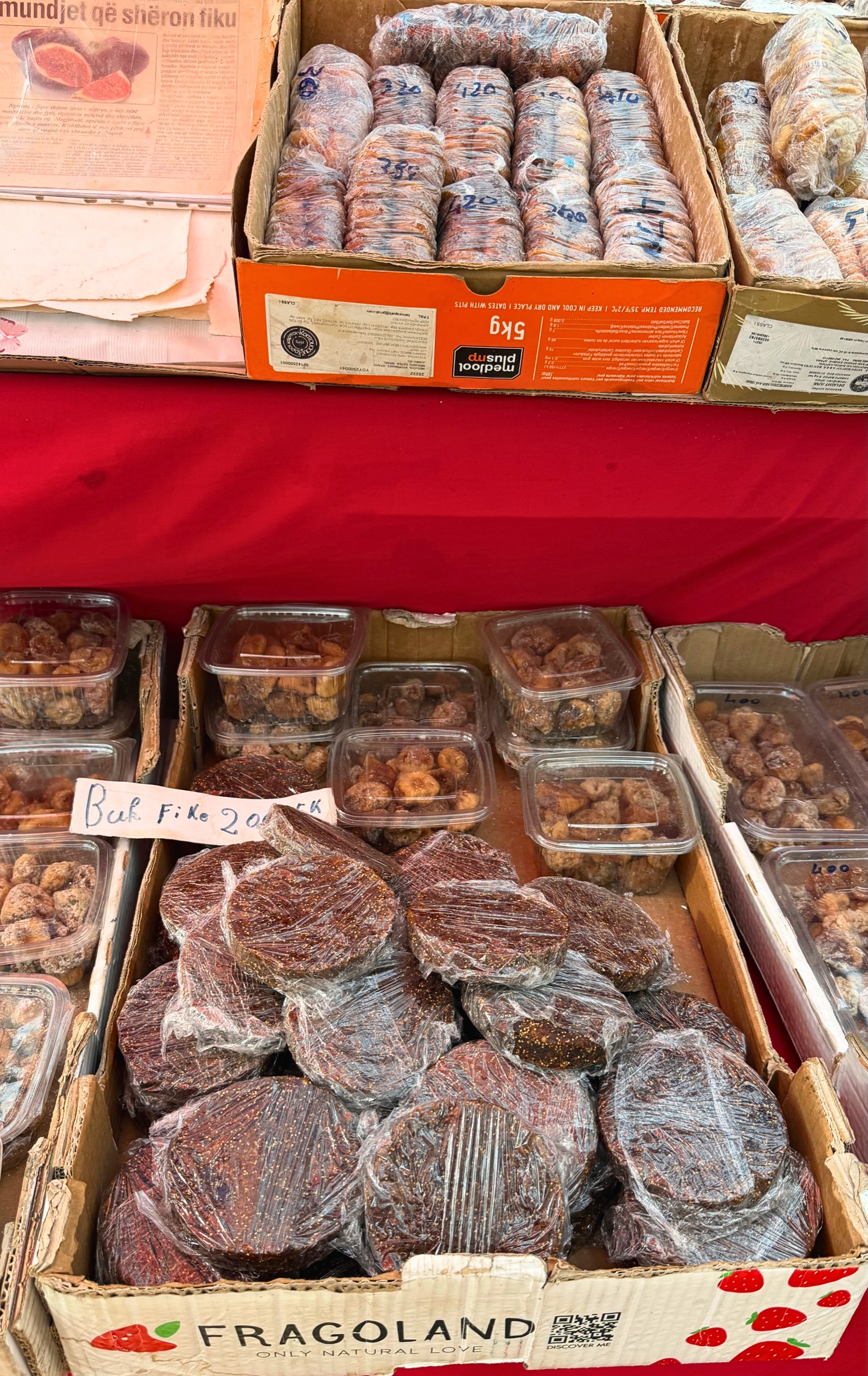 Fig products and other local goods at Tirana’s New Bazaar.
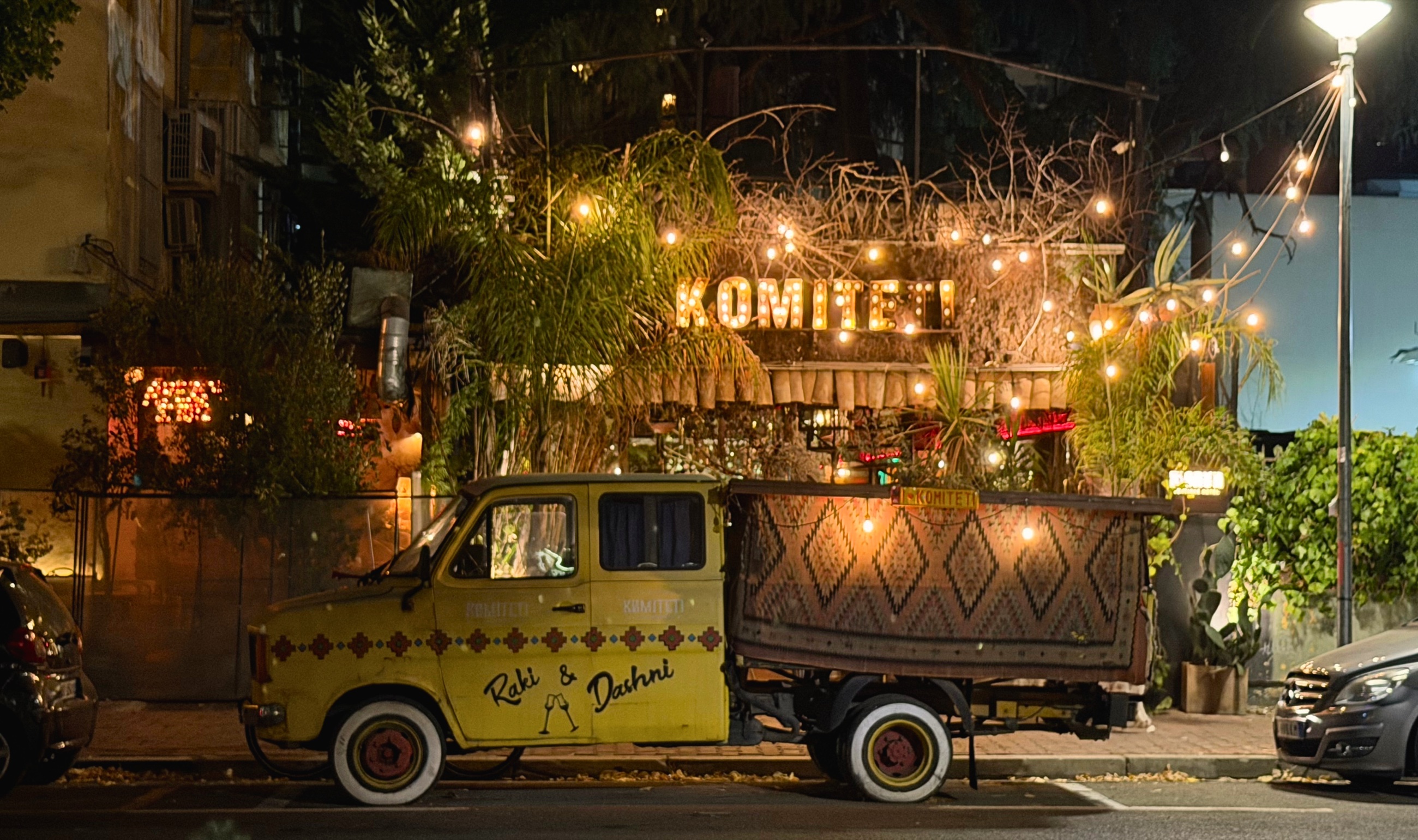 An evening stop at Komiteti Kafe Muzeum Bar, where Albania’s communist-era history fills the rooms inside.
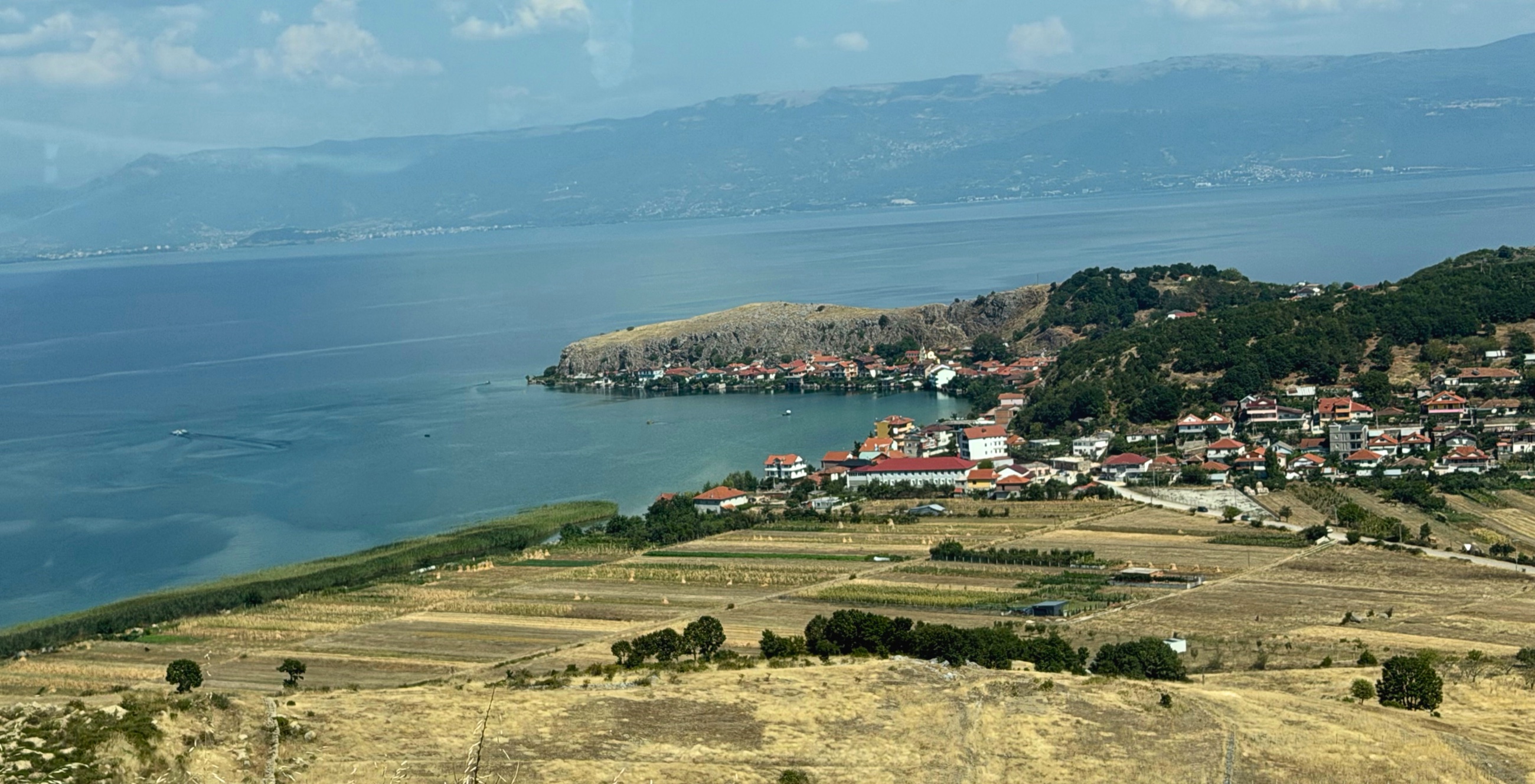 A first glimpse of Lin and Lake Ohrid from the road driving east across Albania.
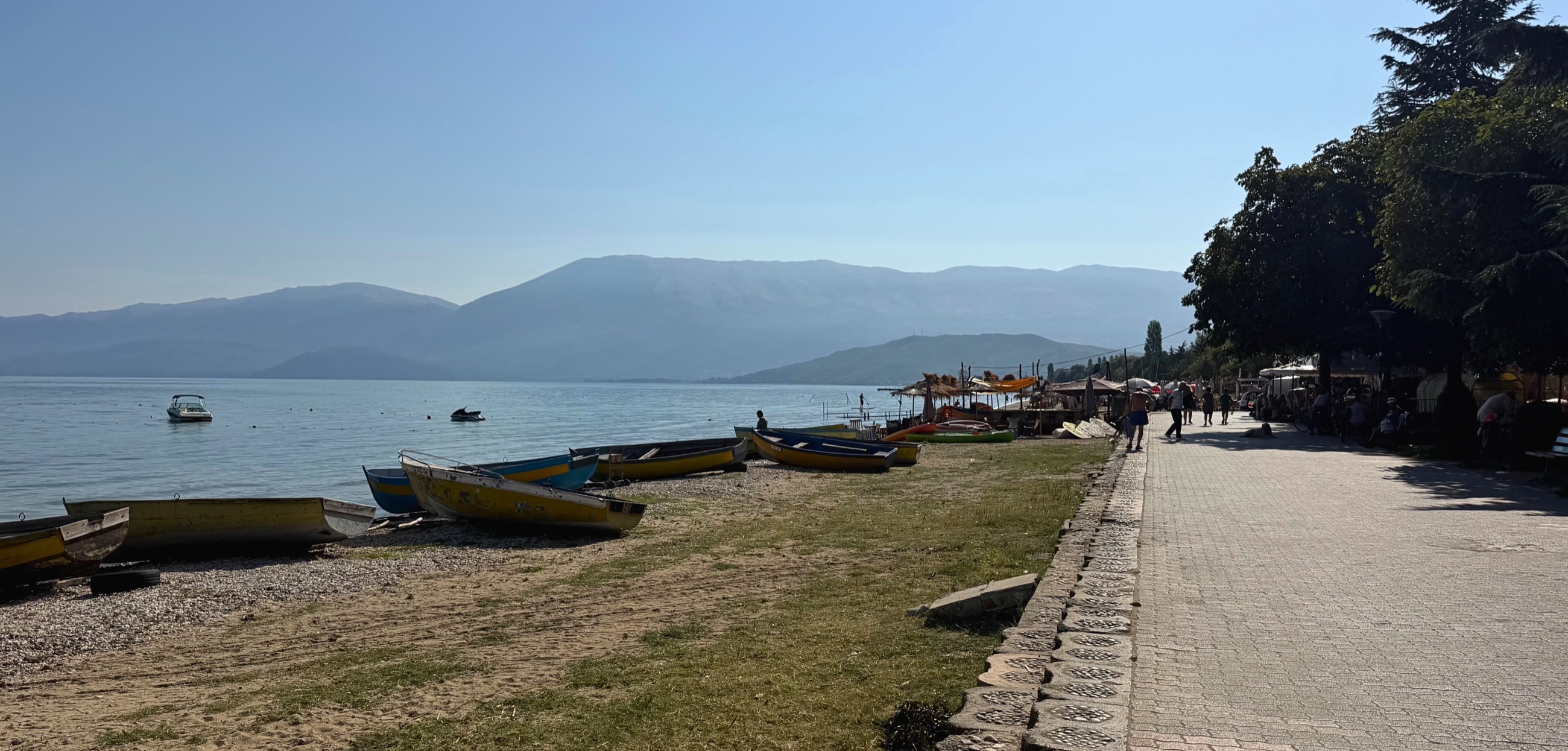 Boats along the waterfront promenade in Pogradec.
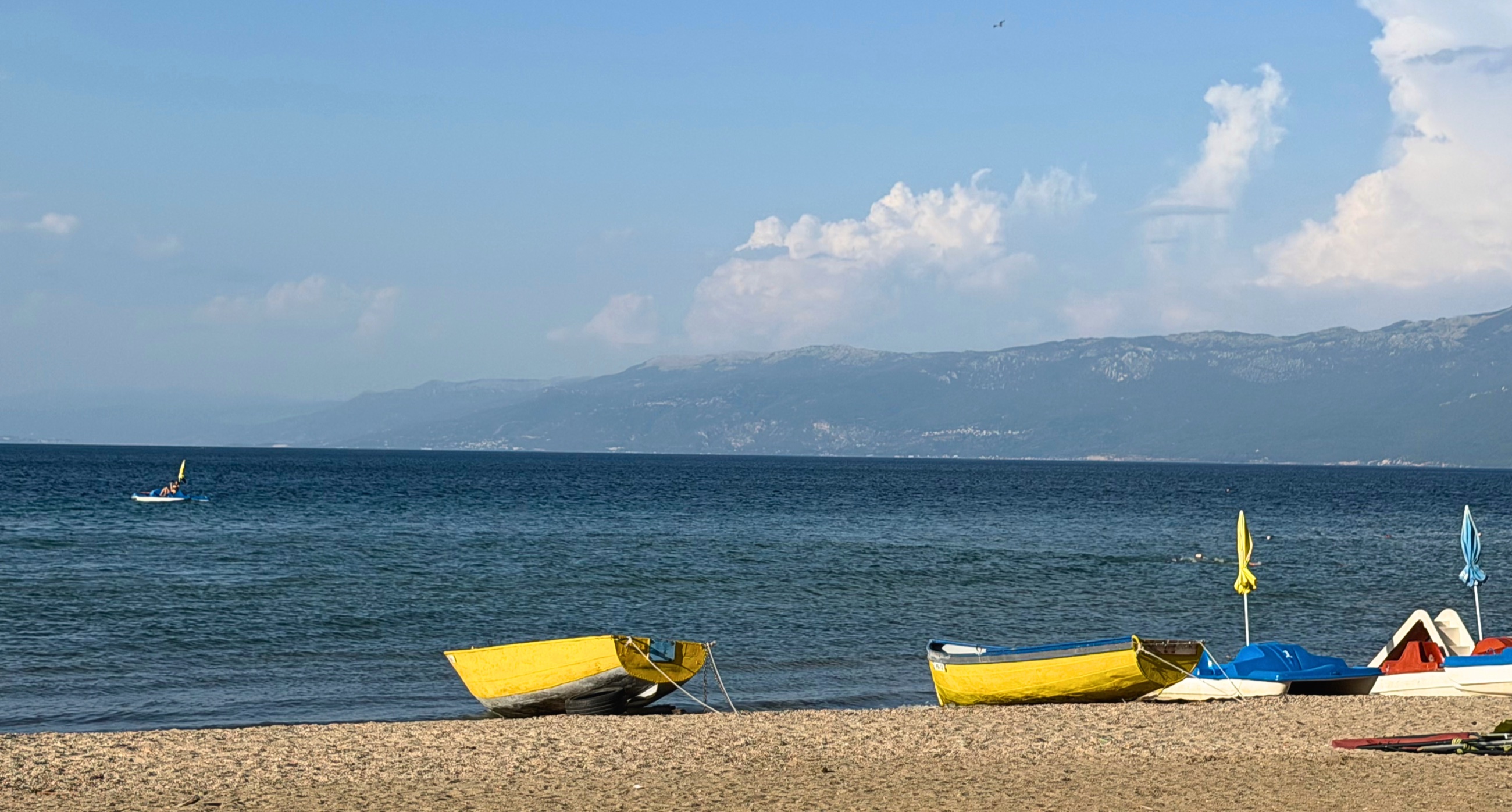 Bright summer boats along the Albanian shore of Lake Ohrid.
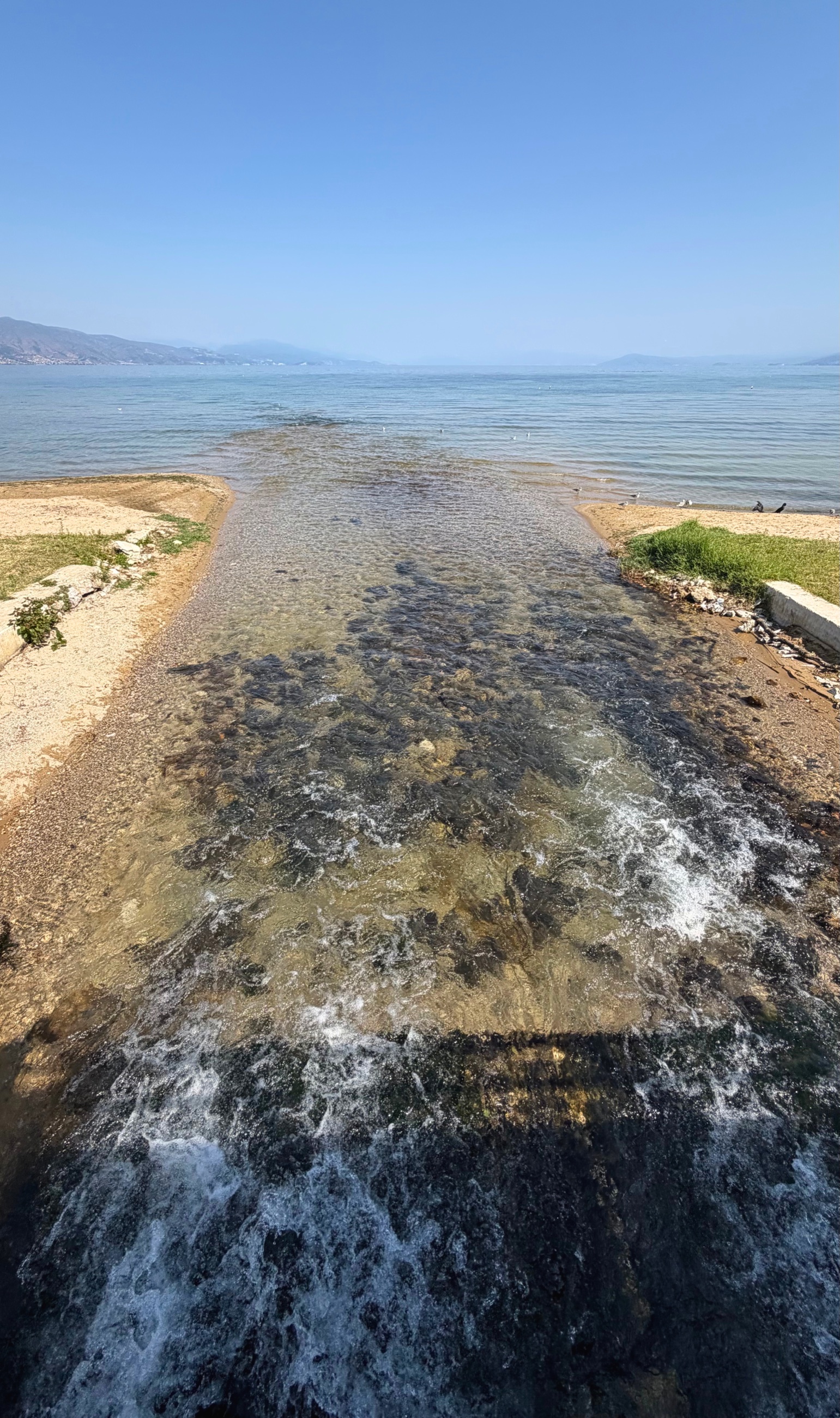 Water from the Drilon springs flows into Lake Ohrid through channels shaded by trees.
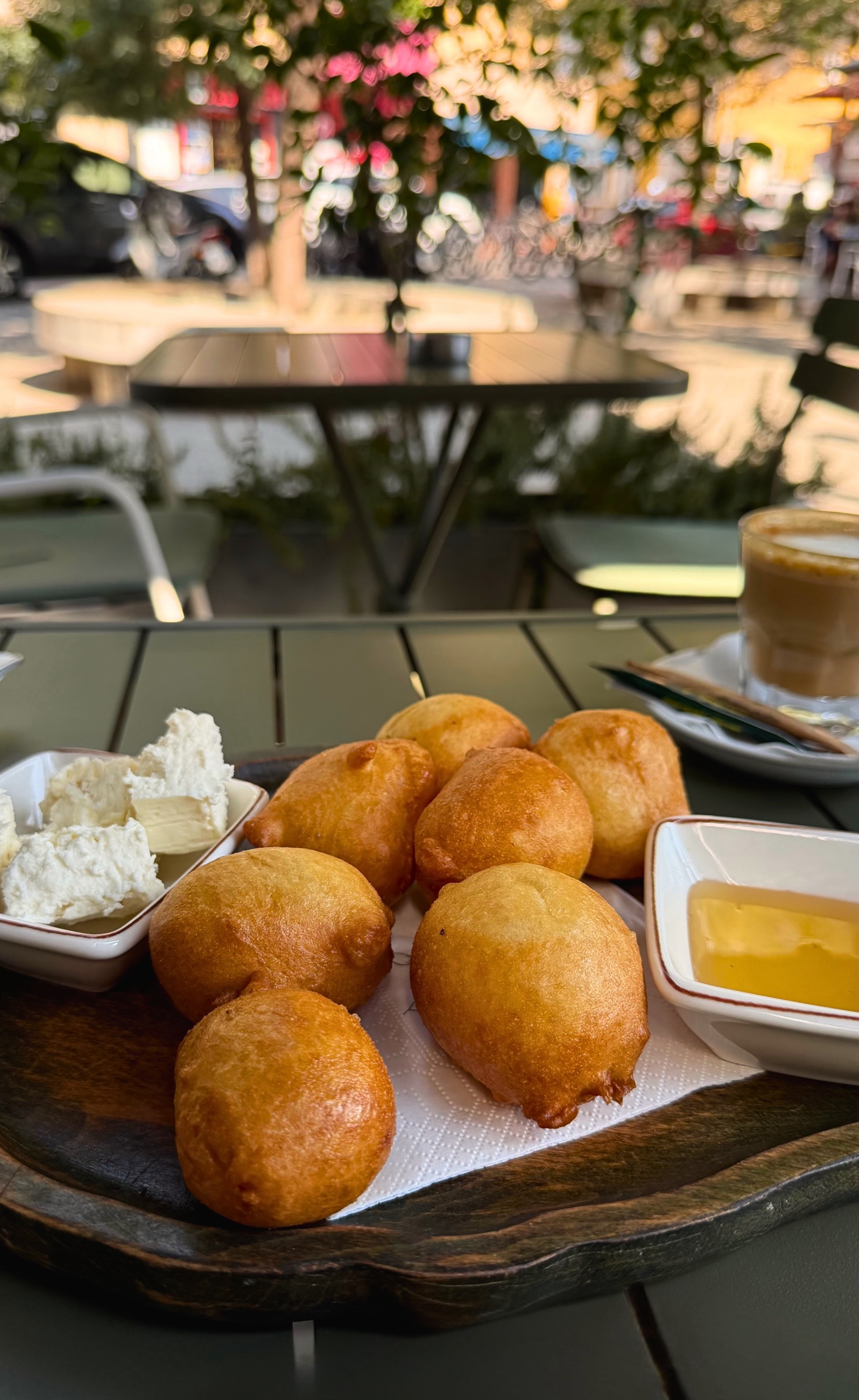 Petulla with cheese and honey in Tirana.
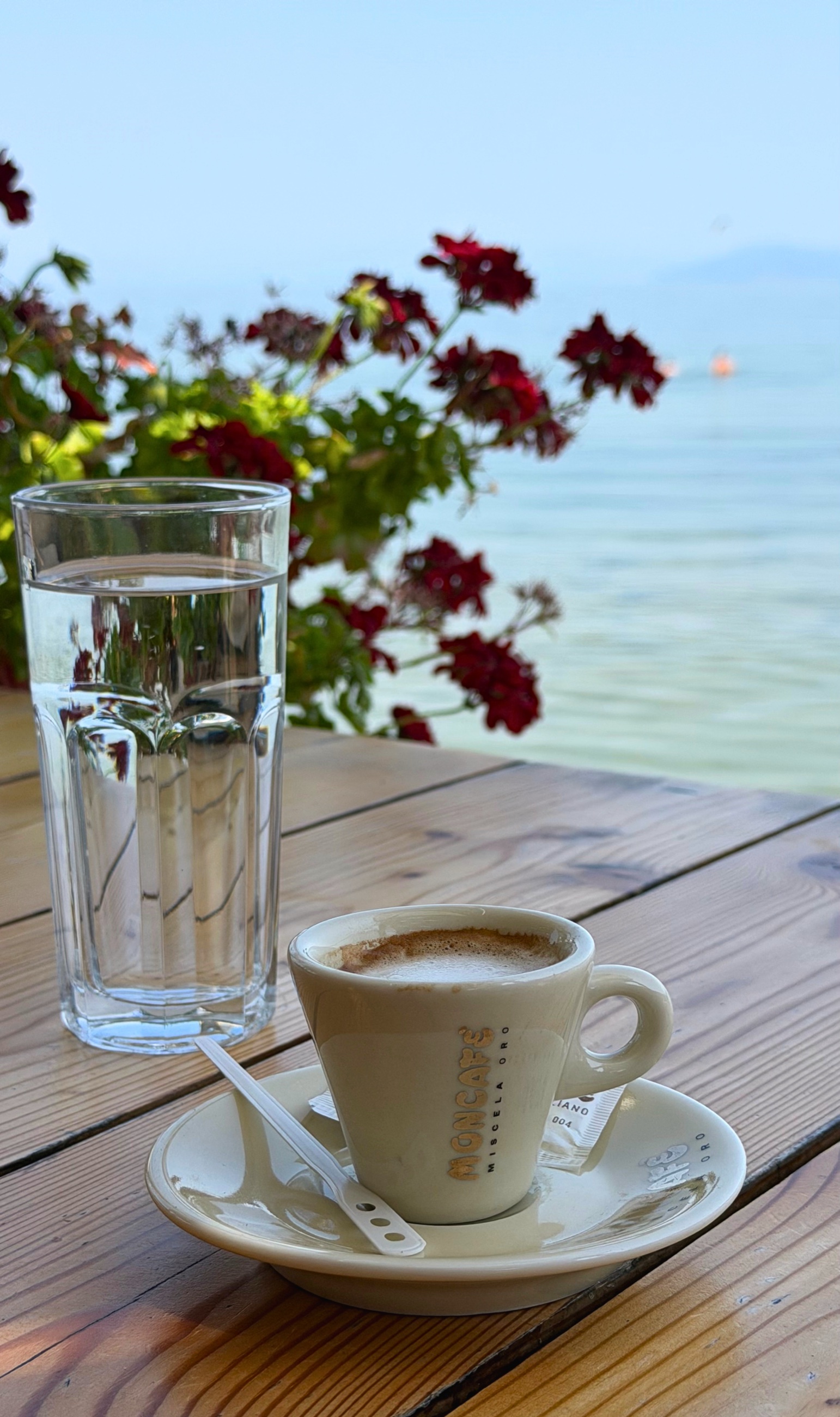 A lakeside macchiato in Tushemisht before the walk back toward Pogradec.
🎯 Next Week Preview
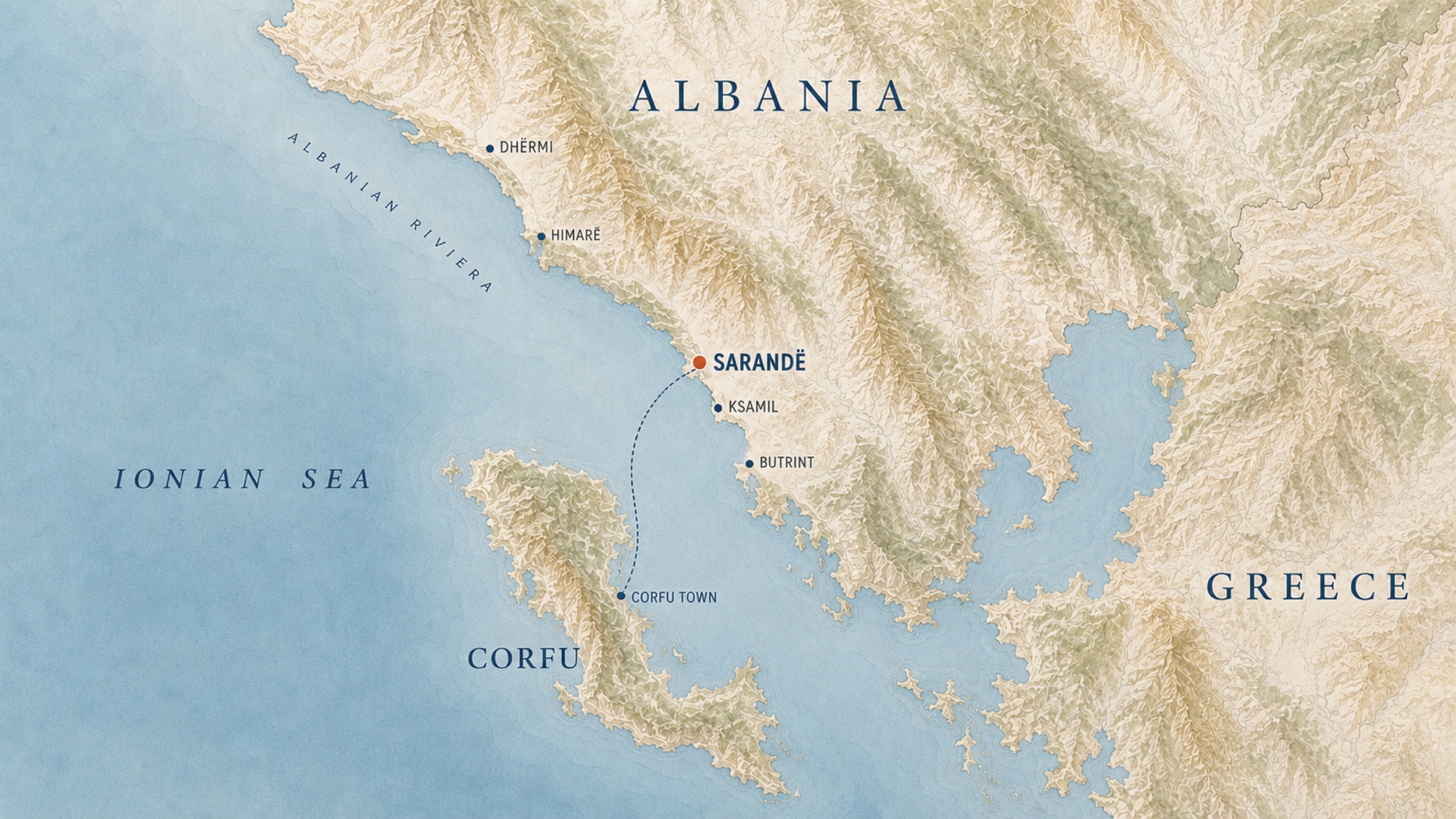 Sarandë on Albania’s southern Ionian coast, directly across from Corfu near the Greek border.
We have reached our final days in Tirana. After more than a month in the capital, there is little urge to manufacture a grand finale. We plan to stay close to home, keep our gym and coffee routines intact, and spend our final weekend low-key, most likely with a pool day before packing for the move south.
On September 1, we leave for Sarandë and a month on the Albanian Riviera. Our daughter will return to Albania and meet us in Tirana so we can make the journey south together, with several days in Sarandë and Corfu to follow.
The next dispatch will come from the coast. It will also give us a chance to look back on Tirana as a completed stay, share our first impressions of Sarandë, and explain more about where this journey is heading next. After several months of changing plans and moving pieces, the rest of the year is beginning to come into clearer focus.
💌 Personal Connection
Monday reset itself the usual way. Gym. Macchiato. Groceries. A meal at home. Work.
After a weekend away, we slipped almost immediately back into the life we had built in Tirana.
One thing was missing.
Our daughter’s visit ended this week, and after the hikes, meals, long conversations, buses, beaches, coffee stops, and extended days together, it was time for another goodbye.
Distance changes the arithmetic of family time. When everyone lives in different places, being together requires planning, tickets, schedules, and a willingness to cross considerable distances. The result is that everyday time together becomes unusually valuable.
That was what made this visit special. The Albanian Alps were memorable. Lake Ohrid was beautiful. We shared meals and explored places we will remember for years.
But there were also grocery runs, coffee stops, walks through Tirana, and afternoons when everyone simply went about the day. Those in-between times together are part of what we will miss.
Fortunately, this goodbye is a short one. She will be back in Albania next month, this time with friends, and we will meet her again for a few more days in Sarandë and Corfu.
For now, we are grateful for the time we had together, and for one more week in a city that we have thoroughly enjoyed.
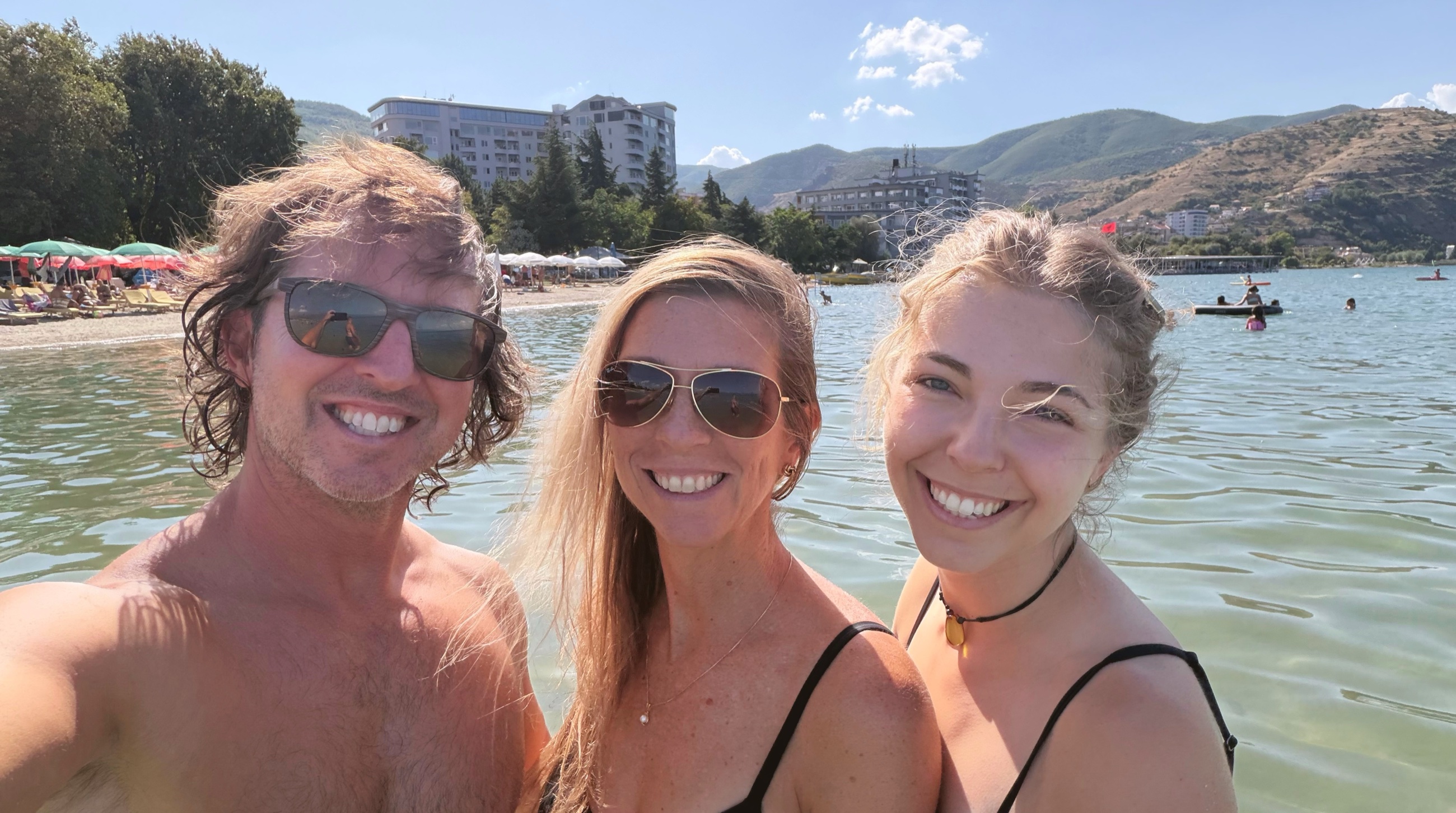 Good times together on Lake Ohrid.
Until next week,
S&S
Some Great Place · Living Local in a Global World · somegreatplace.com