📍 This Week in Venice
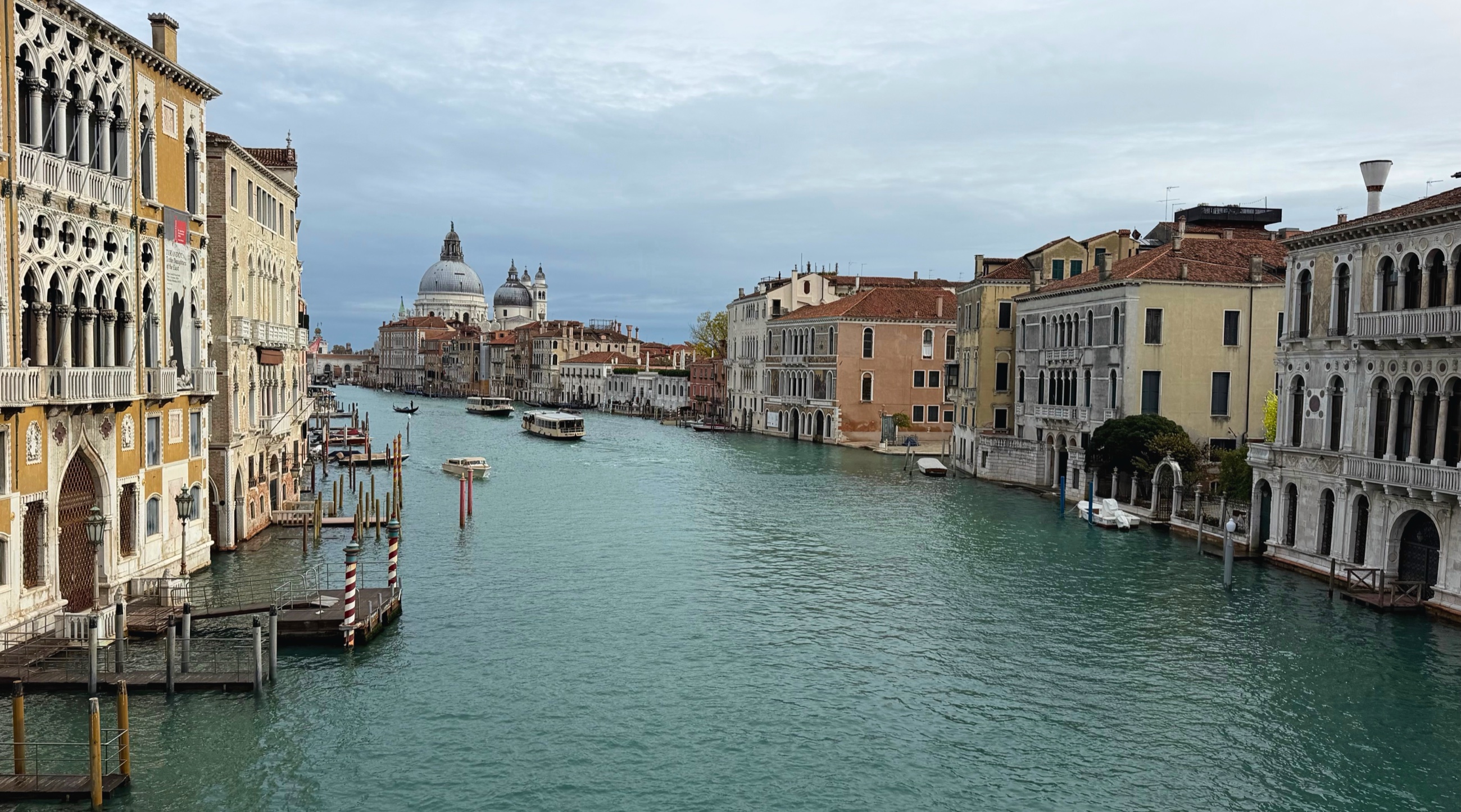 The Grand Canal from the Accademia Bridge, looking toward the domes of Santa Maria della Salute.
For months, Venice kept turning up before we reached it. La Serenissima, “the Most Serene,” as the republic styled itself, left its walls and its name in port after port, from Split and Kotor down the Adriatic to Corfu, and as far as Istanbul. This week, we arrived at the city itself.
The occasion was Stephanie’s birthday: three days and two nights, a short vacation inside the longer journey, before settling into our next base in Bologna.
Getting there took some rearranging. We flew from Belgrade to Bologna and spent one night in a hotel near the station, where we repacked into one small backpack each. The next morning we walked our luggage ten minutes to The Social Hub, our home for the coming weeks, which holds luggage free of charge for guests with an upcoming stay. That spared us paying for two rooms at once; we checked in when we came back. Bologna Centrale was five minutes farther. A high-speed train delivered us to Venezia Santa Lucia about 90 minutes later.
The station steps lead straight down to the Grand Canal. Boats moved where buses would ordinarily be. Across the water stood a domed church and a row of old facades lining the canal. No photograph can convey how much of it there is.
The layout takes a moment to absorb. Venice stands on 118 small islands in a shallow lagoon, tied to the mainland by a single causeway that carries the road and the railway. The Grand Canal winds through the middle in a reverse S about two and a half miles long. Roughly 150 smaller canals curve between the islands, crossed by more than 400 bridges, most of them stepped stone arches only a few paces long. Cars stop at the edge of the city. Past that point, everything moves on foot or by boat.
Our first day was sunny and crisp, about 45°F, and far busier than we expected for mid-November. If this is the off-season, peak season is difficult to picture.
The crowds have a counterpart. Fewer than 48,000 people now live in the historic center, down from about 174,000 in the early 1950s, while visitors arrive by the millions. On peak days from April through July, the city charges day-trippers an access fee of €5 to €10 ($6 to $11). It does not apply in November, and overnight guests are exempt.
Carrying only backpacks, we skipped the water bus and walked to the hotel. The route ran through lanes often too narrow for the two of us to walk side by side, over small bridges, across the Grand Canal, and into squares where the city briefly opened around us. We stopped for pizza along the way, then checked in at the Rosa Salva Hotel in San Marco, a few blocks from the piazza.
We dropped the bags and went straight back out to St. Mark’s Square, the basilica, the Doge’s Palace, and the Bridge of Sighs. Up close, the famous places have approaches, neighboring streets, and distances between them.
We walked six miles that first day and seven the next. Without cars, those miles felt different. There were no crossings to wait at and no traffic to listen for. The interruptions were steps, water, crowds, and the recurring temptation to stop at the top of a bridge.
🎨 Cultural Deep Dive
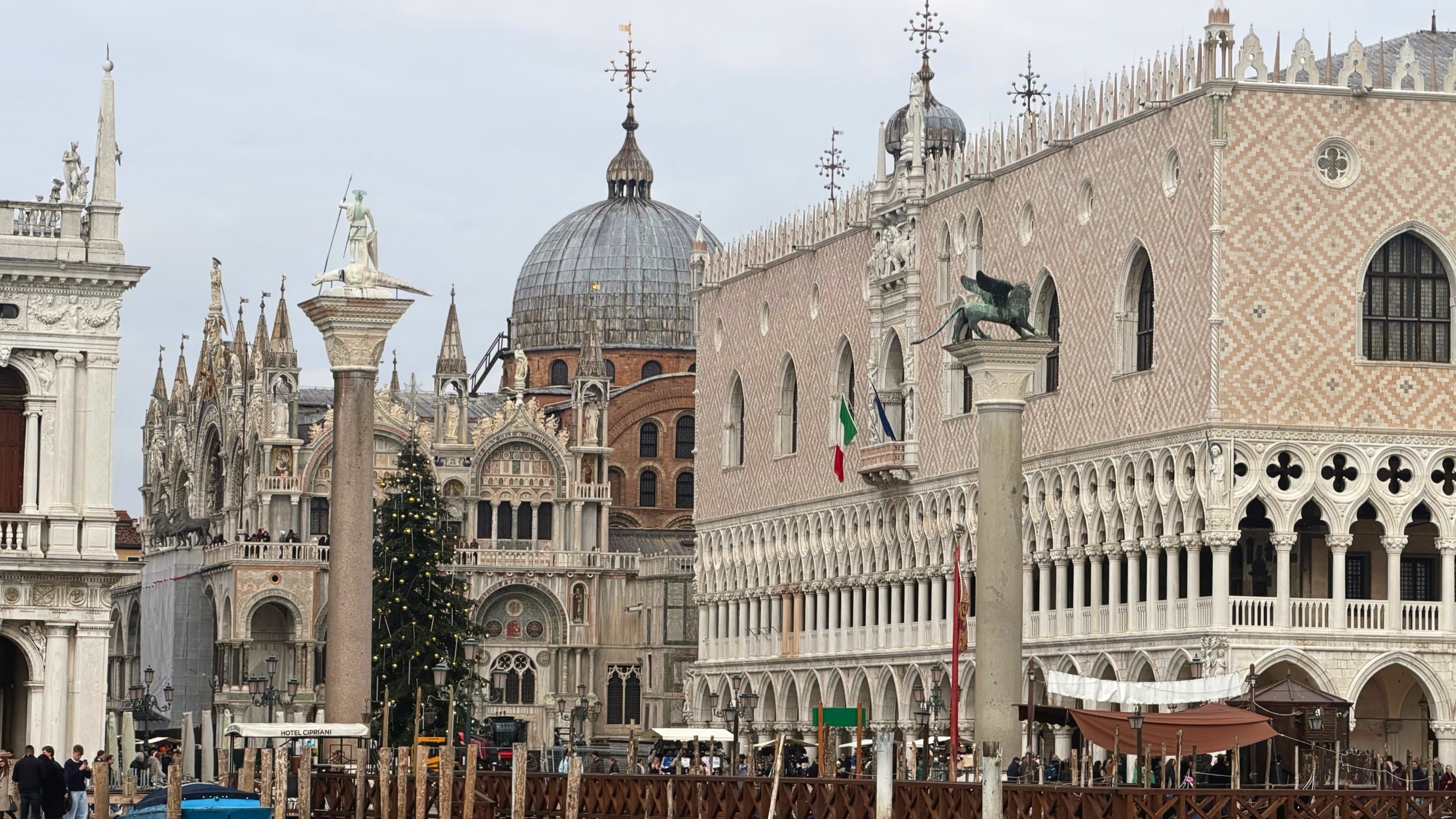 The Doge’s Palace and St. Mark’s Basilica, with Venice’s winged lion overlooking the waterfront.
A republic facing the sea
Venice’s setting could occupy a visit on its own. The city makes more sense, though, once you remember that the water around it was a road. For centuries it carried Venetian ships down the Adriatic and into the eastern Mediterranean, and it carried the profits back.
The city began as a refuge. As Roman authority collapsed on the mainland, people fled into the marshy islands of the lagoon and built there on wooden piles driven into the mud. In 828, Venetian merchants brought home from Alexandria what they held to be the relics of Saint Mark. The evangelist became the city’s patron, and his winged lion became the emblem of the state.
The palaces along the Grand Canal were the homes and warehouses of merchant families. The monumental buildings around San Marco housed the state those families ran. For roughly eleven centuries, by the traditional count from 697 to 1797, that state was led by a doge, an elected head who served for life. There were 120 of them.
The title suggests a monarch, but the office moved steadily in the other direction. Councils, oaths, and the merchant aristocracy hemmed it in until the doge’s decisions, finances, and even his correspondence were supervised. The safeguards protected an aristocratic order, and “republic” here should not be mistaken for representative democracy. Still, the system held until 1797.
We walked around the Doge’s Palace without going inside. Its open arcades and patterned pink-and-white upper walls give an unexpectedly light appearance to a building that held the councils, courts, and prisons of a formidable state. Beside it, St. Mark’s served for centuries as the doge’s own chapel and the church of the Venetian state. It became the city’s cathedral only in 1807, after the republic was gone. Palace and basilica stand shoulder to shoulder because, in Venice, they answered to the same authority.
Behind the palace, the Bridge of Sighs crosses a narrow canal to the former prisons. We photographed it from both sides. The enclosed white stone passage is handsome, but its purpose was judicial: it connected the courtrooms to the cells. The name came later, from the sighs prisoners were imagined to give at their last glimpse of the lagoon.
The republic we kept meeting
Venice ruled a chain of ports more than a territory, strung down the eastern Adriatic and into the Greek seas to protect the route to Constantinople and the markets beyond. Venetians called it the Stato da Mar, the State of the Sea. Without planning to, we have spent much of this year inside it.
Split belonged to Venice for nearly four centuries, from 1420 until the republic fell. Dubrovnik spent a century and a half under Venetian rule before breaking away to become a merchant republic of its own and a persistent rival. In Kotor, the walls that climb the mountain behind the old town were built up under Venice, and UNESCO lists them among the republic’s great works of defense. Farther down the Montenegrin coast, Bar and Ulcinj were Venetian ports until the Ottomans took both in 1571.
In Albania, Venice held Shkodër and its hilltop castle of Rozafa for most of a century, until an Ottoman siege forced the city’s surrender in 1479. Across the channel from Sarandë, Corfu anchored the whole system. Venice acquired the island in 1386 and kept it for four centuries, rebuilding the fortresses that withstood repeated Ottoman sieges. Butrint, on the mainland opposite, was held as Corfu’s outpost, and a Venetian tower and fortress still stand among its ruins.
The reach extended into the Aegean. Thessaloniki turned to Venice for protection in 1423 and stayed Venetian for seven years, until the Ottomans took the city. At Sremski Karlovci, north of Belgrade, Venice was among the powers that signed the Treaty of Karlowitz in 1699, gaining the Peloponnese and more of the Dalmatian hinterland in its last major expansion.
Even Lisbon belongs to the story, as the place where Venice’s fortunes began to turn. When Vasco da Gama opened the sea route from Portugal to India in 1498, spices no longer had to pass through the eastern Mediterranean, and the trade that had made Venice rich began shifting to the Atlantic.
One city on our route felt Venice more sharply than any other.
The doge who went to Constantinople
The best-known doge is Enrico Dandolo, elected in 1192 when he was already very old and, by most accounts, blind or nearly so. He is the reason our time in Istanbul earlier this year came to mind.
In 1202, the knights of the Fourth Crusade arrived in Venice unable to pay for the fleet they had ordered. Dandolo offered terms. The crusaders first helped Venice take Zara, a rival port on the Adriatic that is today’s Zadar in Croatia. The expedition, launched to recover Jerusalem, then turned instead on Constantinople, the Eastern Orthodox capital of the Byzantine Empire. In April 1204, crusaders and Venetians sacked a Christian city, two and a half centuries before the Ottomans took it.
Venice came away with trade privileges, islands including Crete, and shiploads of plunder. The four bronze horses of St. Mark’s had stood at Constantinople’s Hippodrome; Dandolo sent them home, and they became emblems of the republic. Replicas now stand on the basilica’s facade, with the originals kept inside. Dandolo himself died in Constantinople in 1205 and was buried in Hagia Sophia.
Much of what draws the eye at San Marco came from somewhere else. Along with the horses, the dark red porphyry emperors at the basilica’s corner and many of its marble columns and relics were carried home from Constantinople. Venice displayed them openly, as trophies. The basilica was the church of the state, and its facade doubled as a record of what the state had won.
Decline, Napoleon, and after
Venice declined slowly. The Ottomans took its eastern possessions one at a time, Cyprus in 1571 and Crete in 1669, while Atlantic trade drew commerce away from the Mediterranean. By the eighteenth century, the republic was better known for Carnival, opera, and Canaletto’s views than for its fleet.
The end came quickly. In May 1797, with Napoleon’s army on the mainland shore, the Great Council voted itself out of existence and the last doge, Ludovico Manin, laid down his office. After more than a thousand years, the republic ended without a battle. Napoleon sent the bronze horses to Paris, where they stayed until 1815, and within months he traded Venice to Austria. Apart from a second French interval, the city remained under Habsburg rule until 1866, when it joined the new Kingdom of Italy.
The empire went, and the city it paid for stayed. Nearly everything we walked past this week was built before 1797.
Three churches, three chapters
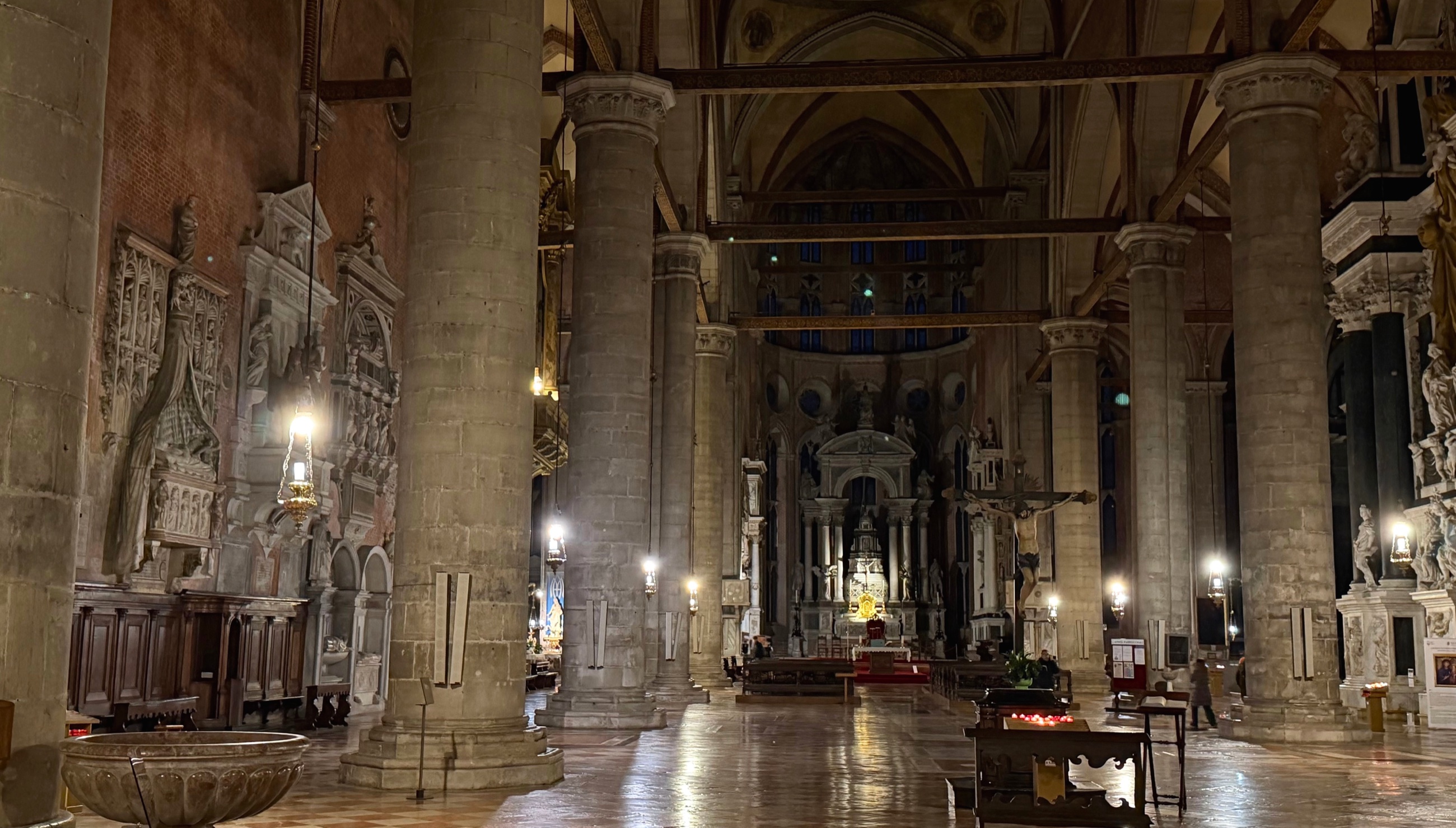 Inside the Basilica dei Santi Giovanni e Paolo, where massive Gothic columns frame the nave and monuments to Venice’s doges line the walls.
Several of our most absorbing stops were churches, each showing a different side of Venetian life.
At San Zaccaria, in Castello, we found Giovanni Bellini’s altarpiece of the Madonna and Child with four saints, signed and dated 1505. The figures are gathered in a painted apse whose columns continue the church’s real stone frame, so the scene appears to occupy a chapel opening off the aisle. At either edge, Bellini leaves a strip of sky and trees. The painting still hangs in the church it was made for, which is a rare way to see a work of this standing.
At the Basilica dei Santi Giovanni e Paolo, which Venetians compress to San Zanipolo, the subject shifts from devotion to public memory. The great brick Gothic church of the Dominicans is often called the pantheon of Venice. It holds funerary monuments to 25 doges, some of them rising most of the way up the walls. A doge’s term ended with his death, but his standing, and his family’s, continued in marble.
Farther across the city, we crossed the wooden Accademia Bridge and looked down the Grand Canal toward the dome of Santa Maria della Salute, then walked the rest of the way and went in.
The Salute exists because of a vow. During the plague of 1630, which killed close to a third of the city, the republic promised a church to the Virgin if the epidemic lifted. Baldassare Longhena won the commission as a young architect and worked on it for the rest of his life; the church was consecrated in 1687, five years after he died. Tradition holds that more than a million wooden piles were driven into the lagoon bed to carry it.
Inside, the plan is an octagon. Where a Gothic church pulls the eye down a long nave, the Salute gathers around its center beneath the dome, with six chapels opening off the ring. In the sacristy hang a dozen works by Titian, including the early St. Mark Enthroned and three Old Testament ceiling canvases, alongside Tintoretto’s wall-sized Marriage at Cana.
The vow is still kept. Every November 21, the Festa della Madonna della Salute brings Venetians to the basilica to light candles, traditionally by way of a temporary bridge laid across the Grand Canal. Our visit fell days before the feast, so we did not see it. For Venetians, the dome in so many photographs is still the destination of an annual pilgrimage of thanks.
Sunday at St. Mark’s
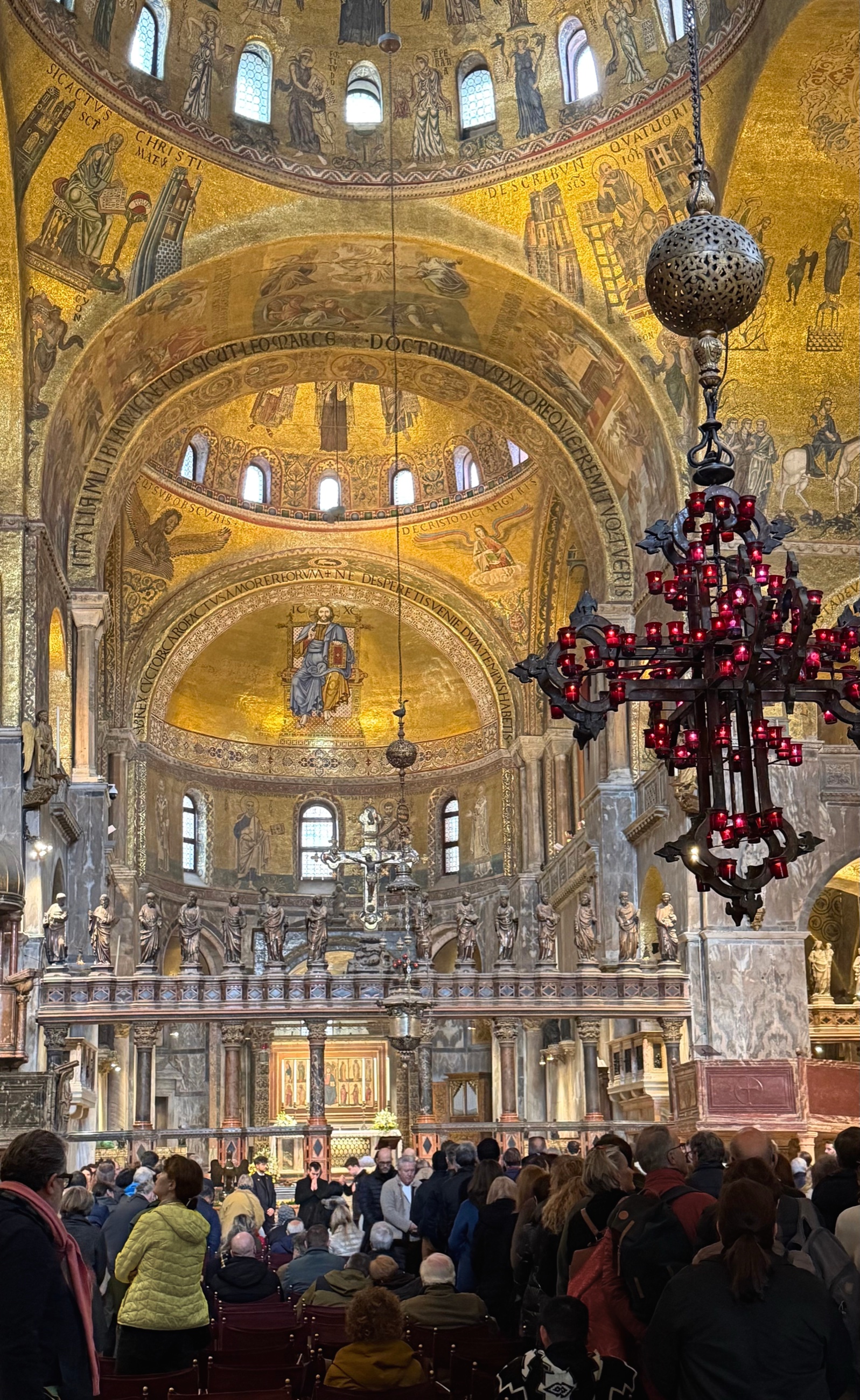 Sunday Mass at St. Mark’s Basilica, where choir and organ accompanied the liturgy beneath the gold mosaic domes.
On Sunday morning, we attended the solemn Mass at St. Mark’s Basilica.
The service began at ten, with the basilica’s choir and the pipe organ. Incense hung in the air. The liturgy moved between Italian and Latin, with chants and sung responses rising under the domes.
Above us were acres of gold-ground mosaic; beneath us, a patterned stone floor that has settled into gentle waves over the centuries. As a piece of craftsmanship, the interior is nearly too much to take in, and more so with music moving through it.
Most visits to the basilica follow a short, set route. For nearly an hour and a half we stood and sat within it. The congregation, the prayers, the incense, and the choir gave the vast interior a purpose that sightseeing could not have supplied, and the mosaics overhead and the music beneath them plainly belonged to the same act of worship. The domes, the gold, and the Greek-cross plan also recalled the Orthodox churches of the past several months, which is no accident. St. Mark’s was built on a Byzantine model.
It was one of the most memorable experiences of the trip.
🍽️ Local Flavor Discoveries
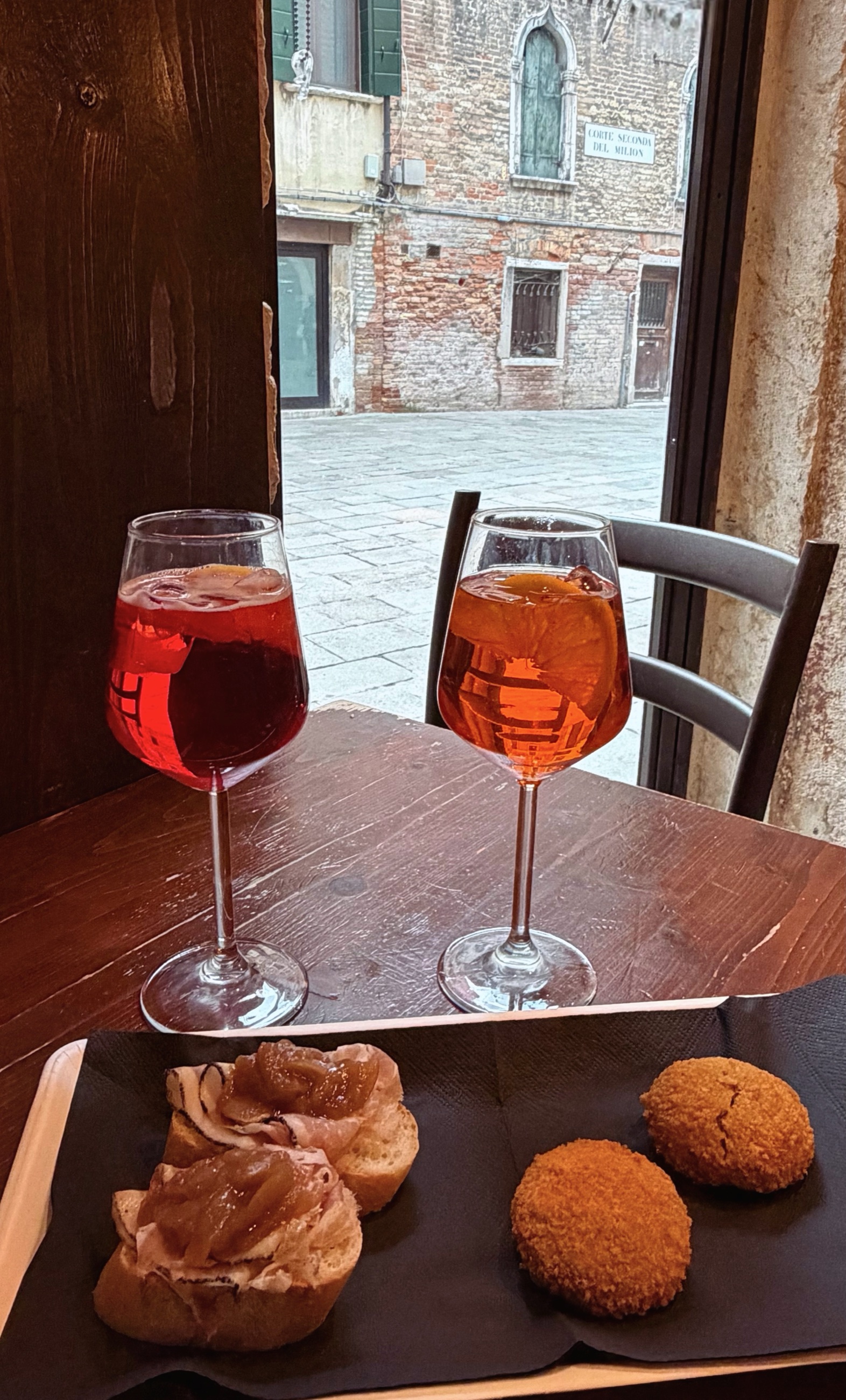 Spritzes and a few cicchetti at a small table in Cannaregio.
A small table in Cannaregio
Away from the monuments around San Marco, Cannaregio showed us a livelier, more residential Venice, a district of homes, side canals, and the small wine bars it is known for.
We settled into one of them for a spritz and cicchetti.
A bacaro is a Venetian wine bar, and cicchetti are the small savory bites served with a drink, usually displayed on the counter and ordered by pointing. Tapas is a fair comparison for scale, though the tradition is its own. They suit a walking day well: something small to eat, a glass, and a few minutes to watch the neighborhood go by.
The Venetian spritz comes in three classic versions, each built on prosecco and sparkling water with a different bitter: Aperol, Campari, or Select. Between the two of us, we have now tried all three. Select is our favorite.
Created in Venice in 1920, Select is ruby red, more herbal than Aperol and a little less bitter than Campari. Its spritz is traditionally finished with a large green olive. We had the Campari version on a later walk, at another small, cozy bar.
Venetian cooking leans heavily on the lagoon: cuttlefish, sardines, clams, and small soft-shell crabs. We have covered a good deal of Adriatic seafood in earlier dispatches, and it is not our first love, so on this trip we ordered from the other side of the menu. The Veneto mainland supplies plenty: duck, game, gnocchi, fresh pasta, prosciutto, and cheese.
One evening, a small restaurant produced wild boar rigatoni, ravioli with sage, house wine, and tiramisu. After a day of bridges and winding passages, a seat, a plate of pasta, and no further plans were all the evening needed.
A birthday dinner
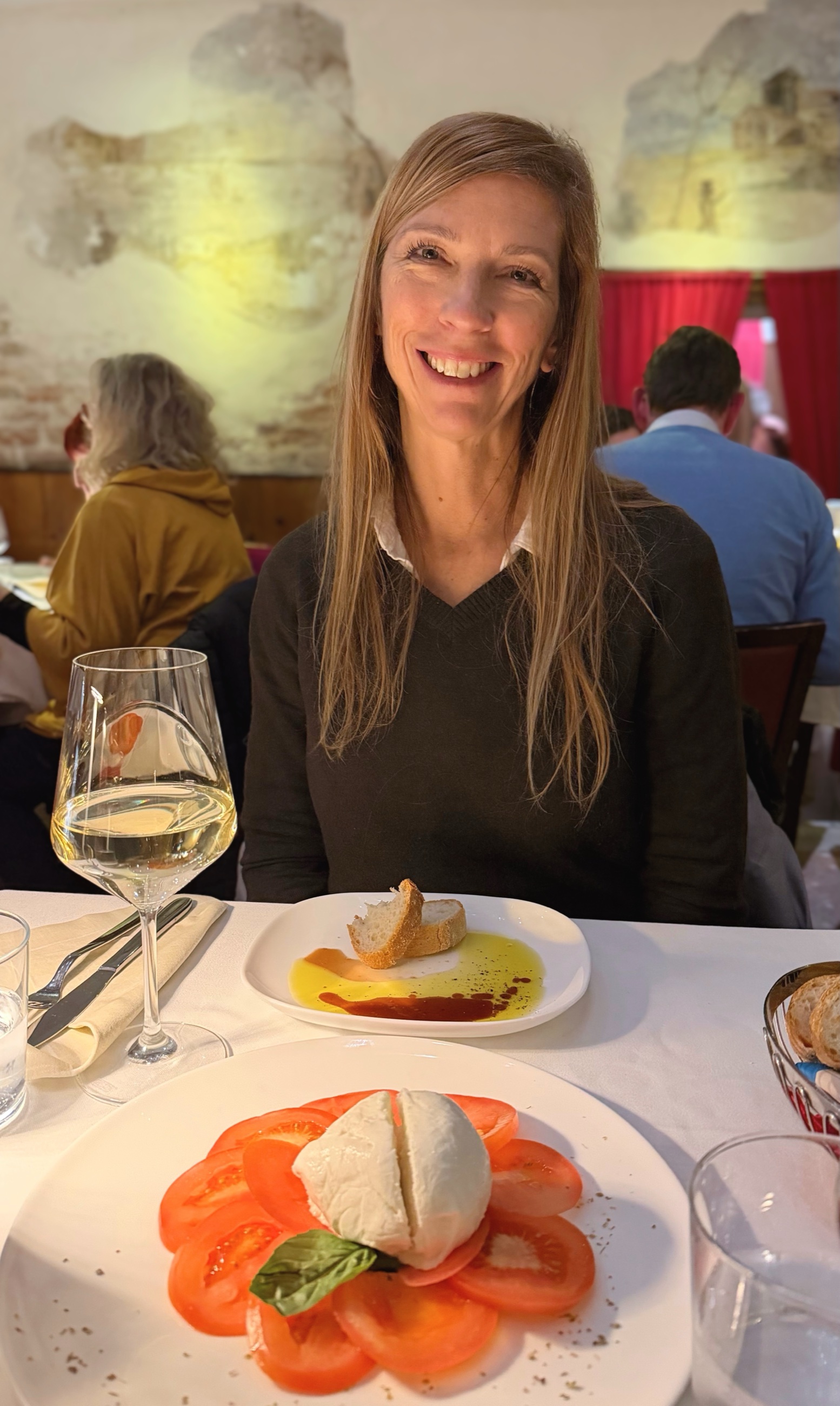 A birthday evening in Venice, celebrating Stephanie and life’s adventures.
For Stephanie’s birthday, we chose a restaurant in San Polo, across the Grand Canal from the hotel. We ordered a caprese salad, gnocchi with gorgonzola, and tagliatelle with duck ragù, with wine and a complimentary taste of limoncello to finish. A pistachio cannolo on the walk back to the hotel completed the celebration.
Coffee, two ways
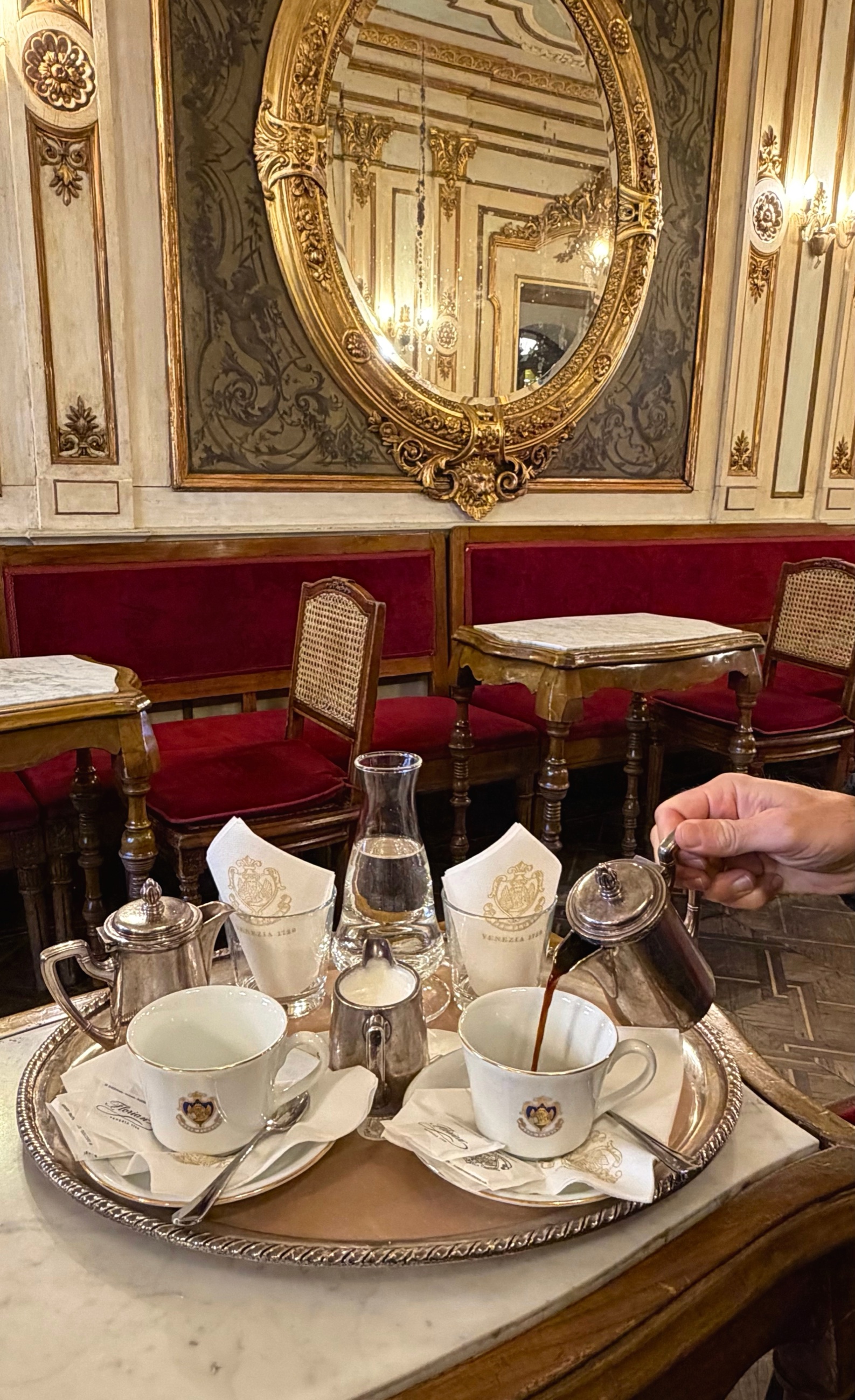 Coffee for two at Caffé Florian, served on silver beneath gilded mirrors in the coffeehouse that opened on Piazza San Marco in 1720.
At Pasticceria Rosa Salva, the pastry shop attached to our hotel, breakfast was a chocolate croissant, a pistachio croissant, and two macchiatos, an easy start before heading back into the lanes.
Caffé Florian was the opposite experience by design. Opened under the arcades of Piazza San Marco on December 29, 1720, it is the oldest coffeehouse in continuous operation in Italy. It has outlasted the republic, Napoleon, and Austrian rule, and its guest list over three centuries includes Casanova, Lord Byron, and Charles Dickens. The rooms are ornate, the porcelain carries the house name, and coffee arrives on a silver tray.
We ordered a pot of black coffee with a small pitcher of steamed milk. Florian charges several times what a neighborhood bar does. What that buys is an unhurried seat in one of the most storied rooms in Europe, and for a birthday weekend we were glad to take it once.
💰 Nomad Real Talk
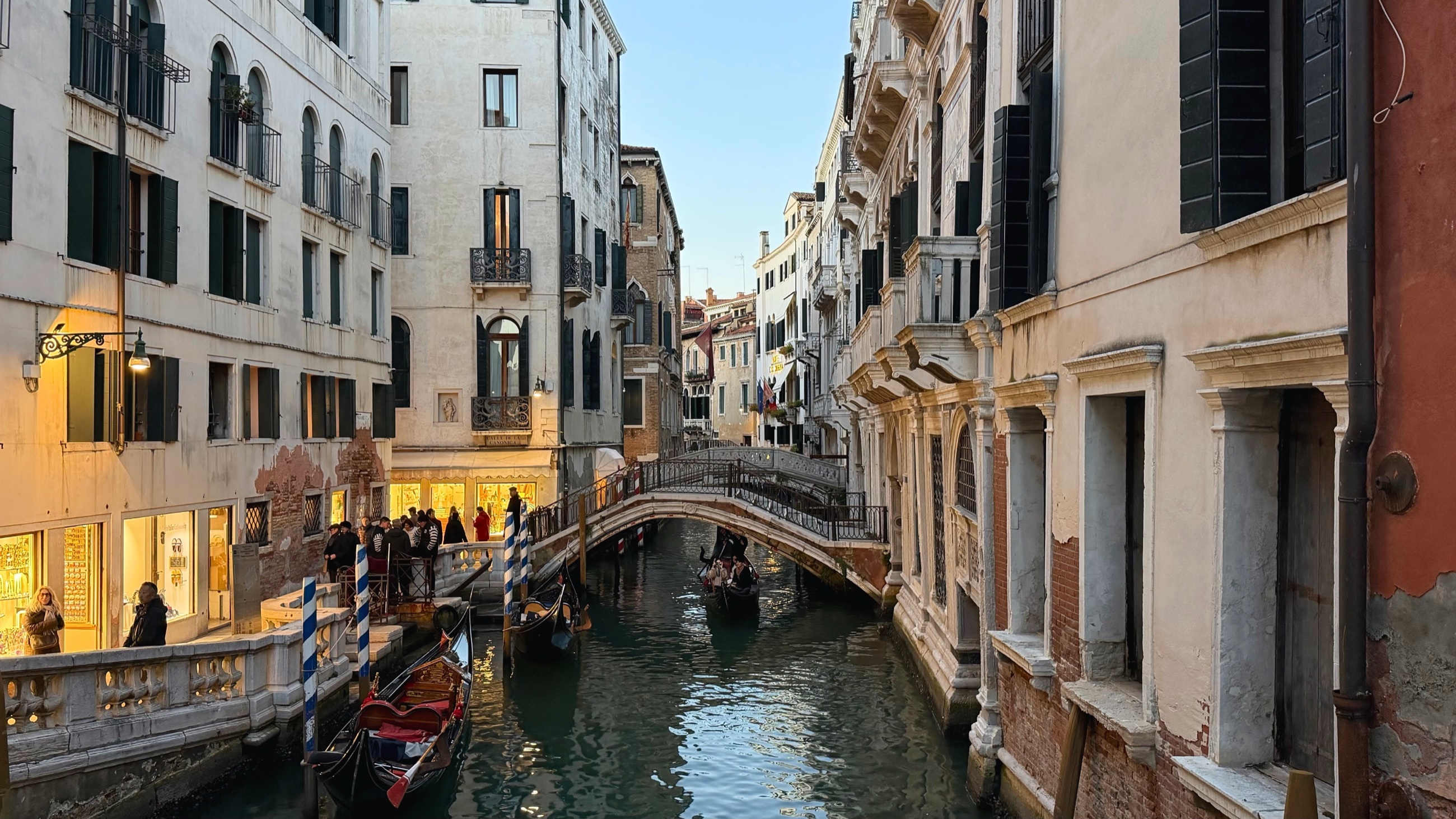 Gondolas, bridges, and glowing shopfronts along a canal near evening.
A vacation inside the journey
Living abroad for months at a time still means running a household. There is laundry, grocery shopping, computer work, and the recurring task of working out how each new place functions. Venice was a break from all of it. We booked a hotel in the historic center, put walking ahead of routine, and let the birthday set the meals and the pace.
Because the trip was a birthday exception to how we normally live, we are not itemizing it. Venice is expensive, and a short stay in the historic center concentrates the cost. A few general observations will be more useful than our receipts.
The city charges most for its famous seats and for being carried across water, and far less for standing at a counter or walking. A spritz and a few cicchetti at a bacaro make an affordable light meal. House wine and a plate of pasta in a residential district cost well below a table near the piazza. Much of what we valued most was free: thirteen miles on foot among the palaces, bridges, and canals; the main church of the Salute; and a sung Mass under the mosaics of St. Mark’s.
We also chose what to leave out. We saw the Doge’s Palace from outside and photographed the Bovolo staircase without paying to climb it. We skipped the gondola. The city sets the fare per boat: €90 ($101) for 30 minutes by day and €110 ($123) after 7 p.m. It is a short pleasure ride, and we were content to watch them pass from the bridges. We got our boat ride on the way out instead: the full length of the Grand Canal for the price of a transit ticket.
Two decisions shaped the weekend more than any single expense. Staying a few blocks from the piazza meant we could return to the room, refresh, and go back out without planning a route each time. Leaving our luggage in Bologna mattered even more. Venice is a city of stepped bridges, and the walk from the station crosses a good many of them. With a small backpack each, that walk was a pleasure, and we could begin exploring the moment we arrived.
🏠 Behind the Nomad Curtain
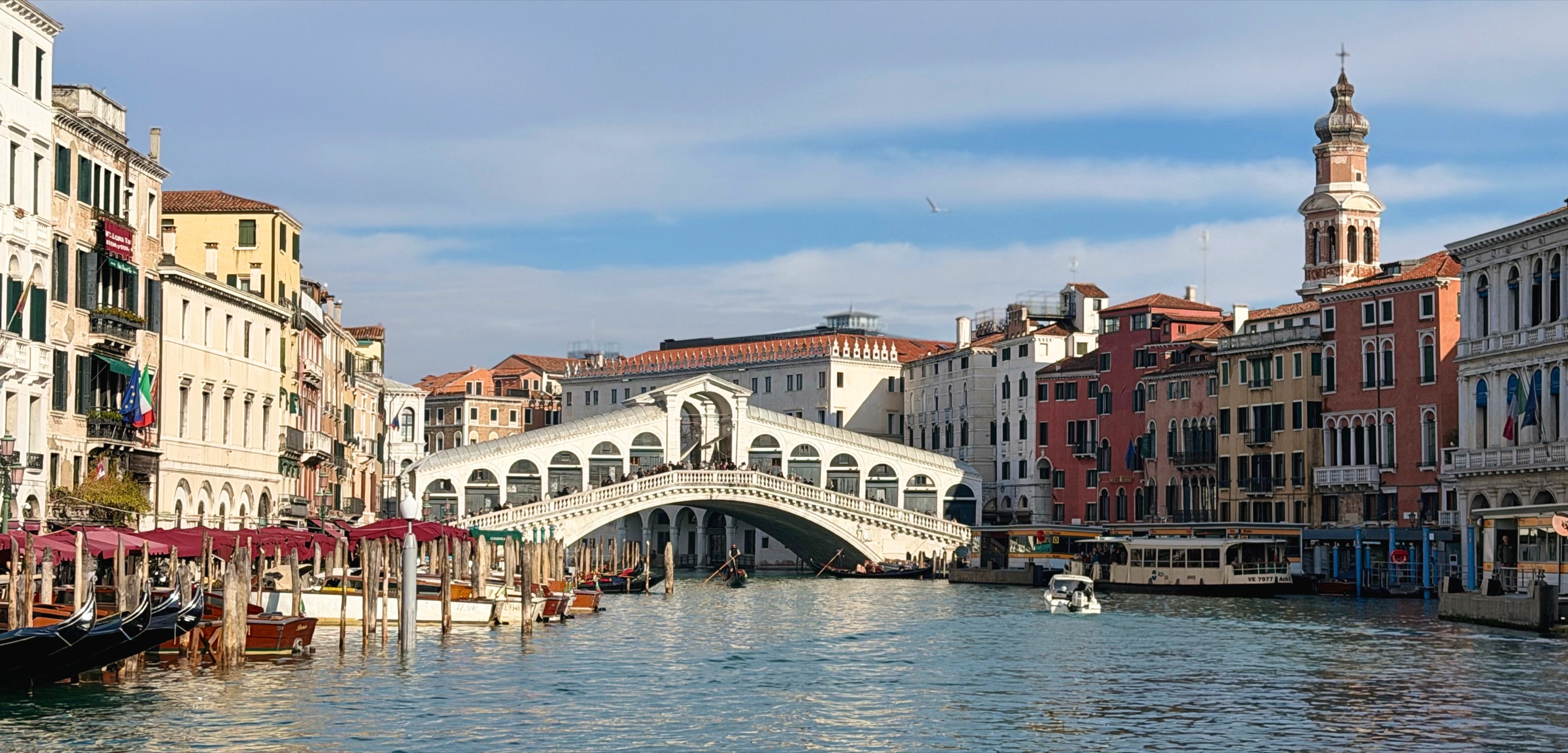 The Rialto Bridge across the Grand Canal, with gondolas moored along the bank.
Learning the city’s routes
Venice rewards walking, but it asks for patience with the map.
The historic center is divided into six districts called sestieri: Cannaregio, Castello, Dorsoduro, San Marco, San Polo, and Santa Croce. There is no grid and seldom a direct line between two points.
A destination that looks close can require a long detour. A lane ends at water. The bridge you need is farther along the canal. A passage opens into a square, and the way onward leaves from a corner you did not notice. We learned to allow more time than the distance suggested.
The Grand Canal is the larger obstacle. Only four bridges cross it along its entire length. We crossed at two of them: the stone Rialto, finished in 1591 and for nearly three centuries the only way across on foot, and the wooden Accademia.
Fields, wells, and high water
The squares help explain how the city worked. Venice has one piazza, San Marco. The rest are called campi, “fields,” because that is what they once were, and smaller ones are campielli. Each was the gathering place of its parish.
Most still have a carved stone wellhead at the center. These are easy to walk past, and they answer an obvious question: surrounded by salt water, what did Venetians drink? Rain. The paving of a campo sloped toward drains, and the water filtered down through sand into a clay-lined cistern below, to be drawn up at the well. The neighborhood gathered above ground on top of its own water supply.
Water is also the subject at Libreria Acqua Alta, the bookshop in Castello where the stock sits in bathtubs, bins, and a full-sized gondola. The arrangement is much photographed, but it is practical in origin. Acqua alta is the seasonal high water that floods low parts of the city, and the tubs are there to keep the books above it.
The city’s main defense is now offshore. Since 2020, rows of mobile gates at the lagoon’s three inlets, a system known as MOSE, have been raised against the highest tides to close the lagoon off from the Adriatic. They were needed 30 times in the first two months of this year alone, and the city is already debating what comes next as the sea rises.
Near Campo Manin, we went looking for the Scala Contarini del Bovolo, an exterior spiral staircase of stacked arches wrapped around a tower. Bovolo is Venetian for snail. It stands in a small courtyard at the end of an alley, and we photographed it from below. Venice is capable of putting a major piece of architecture where you must make a deliberate effort to find it.
Glass shops were everywhere, and they point outward to the wider lagoon. In 1291, the republic ordered the city’s glass furnaces moved to the island of Murano, largely to keep fire away from a dense city. The craft has been identified with the island ever since. We did not get to Murano, but we did bring a little of it with us: a small hand-blown Christmas ornament, our one souvenir, sized for people who live out of backpacks.
Leaving by the Grand Canal
For the return to Santa Lucia, we took the public water bus.
The terms are worth sorting out. A vaporetto is a public water bus on fixed, numbered routes, run by the transit agency ACTV. A water taxi is a private motorboat at private prices. A gondola is a pleasure ride. For transportation, the vaporetto is the one that matters.
The ride from San Marco to the station took about 45 minutes and ran the whole length of the Grand Canal. We took the open-air seats at the very front of the boat, with nothing between us, or the camera, and the view. After two days of meeting the canal only at its bridges, we watched its palace fronts pass in a continuous row, from the water they were built to face. As sightseeing, it was the best value of the weekend.
A standard ticket costs €9.50 ($11) per person and is valid for 75 minutes. Buy it at a machine or ticket window, tap it on the validator at the dock before boarding, and check the direction of the boat, since several lines share the same stops.
At the station, we ate a quick bite on the steps above the water, had a last macchiato standing at a counter, and boarded the 2 p.m. train to Bologna.
📸 Photo Story
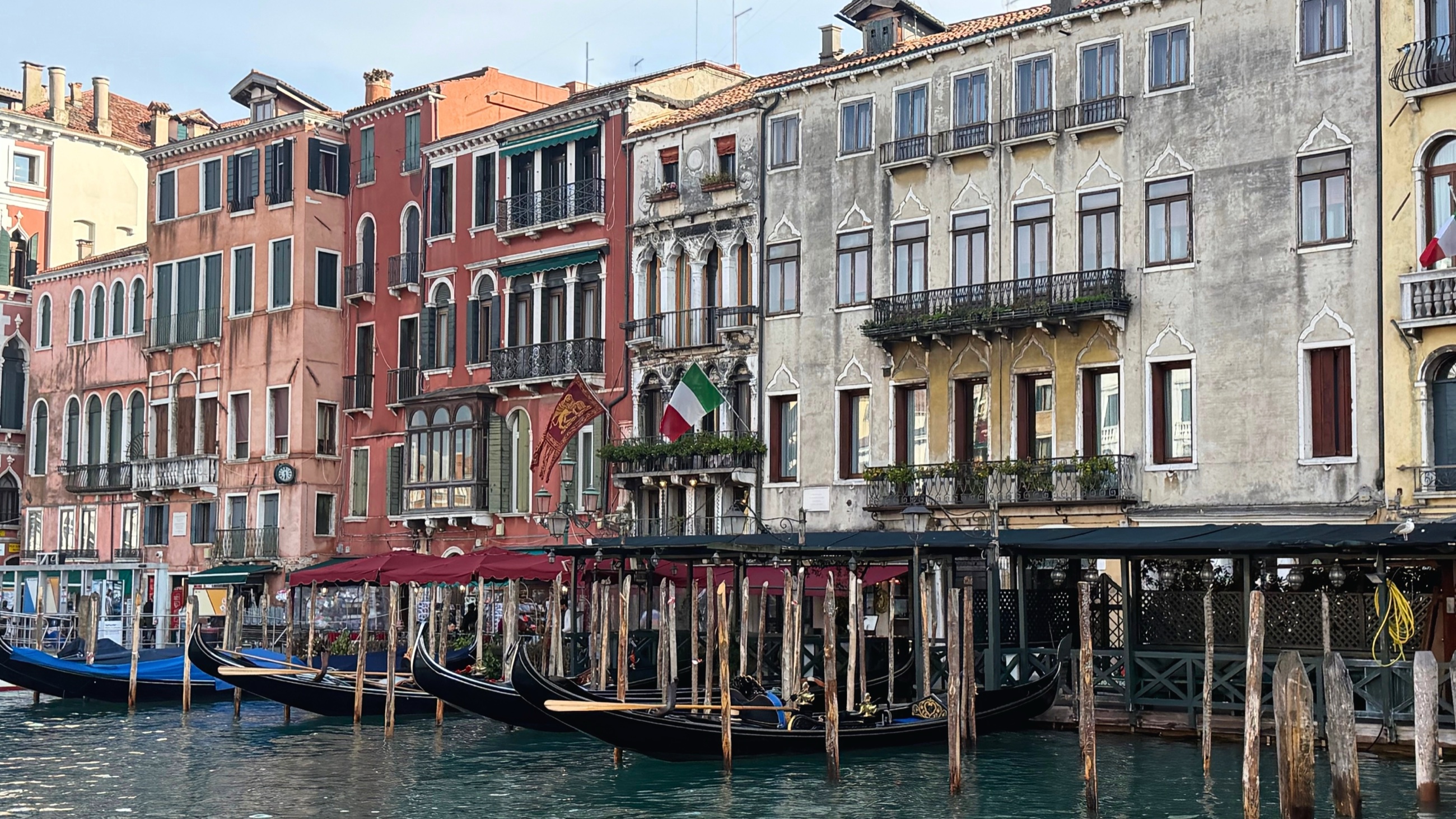 Along the Grand Canal, shuttered windows and wrought-iron balconies overlook a line of moored gondolas.
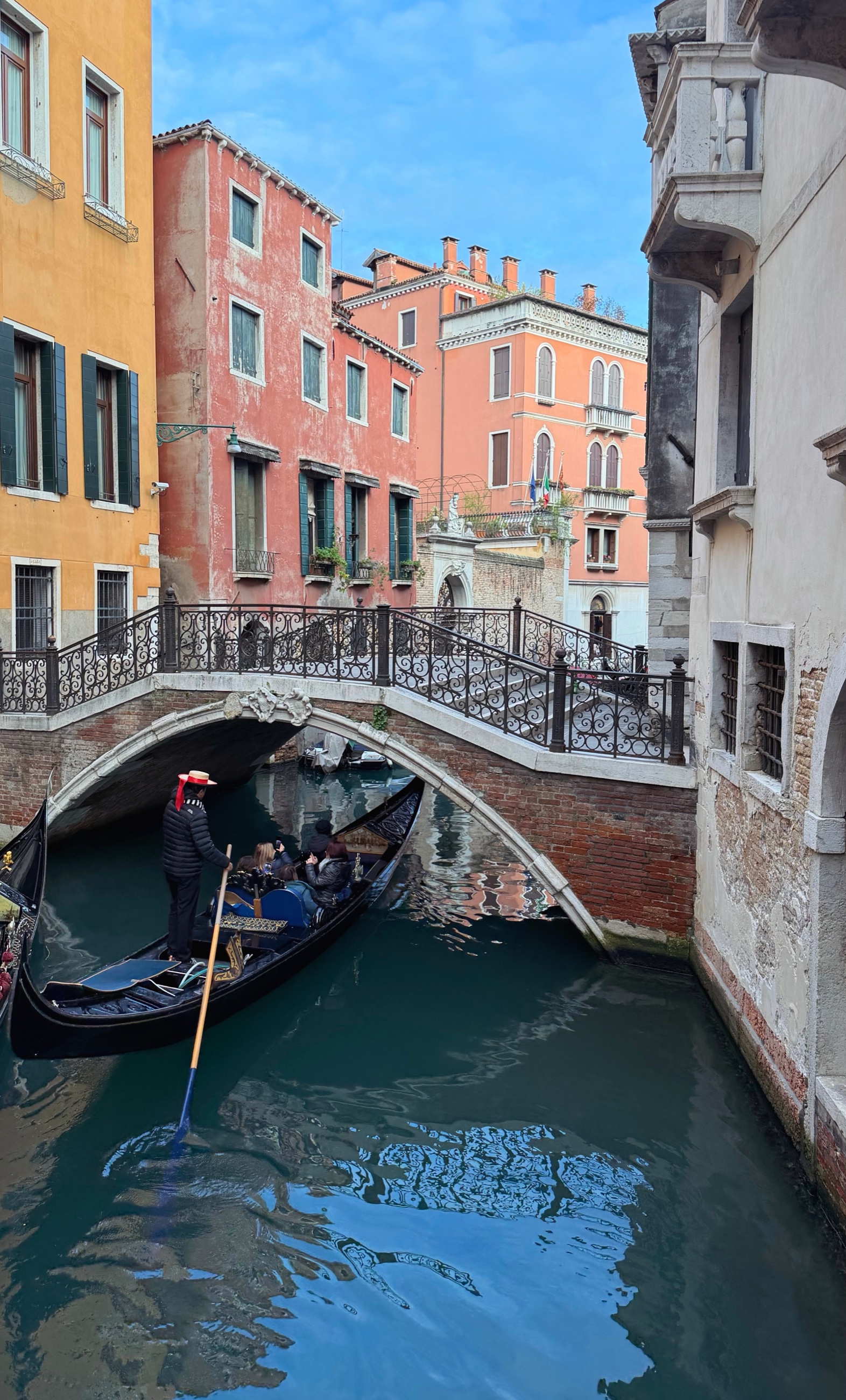 A gondolier steers beneath a low brick bridge, framed by the pink and ochre façades above.
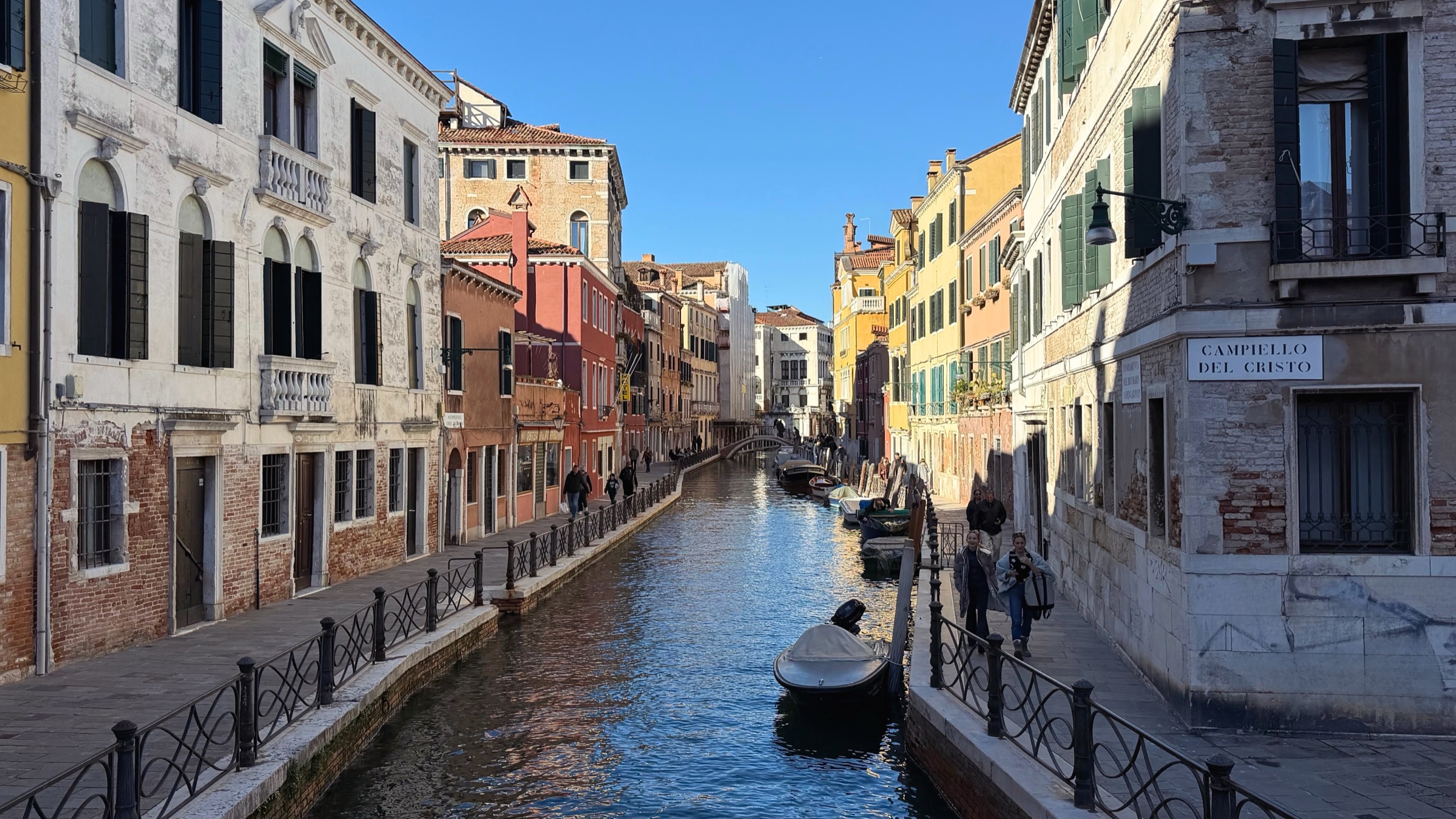 Walkways follow both banks of the canal beside Campiello del Cristo, linking doorways, moorings, and small bridges.
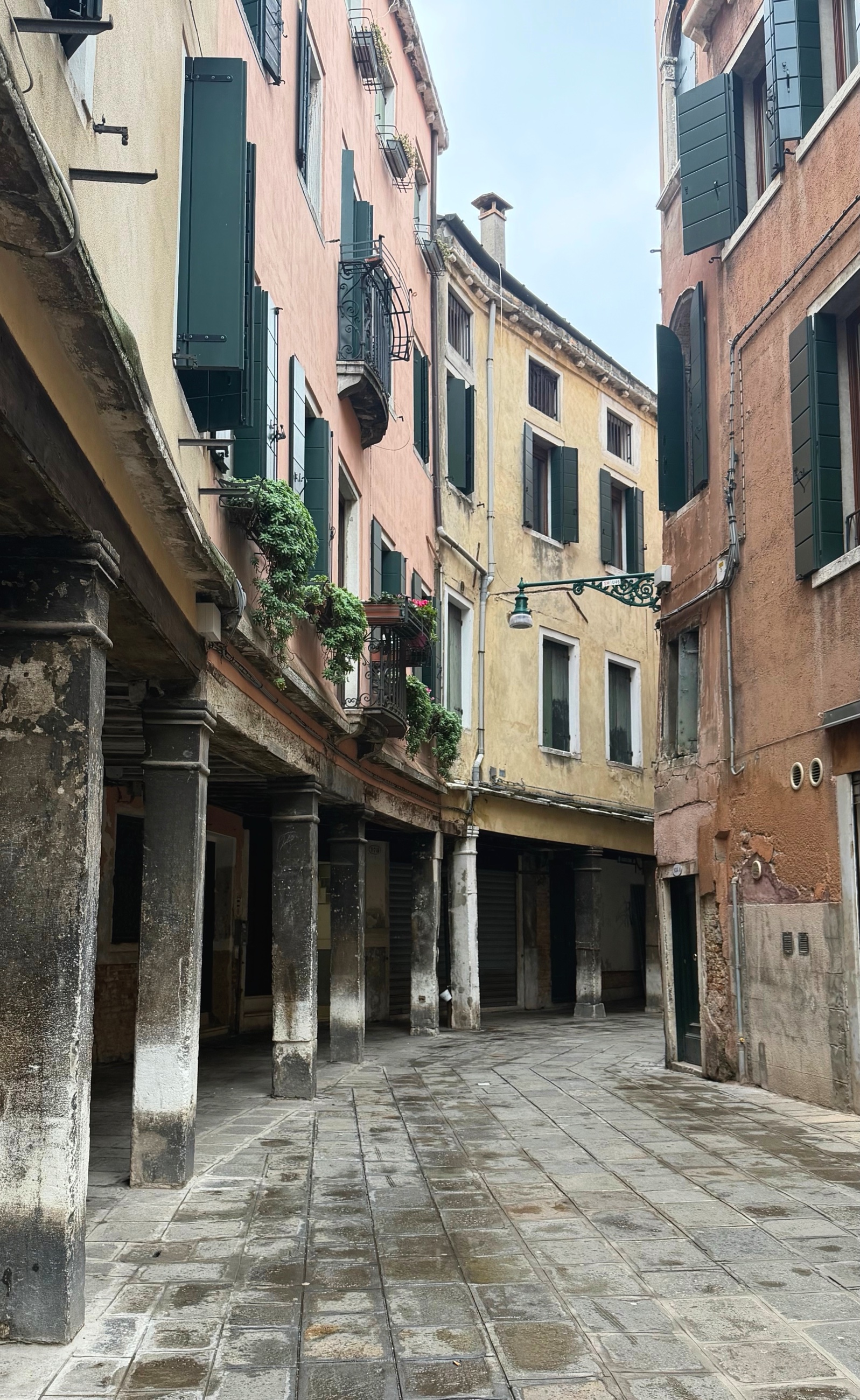 A lane curves past weathered stone columns beneath overhanging rooms, planted balconies, and green shutters.
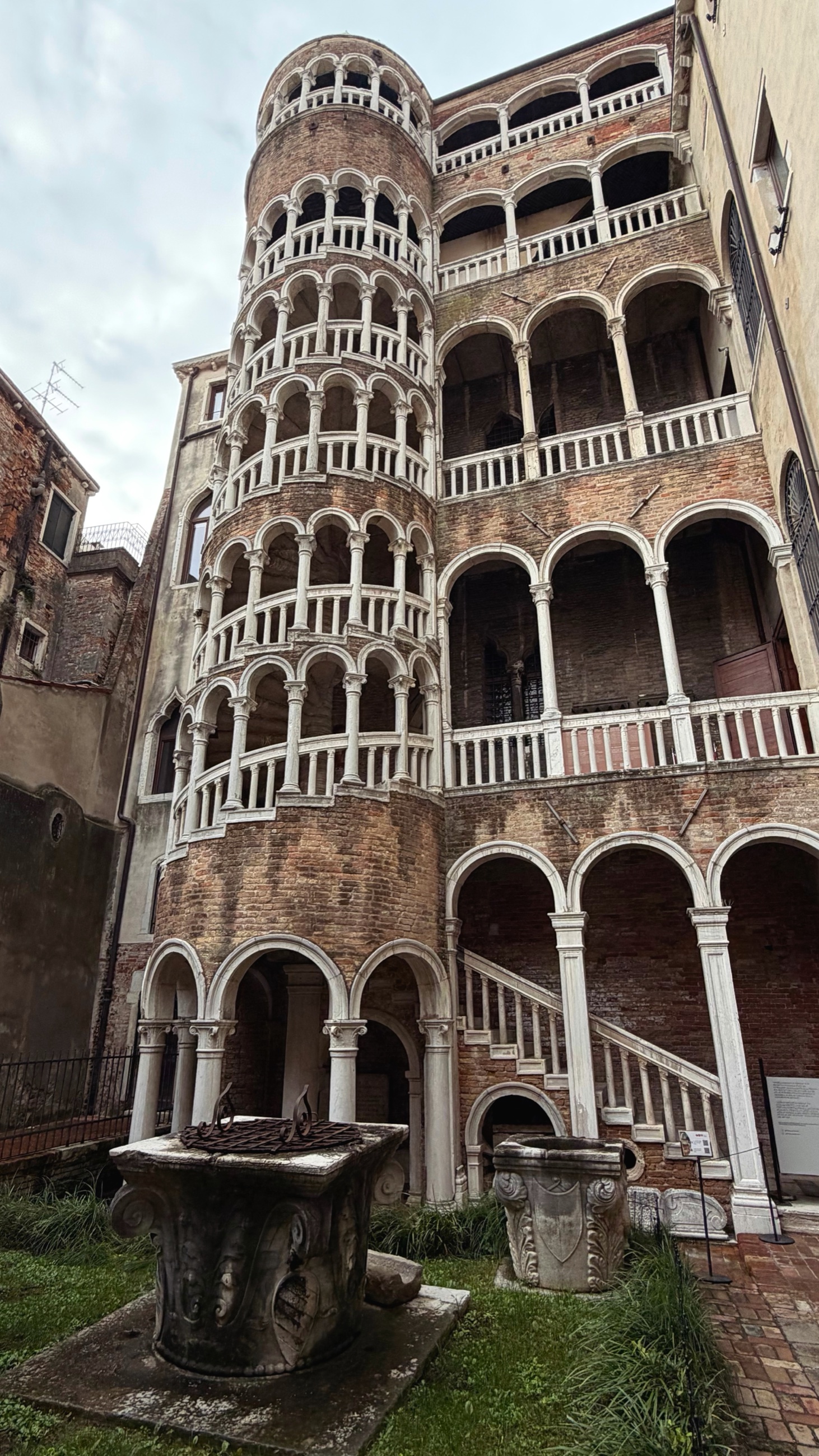 The Scala Contarini del Bovolo winds upward through tiers of open arches above the courtyard’s carved stone wellheads.
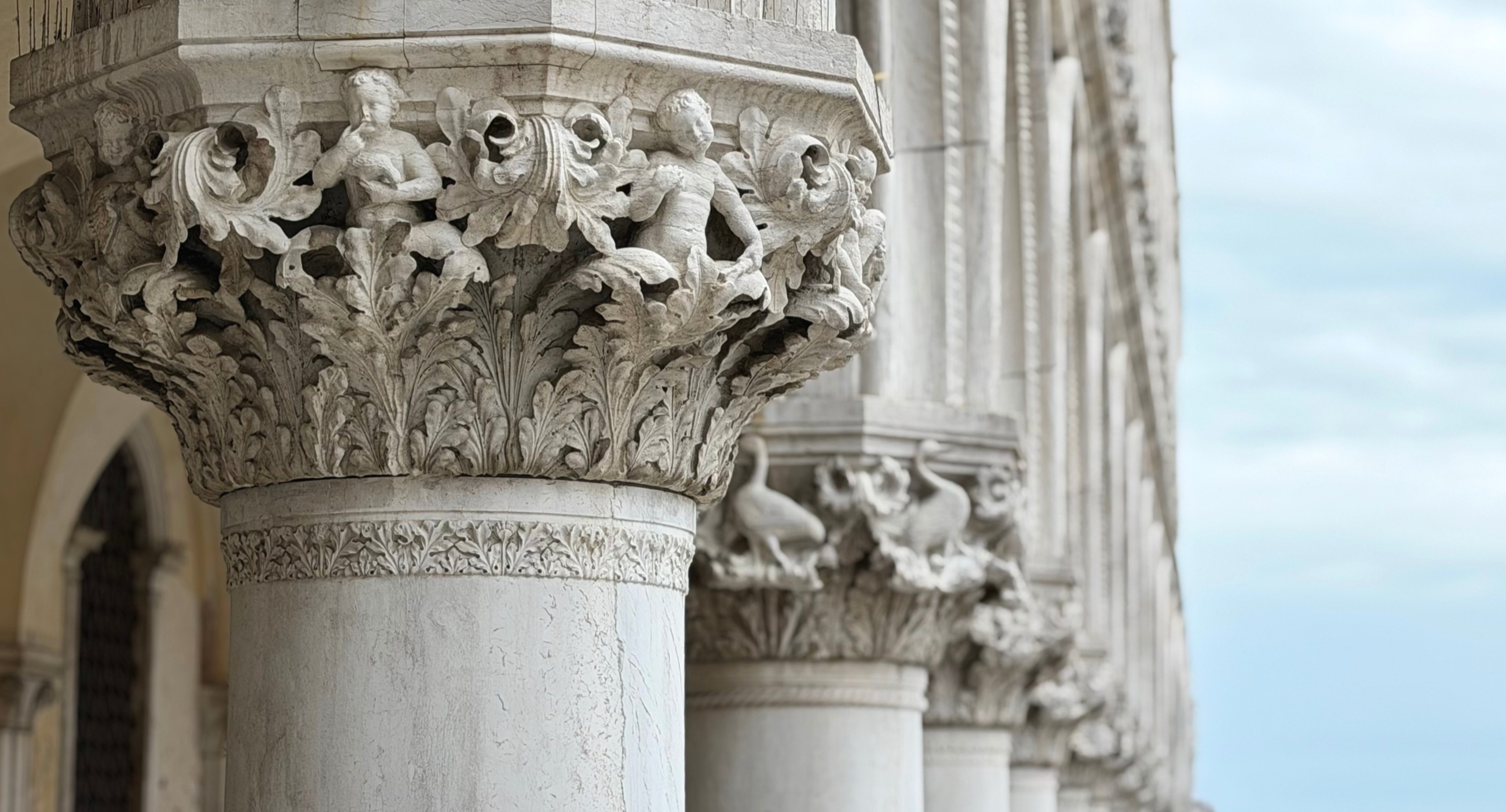 Figures and curling leaves crowd a carved stone capital, with successive columns receding along the arcade.
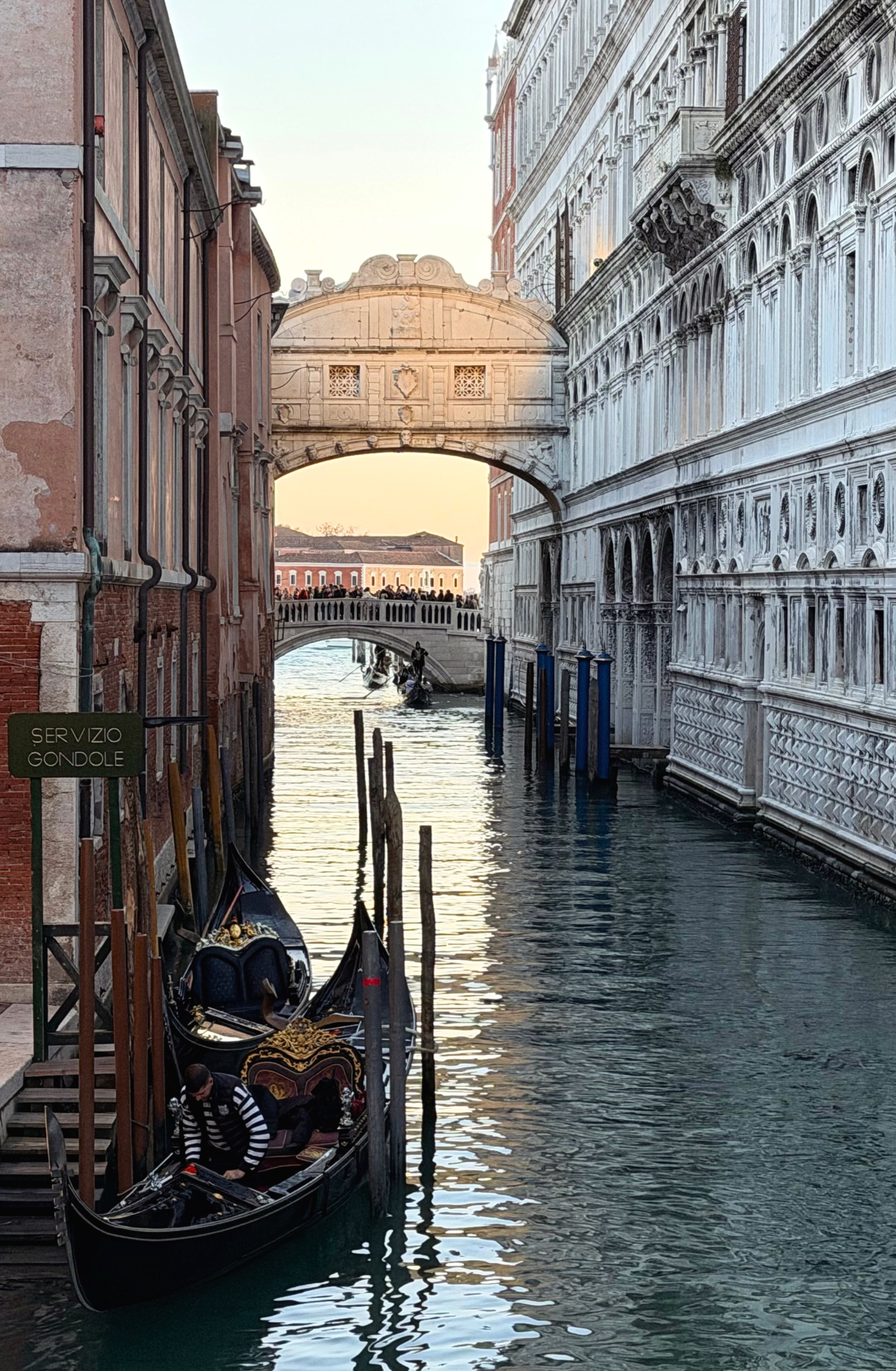 Evening light beyond the Bridge of Sighs, built to connect the Doge’s Palace courtrooms with the prisons across the canal.
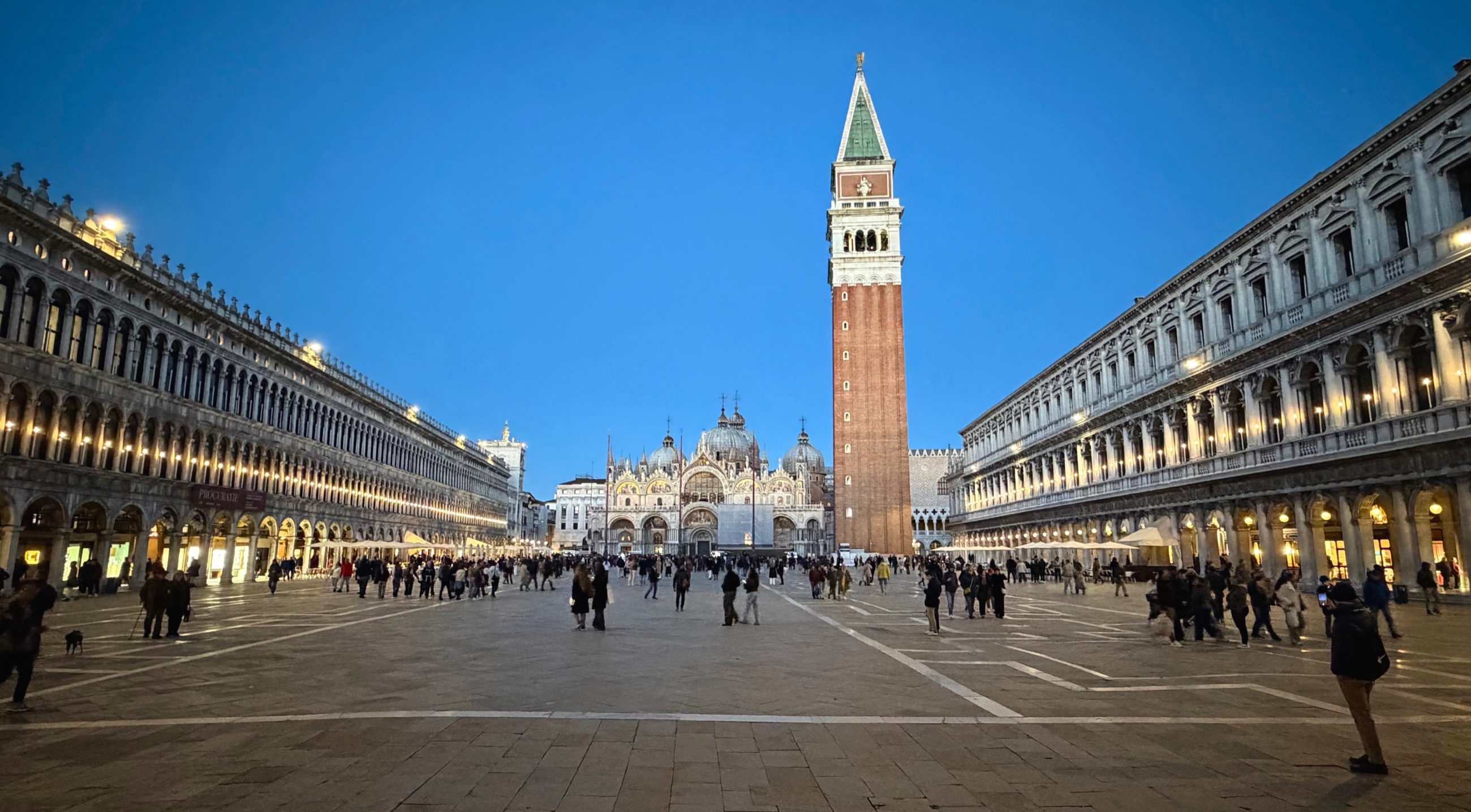 The arcades of Piazza San Marco glow at blue hour, framing the basilica and its towering campanile.
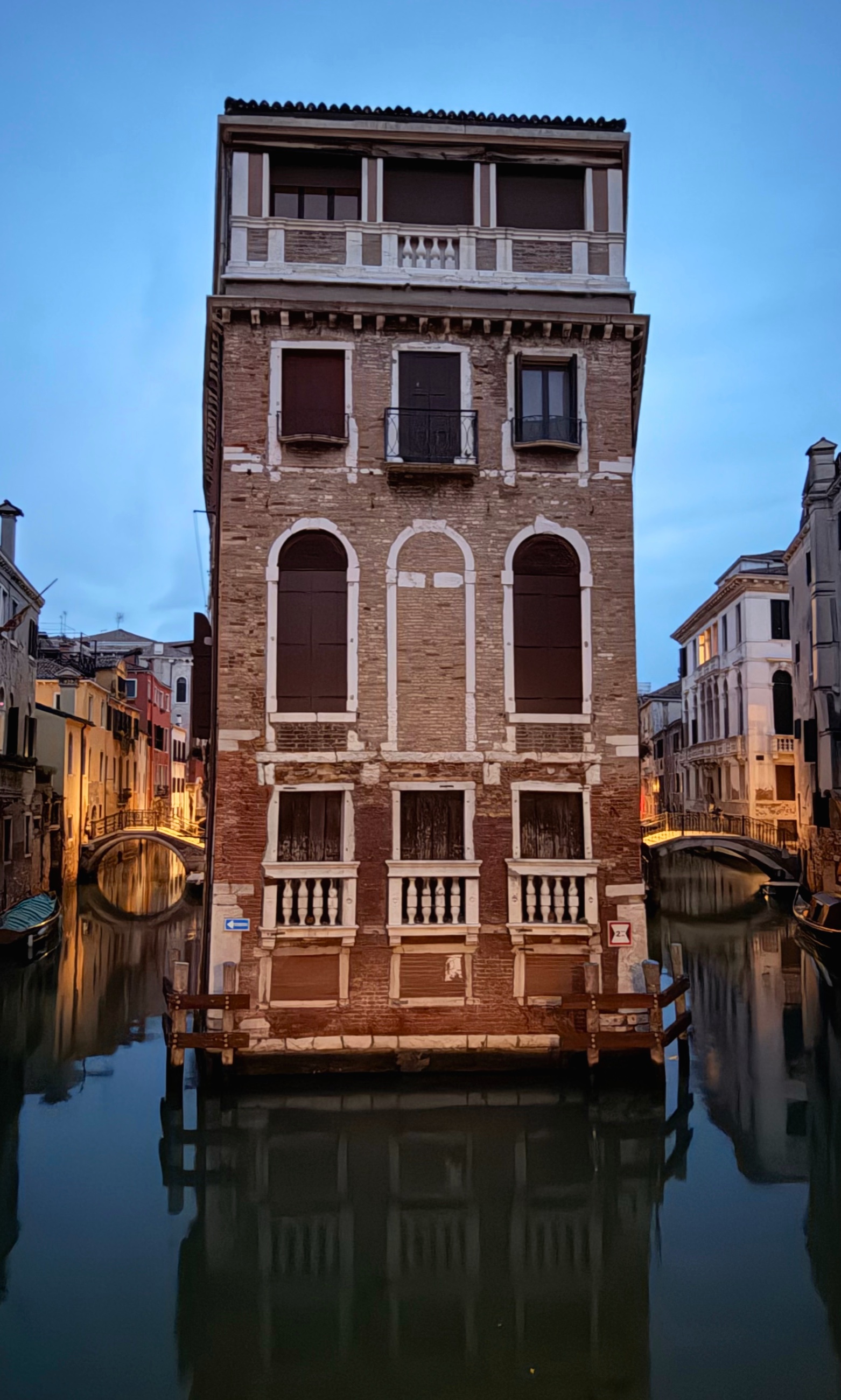 Canals surround Palazzo Tetta on three sides, its brick façade reflected between lamplit bridges at dusk.
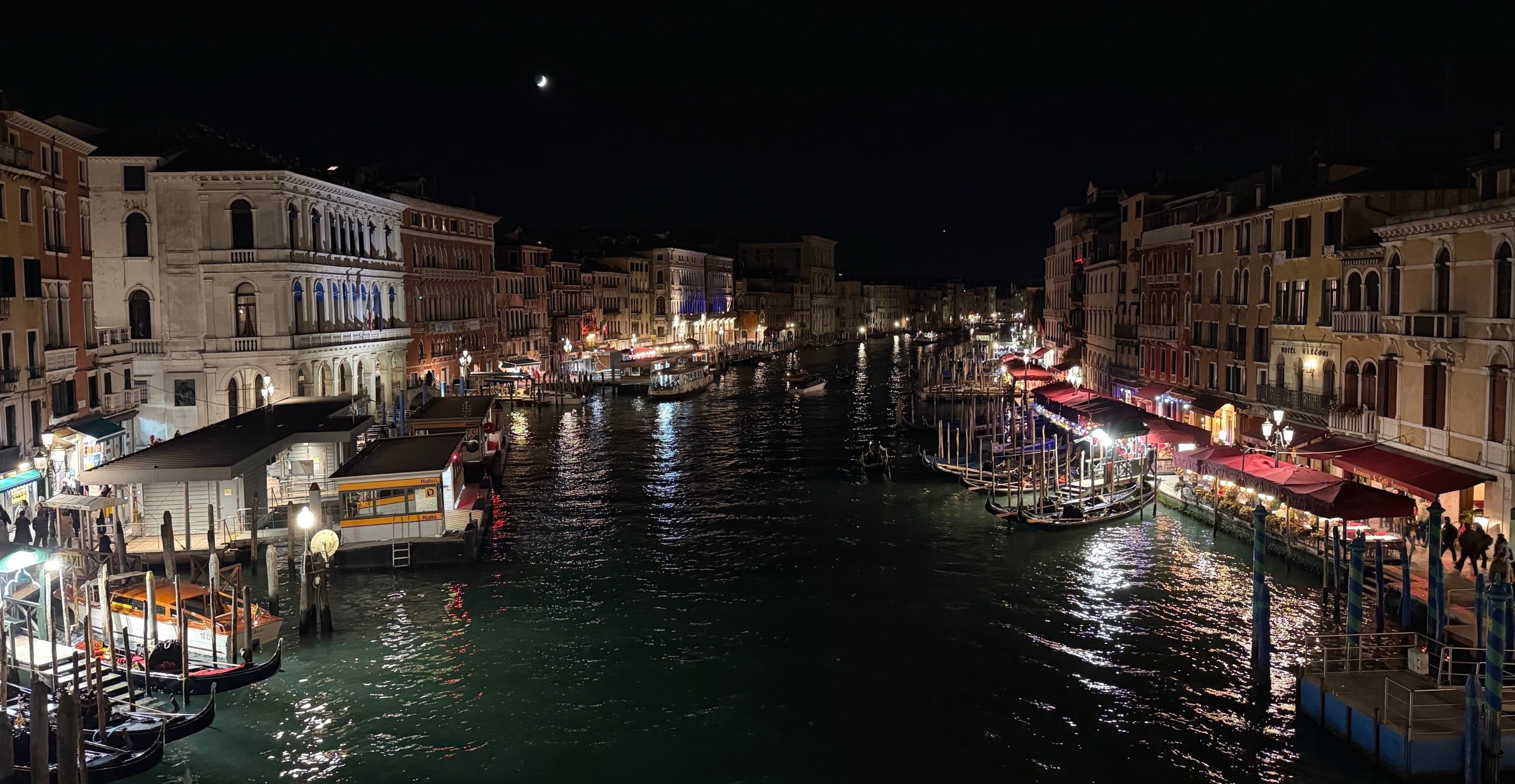 Beneath a crescent moon, the Grand Canal reflects the lights of vaporetto stops, restaurant terraces, and waterfront palaces.
🎯 Next Week Preview
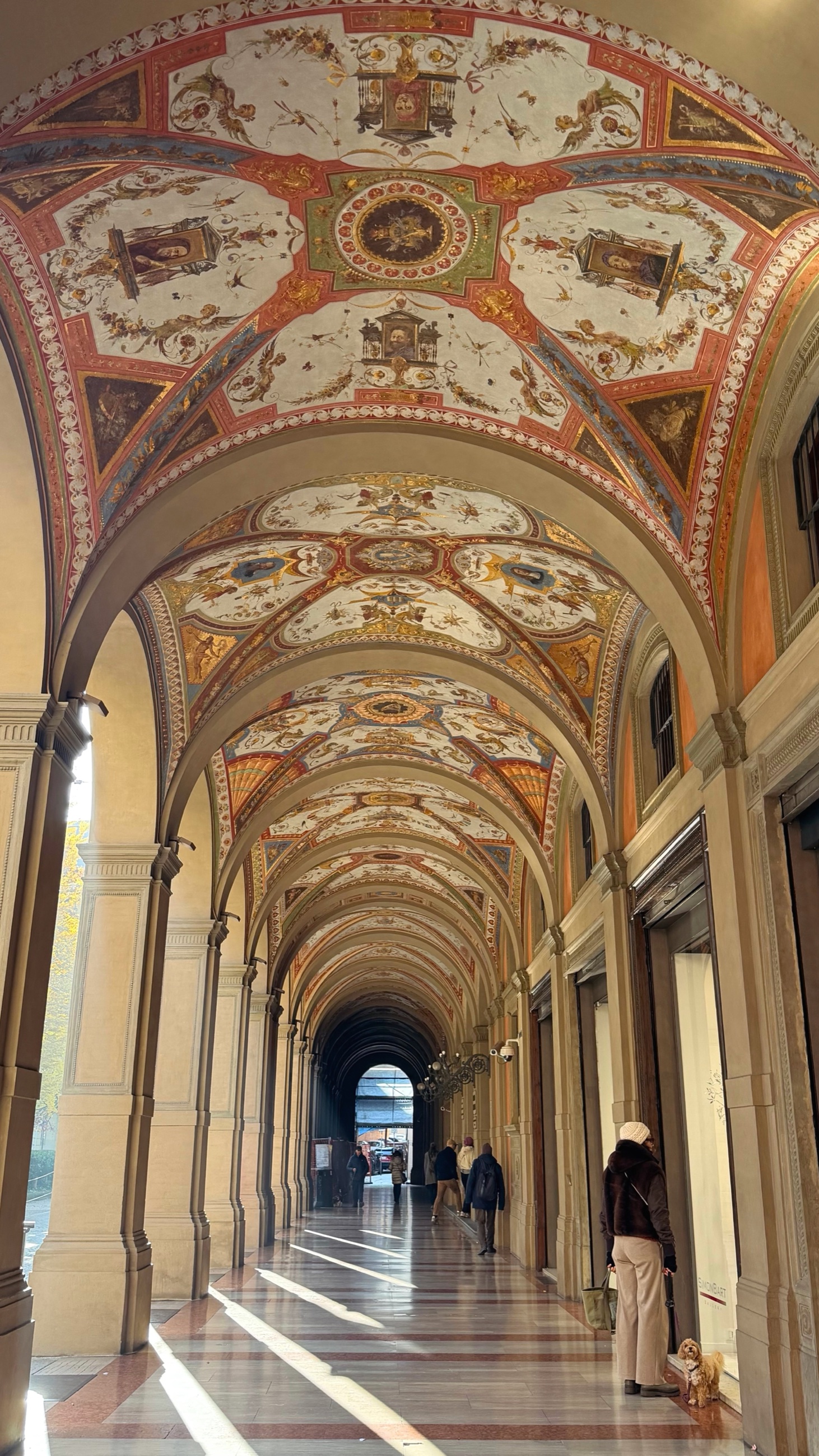 November sunlight beneath the painted vaults of Bologna’s Banca d’Italia portico, decorated by Gaetano Lodi between 1862 and 1865.
Bologna: settling in beneath the porticoes
Ninety minutes after leaving Venice, we were back in Bologna, a five-minute walk from the station to our base for the next 25 nights. Next week we return to the familiar work of making a temporary home: learning the neighborhood, finding groceries and coffee, and setting up routines.
We will also start looking into the city’s nicknames. Bologna is La Grassa, “the fat one,” for its food, and La Dotta, “the learned one,” for a university that has operated continuously since 1088. After canals and island crossings, our attention turns to miles of covered sidewalks, student streets, and the kitchen that gave Italy ragù and tortellini.
We also hope to take a day trip or two along the Via Emilia, the Roman road that still links the cities of this plain. Parma, under an hour west by train, is the home of Parmigiano Reggiano and prosciutto di Parma, with a pink-marble baptistery beside its cathedral. Modena, closer still, pairs its UNESCO-listed Piazza Grande and Ghirlandina tower with traditional balsamic vinegar and the carmakers of Italy’s Motor Valley.
💌 Personal Connection
We arrived in Venice with a birthday plan. The city gave us a good deal more.
The views are beautiful, but what left us in awe was how far they extend: another canal beyond the first, another bridge after the turn, another church holding paintings worth traveling to see on their own. Venice does not thin out between its landmarks.
Even so, what we will remember about these days belongs as much to Stephanie’s birthday as to any building. Meals together. Coffee on the square. Long walks with no errands waiting at the end of them. And a Sunday morning of worship, when we stopped moving and let the place come to us.
After months in towns that carried Venice’s mark, seeing the city gave those earlier chapters a fuller context. It also gave us something simpler: a few days set aside for each other.
On the last vaporetto ride, the buildings we had approached through lanes and over bridges passed one after another along the water. We were already on our way back to our bags, our next room, and the routines waiting in Bologna. For three days, we had carried very little and wanted for nothing.
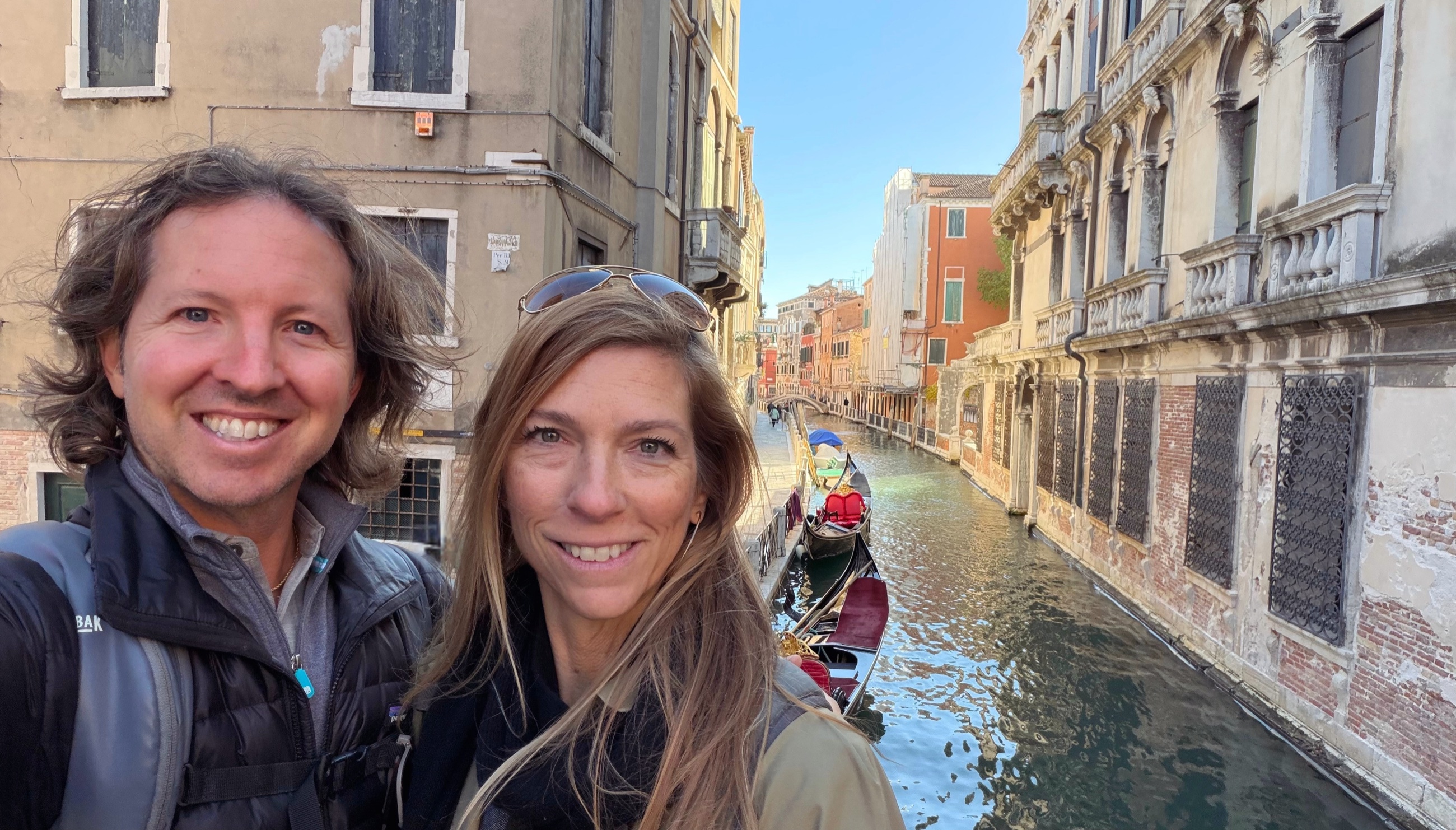 A pause on a canal bridge during Stephanie’s birthday weekend in Venice.
Until next week,
S&S
Some Great Place · Living Local in a Global World · somegreatplace.com