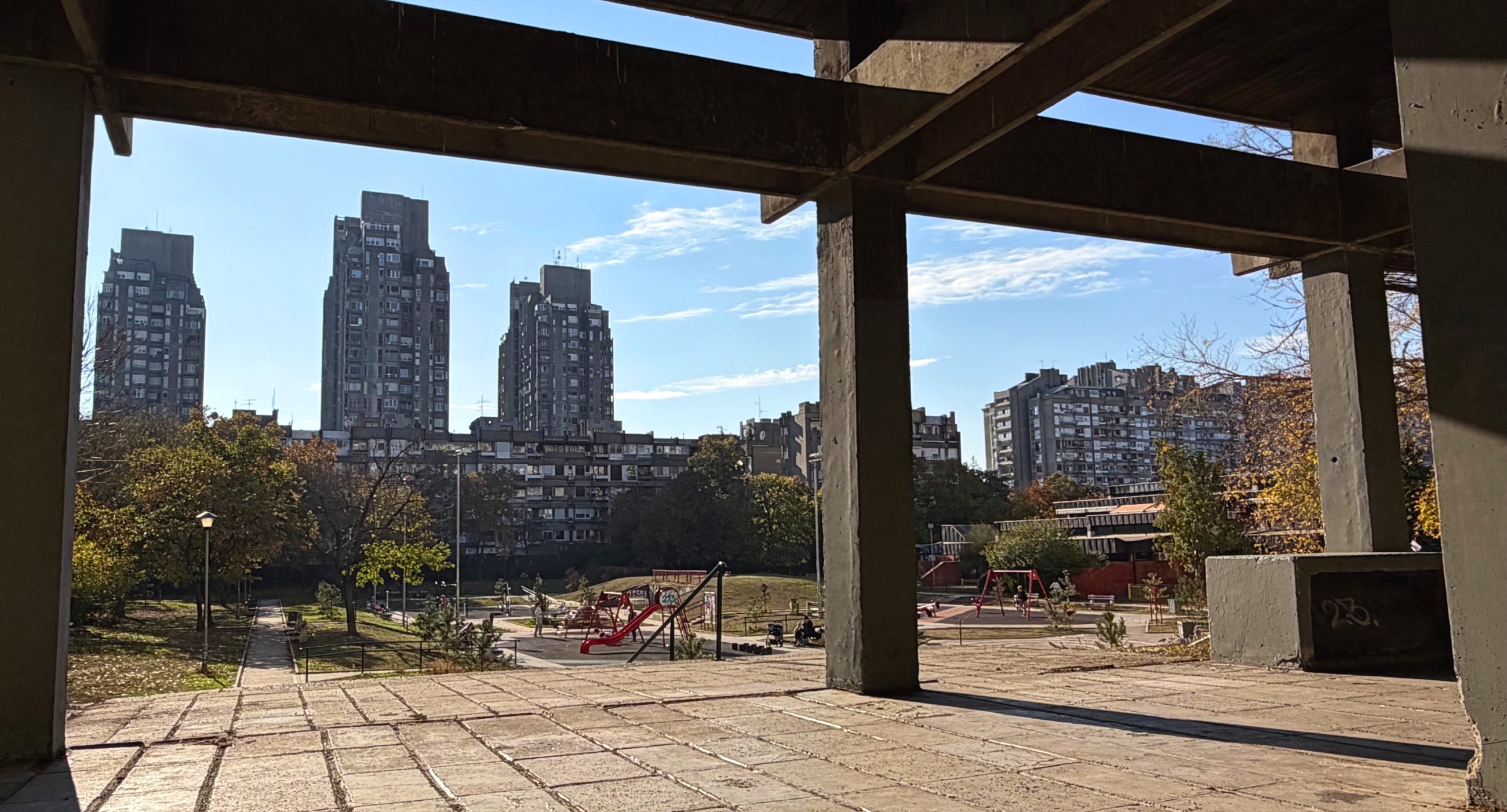
 In New Belgrade, a playground and tree-lined paths fill the courtyard between Yugoslav-era apartment towers.
Beneath the Genex Tower in New Belgrade, we found a small coffee shop. Ca.Ca.Fe has bare concrete walls, house music, and a considerable advantage when it comes to giving directions: look for the two towers joined by a bridge high above the highway, then walk around the back.
We had crossed the Sava to walk about five miles through the numbered residential blocks of Novi Beograd, or New Belgrade. From the highway, the apartment buildings seem to run the length of whole streets. We wanted to see what lay between them.
A few days earlier, at the Museum of Yugoslavia, we had stood in front of the batons that young runners once carried across the country for President Tito’s birthday. On the left bank of the Sava, another part of that history is still in daily use: the schools, courtyards, and apartments built for the capital of a federation that no longer exists. We spent much of our final week in Belgrade in the twentieth century.
📍 This Week in Belgrade
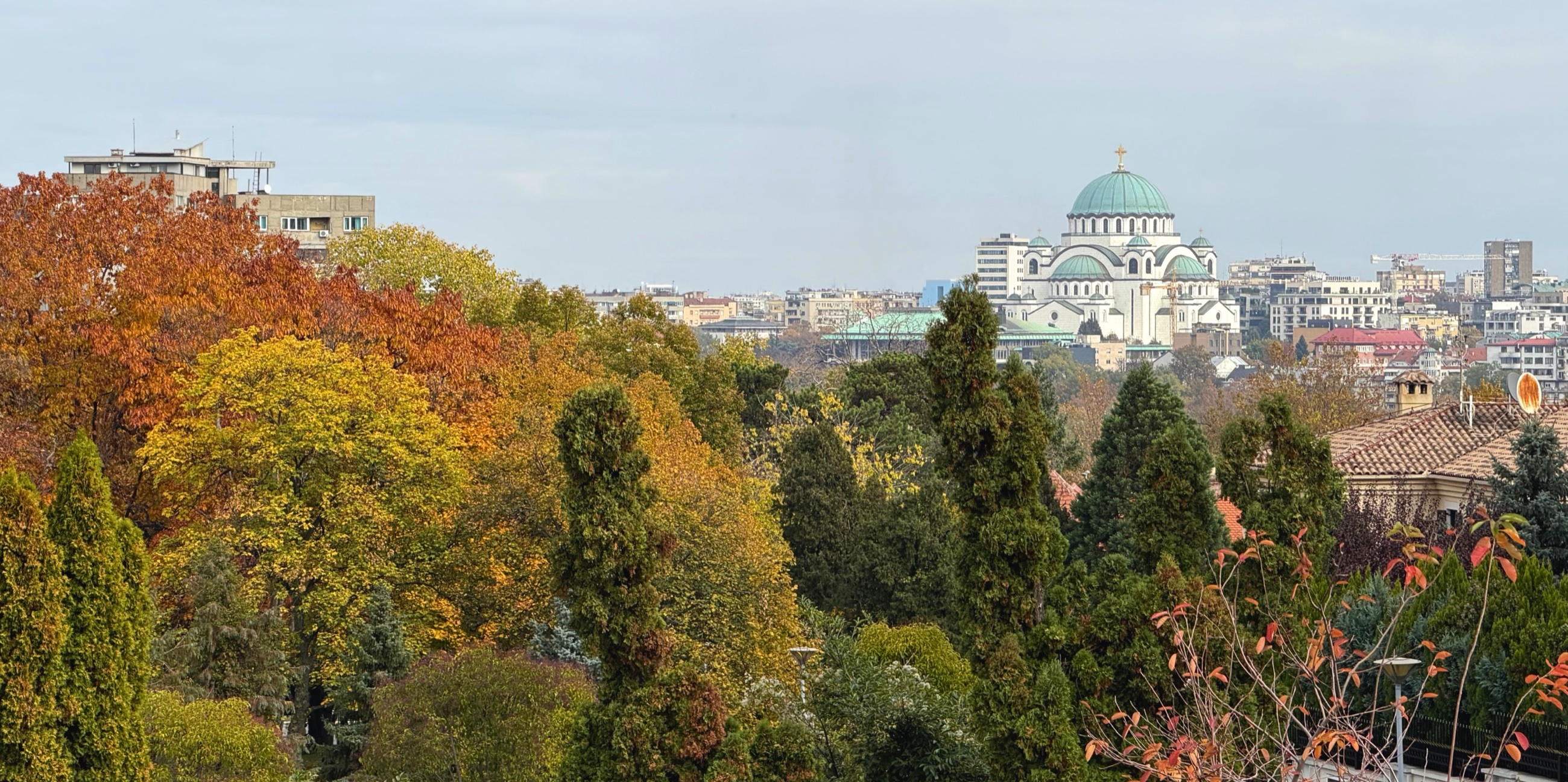 The Church of Saint Sava beyond the autumn trees, seen from outside the Museum of Yugoslavia in Dedinje.
A Morning in Dedinje
The Museum of Yugoslavia occupies three buildings on a wooded slope in Dedinje, a residential district of embassies, villas, and large gardens south of the city center. We timed our visit for the first Thursday of the month, when admission is free. The regular ticket is 800 dinars (about $8) per person. A sculpture garden connects the buildings, and each has a different relationship to the man whose career runs through all three.
In the Old Museum, diplomatic gifts presented to President Josip Broz Tito share space with objects sent by Yugoslav citizens. A ceremonial weapon or a piece of traditional dress records an encounter between a foreign delegation and a head of state. The relay batons record an annual birthday ritual that began in 1945. In 1957 it became the Relay of Youth, with a single federal baton representing the many local relays. On May 25, the final runner presented it to Tito before a stadium crowd in Belgrade. The relay continued after his death in 1980, and the last baton was carried in 1987.
The House of Flowers, where Tito and his wife, Jovanka Broz, are buried, was once his winter garden. Nearby stands the May 25 Museum, designed by Mihailo Janković and completed in 1962 as the city’s gift to Tito on his seventieth birthday. The museum describes it as the first building in Belgrade designed and built to be a museum. Today its galleries allow for a much wider account of Yugoslav life. On one side, Read and Pass It On examines the war leaflet in the twentieth-century Yugoslav region: propaganda in its most portable form, whose success depended on a reader handing a scrap of paper to someone else.
Across the hall, Freedom Is Just a Dream for Us gathers drawings, fragments of clothing, and handmade objects from prisoners held in concentration camps and prisoner-of-war camps during the Second World War, some on Yugoslav territory and others far from home. A name on a document or a few lines in someone’s hand could be all the curators had with which to tell a life.
Afterward, we stopped for a coffee and continued through Dedinje, past the U.S. Embassy and along the outer wall of the Royal Compound. Behind it stand the Royal Palace, built for King Alexander I in the late 1920s in a Serbo-Byzantine style, and the White Palace he commissioned for his sons, known for its art collection. Visits are by guided tour only, booked in advance through the Tourist Organization of Belgrade for 2,000 dinars ($19), including a bus from Nikola Pašić Square. We had not booked, so our view was chiefly of the wall and the trees. It is a short walk from the burial place of Yugoslavia’s president for life to the grounds of the king whose dynasty his government displaced.
Five miles through New Belgrade
In 1948, youth work brigades from across Yugoslavia began preparing the marshy ground on the left bank of the Sava for a new part of the federal capital. State media presented them as volunteers building a new country with shovels; for many participants, enthusiasm and obligation were difficult to separate. Early plans provided for government buildings and student housing. As the postwar housing shortage grew more urgent, much of New Belgrade took the form we had come to see: a grid of numbered blocks, each with apartments grouped around schools, playgrounds, and shared green space. Residents still use the numbers. Ask someone where they live, and the answer may simply be Blok 45.
At the Genex Tower, the road explains the architecture. Known formally as the Western City Gate, Mihajlo Mitrović’s paired towers were completed in 1979 beside the highway into Belgrade from the west and the airport. Their two-story connecting bridge and round crown, built for a revolving restaurant whose turning mechanism was never installed, are visible long before an approaching driver can make out a window. The taller tower is residential; the shorter one, which housed the state trading company Genex, now stands empty.
On foot, the building we liked looking at most was a little farther on, in Block 28. Its apartments have square concrete window frames that project well out from the wall. Belgraders call the buildings Televizorke, the televisions. Anyone who remembers a set deep enough to require its own piece of furniture will recognize the resemblance. Architect Ilija Arnautović designed them in the early 1970s, and decades of rain and frost have streaked the concrete in a way that suits the shapes.
In Block 30, a long, straight path runs past apartment entrances on one side and benches and trees on the other. In places, the roots have lifted the pavement. Apart from a small grocery and a bakery, there was almost no commerce. On the walls, murals for Belgrade’s two great football rivals, Partizan and Red Star, mark out loyalties block by block. Both clubs were founded in 1945, in the first months of Tito’s Yugoslavia; Partizan was the army’s team. In Block 21, a single four-story residential building known as the Meander folds back on itself for more than half a mile. From the boulevard we could see how far it extended. Inside its bends were small businesses and places to sit.
Our walk ended in Block 23, built between 1969 and 1976 to designs by Aleksandar Stjepanović, Branislav Karadžić, and Božidar Janković. Here the exposed concrete forms deep grids across the apartment fronts, among the most severe façades we saw all day. The development included about 2,100 apartments planned for some 7,500 residents, two kindergartens, and what is now Laza Kostić Elementary School. The school’s position explains a great deal about the plan. Children could reach it from home along interior paths, with the major roads routed around the perimeter. Today, parked cars and delivery vans have claimed some of that pedestrian space. The school is still there, within walking distance of every apartment in the block.
In our first week, we walked the Belgrade Waterfront on the opposite bank of the Sava. Its glass towers and New Belgrade’s concrete slabs belong to different generations of large-scale development. At the Waterfront, we spent most of our time looking out along the river. In the Blocks, the most interesting turn was almost always inward.
Armistice Day
Our last full day in Belgrade was November 11, Armistice Day. Serbia has kept it as a public holiday since 2012, marking the 1918 armistice that ended the First World War. Its emblem is a small badge pairing a purple flower with the ribbon of the Albanian Commemorative Medal, awarded to soldiers who survived the Serbian army’s retreat across the Albanian mountains in the winter of 1915 and 1916.
Much of its route ran through places we came to know this year. Survivors reached the Albanian coast and were carried by Allied ships to Corfu. Rebuilt there, the army was shipped on to Thessaloniki and from there to the front. In 1916 it fought its way back toward home over Kajmakčalan, a mountain on today’s border between Greece and North Macedonia.
The flower on the badge, Natalie’s ramonda, grows on Kajmakčalan. Named for Queen Natalija Obrenović, it can dry out almost completely and revive with a little water, which is why it was chosen.
After coffee in Vračar, we took the bus to Republic Square and returned to the National Museum, free for the holiday. We came back for one object. Miroslav’s Gospel is kept in a small, climate-controlled room that is not always open, and for the holiday its doors were unlocked. We waited in a short line while staff admitted four to six people at a time, then took our turn standing over the book, opened beneath glass, for a couple of minutes. Photography is not permitted inside.
The Gospel is the oldest surviving Serbian illuminated manuscript written in Cyrillic, made between 1180 and 1191 for Prince Miroslav of Hum, an older brother of Stefan Nemanja. It was probably made for the Church of Saints Peter and Paul in Bijelo Polje, in today’s Montenegro. Its 181 parchment leaves carry 296 miniatures in red, green, yellow, white, and gold, and the text runs in two columns of capital letters with no spaces between the words. The museum’s own logo comes from one of its initials, a Cyrillic П formed by two intertwined birds. For a book more than eight centuries old, it is in excellent condition.
It also belonged to the day. The monks of Hilandar Monastery, on Mount Athos, presented the Gospel to King Aleksandar Obrenović in 1896. In 1915 it was packed with the state treasury and carried with the army on the retreat through Albania. The book on display for Armistice Day had made the same crossing as the soldiers the holiday remembers.
Afterward, we walked Knez Mihailova one last time and took the bus home.
🎨 Cultural Deep Dive
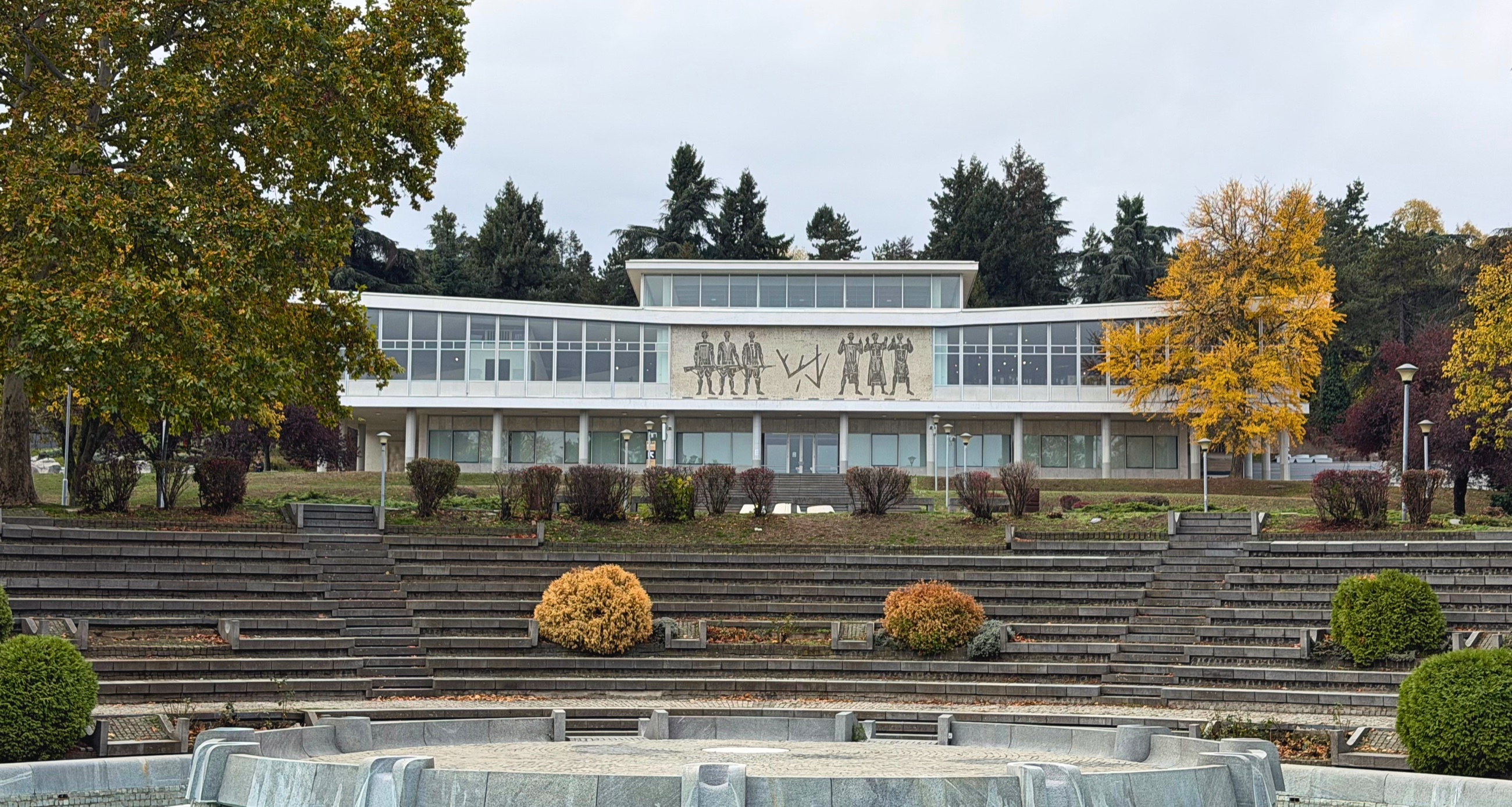 The May 25 Museum, part of the Museum of Yugoslavia, built in 1962 as Belgrade’s gift to Tito on his seventieth birthday.
The Making and Unmaking of a Yugoslav Capital
The king on one side of Dedinje and the president on the other governed two quite different Yugoslavias. The first was proclaimed in Belgrade on December 1, 1918, as the Kingdom of Serbs, Croats and Slovenes, under the Serbian royal house. The name described its ambition more readily than its workings. How much authority belonged in Belgrade, and how much in the country’s regions, was bitterly disputed from the start. In 1928 a deputy opened fire on Croatian representatives on the floor of parliament, fatally wounding the Croatian Peasant Party leader, Stjepan Radić. In January 1929, King Alexander dissolved parliament and assumed personal rule. That October he renamed the kingdom Yugoslavia, the land of the South Slavs. He was assassinated in Marseille in 1934. The Axis invasion of April 1941 drove the royal government into exile, and it never governed again.
Tito’s Communist Partisans emerged from the war in control of the country. The monarchy was abolished in November 1945, and the new state became a federation of six republics, each with its own institutions, under a single ruling party. Four correspond to countries where we have lived this year: North Macedonia, Croatia, Montenegro, and Serbia. The other two were Slovenia and Bosnia and Herzegovina. The state’s promise of “Brotherhood and Unity” carried particular weight among people who had lived through occupation, mass killing, and civil war. Tito’s name was given to a town in each of the six republics and two autonomous provinces. Podgorica, Montenegro’s capital, was Titograd until 1992.
Tito’s break with Stalin in 1948 explains much of why Yugoslavia is remembered so differently from the rest of communist Europe. Belgrade hosted the first summit of the Non-Aligned Movement in 1961. At home, Yugoslav citizens gained opportunities to travel and work abroad that few elsewhere in Eastern Europe could match. A Yugoslav passport could mean a job in West Germany, earnings sent home, and a return visit each summer. Housing allocated through an employer could give a family a permanent address in a new district like the one we walked, where households of very different occupations might share a stairwell.
The split showed in concrete, too. Yugoslav architects turned away from the ornamented socialist realism favored in Moscow toward Western modernism, and New Belgrade took its cue from Le Corbusier: tall housing set in open green space, with traffic kept to the edges. Block 23’s school is that idea built.
The same split had a harder side. Yugoslavia remained a one-party dictatorship. The press, radio, and publishing answered to the party, and the criminal code punished “hostile propaganda,” a charge broad enough to cover an article, a poem, or a joke about Tito. Milovan Đilas, a Montenegrin who had been one of Tito’s closest deputies, spent nearly nine years in prison for his writing, including The New Class, his indictment of the party elite.
After 1948, authorities sent thousands of suspected Stalin supporters to Goli Otok and nearby Sveti Grgur, two islands in the northern Adriatic, now part of Croatia, and nationalists and other political prisoners followed. Inmates broke stone at forced labor and were beaten, often by fellow prisoners made to prove their loyalty. The state security service, the UDBA, watched citizens at home and pursued émigré opponents abroad, at times by assassination. A Yugoslav citizen could cross borders more freely than a Czech or a Bulgarian, and still be imprisoned for an opinion.
Our two months in Albania gave the split with Stalin a nearer point of reference. Immediately after the war, Enver Hoxha’s government was so closely tied to Belgrade that a union of the two states was under discussion. In 1948, Hoxha sided with Stalin and broke with Tito. Yugoslavia went on to deal with both sides of the Cold War. Albania later broke with the Soviet Union and then with China, and withdrew into isolation. Until this week, we had understood that history chiefly from the Albanian side, in a country where concrete bunkers still sit on the hillsides. In Belgrade, one expression of the other course was a museum full of gifts brought by foreign delegations.
Much of the prosperity of the 1960s and 1970s was borrowed. By the early 1980s, Yugoslavia owed Western lenders roughly $20 billion, and after Tito’s death in 1980 the bill came due: austerity, unemployment, shortages, and by the end of the decade, inflation running into four digits. The system had also kept national grievances quiet rather than resolving them. “Brotherhood and Unity” was enforced as much as it was believed, and with Tito gone and the money running out, disputes over which republics should bear the costs turned bitter. When one-party rule gave way in 1990, the first multiparty elections were held republic by republic rather than for the federation as a whole, and the winners were often the politicians who mobilized national grievances most effectively. Slovenia and Croatia declared independence in June 1991. The wars that followed over the next decade killed more than 130,000 people and drove millions from their homes.
Belgrade outlasted the federation as a capital. It served a smaller Federal Republic of Yugoslavia, made up of Serbia and Montenegro, from 1992, and then the looser State Union of Serbia and Montenegro from 2003. That arrangement ended in 2006, when Montenegro voted for independence. When we lived in Bar and on the Bay of Kotor this summer, that separation was twenty years old.
🍽️ Local Flavor
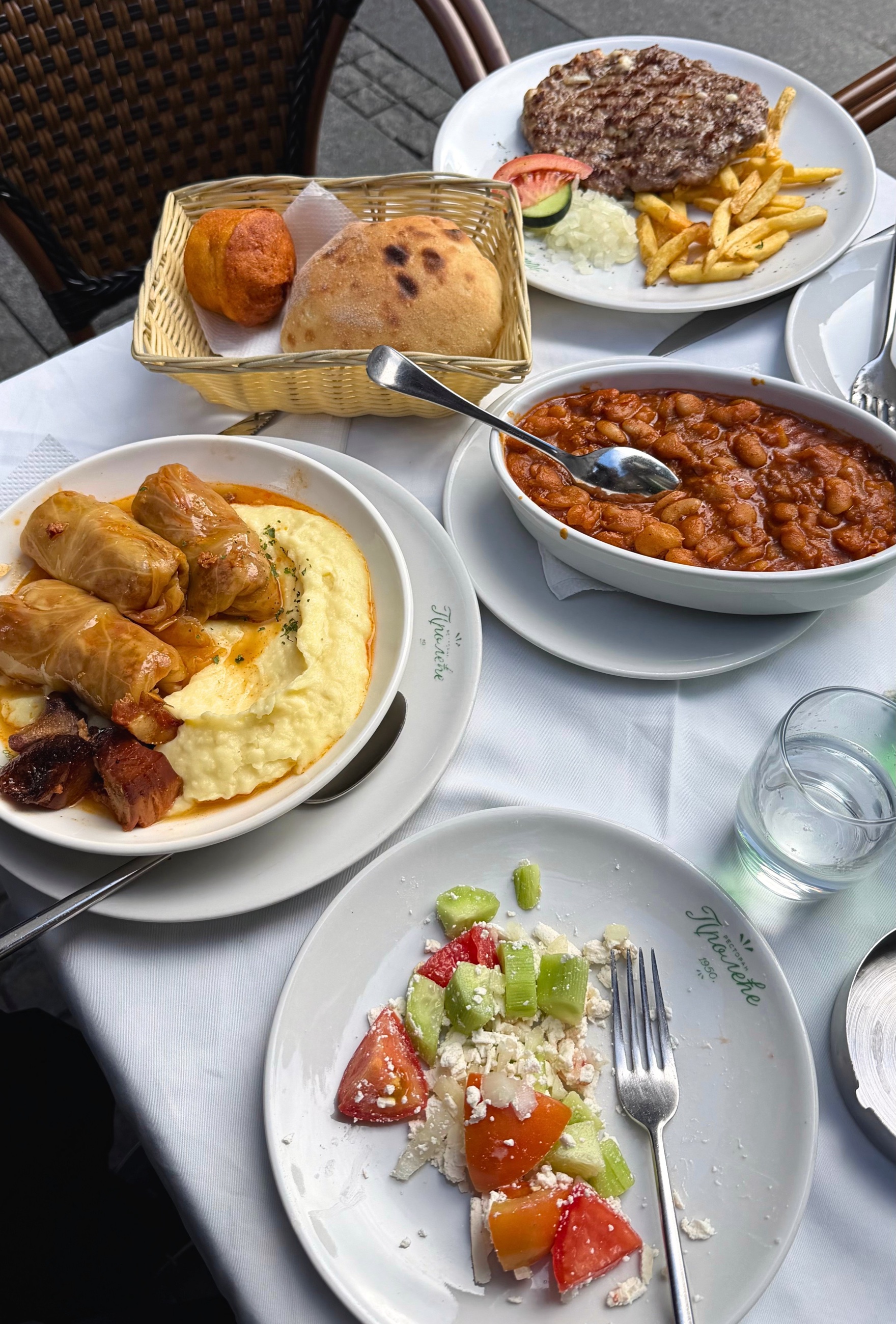 Lunch on the patio at Proleće in our first week in Belgrade, an introduction to some dishes we kept ordering throughout the month.
Lunch in Dedinje
After our morning in Dedinje, we were ready for a hot lunch. Nearby, we found a counter serving gotova jela, ready-cooked dishes sold by the portion, the same kind of bakery-and-kitchen lunch we described in our opening week. We filled two plates, about 630 dinars ($6) each, and shared what was on them: a cabbage roll (sarma), a square of moussaka, beans (pasulj), roasted sweet potatoes, and vegetables. Few meals this month were better value.
The kafana, after a month
We had eaten sarma on our first weekend in Belgrade, too, at Proleće, our introduction to the Serbian kafana. We sat outside, where the plates bore the house name in green Cyrillic lettering with the year it opened, 1950, just beneath. Alongside the sarma came a shopska salad, the house pljeskavica (a grilled meat patty), and prebranac, the baked white beans that became one of our regular orders this month.
Belgrade’s kafanas range from plain neighborhood rooms with a few tables to Skadarlija establishments with a band. The tradition began in the coffeehouse. The city had one in Dorćol, then its trading quarter, by the sixteenth century under Ottoman rule, and the habit of sitting a long time over a small cup outlasted the empire that brought it. Over the centuries the menu widened, and the kafana became the place where business was settled, politics argued, and news passed along. Around the turn of the twentieth century, actors, painters, and poets made Skadarlija their quarter and adopted particular kafanas as their regular tables, which is why the street still trades on its bohemian reputation.
Music is part of the tradition, too. At some kafanas, starogradska muzika, the old-town songs played by small bands, carries on with the drinking and singing well into the early hours. We chose to visit by day, at Proleće on our first weekend and at Znak Pitanja, the Question Mark, which we wrote about last week.
💰 Nomad Real Talk
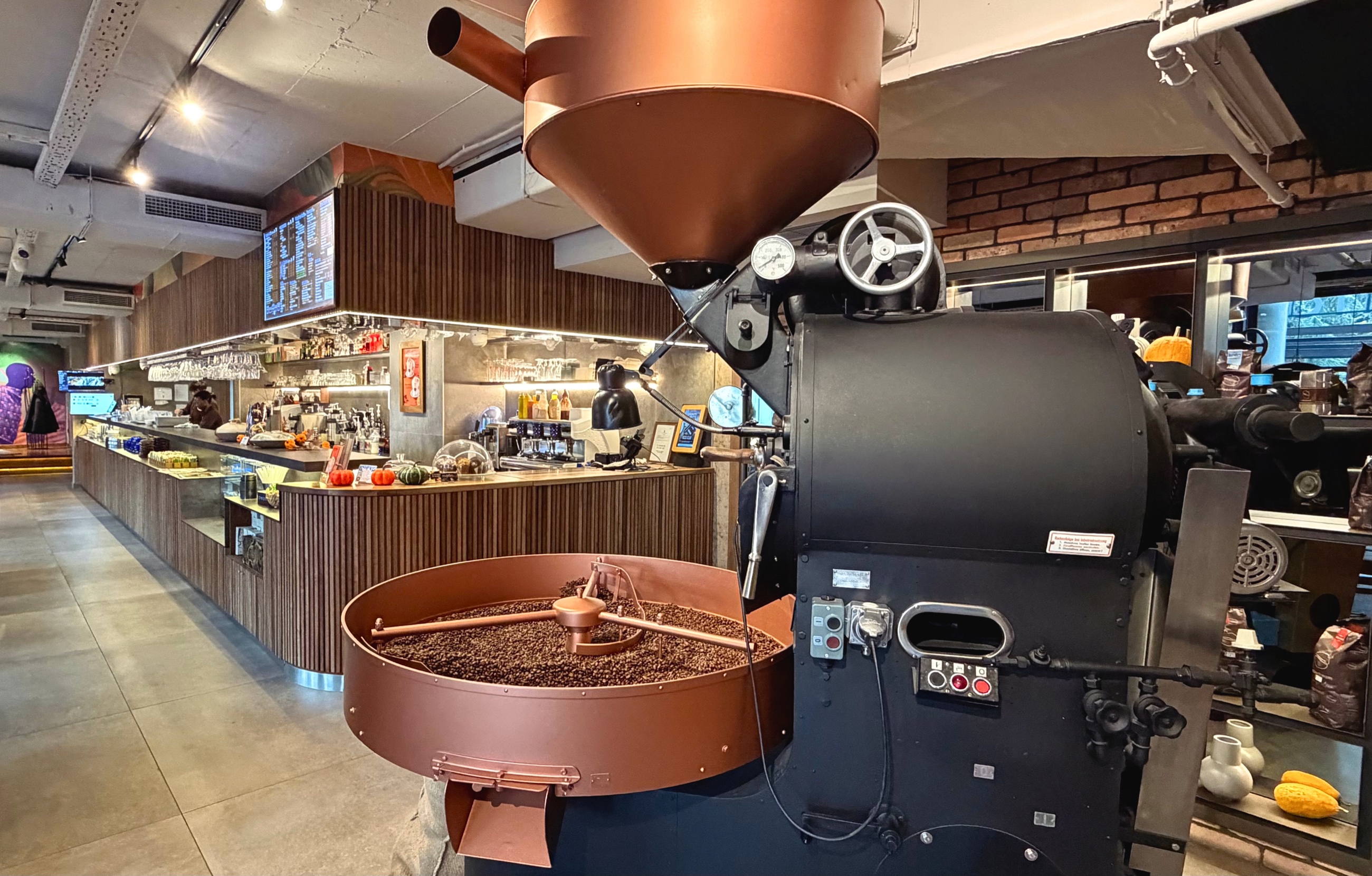 The roaster at our neighborhood Coffeedream, a local coffee chain, one block from our apartment in Vračar.
A month in Belgrade, assessed
Housing and groceries. Our furnished apartment in Vračar cost $1,468 for the month. We bought fruit and vegetables at Kalenić Market, where the selection was better than at nearby grocery stores, and picked up dairy and household supplies at the supermarket.
Getting around. City buses, trams, and trolleybuses have been free since January 2025, and we never paid a fare in the city. That made a difference three mornings a week when we went to XL Fitness Factory. Membership was 3,800 dinars ($36) each for the month, and the trip took about twenty-five minutes each way. Free transit made it practical to choose a gym for its equipment and an apartment for its neighborhood, even when the two were in different parts of town.
What things cost. Belgrade eats at every price, from neighborhood bakeries and kafanas to tasting menus. Langouste, in the historic center, holds a star in the 2026 Michelin Guide, and the guide’s Bib Gourmand list includes newer Serbian kitchens such as Iva New Balkan Cuisine. We ate at the bakery and kafana end of that range. Typical prices during our stay: $3 for a flat white or cappuccino, $4 to $5 for a shawarma wrap, and $6 to $7 per person for a plate of homemade prepared food. A ten-piece order of ćevapi with salad and bread, easily shared, ran $12 to $14, and a large kafana lunch for two $35 to $45. Culture came cheaply, too. Two floor seats for La Bohème at the National Theatre cost $44, and many of the month’s afternoons cost nothing: Saint Sava, Kalemegdan’s grounds, the National Museum and the Museum of Yugoslavia on their free days, and every walk.
Weather. November brought shorter days, jackets, and some rain. It also brought out an advantage of a capital this size: there is always somewhere to go indoors. A wet morning gave us the National Museum.
Walkability and the limits of it. We felt comfortable walking here, and we walked a great deal. The chief constraint was the distance between things, particularly once a day took us across the Sava. Belgrade is walkable by neighborhood rather than as a whole, and free transit fills the gaps.
Working life. The routine we set in our first week held all month: the gym and errands in the morning, a long lunch, and work in the late afternoon and evening, with room for a longer outing when one called for it. Belgrade made that rhythm easy to keep.
Time and borders. Serbia is outside the Schengen Area and gives Americans its own visa-free allowance of 90 days within any 180, so a month here does not draw down Schengen days. For long-term travelers counting those days, that alone makes Belgrade worth considering.
Whom it suits. For someone who likes long walks, cooks with market produce, and would use a theater ticket as readily as a trail map, Belgrade has enough to sustain a month, and probably more. Travelers who want a coastline or mountains within easy reach will find less of either, though the Sava and the Danube make up for some of it. The city’s nightlife, including the floating clubs along the rivers, is well known. It was not our scene, and the month was full without it.
🏠 Behind the Nomad Curtain
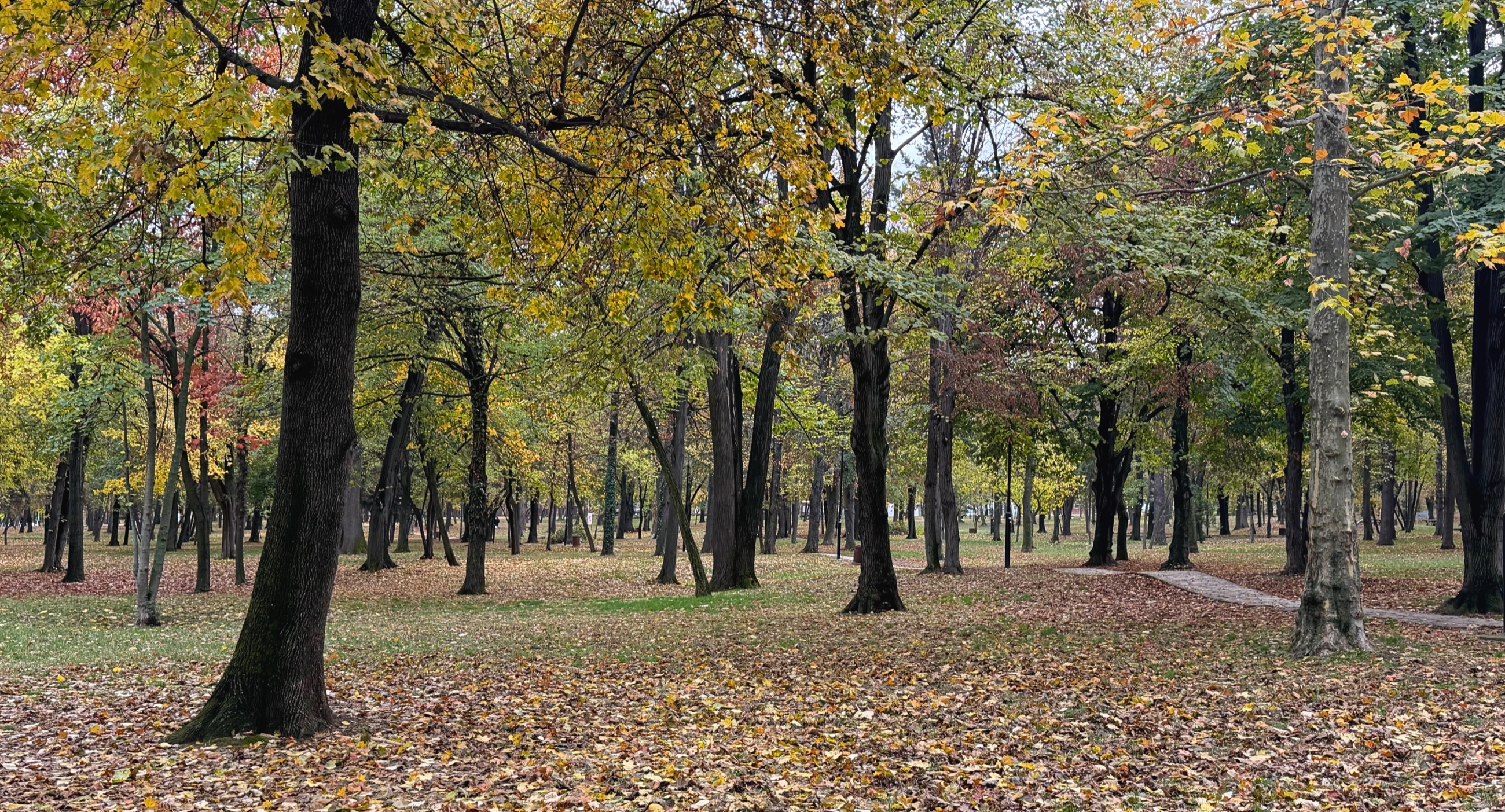 Autumn in Hajd Park, near the Museum of Yugoslavia in Dedinje.
The surprise after a month was how green Belgrade had been. We expected parks around the fortress and along the rivers. We had given less thought to the trees along residential streets, to Tašmajdan Park wrapped around Saint Mark’s, or to how much of a November walk in a city known for concrete could take place under branches.
We would happily live in Vračar again. From our apartment we could walk to the Church of Saint Sava, several parks, and a major public transit hub. On market days it was ten minutes home from Kalenić through tree-lined streets. Dorćol would be our second choice. We enjoyed its cafés and the leafy stretch of Strahinjića Bana, a street that offered much of what we liked best about Vračar, a little closer to the fortress and river.
📸 Photo Story
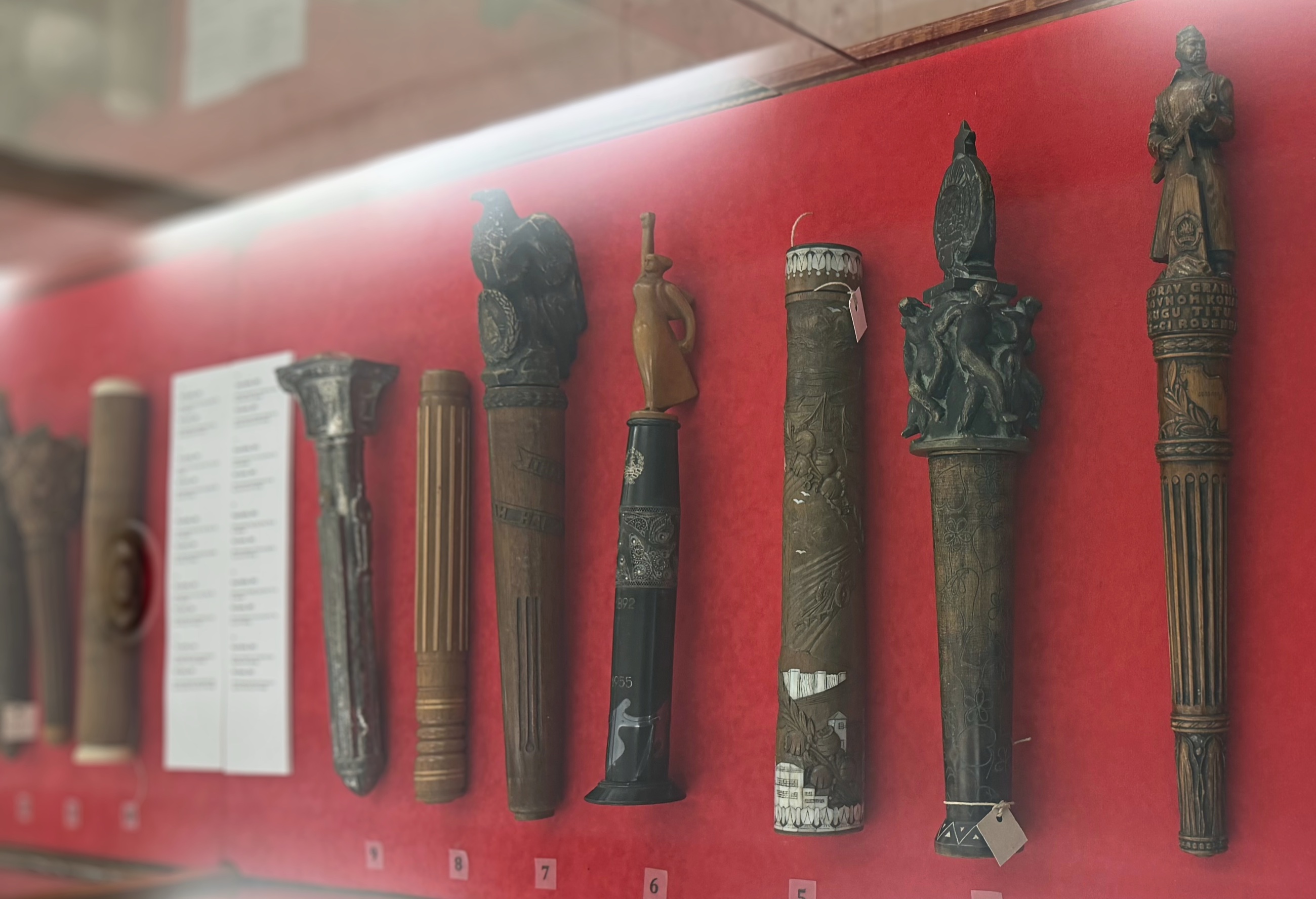 Carved figures and delicate inlays on relay batons in the Old Museum at Belgrade’s Museum of Yugoslavia.
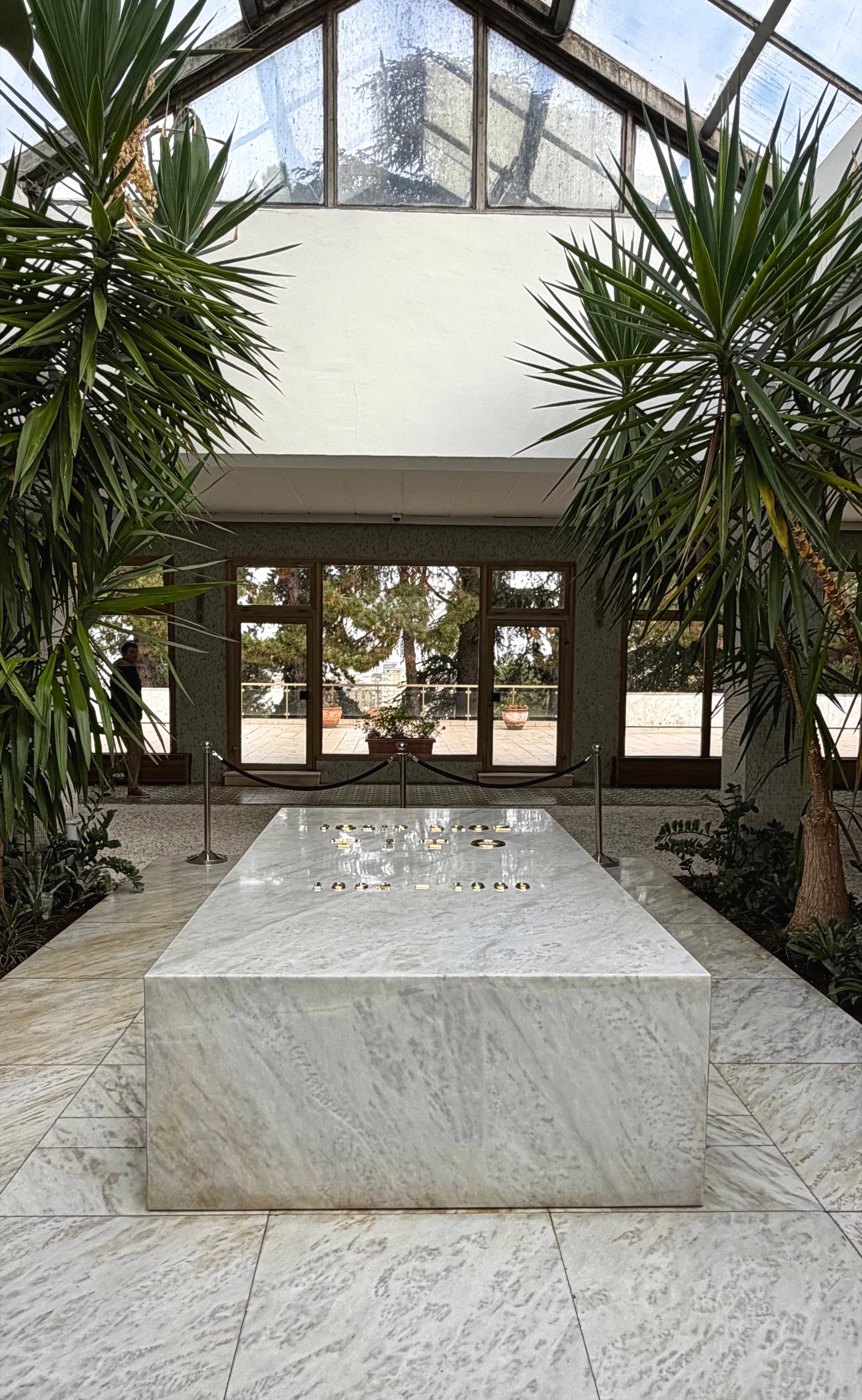 Tito’s marble tomb beneath palms and a glass roof in the House of Flowers, Belgrade.
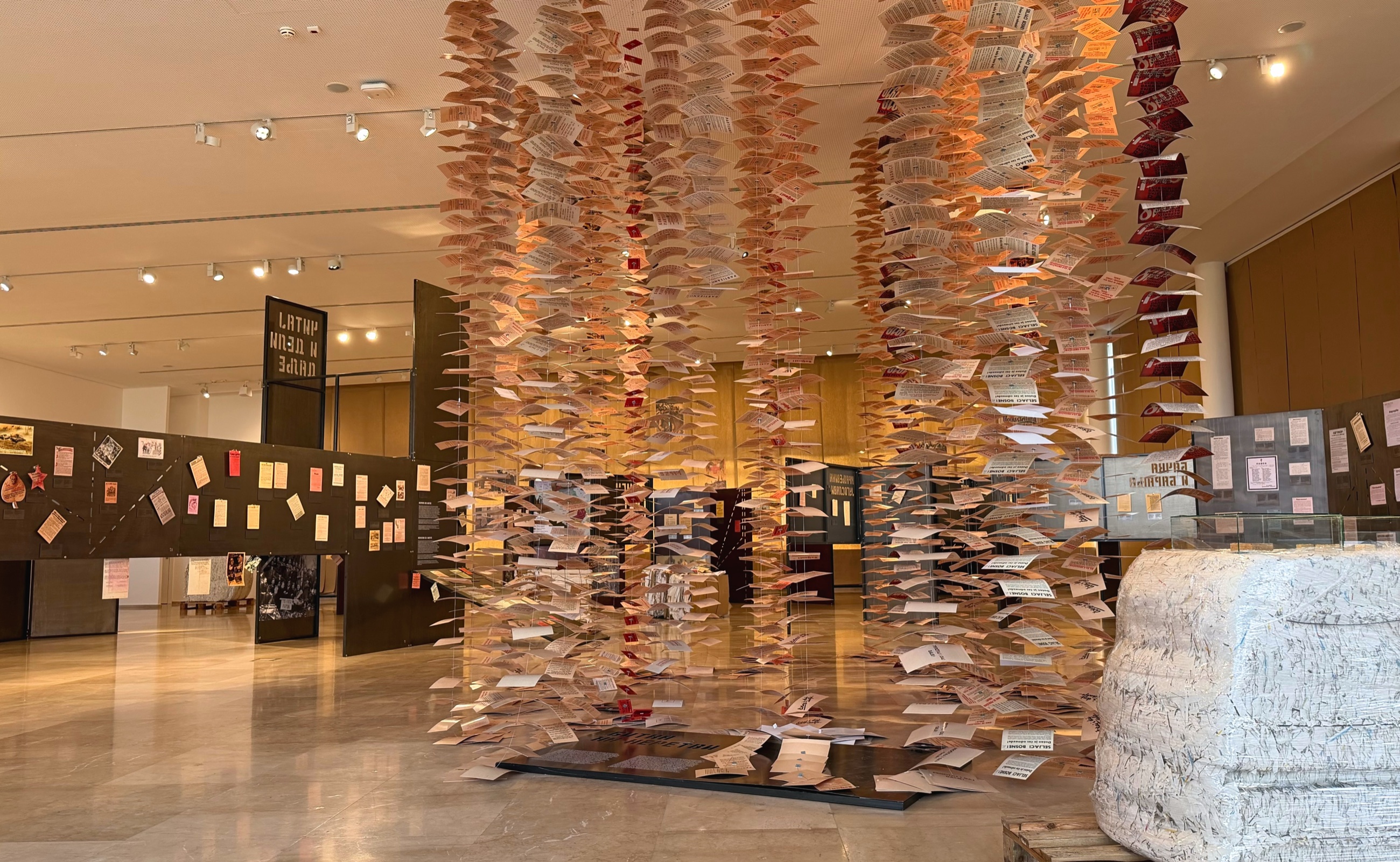 Suspended leaflets in Read and Pass It On, the wartime propaganda exhibition at Belgrade’s May 25 Museum.
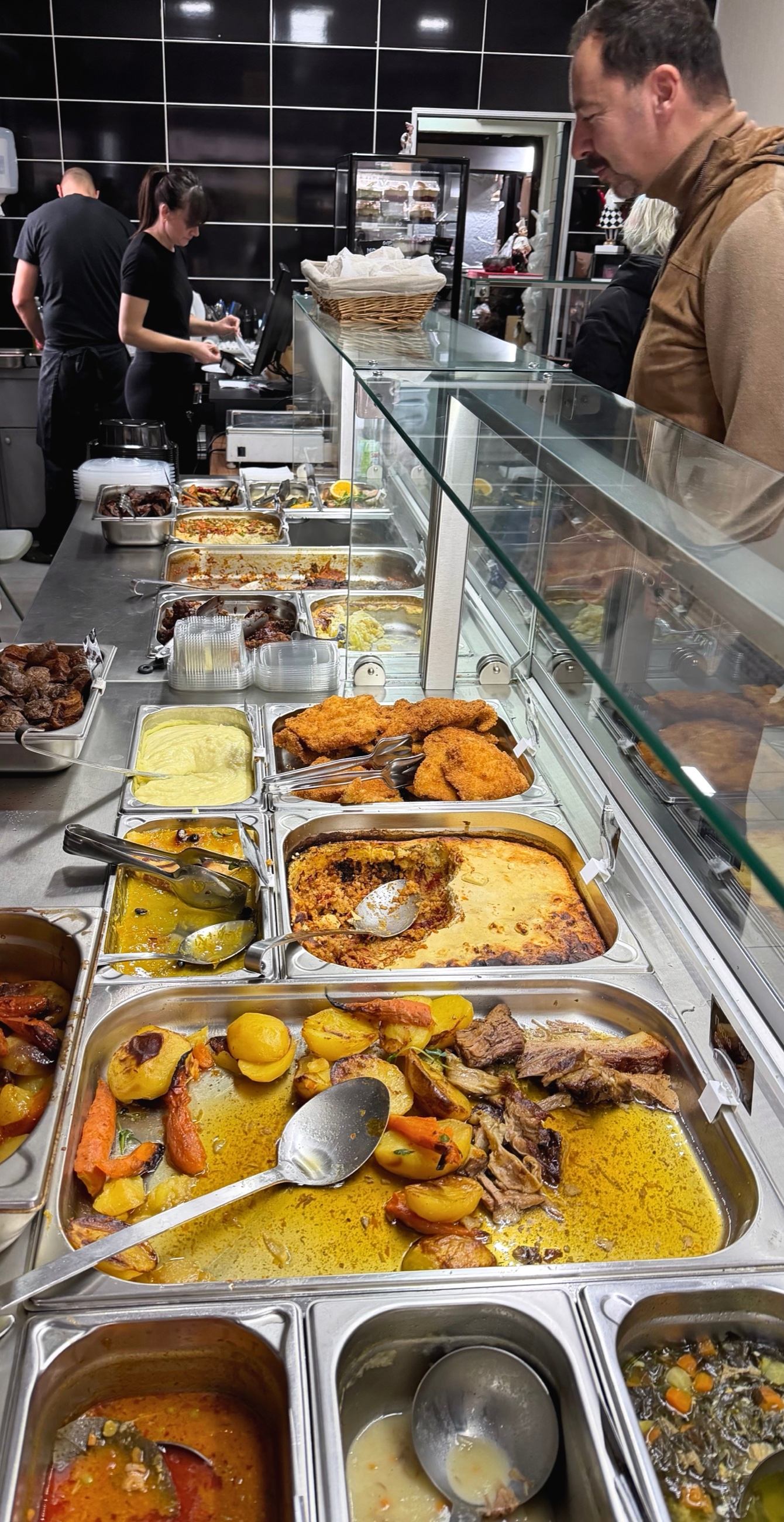 A counter of gotova jela, ready-cooked dishes, at our lunch stop in Belgrade’s Dedinje district.
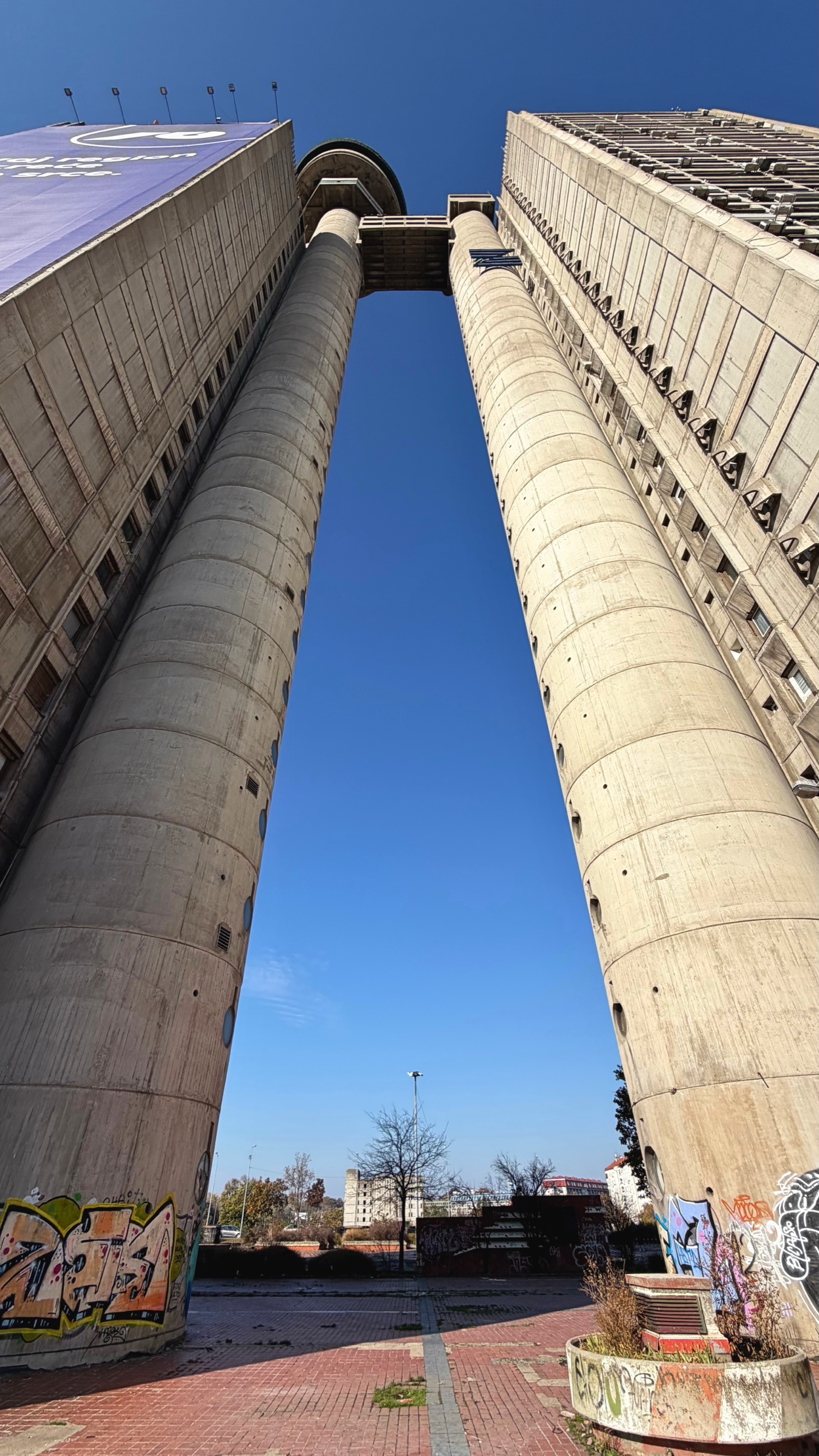 Looking skyward between the Genex towers, New Belgrade’s Western City Gate.
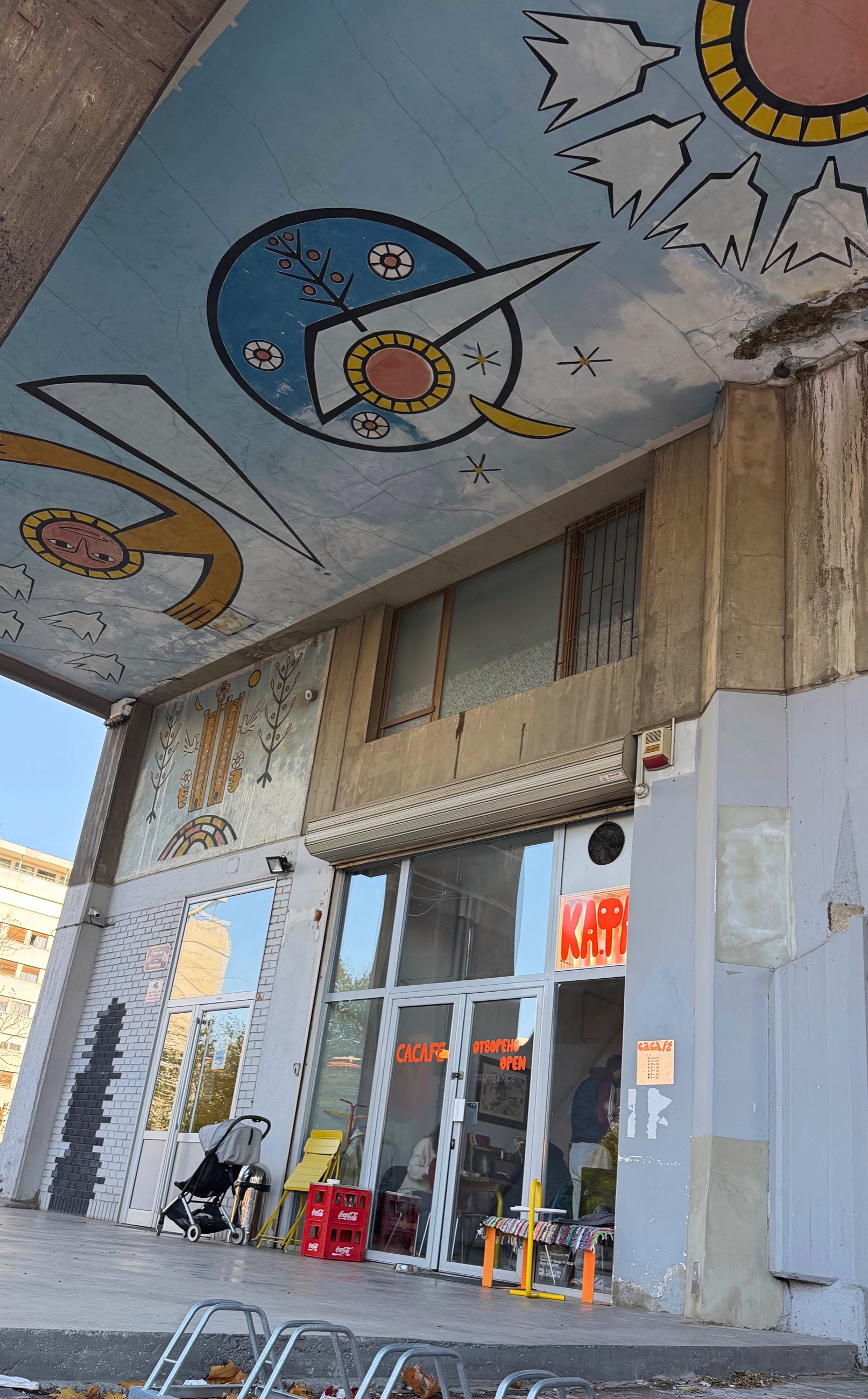 Painted suns and birds above Ca.Ca.Fe’s entrance at the base of New Belgrade’s Genex Tower.
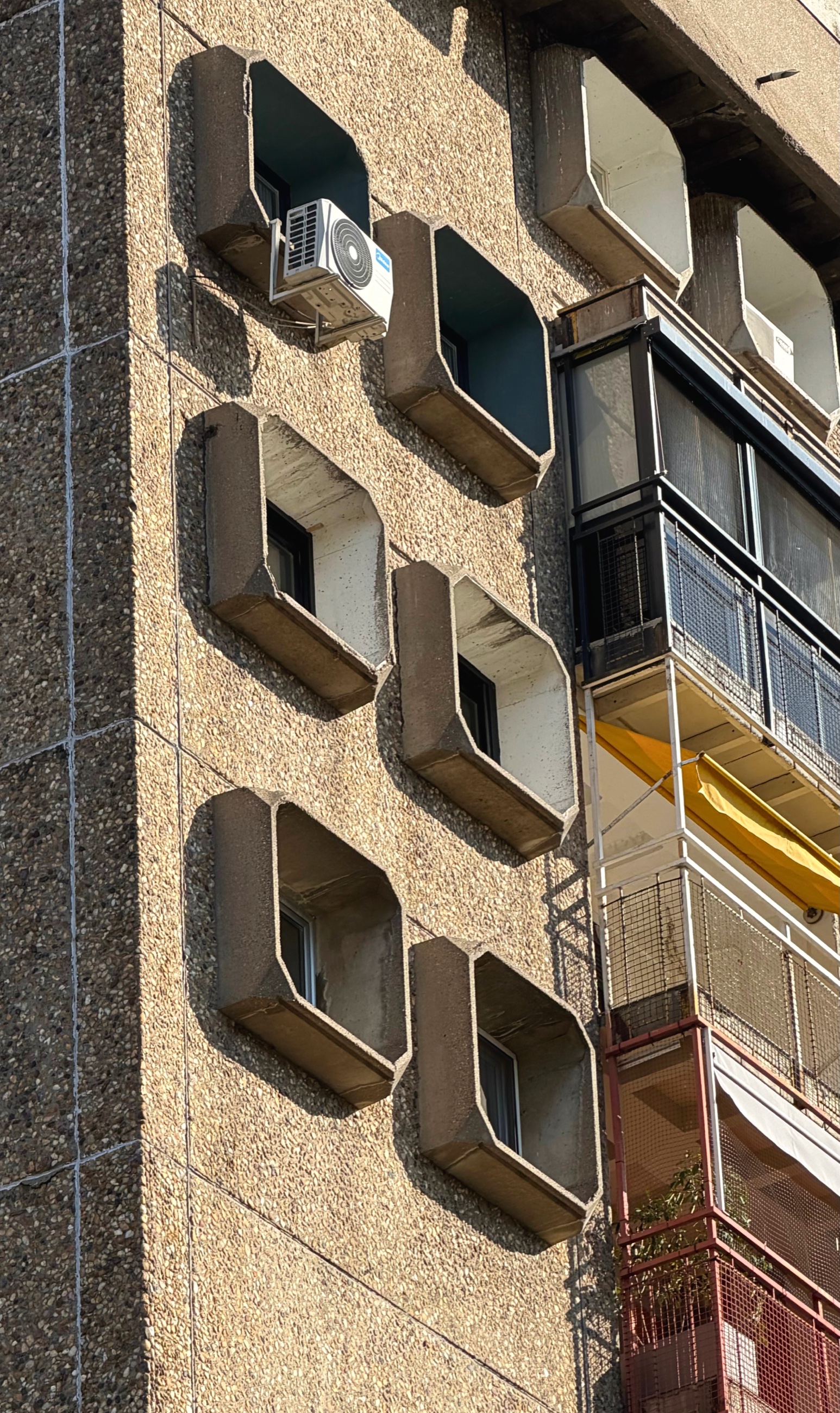 Deep window frames and colorful balconies at Televizorke, the “television” buildings in New Belgrade’s Block 28.
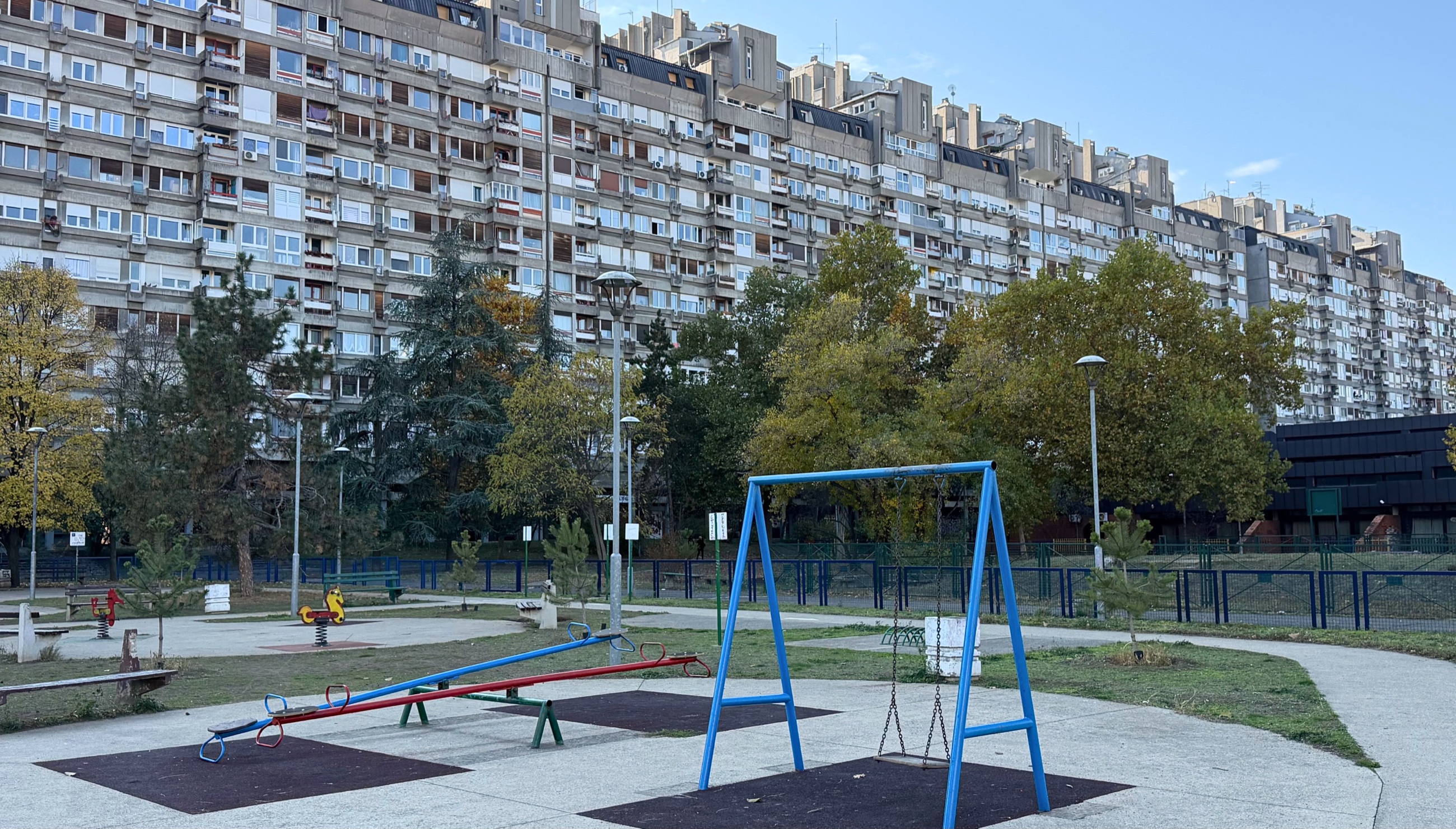 A playground beneath the long Brutalist apartment façade in New Belgrade’s Block 23.
🎯 Next Week Preview
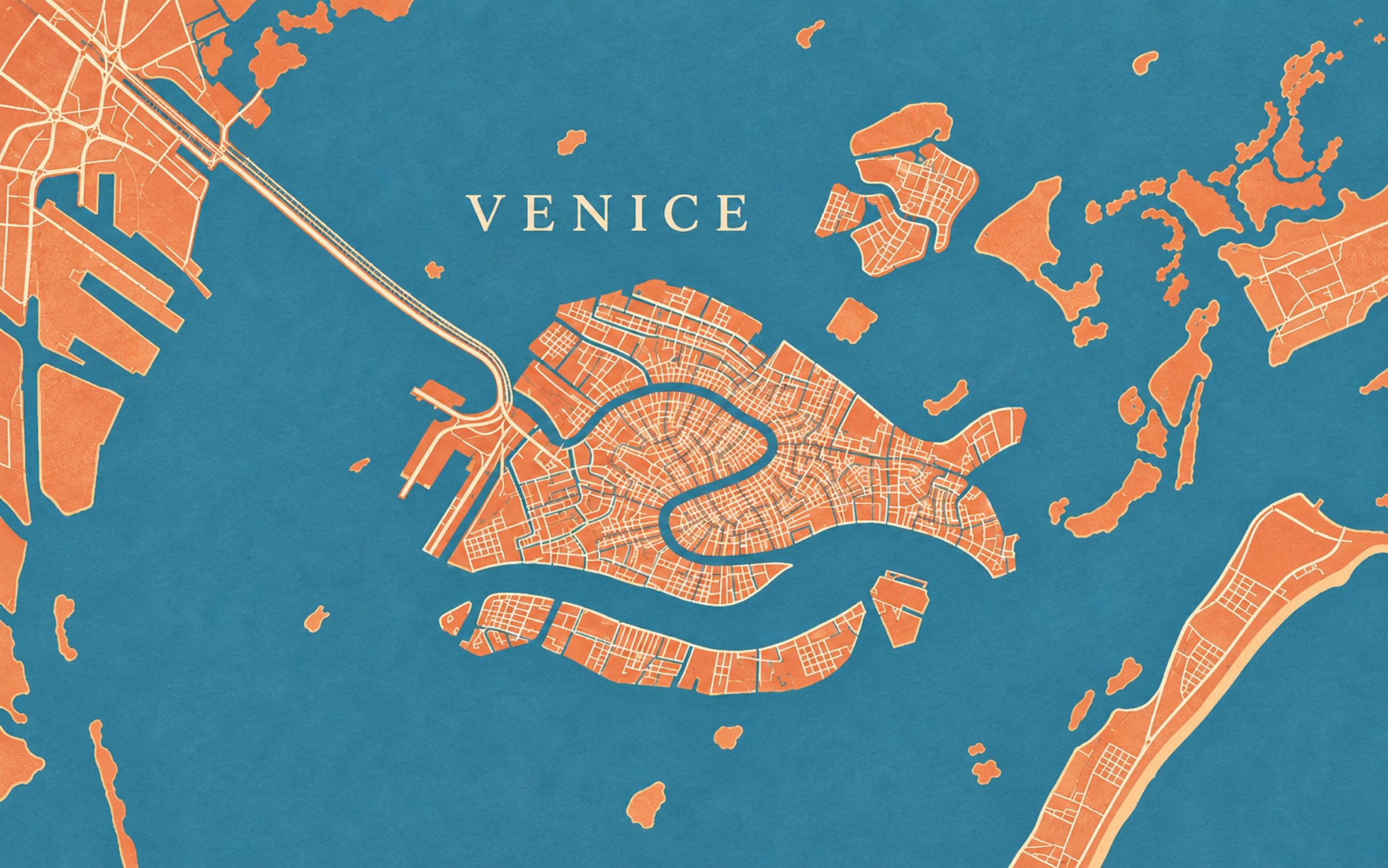 Venice’s historic center sits within a lagoon, linked to the mainland by road and rail. AI-created illustration.
Our next stop is Venice, where we plan to celebrate Stephanie’s birthday before settling into Bologna for the rest of our twenty-eight nights in Italy. For months we have been coming across pieces of the old Venetian Republic. We walked through ports it governed in Dalmatia and around the Bay of Kotor, looked out over the Vivari Channel from the Venetian castle at Butrint, and found its influence at dinner in Kassiopi, where we ate Corfiot sofrito overlooking the harbor. Now we will see Venice itself. Then it is on to Emilia-Romagna, an apartment in Bologna, and a new set of decisions about where to buy groceries and what to have for lunch.
💌 Personal Connection
Among the places we have called home this year are Ohrid, Split, Kotor, Bar, and now Belgrade, five cities that today lie in four countries. Within living memory, a family could have moved among all five without leaving Yugoslavia.
Of everything we saw at the museum, the relay batons brought that geography closest. After months in the former Yugoslavia, we could picture the distances a baton covered from one town to the next, and many of the towns themselves. Belgrade was the capital at the far end of that route.
In our first week here, we wrote that Belgrade is where many of the region’s threads lead back. We meant it as history. By the end of the month it held in a smaller way, too: a bakery whose staff knew us by sight, bus lines we no longer had to check, and the bells of Saint Sava from an apartment in Vračar.
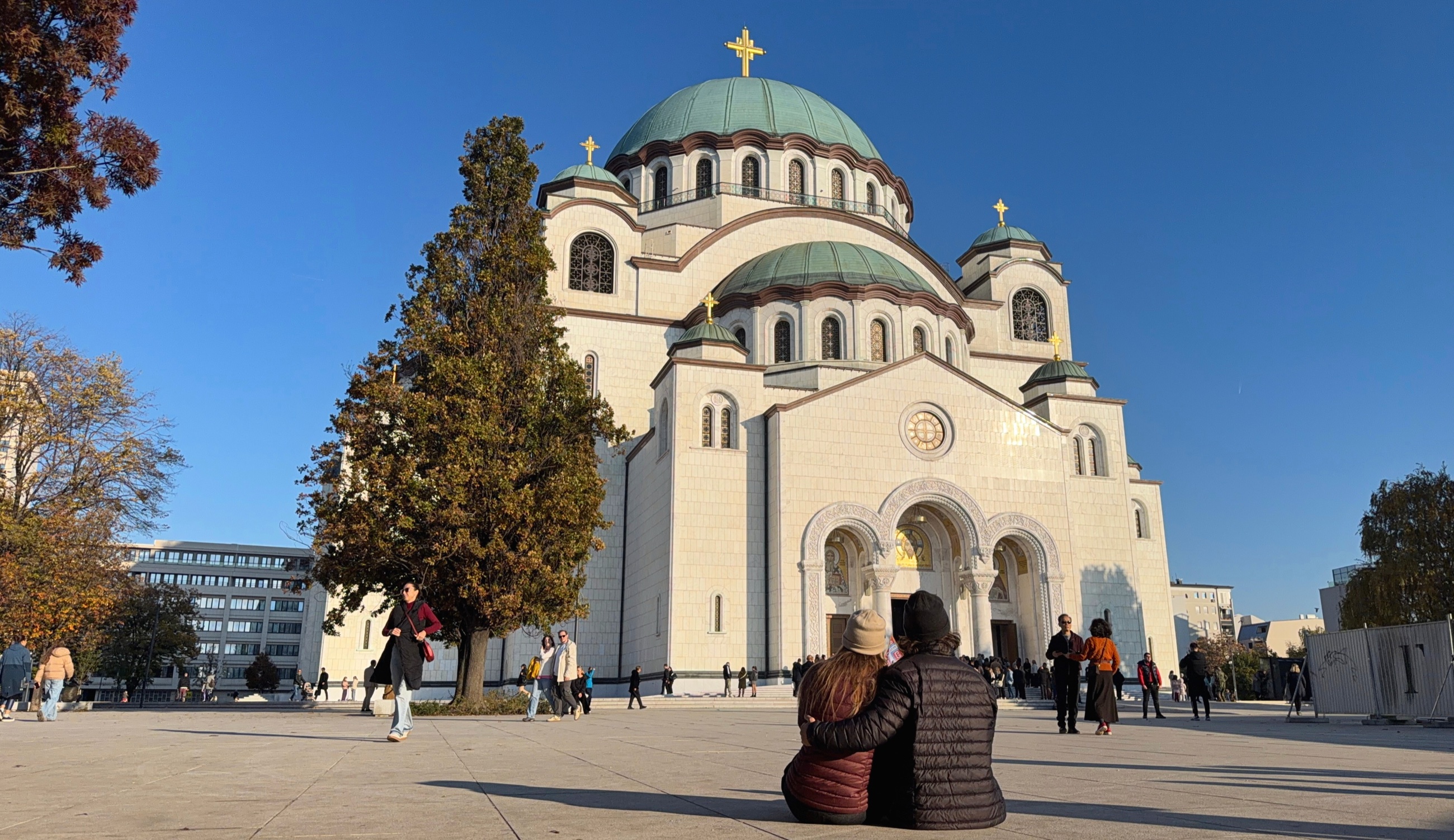 Together outside Saint Sava, a familiar landmark on our daily walks around the neighborhood.
Until next week,
S&S
Some Great Place · Living Local in a Global World · somegreatplace.com