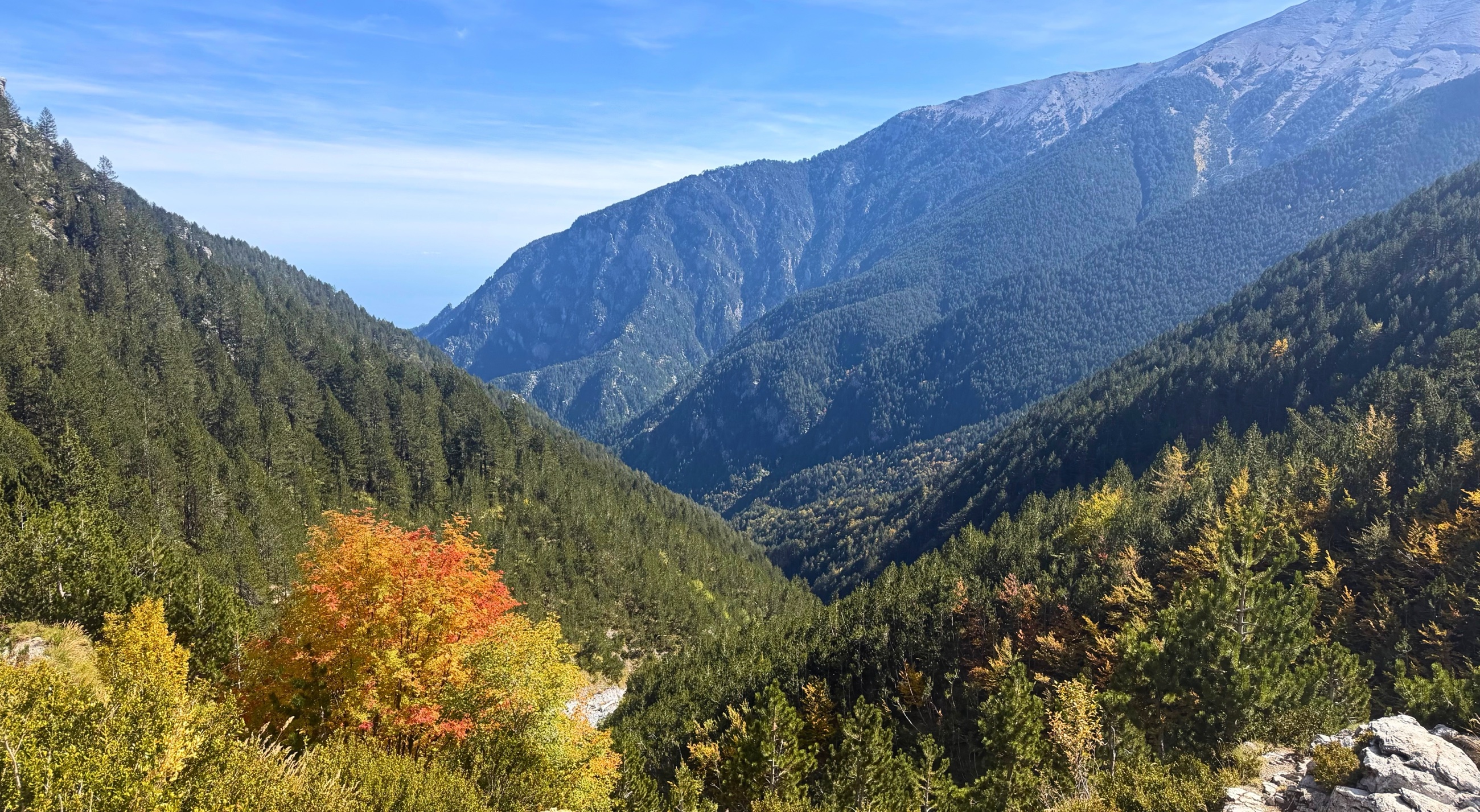
 The forested slopes and limestone ridges of Mount Olympus in early autumn.
A climb on Greece’s highest mountain, a day across the kingdom of Philip and Alexander, and a stop in biblical Berea close our time in northern Greece.
Last week we wrote that in Thessaloniki, history rarely requires an excursion. This week, we drove beyond the city to the places where some of that history began.
Two rental cars carried us out of the city on two separate days. The first went south to Mount Olympus for the steepest climb of our travels so far. The second went west across the Macedonian plain to Aigai, Veria, and Pella: the places where Philip II built a kingdom, where Alexander inherited it, and where the Apostle Paul found a receptive audience nearly four centuries later.
Between those trips, we kept to our usual routine. Mornings and early afternoons were for the gym, errands, coffees, and exploring the city. We worked later in the afternoons and evenings, with time for waterfront walks when the day allowed. After twelve nights, we left Thessaloniki with a deeper appreciation for northern Greece and a conclusion that has been building over several visits: Greece is our favorite country outside the United States.
📍 This Week in Thessaloniki
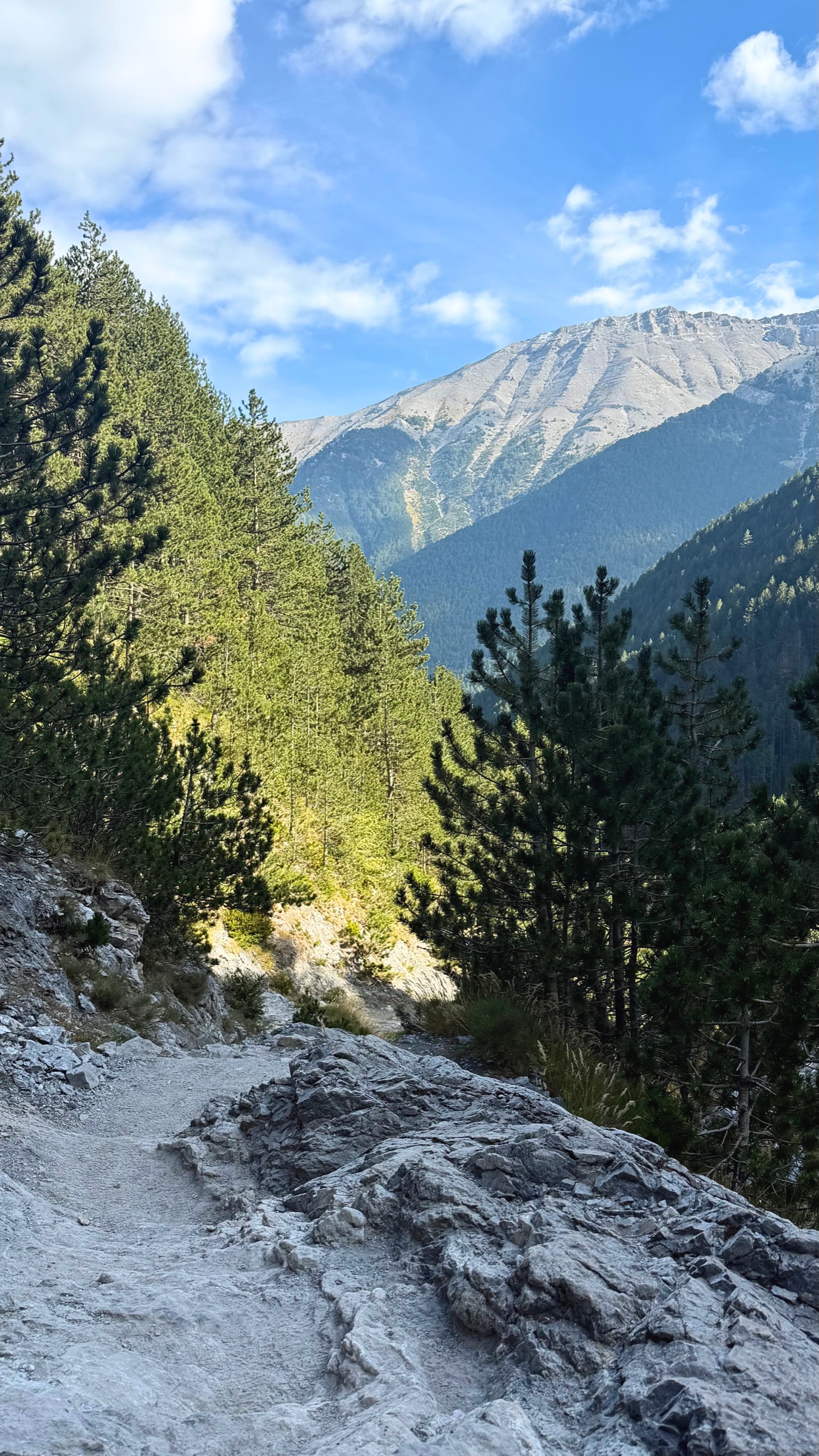 The rocky E4 trail winds through the pine forest along the upper slopes of Mount Olympus.
Mount Olympus in a Day: Prionia to Refuge A
In ancient Greek mythology, Mount Olympus was the home of Zeus and the twelve Olympian gods. Its highest summit, Mytikas, takes its name from the Greek word for nose and rises 9,570 feet. A neighboring peak, Stefani, is known as the Throne of Zeus. Today the mountain is a national park, forested on its lower slopes and bare, broken limestone far above.
We had one day, so we chose the route that gave us the most mountain for the time: the E4 trail from Prionia to the Spilios Agapitos refuge, known as Refuge A, at 6,890 feet. It reaches well into the upper mountain without requiring a technical summit climb.
We picked up a rental car in Thessaloniki and drove about ninety minutes southwest, past the gateway town of Litochoro, to Prionia. At roughly 3,600 feet, it is the highest point on the mountain reachable by car. The weather cooperated: clear skies, cool morning air, and temperatures warming toward 60°F by afternoon.
The climb
The trail wastes no time. It climbs straight into the forest above the parking area and keeps climbing, through round after round of switchbacks, across dry ravines, and up through stands of pine. There is almost no level ground. Gradually the trees open, and through the gaps the valley falls away below while the upper ridges rise above. Higher still, the pines thin, the trail becomes exposed, and the sun takes over.
The grade never eases. It simply continues until the stone buildings of the refuge appear around a bend.
The refuge
Olympus is served by a network of mountain refuges, called katafygia, that provide meals, water, and bunks. Refuge A is the best known. Climbers bound for Mytikas and Stefani eat a meal here, sleep, and set out for the summits the next morning. For day hikers, it is the natural turnaround.
We took a picnic table on the sunny deck and ate the lunch we had carried up, looking across the ridges toward the valley below. The rest was necessary. So was the time to gather some resolve for the descent.
The way down was nearly as demanding as the way up. The trail is steep and covered in loose rock, and it asks for careful footing from legs that have already done their work. We reached Prionia six and a half hours after leaving it, including lunch and every rest stop: 6.8 miles round trip and 3,286 feet of elevation gain.
Measured against the Albanian Alps
For comparison, we thought back to the Valbona-to-Theth crossing in the Albanian Alps, which we hiked earlier this summer. Valbona is an up-and-over route of about ten miles, so nearly all of its 3,100 feet of climbing comes in the first five miles, about 620 feet per mile.
Olympus asked for more in less: nearly 3,300 feet in just 3.4 miles, close to 1,000 feet per mile. A grade like that, held for more than three miles, is uncommon on maintained trails in the United States. It was far from our longest hike, but it was the steepest sustained climb we have done.
Had anyone asked during the last hour of the ascent whether it was worth it, the honest answer might have been no. After a night’s sleep and a few days of recovery, the answer is yes. It was Mount Olympus, after all.
🎨 Cultural Deep Dive
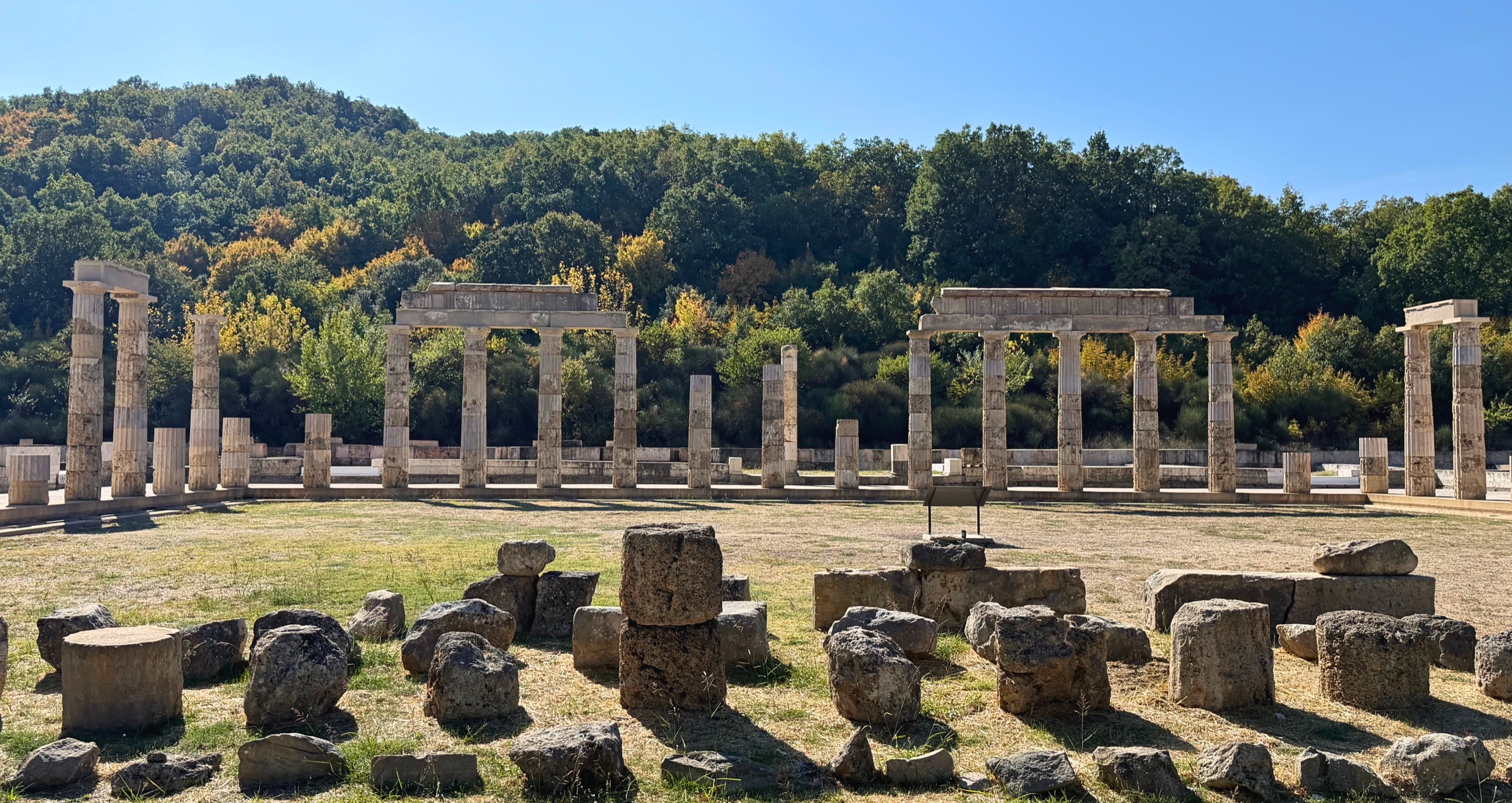 The central courtyard of the Palace of Aigai, where Alexander the Great was proclaimed king in 336 BC.
Aigai, Berea, and Pella: A Day Across Ancient Macedon
For our second rental, we drove west into the Macedonian countryside with three stops in mind. Aigai was the kingdom’s first capital and royal burial ground, where Philip II was assassinated and Alexander was proclaimed king. Veria, ancient Berea, was Paul’s next stop after he left Thessalonica. Pella was the later capital and Alexander’s birthplace. We kept to the outdoor sites and skipped the paid museums, a tradeoff we explain in Nomad Real Talk.
Aigai: where Philip fell
Vergina, the modern village beside ancient Aigai, sits a little over an hour west of Thessaloniki at the foot of the Pierian Mountains. Aigai remained the ceremonial and burial center of the Macedonian kings long after the court moved to Pella.
Philip II ruled from 359 to 336 BC. He took a kingdom long overshadowed by Athens, Sparta, and Thebes and made it the dominant power on the Greek mainland. His instrument was a reformed professional army built around the phalanx, its infantry armed with sarissas, pikes about 18 feet long, and supported by heavy cavalry. Victory over an alliance led by Athens and Thebes at Chaeronea in 338 BC left Macedon dominant over mainland Greece. Philip then began planning an invasion of the Persian Empire, presenting it as revenge for the Persian Wars nearly 150 years earlier, when the army of Xerxes burned Athens and the temples on its Acropolis.
Philip would not live to lead it.
We started at the royal tomb complex, now enclosed in a museum built beneath a reconstructed earthen mound. In 1977, the archaeologist Manolis Andronikos uncovered unlooted royal burials here, including a tomb most scholars attribute to Philip, with a gold casket, weapons, and funerary furnishings still in place. We walked the outside of the mound, looked down into the dark entrance, and took the road uphill.
The walk to the theater takes about twenty minutes. On a sunny October morning, we had the rural hillside nearly to ourselves.
In 336 BC, Philip held celebrations at Aigai for the marriage of his daughter, Alexander’s sister, to Alexander I of Epirus. As he entered the theater, Pausanias, a member of his own bodyguard, stabbed him to death. The theater survives as stone foundations, the circular orchestra, and the lowest row of seating. The palace stands on the terrace directly above it. From the orchestra, the distance between the place where Philip died and the courtyard where his son was acclaimed king is a short walk uphill.
The palace where Alexander became king
The Palace of Aigai occupies a broad terrace overlooking the plain. Archaeologists describe it as the largest building of classical Greece, roughly three times the size of the Parthenon. It was built under Philip around a great colonnaded courtyard, with a monumental entrance, banquet halls, and floors laid with mosaics.
Its planning was as deliberate as its scale. Researchers have identified a precise geometric scheme of squares, dodecagons, and concentric circles, which some connect to Plato’s concept of the Anima Mundi, or Soul of the World. If so, the palace gave physical form to an ideal of cosmic order through mathematics and proportion.
The palace reopened to visitors in early 2024 after a long restoration. Part of the two-story colonnade at the entrance has been rebuilt, original stone set beside new, and the outlines of the rooms, along with sections of mosaic floor and painted plaster, make the original plan easier to read.
We walked into the central courtyard, where tradition holds that the army acclaimed the twenty-year-old Alexander as king. With the reconstructed columns behind us and the plain spread out below, the reach of Philip’s ambitions was easier to grasp.
Alexander inherited a trained army, a consolidated kingdom, and his father’s plans for Persia. In 334 BC, he crossed into Asia Minor. He defeated Darius III at Issus in 333 BC and again at Gaugamela in 331 BC, and his campaigns carried Macedonian rule through Egypt, Mesopotamia, and Persia to the edge of India. He died in Babylon in 323 BC, at just thirty-two, following a sudden illness whose cause remains uncertain.
Alexander’s unintended legacy
The empire broke apart among his generals almost immediately. What lasted was cultural. The successor kingdoms established Greek-speaking cities and institutions across the eastern Mediterranean and the Near East. Thessaloniki, our home for the past twelve nights, was one of them: Cassander, a Macedonian ruler who emerged from the struggles following Alexander’s death, founded it in 315 BC and named it for his wife, Thessalonike, Alexander’s half-sister. Across this new world, Koine Greek, a common form of the language, became the shared medium of government, trade, and learning. Local languages and traditions continued, but Greek allowed people to communicate across those boundaries.
Roughly four centuries after Alexander, the New Testament would be written in that language. We have followed the influence of this Greek-speaking world for months: in Istanbul, once the capital of the Eastern Roman Empire; in Ohrid, where Clement and Naum, disciples of the Thessaloniki-born brothers Cyril and Methodius, helped establish Slavic Christianity; at Butrint, near Sarandë, where an ancient Greek city became a Roman colony and later an early Christian center; and in Thessaloniki, where we traced Paul’s first visit to the city. At Aigai, we were standing near the beginning of that history.
From a Christian perspective, this history is a striking example of God’s providence. Alexander pursued conquest and personal glory at enormous human cost, with no knowledge of how his ambitions would serve purposes far beyond his own. Yet the Greek-speaking world his campaigns established became instrumental in spreading the Christian gospel. His empire did not endure, but its influence helped prepare the way for a message that would outlast it.
Veria: the Bereans
From Aigai, Veria is about twenty-five minutes by car.
Around AD 50, Paul and Silas spent three Sabbaths preaching in the synagogue at Thessalonica before opposition forced the city’s new believers to send them away by night, toward Berea. Acts 17 picks up the story here. Luke writes that the Bereans were more noble-minded than those in Thessalonica, because they received the message eagerly and examined the Scriptures daily to see whether what Paul said was true. For Christians, the passage has long stood for a particular combination: openness to hearing, and the responsibility to test what is heard.
The Bema (Greek for “speaking platform”) of the Apostle Paul stands near the historic center, a modern monument with mosaics of Paul’s ministry. Its three marble steps are traditionally believed to have come from the synagogue where he preached. The exact spot cannot be established, but the monument keeps the city’s connection to the account in plain view.
Having walked Thessaloniki a week earlier, we found that the geography made the passage clearer. Thessalonica and Berea lie about 45 miles apart, and Paul was moving through a connected landscape of Roman roads, established Jewish communities, and Greek-speaking cities, the same world Alexander’s campaigns had shaped.
Veria deserved more time than we gave it. Its compact center holds dozens of small Byzantine churches, and the old Jewish quarter of Barbouta lines the river below, though we did not reach it. After lunch, we walked to Elia Park, known locally as the Balcony of Veria, and followed its tree-lined path along the bluff overlooking the vast Macedonian plain. Beside the park stands the Church of Saint Anthony the New, dedicated to Veria’s patron saint. The present church dates to 1904, replacing an earlier building destroyed by fire. We stepped inside for a brief look at its richly decorated interior, with Byzantine-style frescoes and an elaborate carved iconostasis.
Pella: the capital in outline
The drive from Veria to Pella took us off the main roads and onto narrow lanes through farmland, past cotton fields and over small one-lane bridges. Central Macedonia is one of Greece’s principal cotton-growing regions. Much of this fertile plain was once covered by water. In antiquity, Pella was connected to the Aegean through a navigable lagoon, giving the Macedonian capital access to maritime trade and transportation. Over the centuries, river sediment filled the lagoon, leaving the ancient city well inland.
Pella was also the birthplace of Alexander the Great, who was born here in 356 BC and spent his boyhood at its court. King Archelaus had moved the royal seat here around the end of the fifth century BC, and Pella grew into the largest city in Macedon, with an organized street grid, a water supply and drainage system, a vast public marketplace (agora), a palace on the hill, and wealthy houses floored with pebble mosaics.
We arrived late in the day and viewed the site from the perimeter fence. From there, Pella is a ground plan: low stone foundations and the outlines of streets and houses stretching across level ground. After the rebuilt colonnade at Aigai, the contrast was sharp. One site reveals the grandeur of the Macedonian monarchy. The other preserves the foundations of the capital from which its kingdom was governed.
By evening, we were driving east toward Thessaloniki.
🍽️ Local Flavor Discoveries
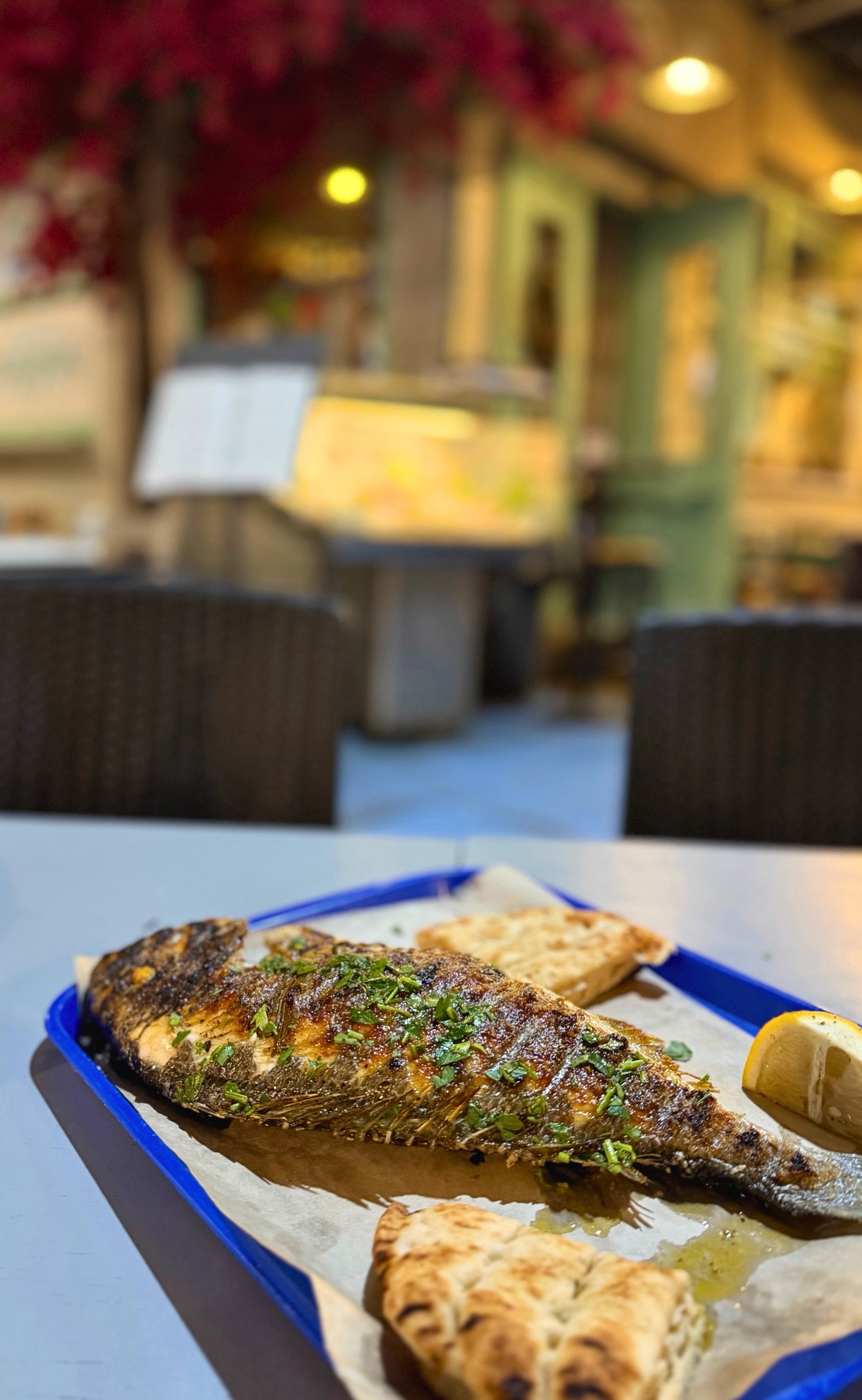 Wild-caught grilled sea bream at MareLab in Thessaloniki.
A Family Taverna in Veria and a Last Fish Lunch
Taverna Platanos, a family-run restaurant serving Veria since 1956, was one of our favorite dining discoveries of the week. Antonis Moustakas founded it, his son Georgios carried it on, and today it is run by the third generation, brothers Antonis and Stefanos. Locals count it among Veria’s best and most affordable tavernas, with a menu built around local produce and regional recipes.
We stopped for lunch after visiting the Bema of the Apostle Paul. For €30 ($34), we shared white salad (a creamy, yogurt-based slaw), grilled chicken and pork in a savory sauce, fried local cheese, and house wine. The kitchen finished with a complimentary ekmek kataifi, a Greek dessert of shredded pastry soaked in syrup and layered with custard and cream. It was a generous, hearty lunch and excellent value for two.
After a walk along the bluff at Elia Park, we stopped for coffee at Poetry Coffee Gallery near the commercial center. Its relaxed, gallery-like interior made it a pleasant place to end our afternoon in Veria.
Back in Thessaloniki that evening, we returned the car and walked to Pizza Pezouli. From the open kitchen, we watched the chef prepare our €11 ($12) pizza, freshly slicing the prosciutto, Parmesan, and mozzarella, adding crushed tomato, arugula, and a splash of truffle oil, then sliding it into the wood-fired oven. The care he took with each ingredient showed in the result.
Our final meal out in Thessaloniki was lunch at MareLab, chosen for one reason: a last plate of fresh fish before leaving the coast. The day’s catch was displayed on ice at the entrance, and we selected a wild-caught sea bream, tsipoura in Greek, weighing about two pounds and large enough to share.
The kitchen grilled it and served it on parchment paper with chopped parsley, olive oil, and lemon, alongside pita and grilled local eggplant, peppers, and squash. The fish cost €29 ($32), including preparation.
It was a fitting last meal in a city where good food had been one of the steady pleasures of our stay.
💰 Nomad Real Talk
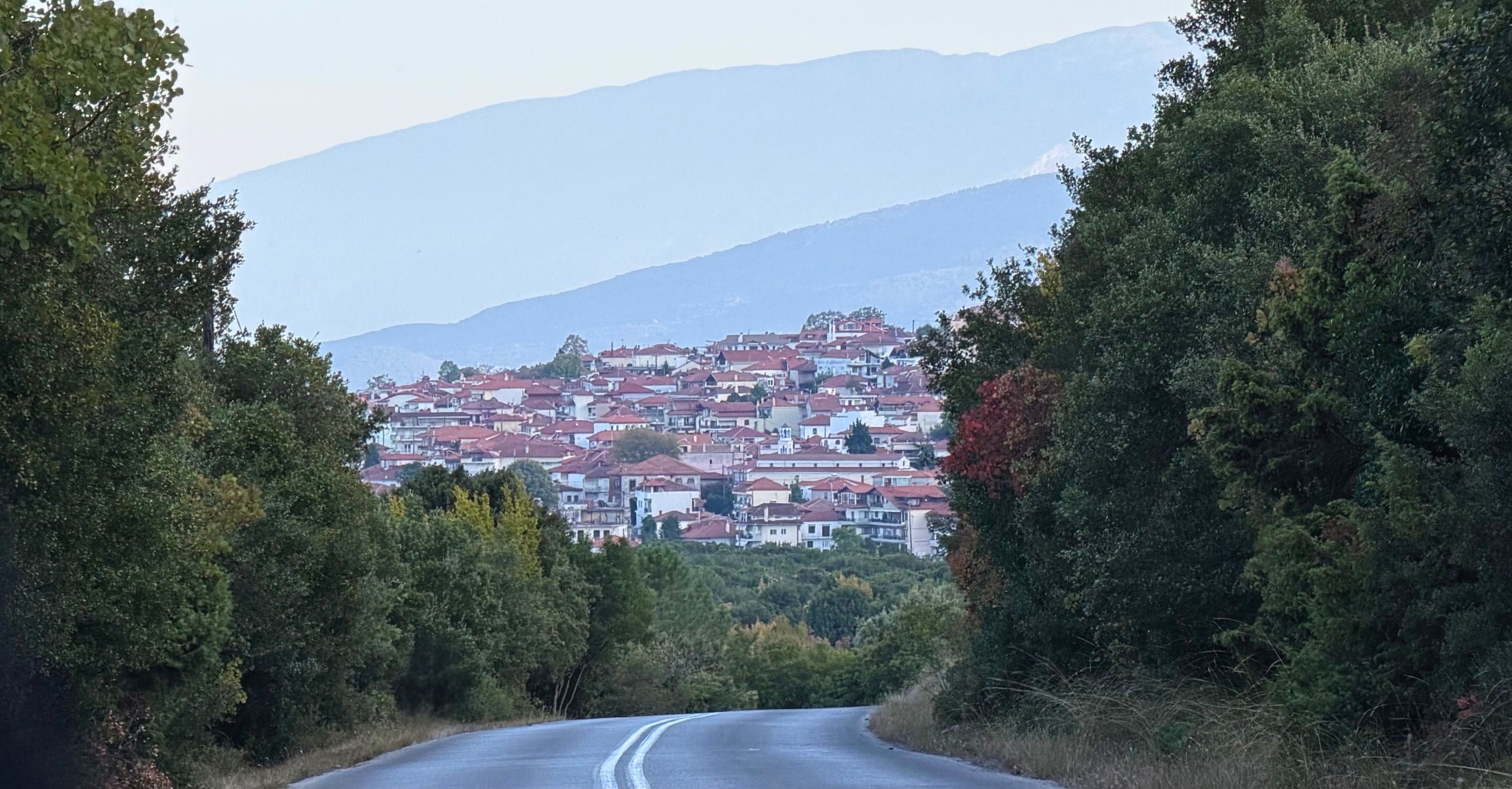 Litochoro, at the eastern foot of Mount Olympus, seen on our return drive to Thessaloniki.
Two Cars, Two Day Trips, €85 ($95)
Thessaloniki’s center is walkable enough that we never needed a car for daily life. Olympus and the Macedonian sites were another matter. Buses reach Litochoro, Veria, and Pella, but getting to the Prionia trailhead or visiting three archaeological sites in one day would have been difficult without a car.
We rented from local providers both times, choosing manual-transmission cars to keep costs down. The full-day rental for Mount Olympus cost €50 ($56), with unlimited mileage, while our day exploring Aigai, Veria, and Pella cost just €35 ($39), with limited mileage. That was €85 ($95) for both days, plus fuel.
Our Macedonian circuit covered roughly 120 miles and a little over three hours of driving: about an hour and ten minutes to Aigai, twenty-five minutes on to Veria, fifty minutes to Pella, and forty-five minutes back to Thessaloniki. Starting at Aigai let us make the uphill walk to the palace in the cooler morning hours. From there, we continued to Veria for lunch and sightseeing, then made a final stop at Pella on the way home.
On skipping the museums
We chose to skip the paid museum entries at Aigai and Pella. At Aigai, a €20 ($22) ticket per person covers the Royal Tombs and the Central Museum, while the palace and theater grounds were free to visit. With three stops, limited daylight, and a budget to manage, we concentrated on the outdoor archaeological sites.
The Royal Tombs Museum houses the burial chambers themselves, along with the gold objects, weapons, and furnishings discovered inside. It would be on our list for a return visit.
Olympus, practically
- Water: There is none on the trail. We each carried about 50 ounces (1.5 liters), enough for the climb in fall, and bought more at Refuge A for the descent.
- Footwear: Wear boots with real traction. The loose rock makes the descent the harder half.
- Layers: The temperature drops quickly with altitude, even on a clear day.
- Time: Plan on about six and a half hours round trip at a steady pace with breaks, and start early enough to finish before dark. October days are short in the mountains.
🏠 Behind the Nomad Curtain
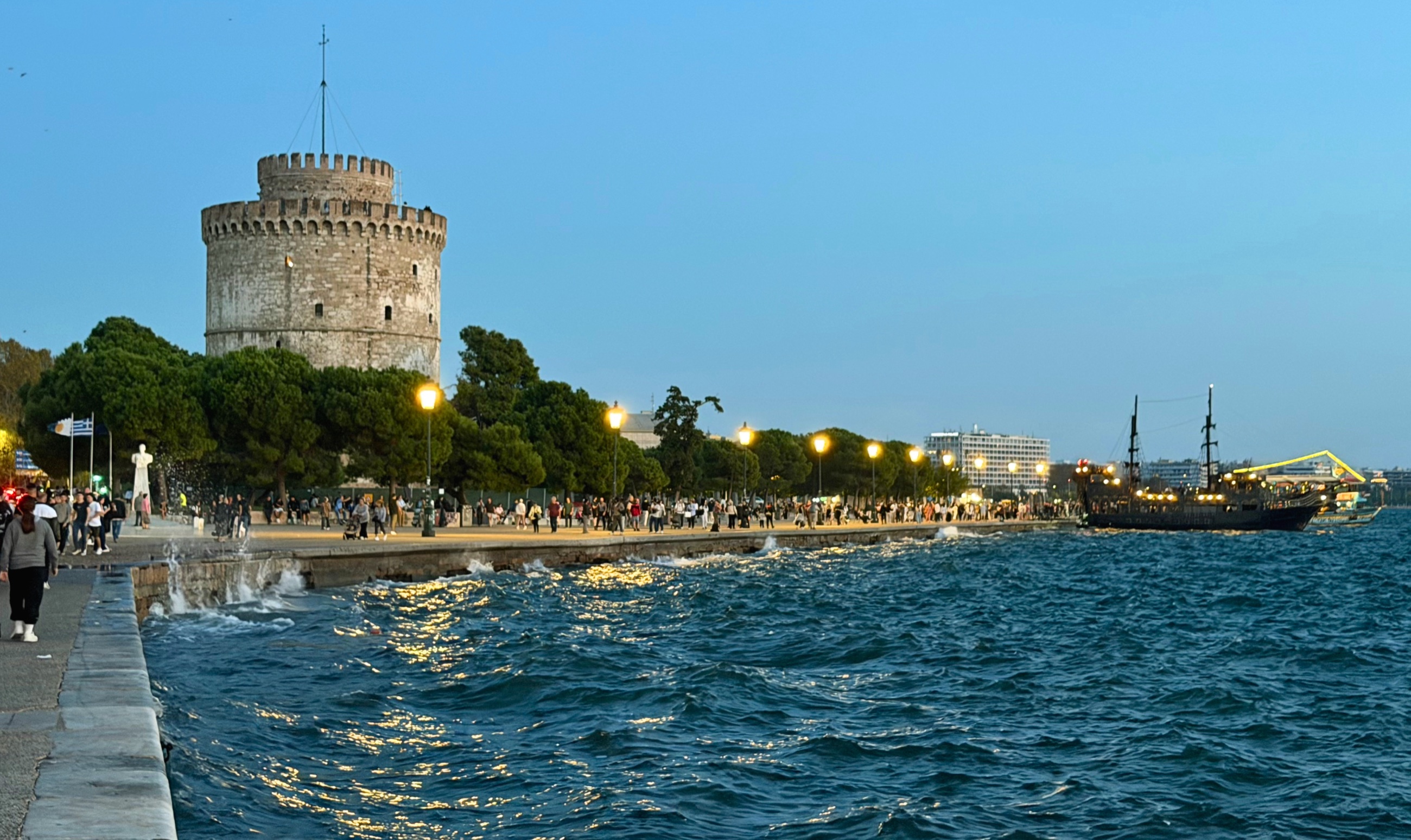 An evening stroll along Thessaloniki’s waterfront, with the illuminated White Tower and choppy waters of the Thermaic Gulf.
What Twelve Nights Allows
At twelve nights, Thessaloniki was shorter than most of our stays abroad. A month gives us time to develop a deeper familiarity with a city. With only twelve nights and work filling most of our afternoons and evenings, we had to be much more intentional about how we spent our time.
Our first week was devoted largely to Thessaloniki itself: its historic center, Roman ruins, Byzantine churches, neighborhoods, and waterfront. By the second week, we knew the city well enough to look beyond it. Two days went to rental-car excursions and another to recovering from Mount Olympus. Groceries and the gym carried on throughout.
The recovery day was particularly welcome. We did laundry, took our first ride on Thessaloniki’s new metro, and walked through the center on errands, including a stop at Tsomakos Jewels to collect the jewelry we had left for repair during our first week.
Thessaloniki made balancing it all relatively easy. The center is compact, much of the city is enjoyable to explore on foot, and our daily routine took shape quickly. That left us time and energy for the excursions, which required more planning. Olympus depended on a clear forecast and an early start. The Macedonian circuit required an efficient order of stops to make the most of the daylight.
Leaving was straightforward. A taxi to the airport cost about €30 ($34), followed by a short flight to Belgrade. Serbia is outside the Schengen Area, so our month there adds no new Schengen days while earlier ones gradually roll out of the 180-day window, which matters for the rest of our European route.
We would plan this stay the same way again. Twelve nights allowed us to explore Thessaloniki in considerable depth and venture into the surrounding region, while still leaving plenty of reasons to return.
📸 Photo Story of the Week
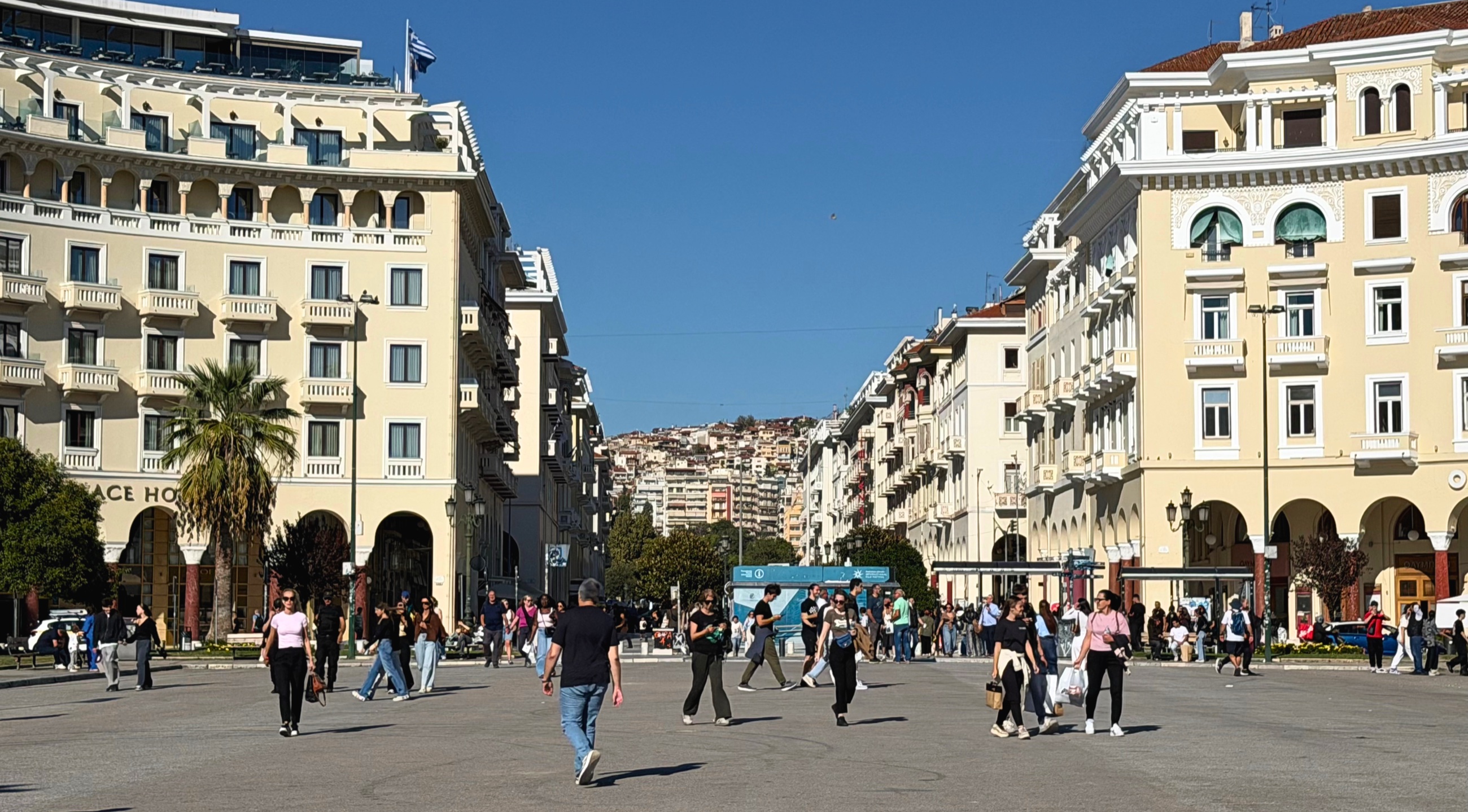 Aristotle Square: Pedestrians cross Thessaloniki’s grand central square, framed by elegant arcaded buildings and cafés.
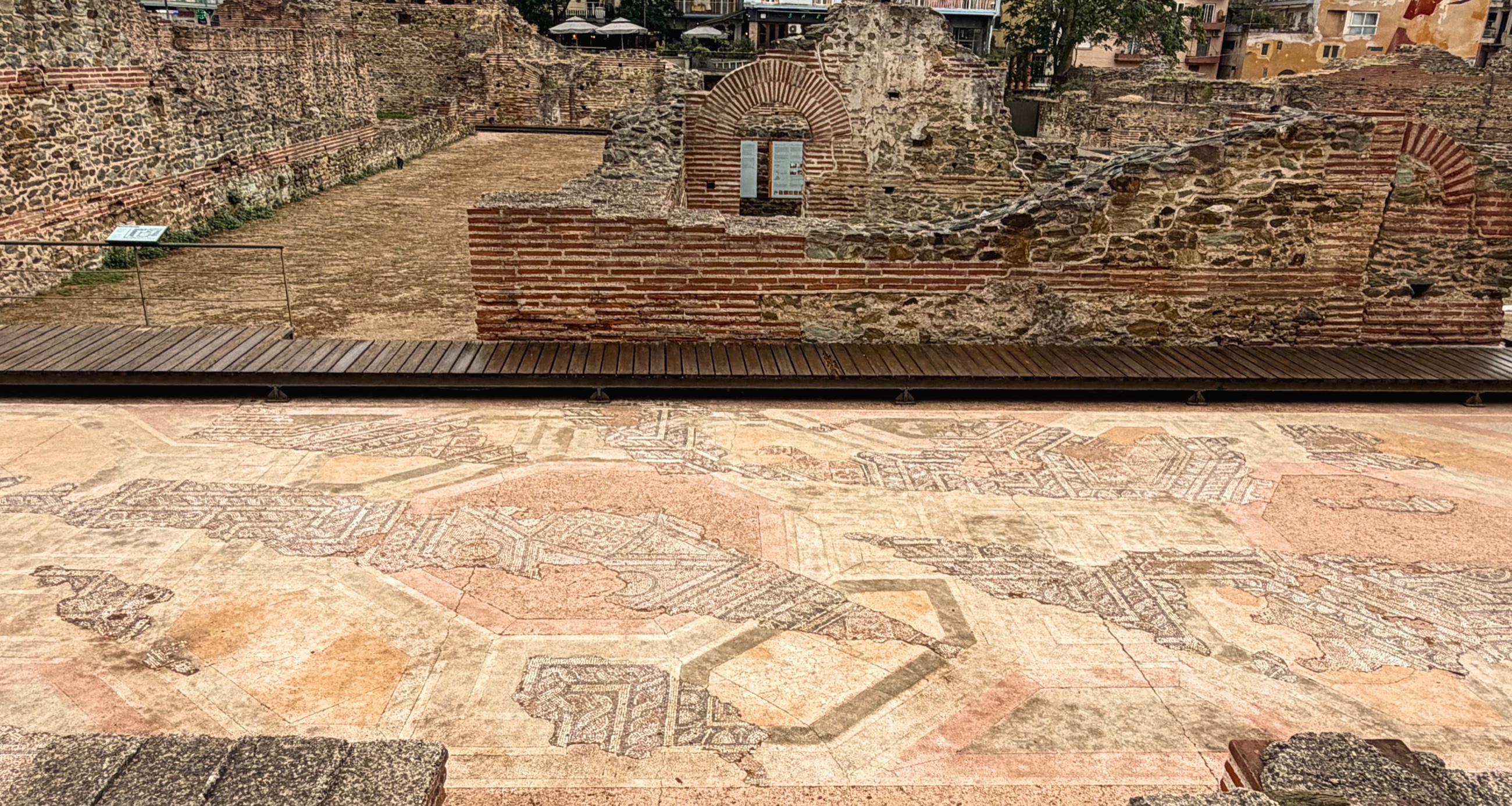 Roman Mosaic: An intricate Roman floor mosaic among the remains of the Galerian palace complex in the heart of Thessaloniki.
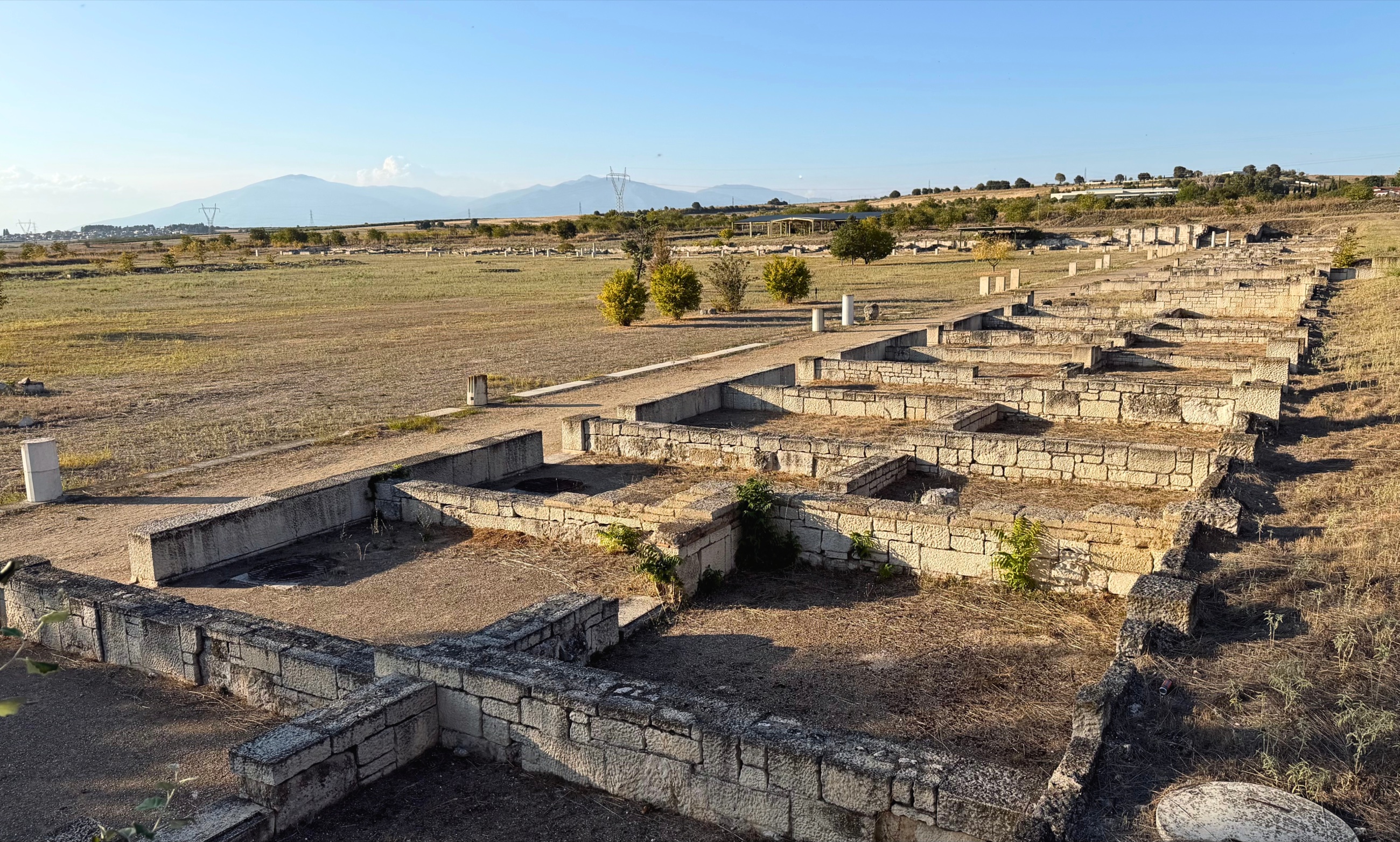 Ancient Pella: Excavated foundations stretch across Pella, the ancient Macedonian capital and birthplace of Alexander the Great.
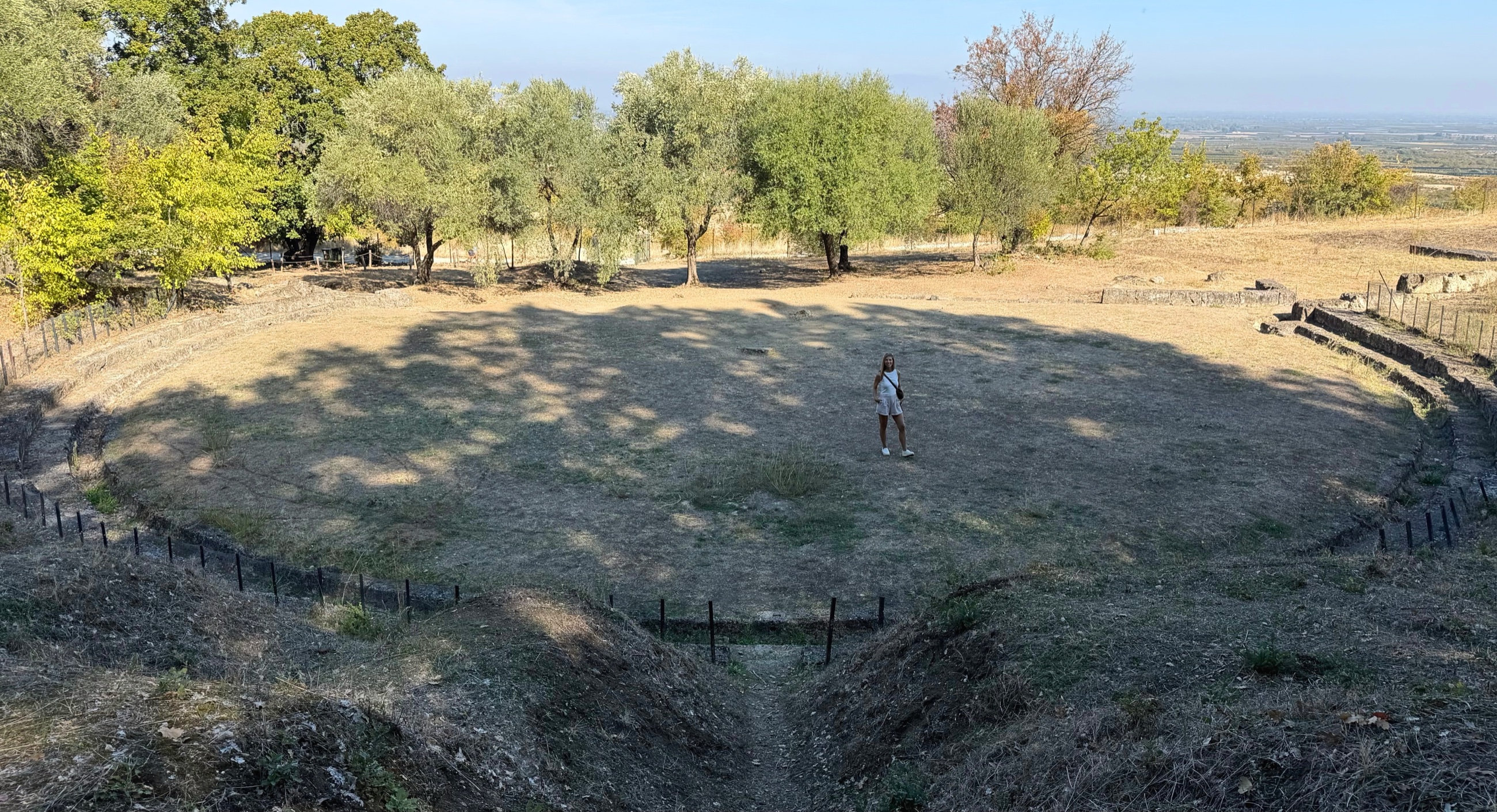 Theater at Aigai: Stephanie stands inside the ancient theater at Aigai, where Philip II of Macedon was assassinated in 336 BC.
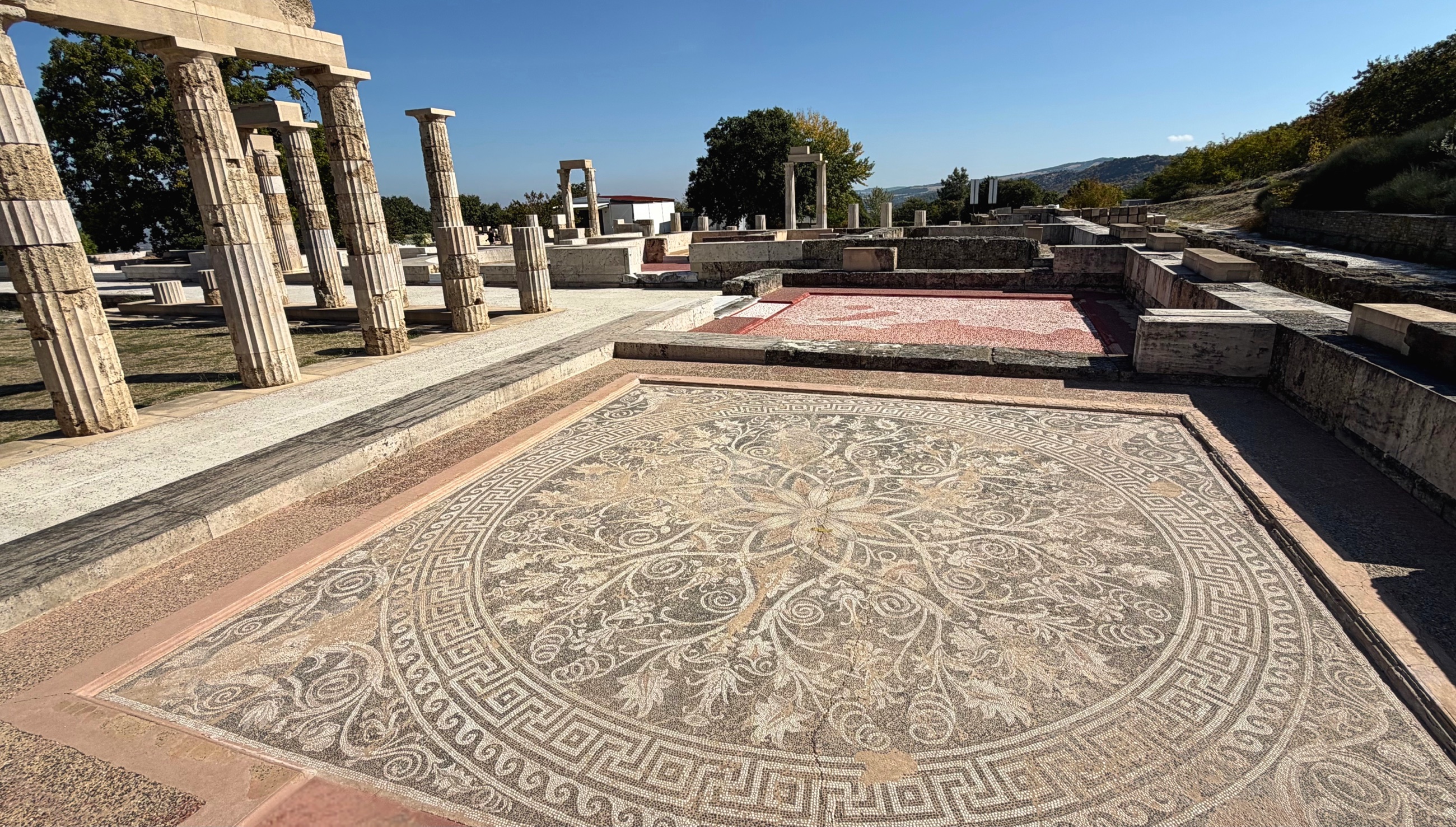 Palace of Aigai: An elaborate circular floor mosaic survives at the royal palace of Aigai, surrounded by reconstructed columns and ancient stonework.
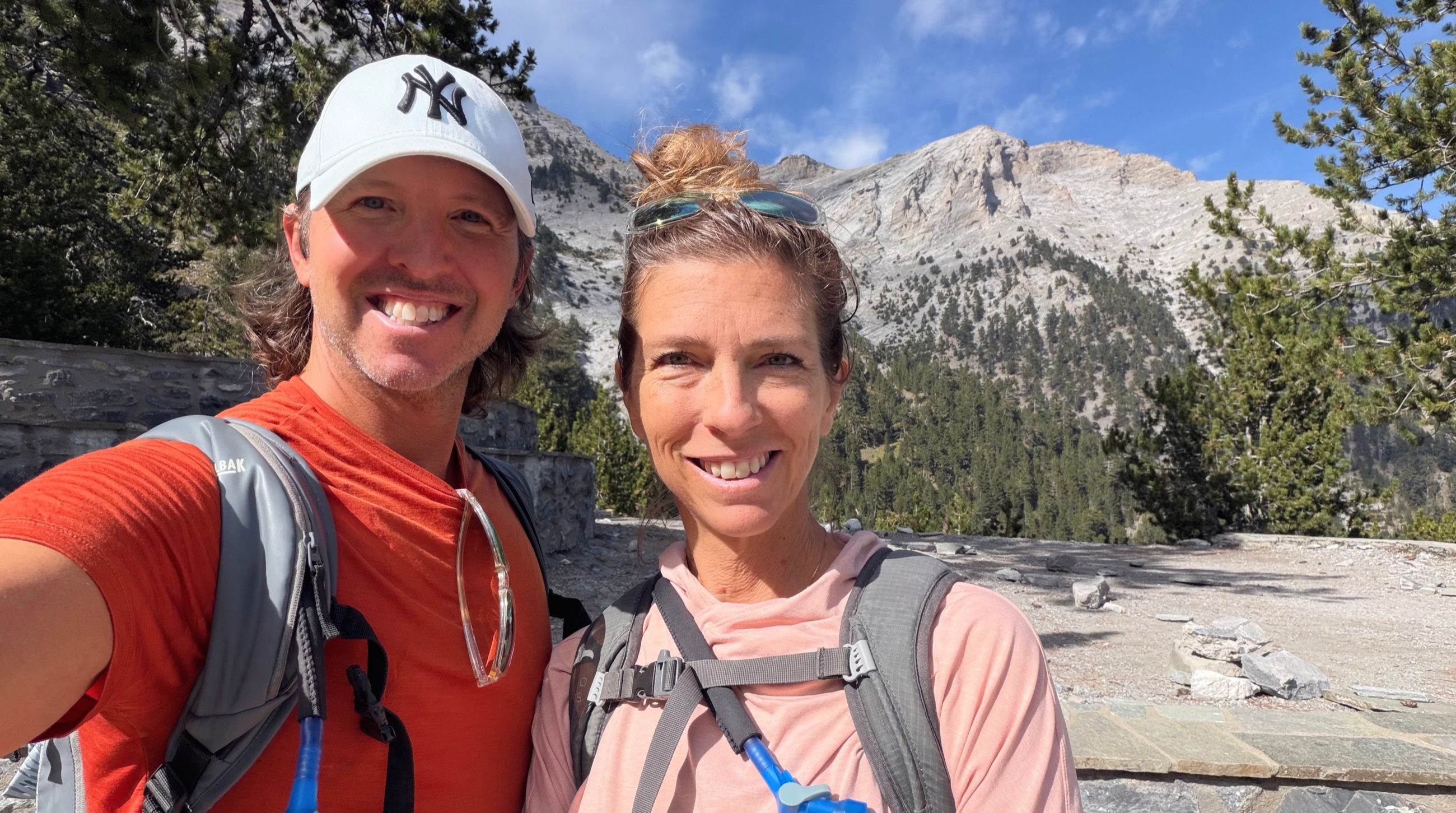 Mount Olympus: Hiking the forested slopes of Mount Olympus, with its rugged limestone peaks rising behind us.
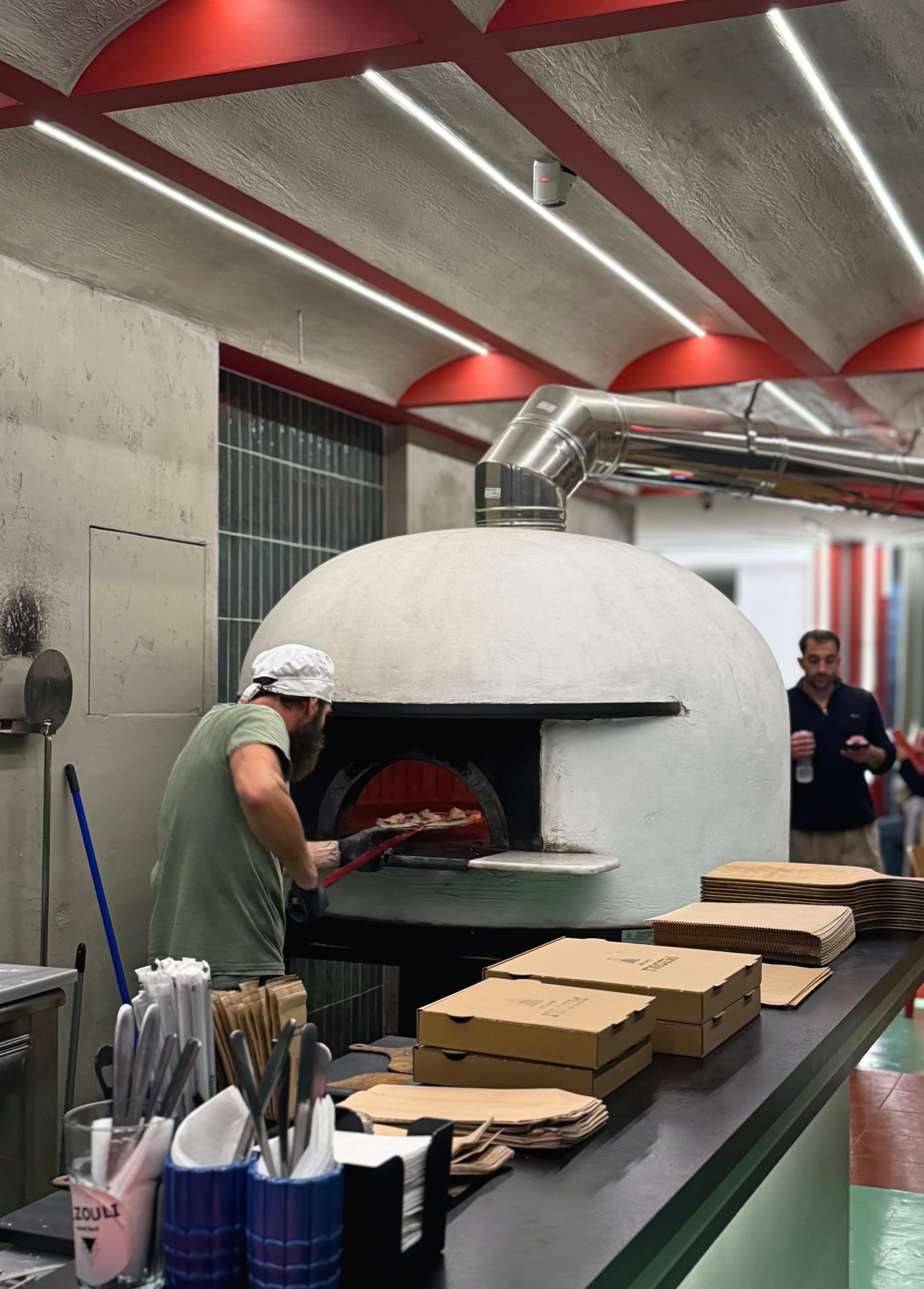 Pizza in Thessaloniki: A pizza maker pulls our pizza from the oven at a neighborhood pizzeria in Thessaloniki.
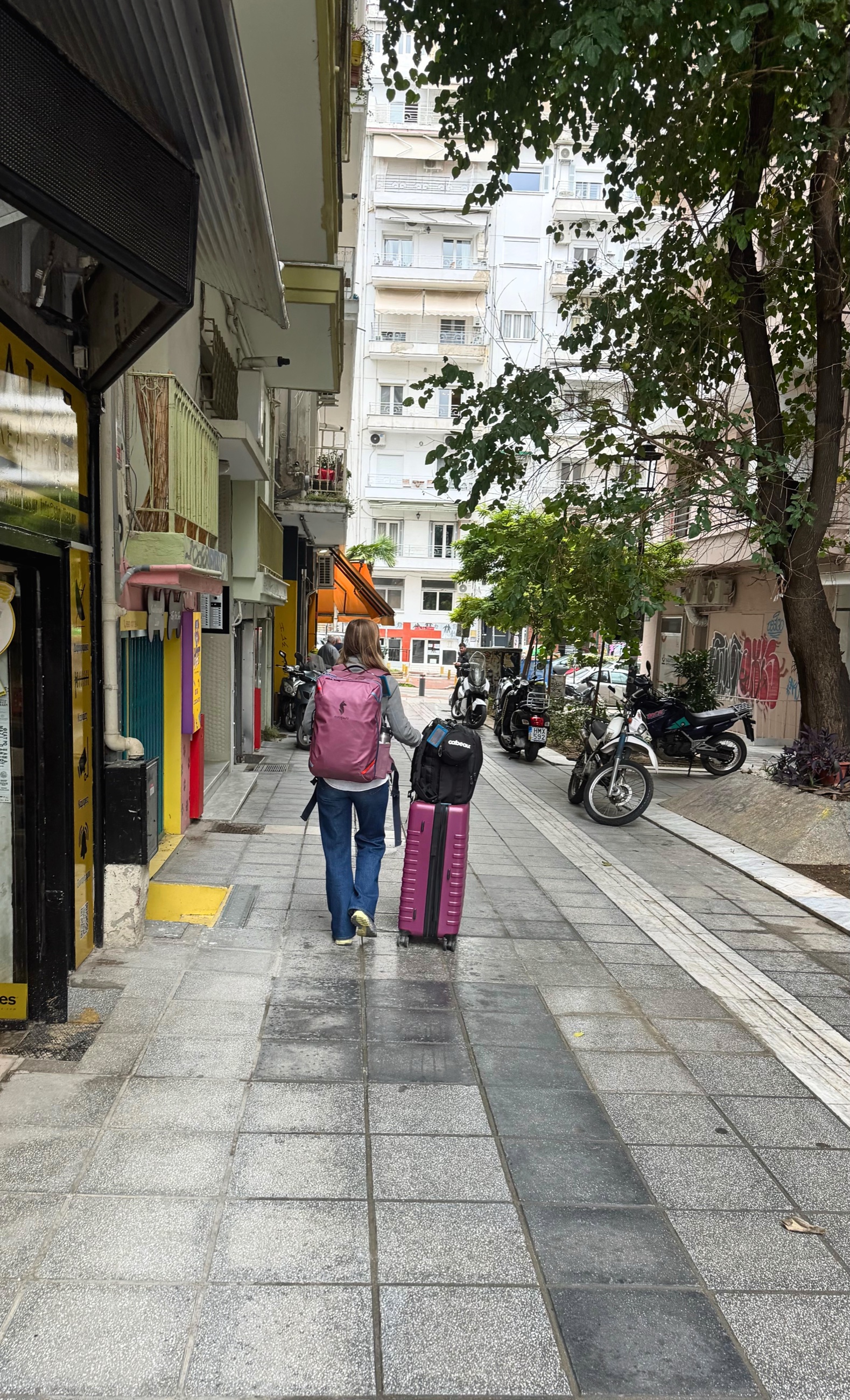 Leaving Thessaloniki: Stephanie navigates the neighborhood streets with her luggage as we leave Greece behind.
🎯 Next Week Preview
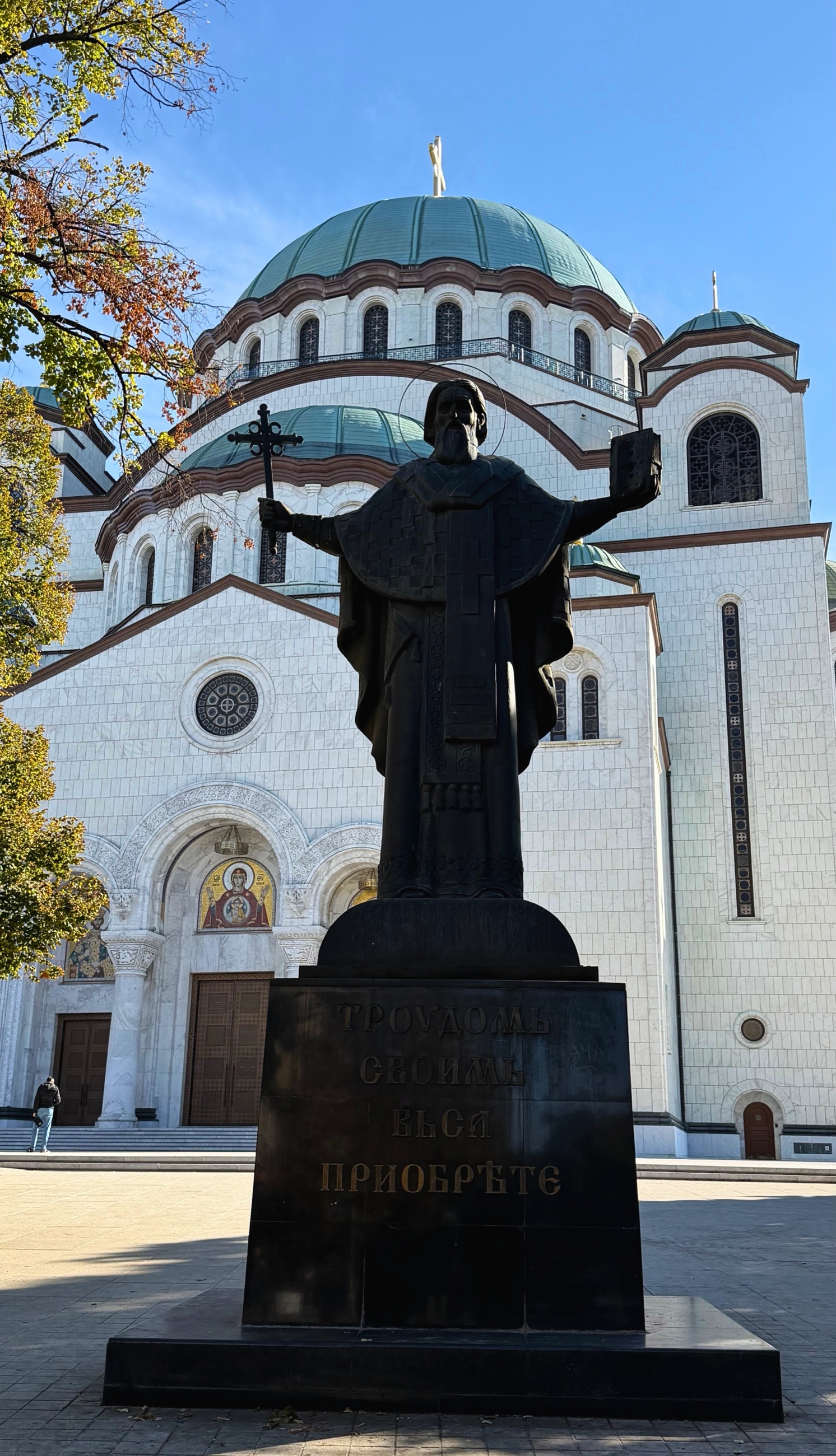 The Church of Saint Sava in Belgrade, with a monument to the Serbian Orthodox saint standing before its great central dome.
Belgrade: Where the Sava Meets the Danube
Belgrade came to us as a recommendation. Mina, our Airbnb host in Bar, Montenegro, this summer, grew up there, and over coffee she gave us a long list of reasons to visit. This month we will find out for ourselves.
The city stands where the Sava flows into the Danube, a position that has made it a fortress and contested frontier for centuries. Celts, Romans, Byzantines, medieval Serbian rulers, Ottomans, and Habsburgs all left their mark. In the twentieth century, Belgrade became the capital of Yugoslavia and remained so through the federation’s breakup in the 1990s.
We are looking forward to walking the historic center along Knez Mihailova and exploring Kalemegdan Fortress above the meeting of the rivers. The Temple of Saint Sava, one of the largest Orthodox churches in the world, offers another chapter in the Christian history we have followed from Istanbul through Ohrid and Thessaloniki. We also want to get to know the city’s neighborhoods, from the stalls of Kalenić Market to Zemun, the former Habsburg border town along the Danube.
After twelve nights in Thessaloniki, we are glad to have a full month ahead of us.
💌 Personal Connection
Why Greece Has Become Our Favorite
Thessaloniki was our sixth Greek destination, after Athens, Crete, Santorini, Naxos, and Corfu. Each was different. Crete gave us mountains and villages, the Cyclades gave us whitewashed towns and open sea, and Thessaloniki gave us a working university city with two thousand years of history in its streets. Somewhere along the way, Greece became our favorite country outside the United States.
Greece suits the way we live. People have been consistently warm and welcoming, and English is widely spoken. The food is fresh, hearty, and affordable, and a long lunch, our main meal of the day, is easy to find. This week, a family taverna in Veria fed us generously for €30 ($34). Café culture is woven into daily life, from morning bougatsa and coffee to an afternoon Freddo. Good gyms, walkable cities, nearby mountains, and ready access to the sea make it easy to keep up the active, healthy routine we value.
Much of what we appreciate about Greece can be found elsewhere. But there is something less tangible about being here, a feeling we have recognized across several visits and one that keeps drawing us back.
The country’s Christian heritage is also visible in daily life, from centuries-old Byzantine churches and Orthodox liturgy to the places where the Apostle Paul preached. Attending Vespers at Thessaloniki’s Hagia Sophia gave us another opportunity to experience that living tradition. The connection between faith, history, and contemporary life adds depth to every visit.
Then there is ancient history. Few countries hold so many consequential chapters so close together. This week alone, we climbed the mountain the Greeks gave to Zeus, looked out over the Macedonian capital where Alexander was born, stood in the courtyard where he was crowned king, and visited the city where the Bereans examined Paul’s teaching against the Scriptures. Those places belong to different centuries and different traditions. In Greece, they are a short drive apart.
Every country we have lived in has its own rewards and its own challenges. Greece is simply the one that has fit us best, and it has done so consistently, across islands, mountains, and cities.
Our last days in Thessaloniki looked much like the rest of our stay. We were living beside the remains of Galerius’s palace and the ancient hippodrome, and we wandered those streets one more time. We cooked, went to the gym, drank our coffees, and took one last long walk along the waterfront, looking across the Thermaic Gulf as daylight faded. Then we packed, said goodbye to the apartment, and headed for the airport.
Thessaloniki has joined the Greek cities we would gladly return to. And Greece has only strengthened its place at the top of our list.
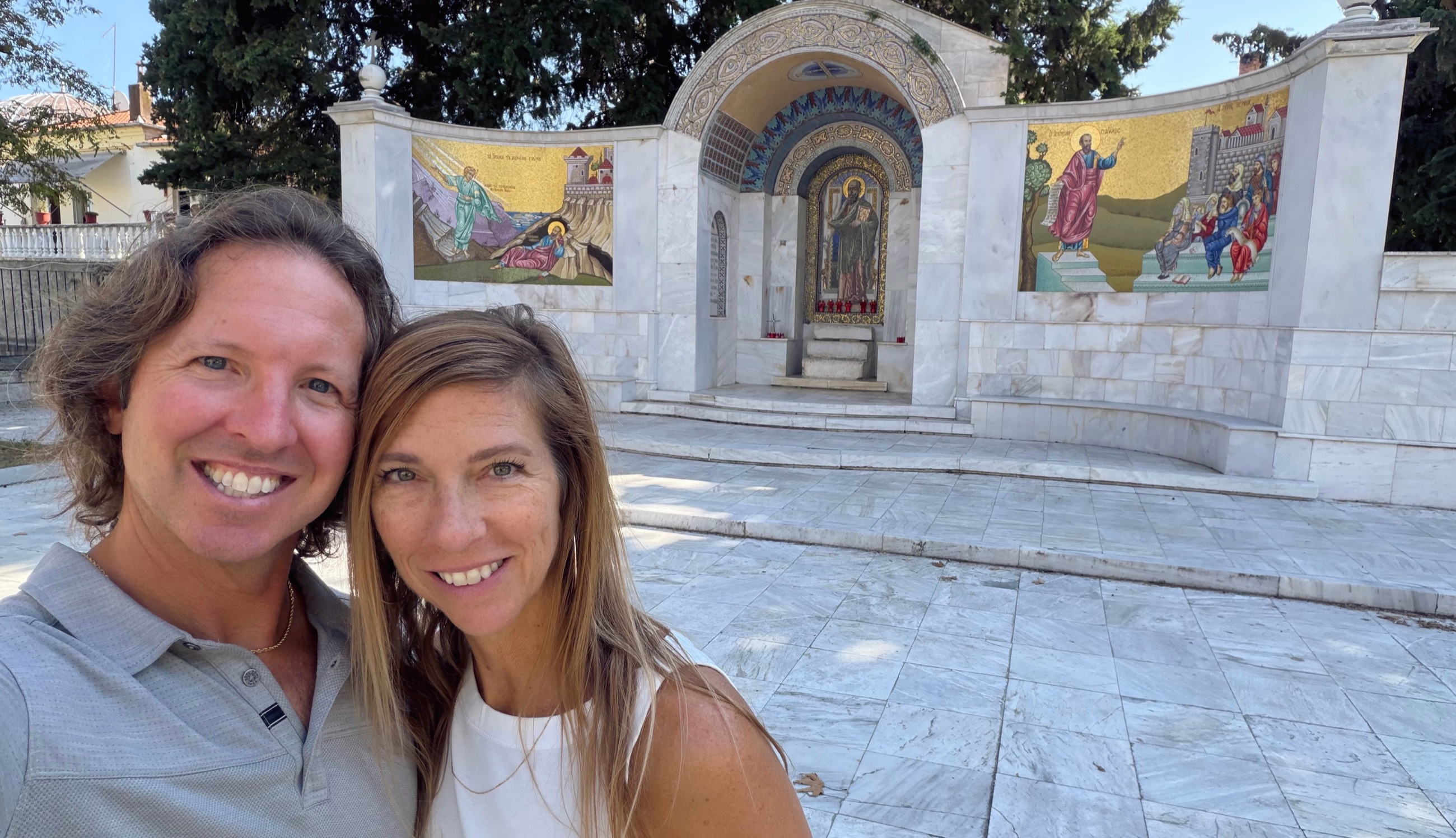 At the Bema of the Apostle Paul in Veria, ancient Berea, where Paul preached during his second missionary journey.
Until next week,
S&S
Some Great Place · Living Local in a Global World · somegreatplace.com