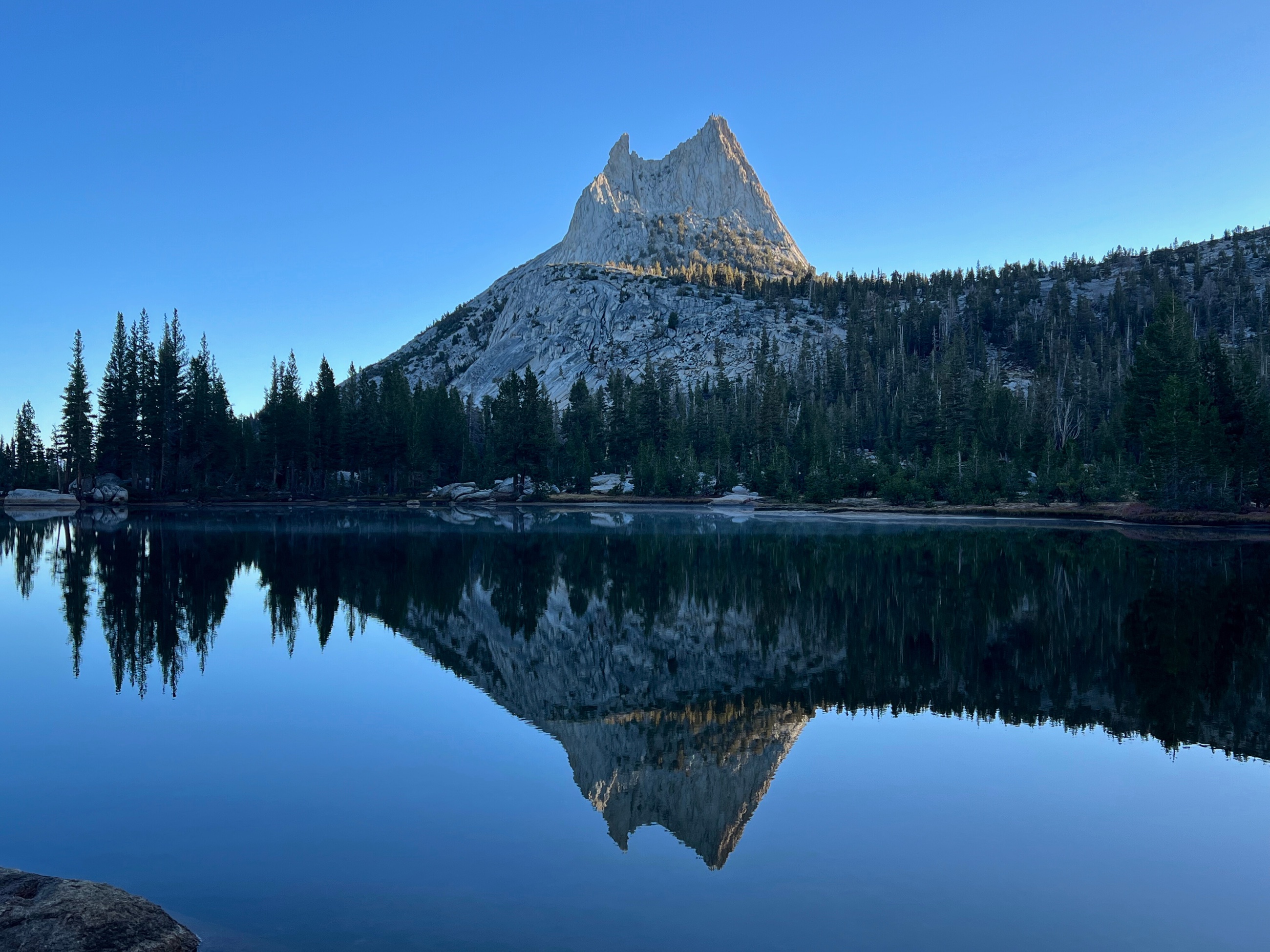
 Cathedral Peak mirrored in the still morning water.
Some Great Place began as a slow-travel story, but the prologue started close to home, in the American West.
After a week of deserts and highways across four states, including three national parks and a 24-hour stop in Las Vegas, we traded red sandstone for granite peaks. Autumn in the Sierra Nevada drew us into Yosemite for five days and four nights in the backcountry.
We entered from the Nevada side, a quieter approach that wound through meadows, still lakes, and high granite domes. At Tenaya Lake, we paused for a picnic before descending into Yosemite Valley. There, the contrast revealed itself: markets and galleries below, silence and stone waiting above.
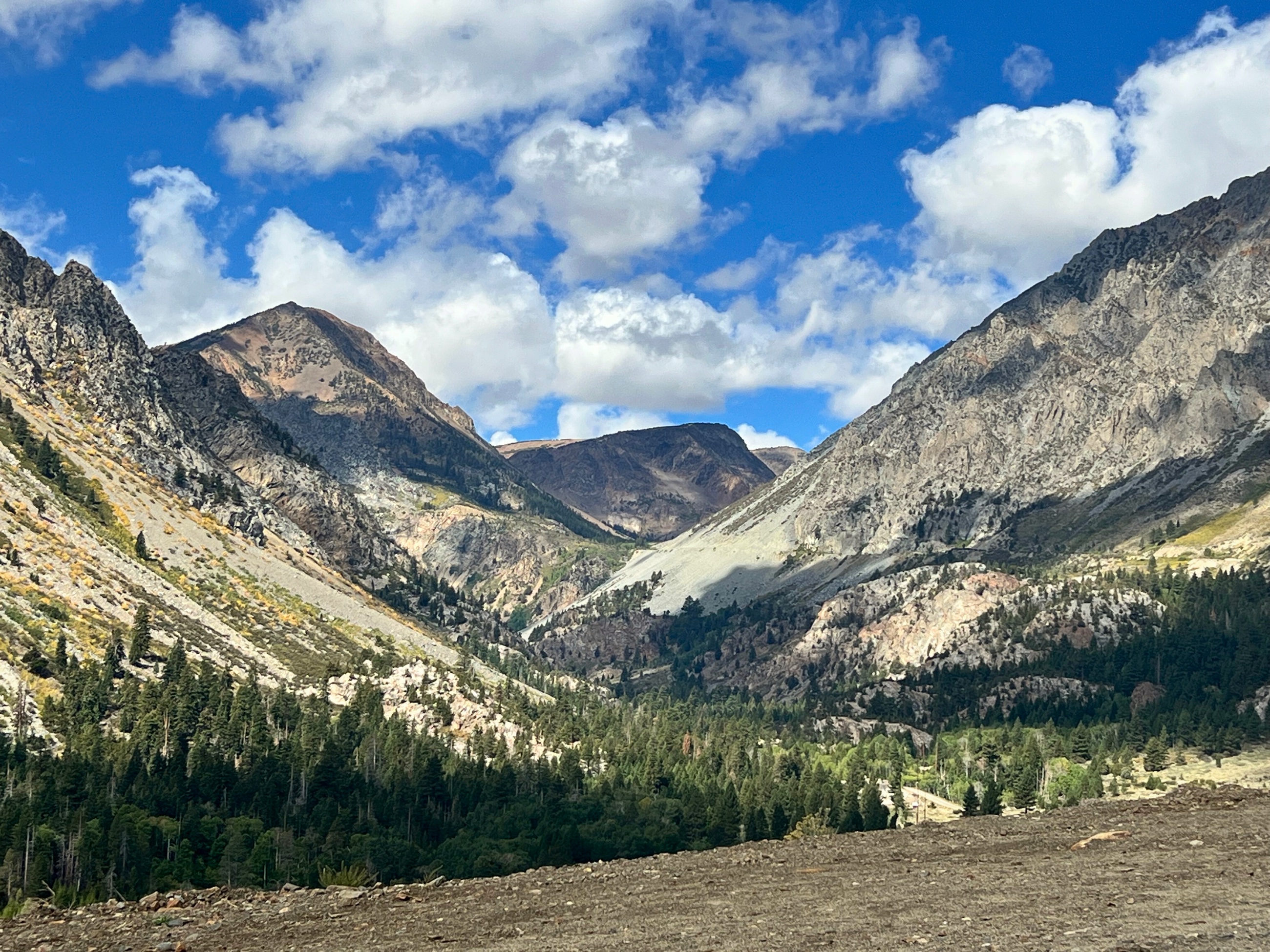 Granite peaks and talus slopes lining the approach into Yosemite from the Nevada side.
Watch the accompanying film: Backpacking Yosemite: Cathedral Lakes to Clouds Rest
From the Valley to the High Country
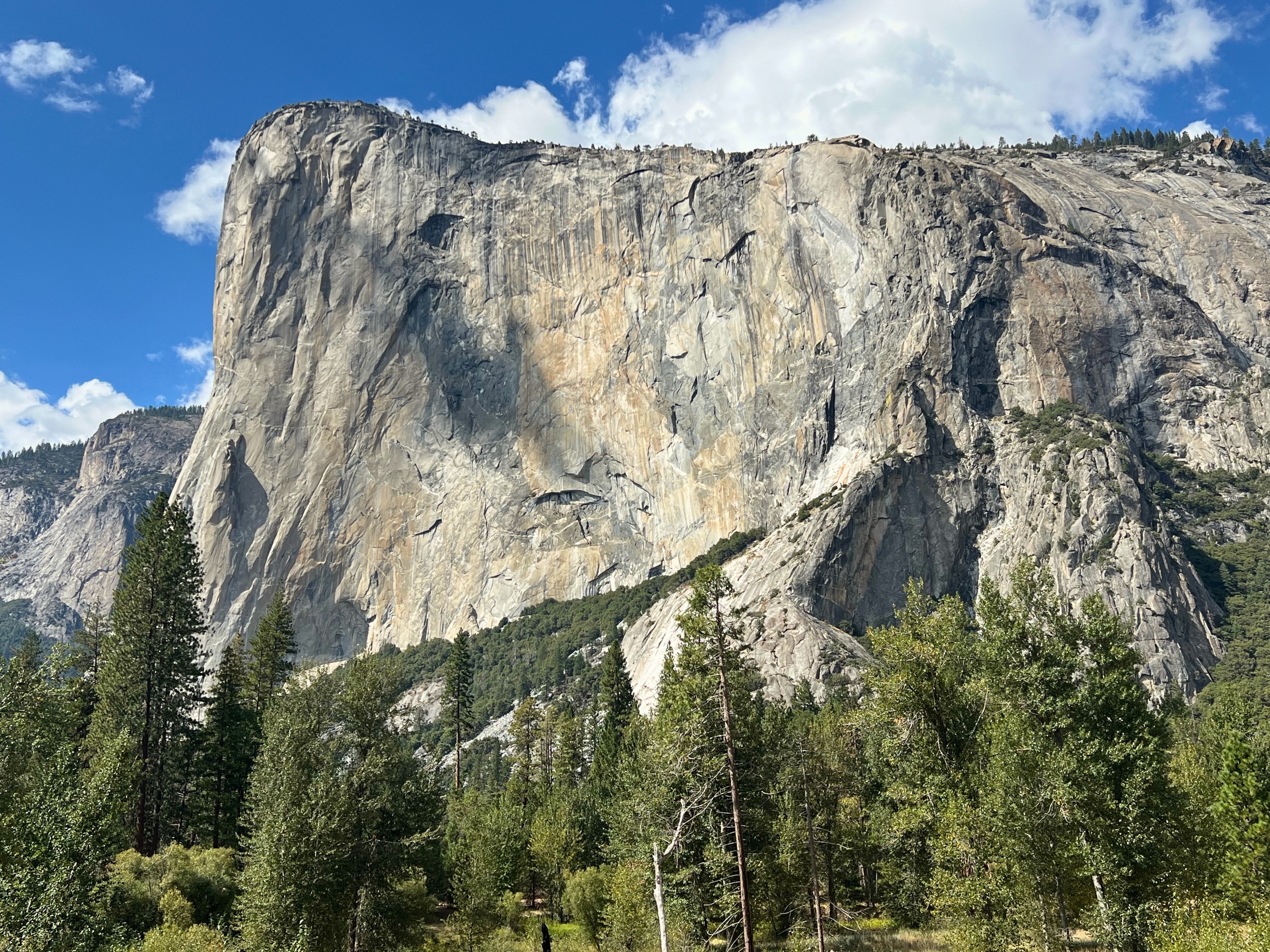 El Capitan rising 3,000 feet above the Valley floor.
Yosemite’s Valley is the place most people know first, and for good reason. El Capitan, Half Dome, the Merced River, the meadows, the walls of granite: the scale is immediate.
But the Valley also functions as a threshold. It has markets, galleries, trail information, campgrounds, shuttle stops, and food. It is accessible without being casual. Even a meal there can feel like preparation, especially when the next morning begins on a trail that leads away from developed Yosemite and into the high country.
The transition matters. Yosemite is both a public national landmark and a wilderness system, and the passage from one to the other is part of the experience.
Permits, Pizza, and the Trailhead Shuffle
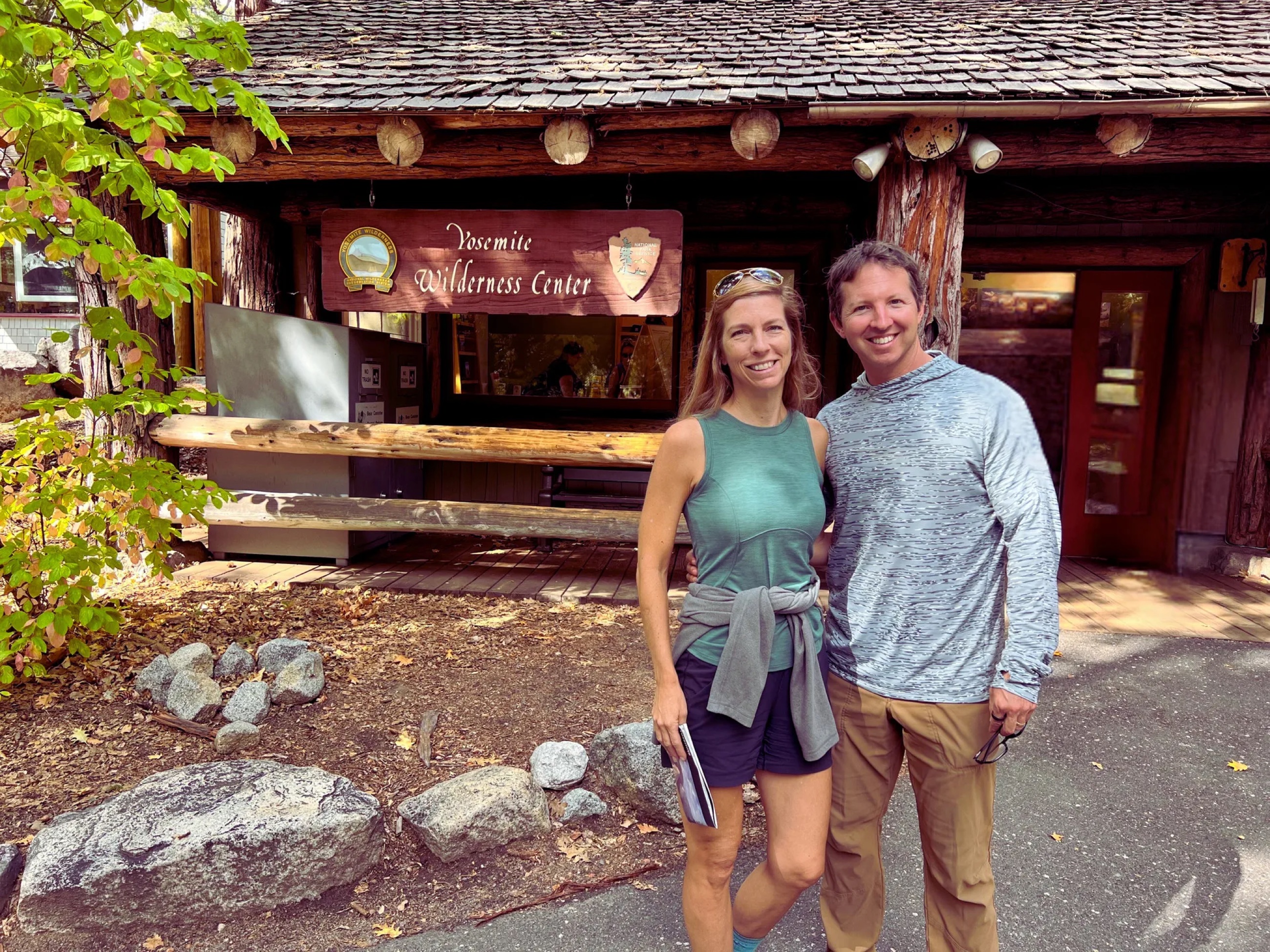 Picking up our wilderness permit at Yosemite’s Wilderness Center for our backcountry journey.
Yosemite’s wilderness requires permits, reserved through Recreation.gov and picked up at the Wilderness Center. Each permit specifies entry and exit trailheads, mandates camps at least four trail miles from developed areas, and requires continuous travel. Exit early, and the permit becomes void.
That system can feel strict, but it is also one of the reasons the backcountry still works. It keeps fragile places from absorbing unlimited pressure while preserving access for hikers willing to plan ahead.
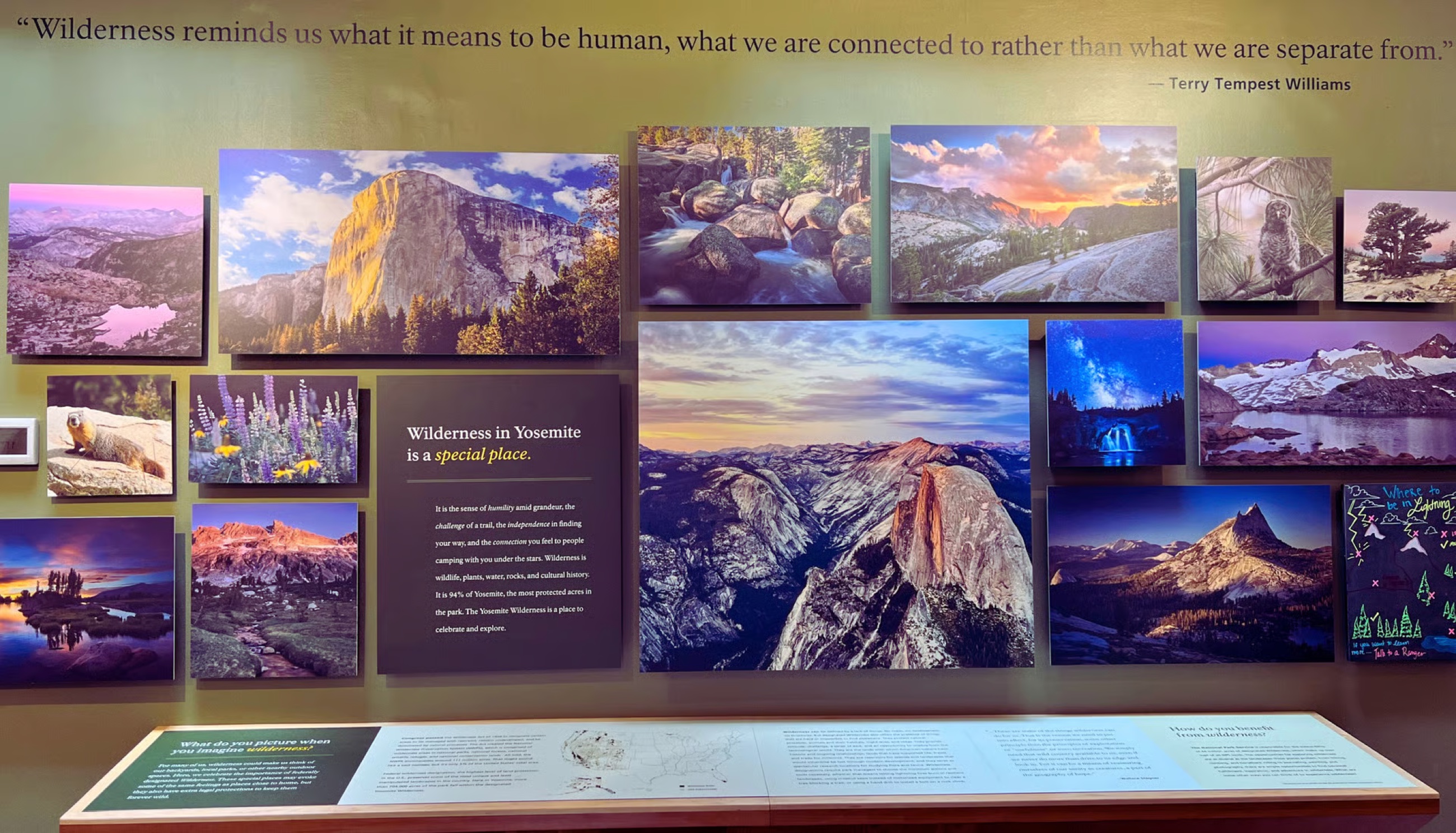 Inside Yosemite’s Wilderness Center, a reminder that wild places connect us to something larger than convenience.
We registered at Backpackers Camp, swapped stories with other hikers, and had one last meal at Curry Village’s Pizza Deck. Darkness fell quickly. Yosemite’s low light policy is not an abstraction when you are eating outside and the Valley begins to disappear around you.
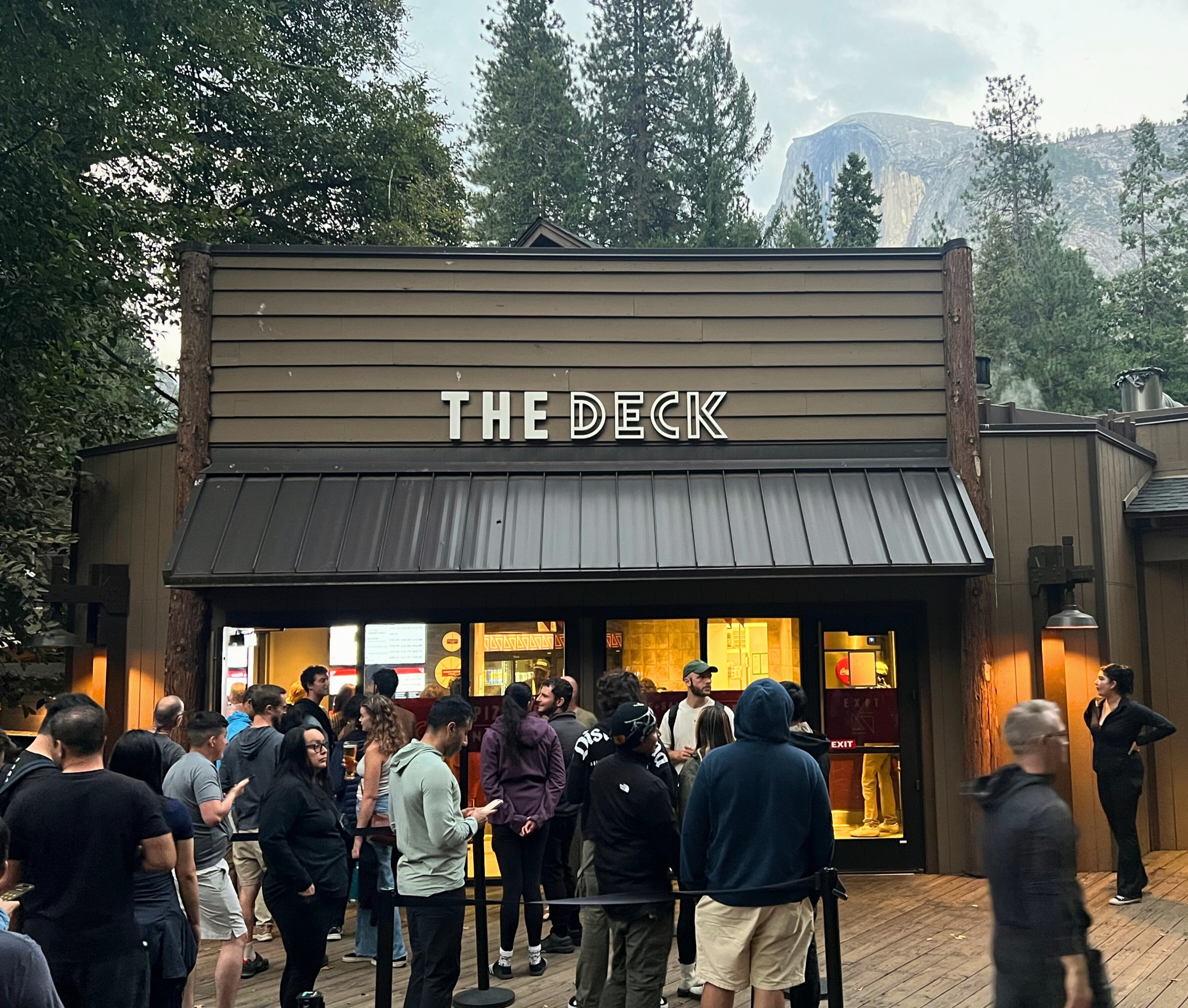 The Pizza Deck at Curry Village, a Yosemite gathering spot beneath the granite.
The next morning brought the trailhead shuffle. Our car sat at Sunrise Lakes trailhead, but our permit began at Cathedral Lakes, five miles down Tioga Road. Hitchhiking between trailheads is legal and customary here. Within minutes, a fellow hiker offered us a ride.
Even in a wilderness itinerary, community still appears in practical ways.
The Philosophy Behind the Permits
Yosemite’s wilderness management traces back to Frederick Law Olmsted and John Muir, two men who argued for a different kind of access: beauty preserved through restraint rather than convenience. Olmsted’s early writing on Yosemite held that scenic grandeur belonged to everyone, but that the privilege carried an obligation to protect what made it grand in the first place. Muir pushed further, arguing that wild places should be experienced on their own terms rather than reshaped for visitor comfort.
The permit system carries that thinking forward. Requiring hikers to plan routes, reserve trailheads, and travel continuously keeps fragile alpine ground from absorbing more pressure than it can recover from, while still leaving the backcountry open to anyone willing to prepare for it.
The same logic governs light. Yosemite limits artificial lighting even in the developed parts of the Valley, so the night sky above Curry Village is not far removed from the sky above a camp at 9,600 feet. It is a small policy with large consequences, one we would notice again a few nights later on a granite dome beneath the Milky Way.
Cathedral Lakes
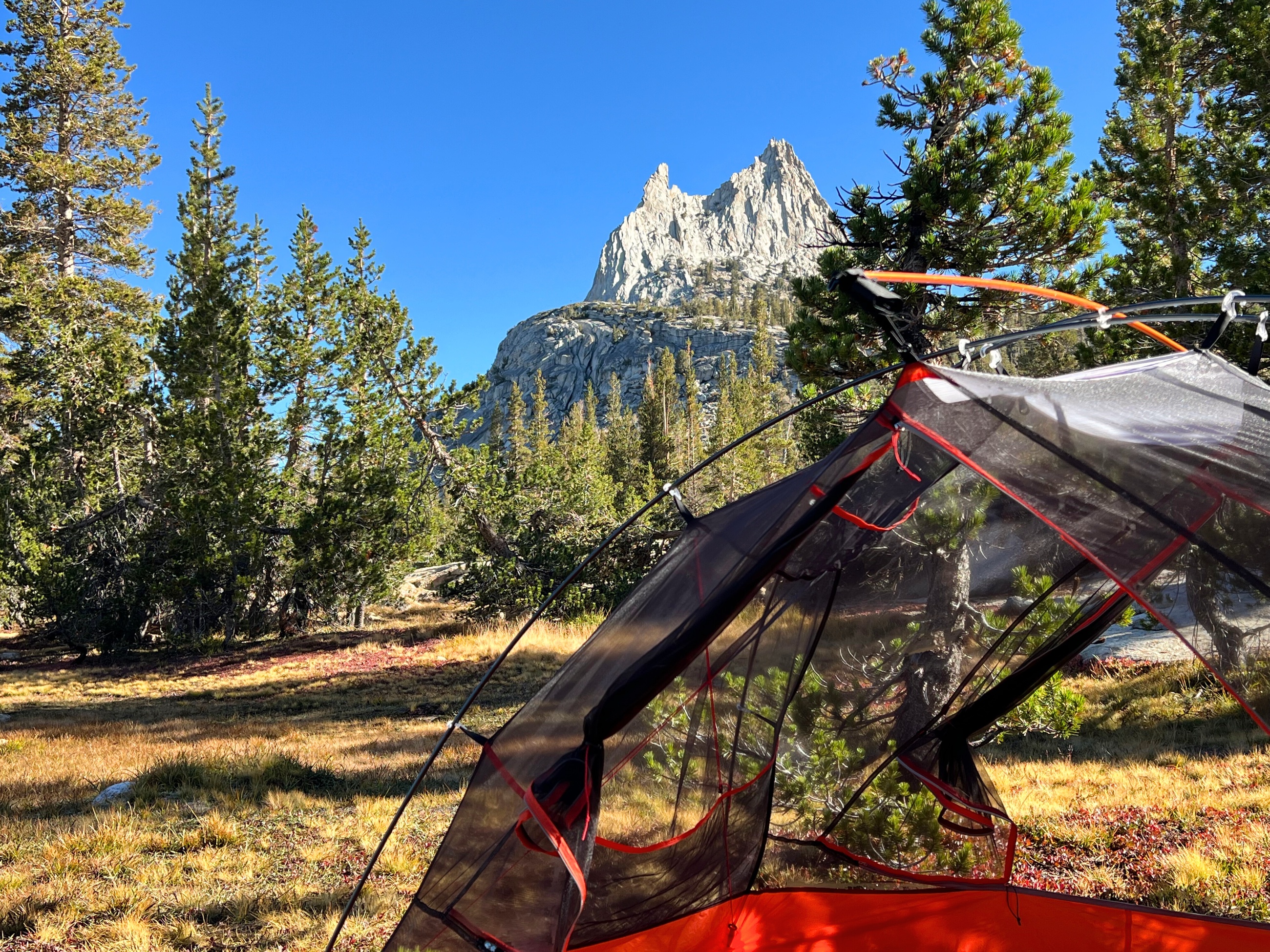 Camp beneath the granite spires of Cathedral Lakes.
The first hiking day led four miles and roughly 1,000 feet up to Upper Cathedral Lake, near 9,600 feet. Cathedral Peak rose above camp with the kind of clean granite form that gives the area its name.
We swam in icy water, cooked a freeze-dried dinner, and watched the weather turn. By night, a hailstorm had moved through, and the boundary between scenery and exposure became more obvious. The high country is beautiful, but it is not ornamental. It is a place where weather, altitude, food, and shelter matter.
Sunrise Lakes and Clouds Rest
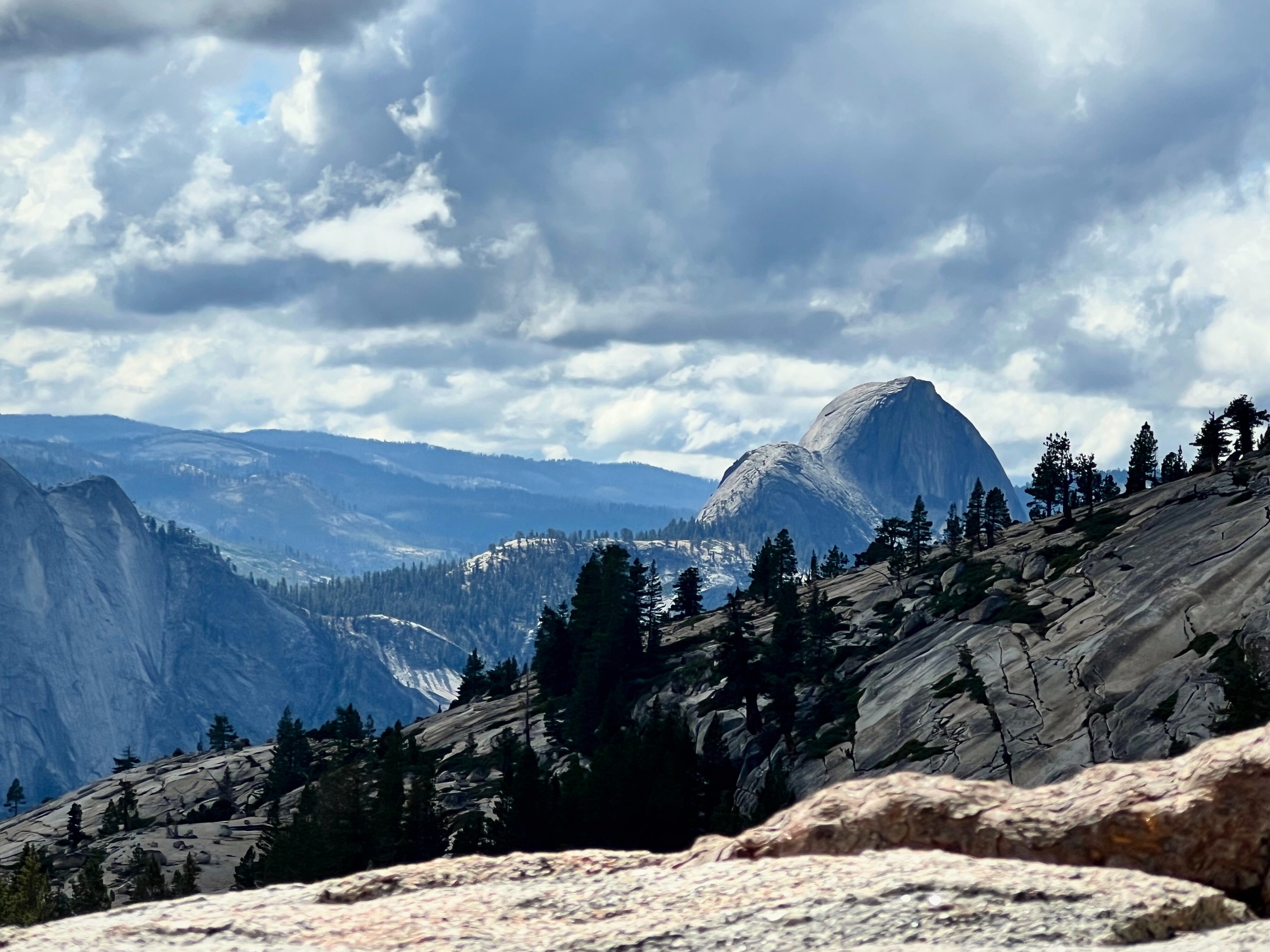 Half Dome beneath storm clouds.
The third day carried us along the John Muir Trail to Lower Sunrise Lake, six miles farther with another 1,000 feet of climbing. The campsite was sheltered by granite boulders and trees, with broad slabs nearby that gave us a place to eat, watch the light change, and settle into the slower mathematics of backpacking.
The next day, we left the overnight packs behind and hiked to Clouds Rest, at 9,926 feet. It was an eight-mile day hike with about 2,000 feet of gain, leading to one of Yosemite’s finest panoramas.
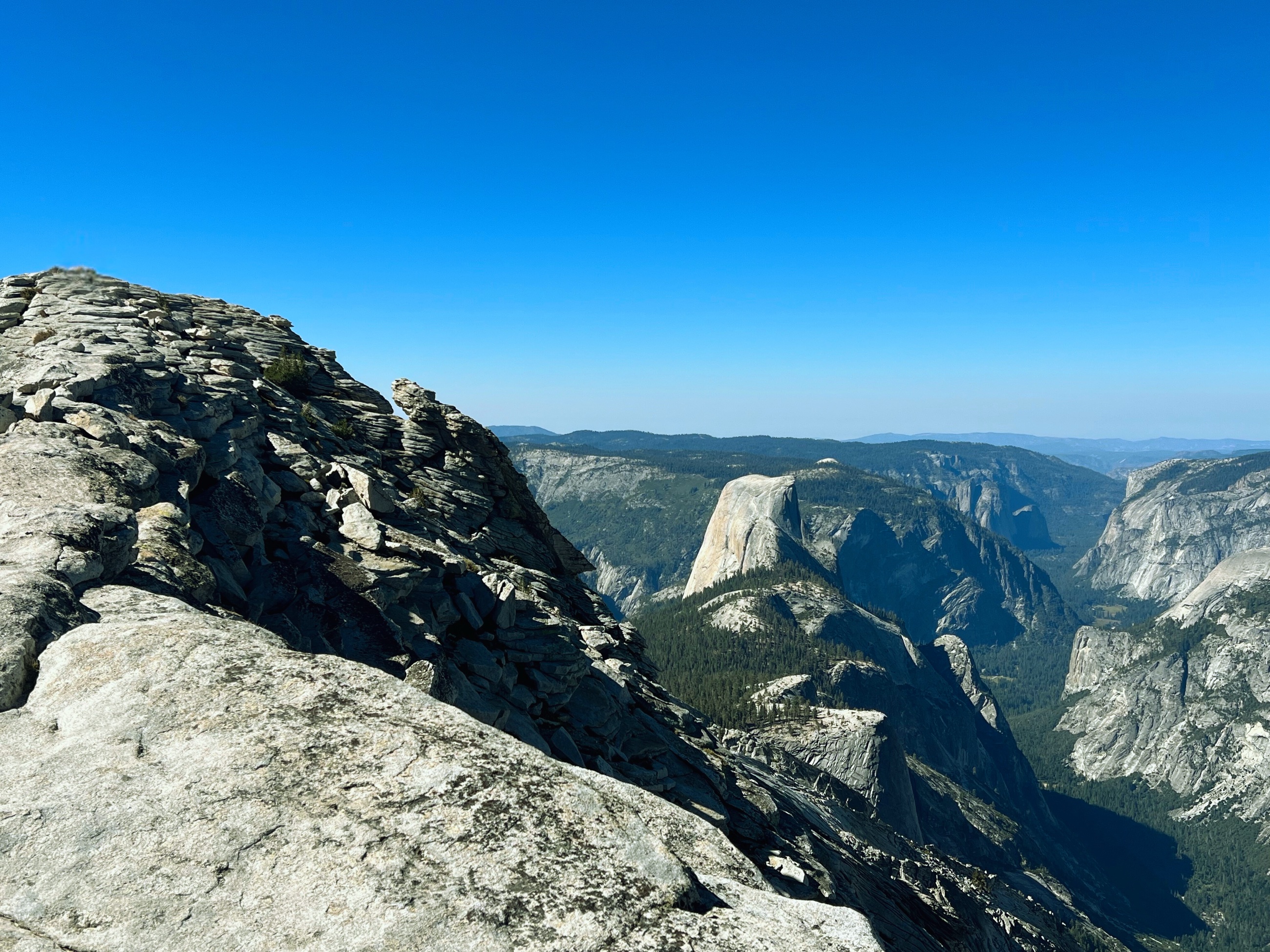 Hiking up Clouds Rest, with Half Dome below and Yosemite Valley stretching west.
From the summit area, Half Dome sat more than 1,000 feet below. Yosemite Valley opened to the west. Tuolumne Meadows lay to the north, and the Sierra Crest extended east. The view was not just scenic. It was geographic. The park made more sense from above because its pieces became connected.
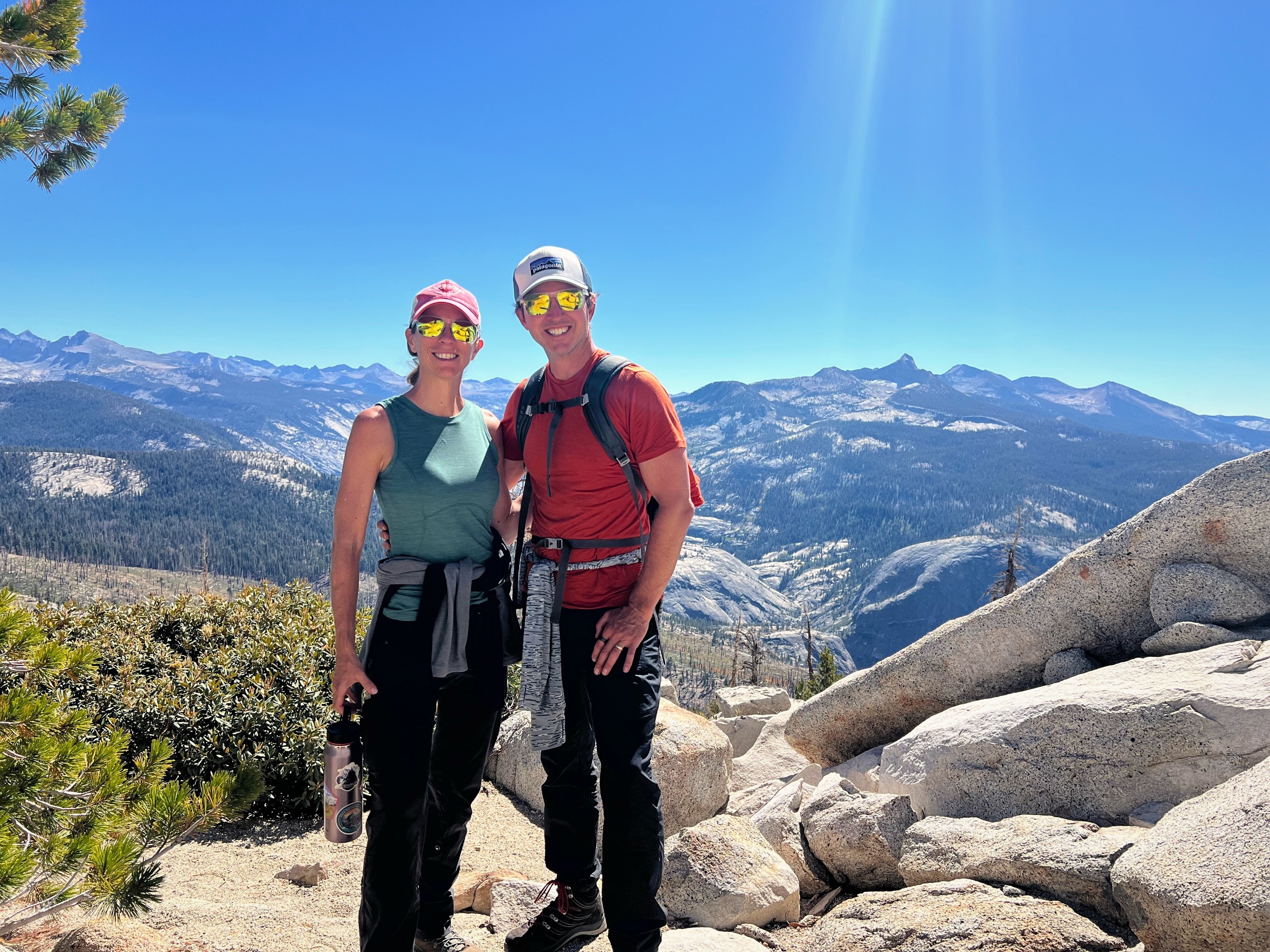 Clouds Rest, with Yosemite stretching in every direction.
That evening, we carried dinner onto a granite dome and watched the sun leave the high country. The meal was simple by design, but the setting changed everything. Freeze-dried food tastes different when the day’s miles are behind you and the next task is only to stay warm.
What the High Country Leaves Behind
Yosemite’s Valley draws millions, and rightly so. Its walls and waterfalls belong among the defining landscapes of America. But the park’s deeper character begins higher, where lakes, peaks, weather, distance, and darkness do more of the teaching.
A wilderness trip narrows life quickly. You cannot multitask through hail. You cannot negotiate with altitude. You cannot treat food, water, shelter, or daylight as background details. At 9,600 feet, lying on granite beneath the Milky Way, we understood that some moments resist capture. The truer memory was cold stone against our backs, the outline of trees above us, and the sky continuing farther than any camera could hold.
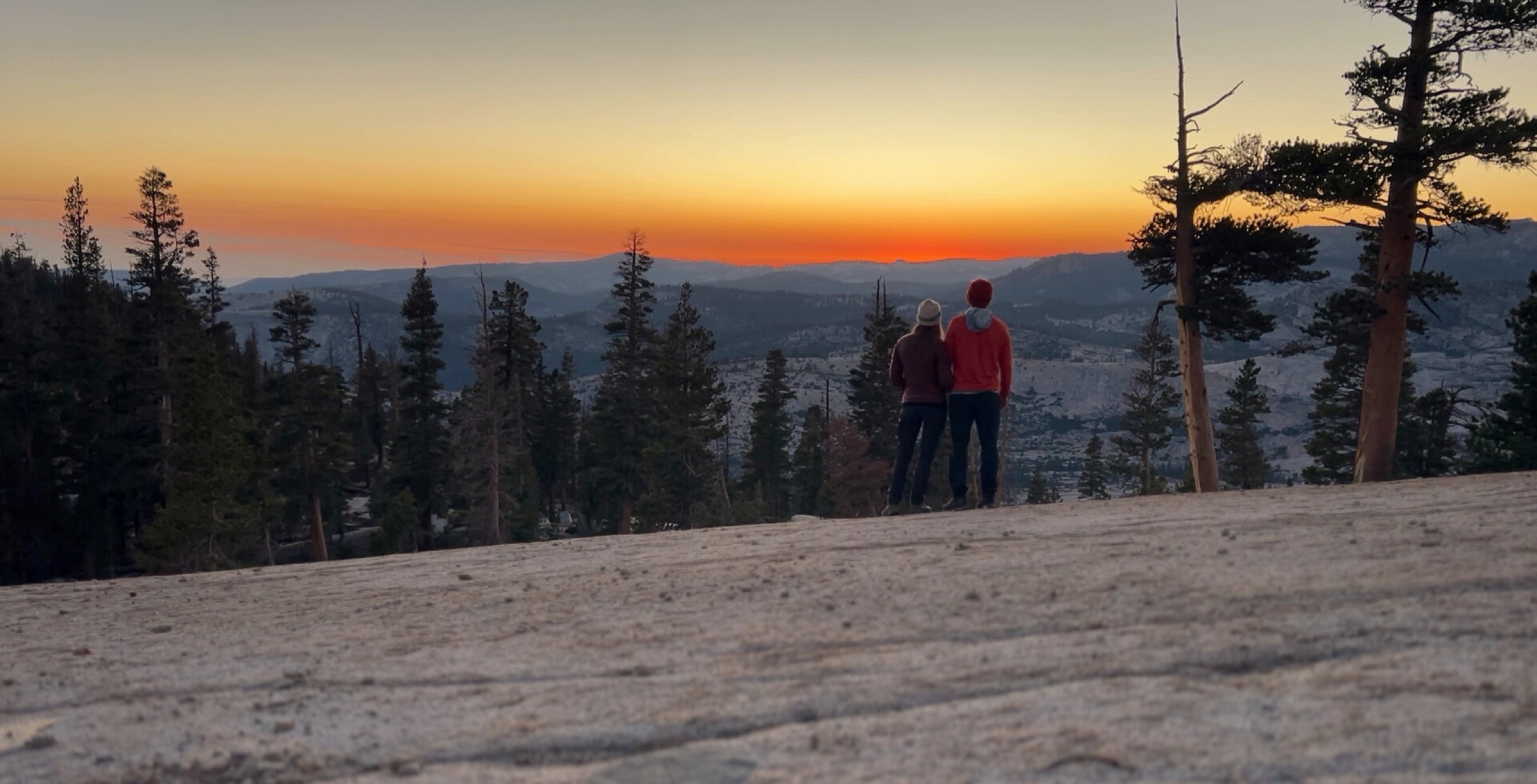 Sunset over the high country as the day fades.
Practical Notes
- Route: Cathedral Lakes trailhead to Upper Cathedral Lake, Lower Sunrise Lake, Clouds Rest, and Sunrise Lakes trailhead.
- Length: Five days and four nights, including one Valley night before entering the backcountry.
- Permits: Yosemite wilderness permits are required and specify entry and exit trailheads.
- Trailhead logistics: We left the car at Sunrise Lakes trailhead and hitchhiked to Cathedral Lakes trailhead, a common Yosemite backcountry practice.
- Day 1: Backpackers Camp registration, gear check, and last fresh meal in the Valley.
- Day 2: Four miles and roughly 1,000 feet of gain to Upper Cathedral Lake.
- Day 3: Six miles and roughly 1,000 feet of gain along the John Muir Trail to Lower Sunrise Lake.
- Day 4: Eight-mile day hike to Clouds Rest (9,926 ft), with roughly 2,000 feet of gain.
- Day 5: Three-mile descent to Sunrise Lakes trailhead, roughly 1,300 feet down, followed by a picnic at Tuolumne Meadows and the drive back to Reno.
- Food: Curry Village’s Pizza Deck worked well as a final Valley meal before the trail. On trail, freeze-dried meals were practical and easy to manage.
- Best visual moments: Cathedral Peak at morning reflection, Clouds Rest in clear weather, and sunset from the granite slabs near camp.