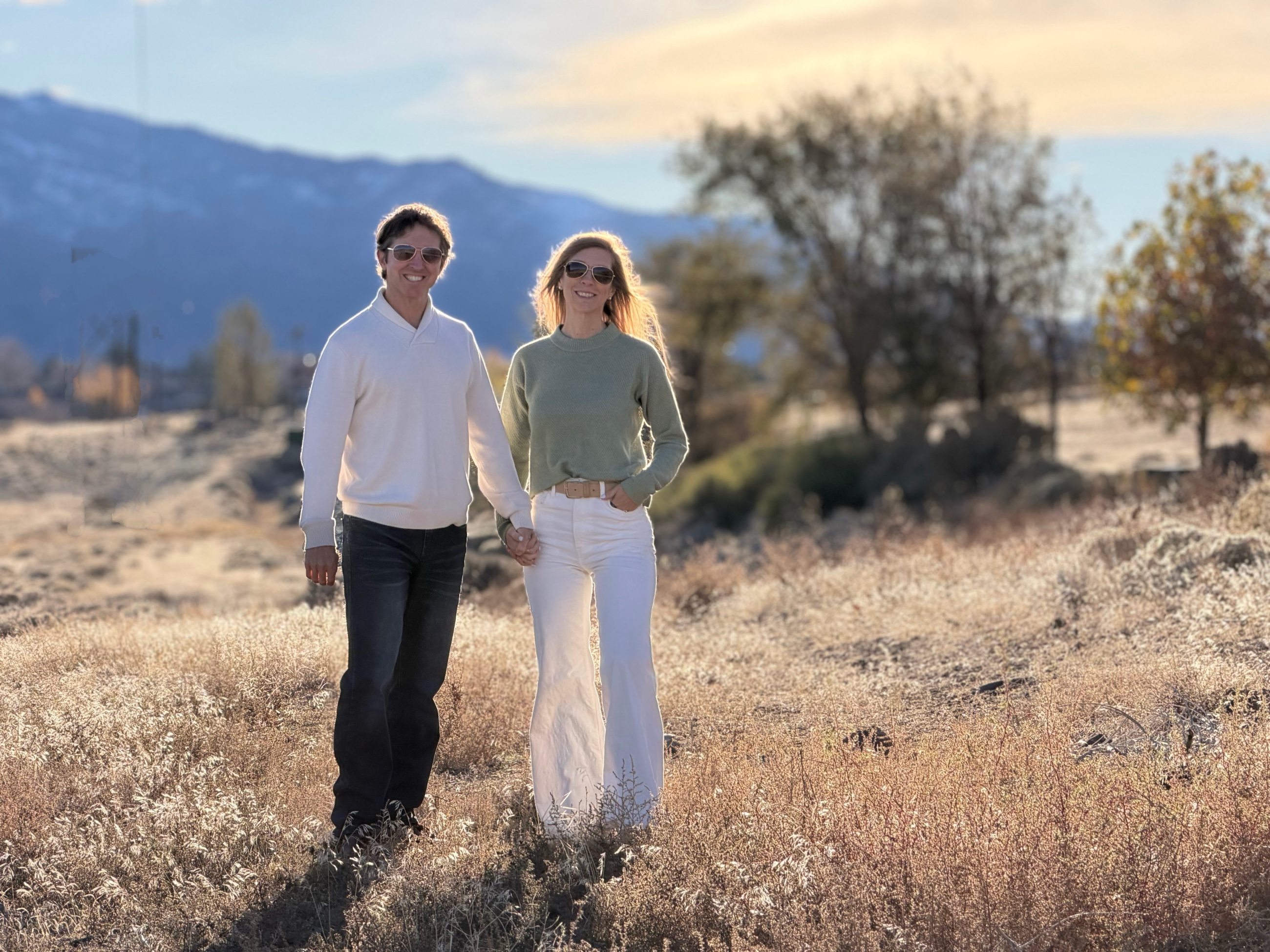
 In the foothills outside Reno, where Some Great Place began.
Reno sits at roughly 4,500 feet, where the Sierra Nevada meets the Great Basin. The city carries the services and cultural life of a regional center, yet its daily geography stays manageable. Most errands take a few minutes, not a crossing of the metro area, and open land is often only a short drive away. Sagebrush slopes rise beyond the neighborhoods. The Truckee River runs through downtown. Mountains stay visible from parking lots and street corners across the city.
That combination shaped daily life more than any single attraction. A summer afternoon could include work at home, a few errands, dinner on the patio, and a walk in the foothills before the light disappeared. Concerts, festivals, restaurants, and casinos belonged to the city, as did trail dust, dry air, strong winds, and evenings that cooled quickly after sunset.
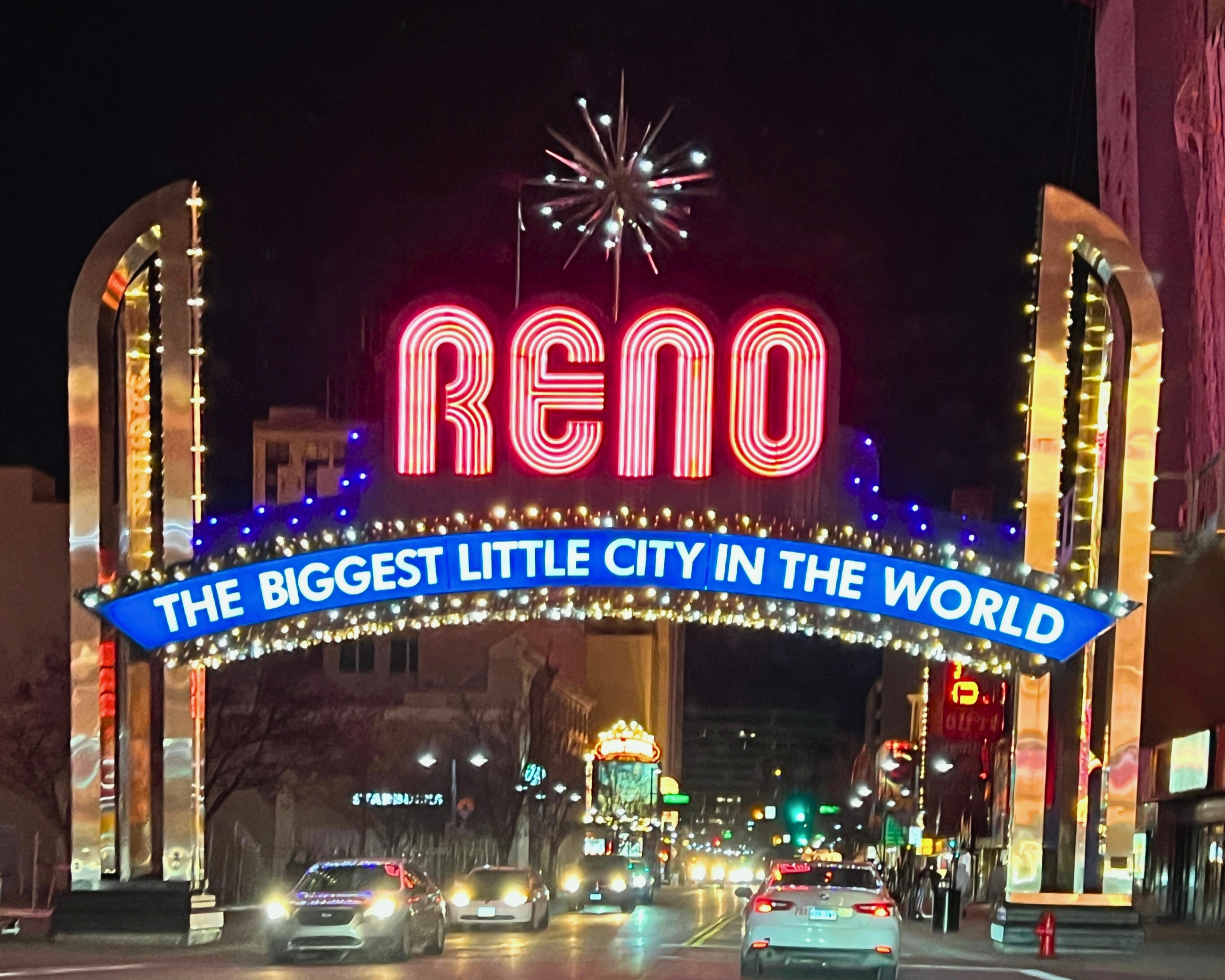 The Reno Arch above Virginia Street at night.
Reno was also where Some Great Place began. Before the long journey started, there was already a place to document. The first test was direct: could we look at a familiar city with enough care to make its character legible?
A City Close to Open Land
Reno’s scale encourages repetition. The same grocery stores, coffee counters, parks, and streets become part of the week without requiring elaborate planning. Familiarity can flatten those routines, but it can also reveal how a city actually works.
Summer made the pattern especially clear. Mornings were often cool enough for a foothill hike before the heat settled over the valley. Trails began among dry grass and sagebrush, with neighborhoods visible below and higher ridges beyond them. There was no need to organize an expedition. Open land was close enough to fit between breakfast and the rest of the day.
Watch the accompanying short: Reno Foothills Hike
By afternoon, the temperature often pushed activity indoors or toward a pool. Later, the air softened again.
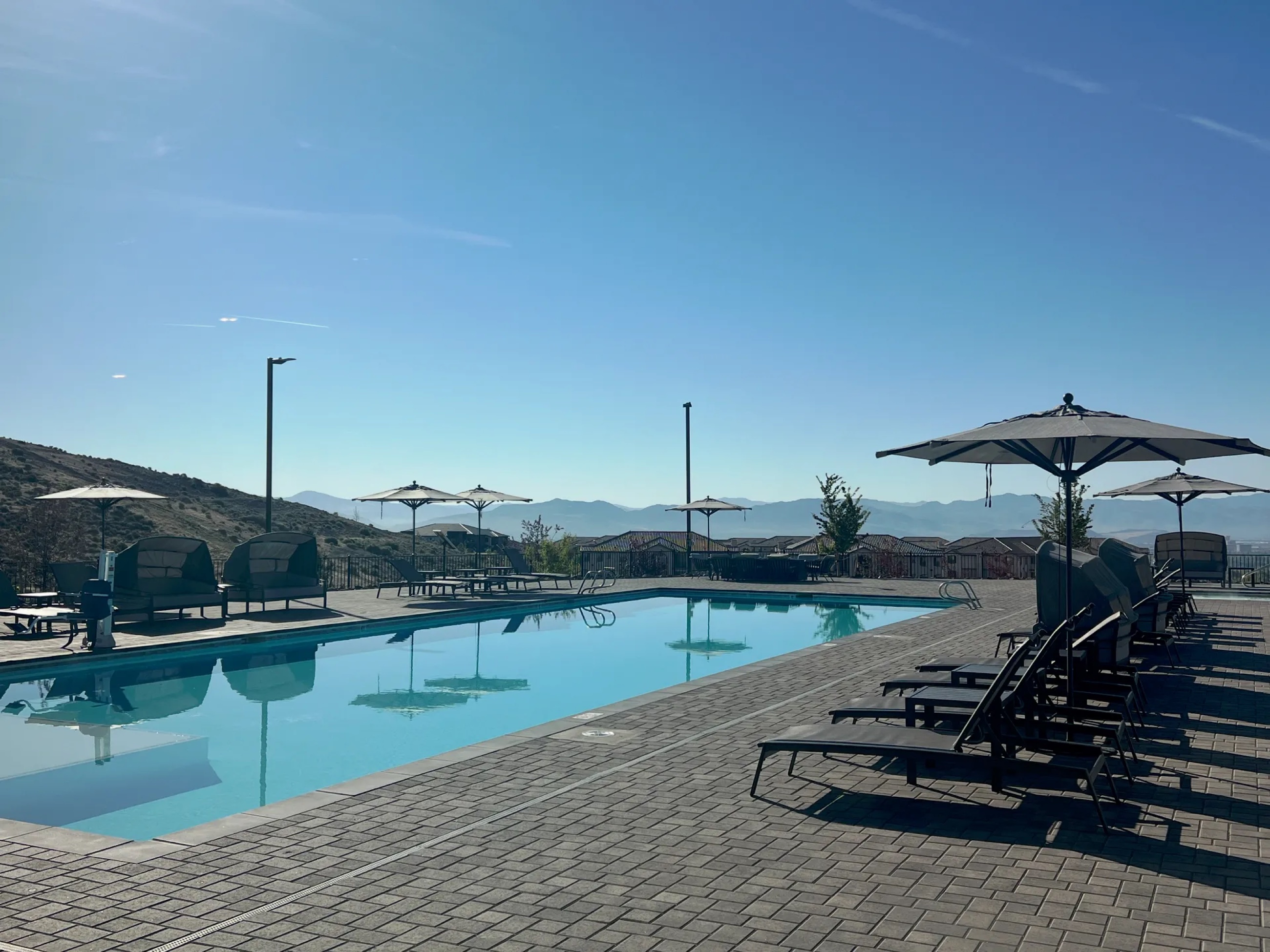 Poolside during the hottest part of a Reno summer afternoon.
One of the meals preserved from that first summer newsletter was grilled pizza with seasonal vegetables, eaten on the back patio during the final hour of daylight. It was a routine dinner, and that is exactly why it belongs in the portrait. Reno was home. Much of its value appeared through meals, errands, walks, church, friends, and recurring local places.
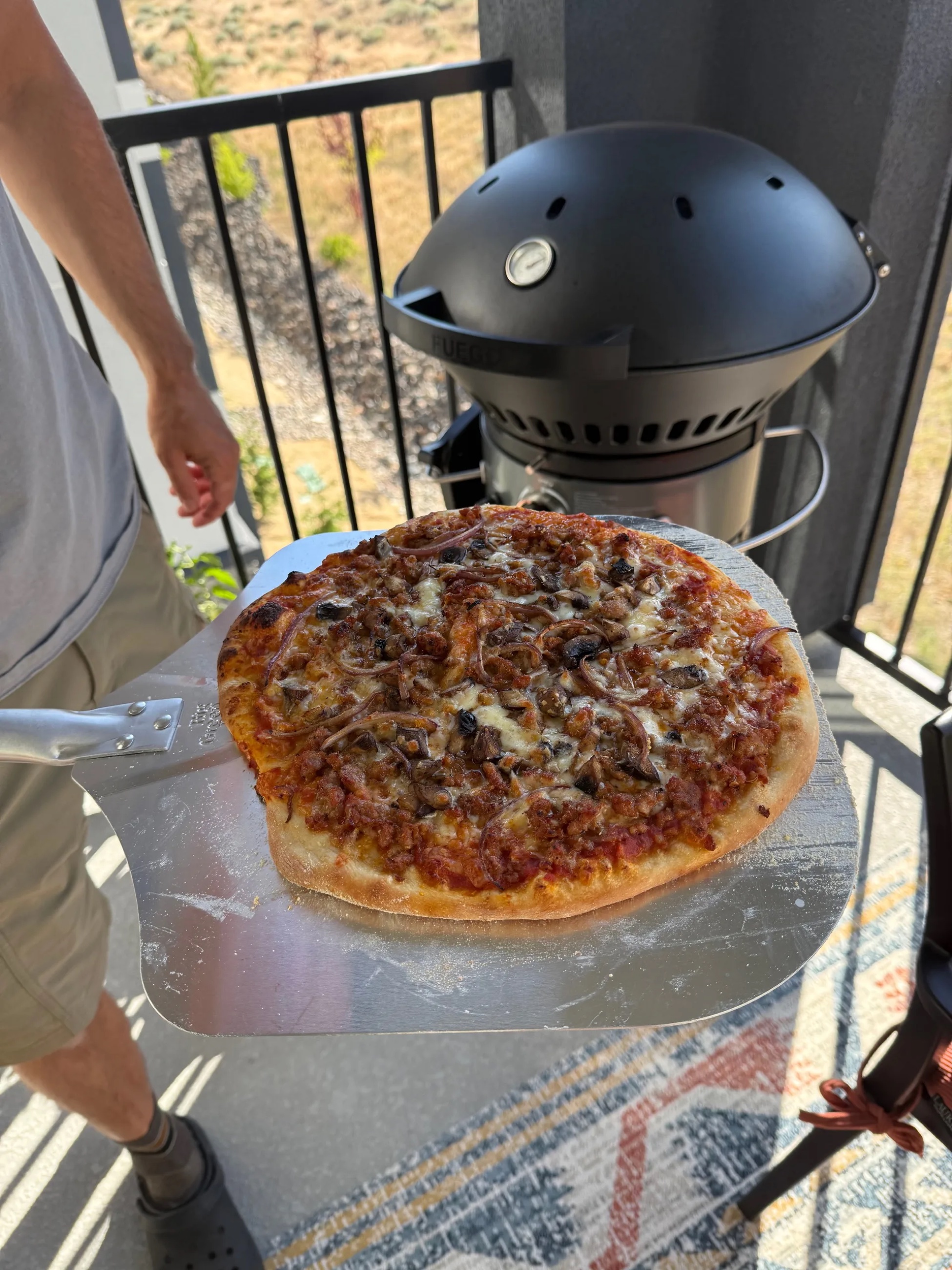 Grilled pizza on the patio during the final hour of daylight.
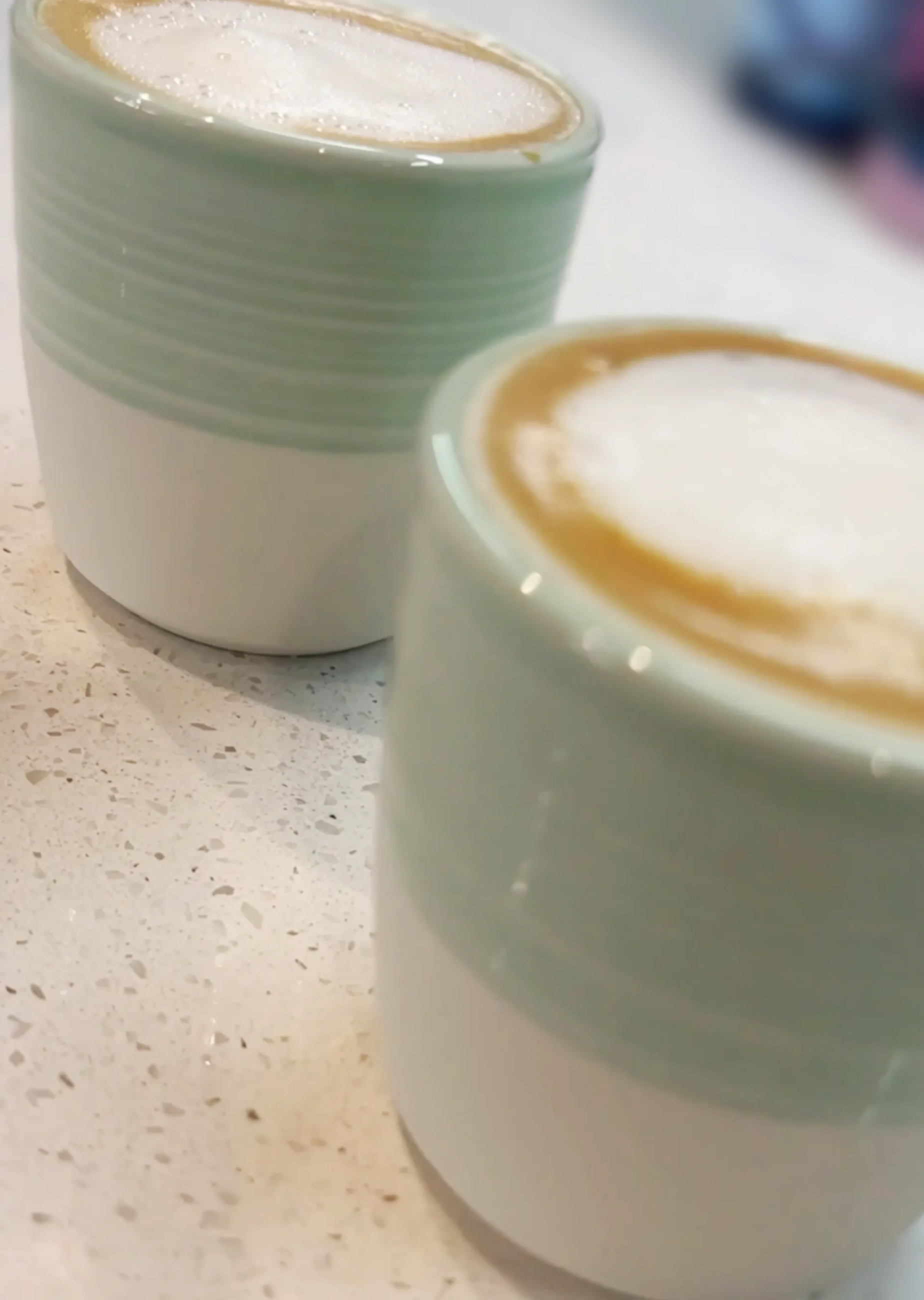 Homemade flat whites, made at home most mornings that summer.
Watch the accompanying short: Flat Whites
One October evening, that meant getting dressed up for a volunteer appreciation dinner hosted by Living Stones Reno, an Old Hollywood theme complete with formal wear, music, and dancing among people who had become real friends over the past year.
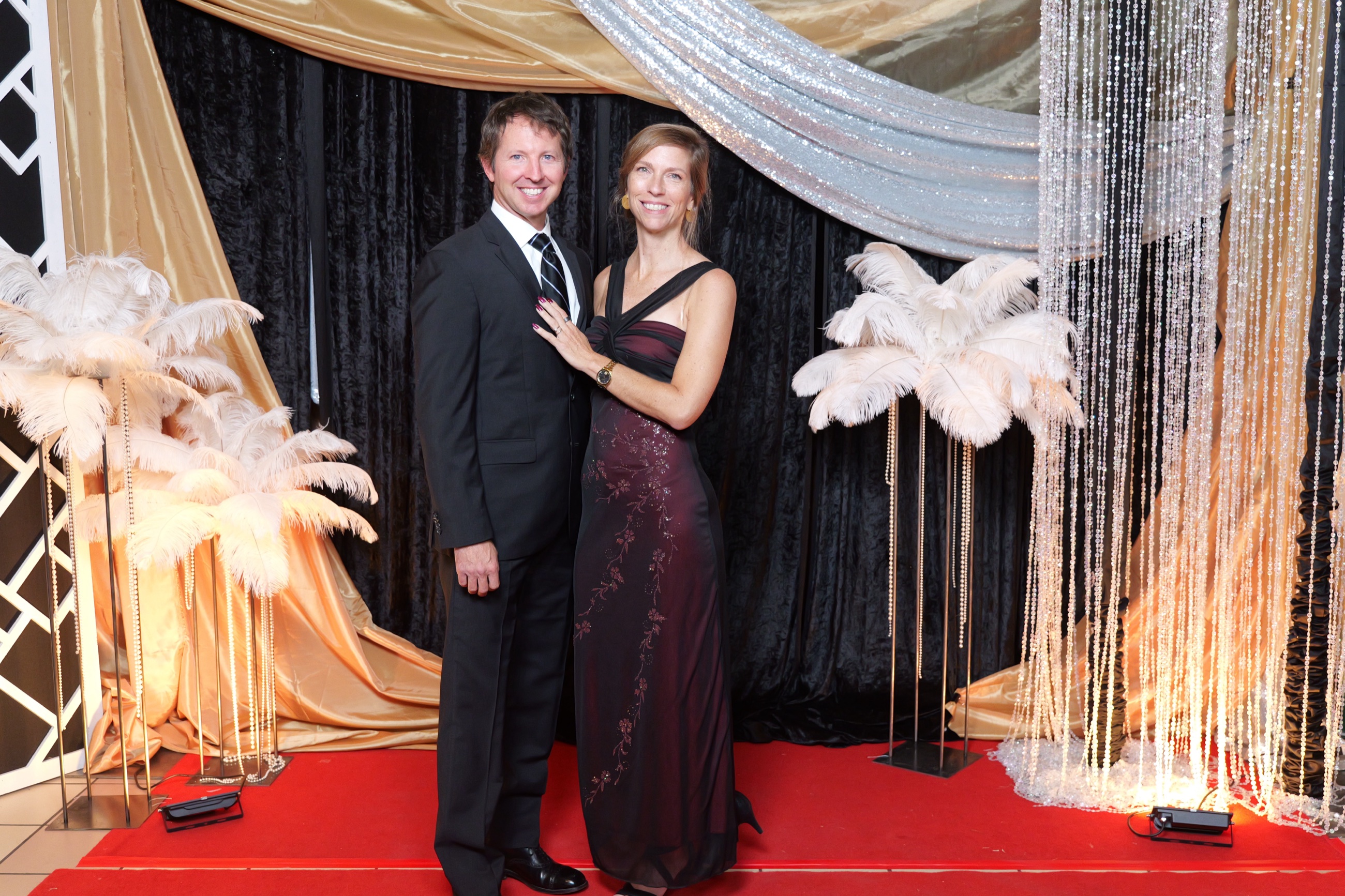 An Old Hollywood evening with friends from Living Stones Reno.
The transition toward autumn arrived in stages. September mornings grew cooler while afternoons still carried summer heat. Rain moved through the valley in brief spells. By November, frost edged the grass, and jackets worn during morning errands came off by early afternoon. The seasonal shift appeared in the cottonwoods along the Truckee River and the increasingly bare foothills.
Summer evenings extended outdoor life. Autumn narrowed it gradually. The city remained easy to move through, while the surrounding landscape kept weather and season in view.
Winter, Close Enough to Reach
Winter followed, colder and shorter on daylight, but no less close to the surrounding land. Reno-Tahoe is often cited as having the highest concentration of ski resorts in North America, and the claim holds up on a map. Within about forty minutes of home sat more lift-served terrain than most skiers see in a lifetime. That winter, new skis replaced gear that had outlived its edge, and the season’s pass got used. Northstar became the default, close enough for a half-day run without losing the whole evening. Palisades and Heavenly each got multiple visits, one on each side of the lake, each with its own scale and character. Other resorts within reach never made it onto the calendar that year, proof that a single season in Tahoe barely scratches what is available.
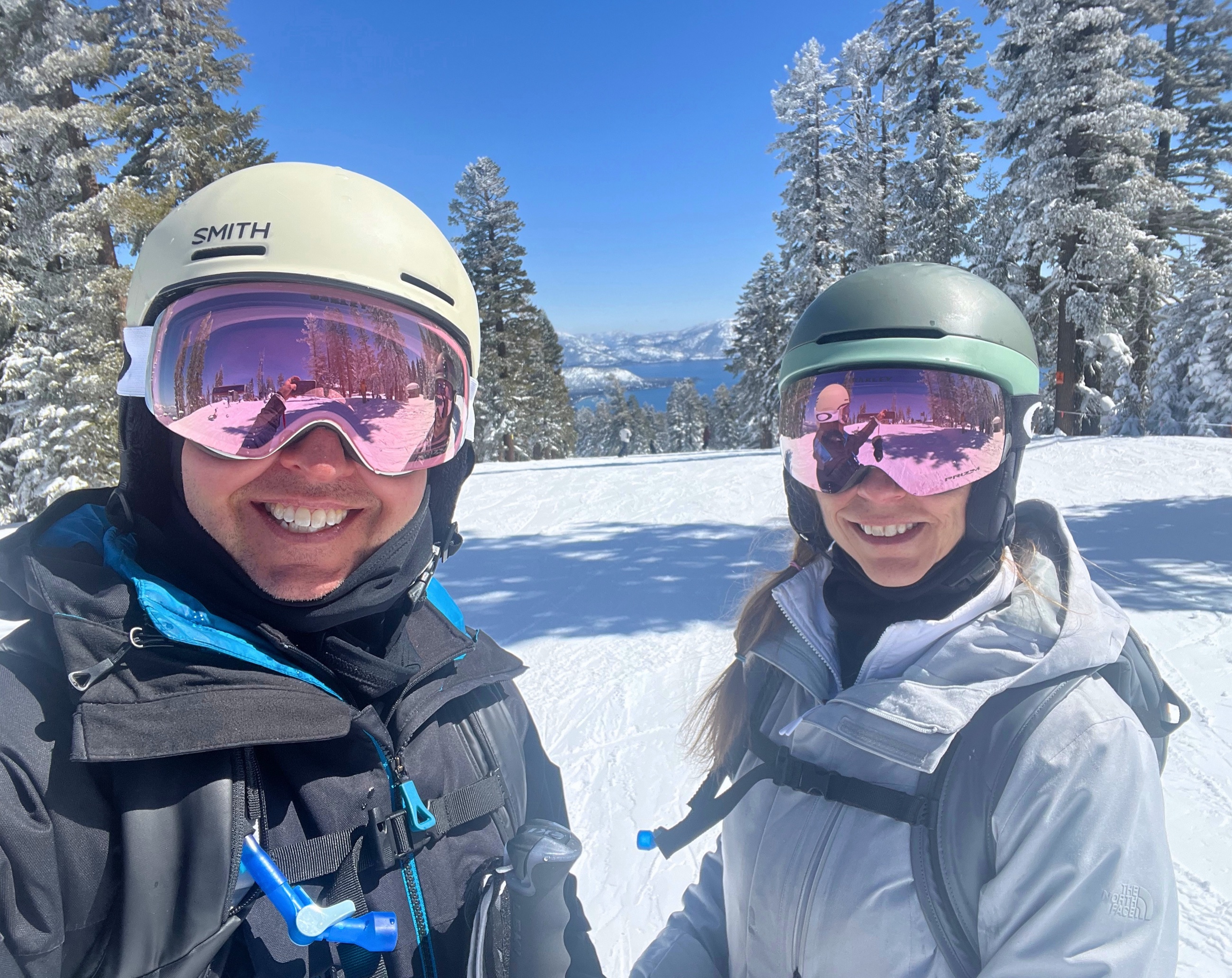 One of several ski days within easy reach of Reno, with Lake Tahoe visible beyond the slope.
On days without lift tickets, snowshoes went up toward Mount Rose instead, a slower way to spend time in the same mountains. Truckee, just over the state line, became a regular stop either direction: coffee in the morning, or an early dinner on the way back down the hill.
That same February, the Reno Events Center hosted PBR, the Professional Bull Riders tour: eight seconds a ride, established names and rising ones on the same card, held in an arena a few miles from ski runs still holding snow.
The Wider West
Wild horses showed up at the edges of town often enough to stop being a novelty, grazing along frontage roads and empty lots where the city gave way to sagebrush.
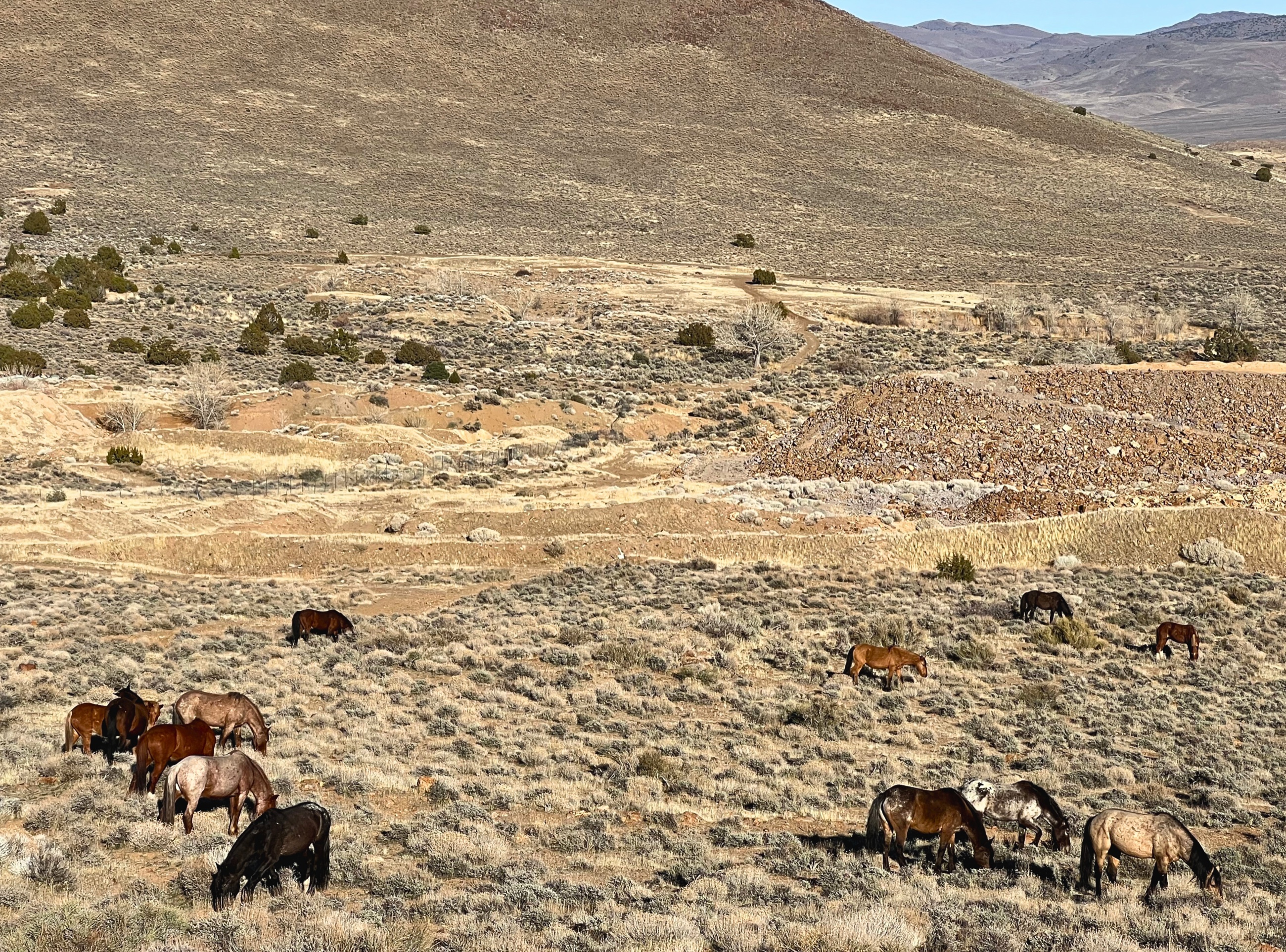 Wild horses grazing in the high desert outside Reno.
Lake Tahoe itself sat within the same reach, different each time we returned: swimming and beach afternoons, hiking along the shoreline trails, or an outdoor Shakespeare festival. That side of Reno life gets its own telling elsewhere in these Field Notes.
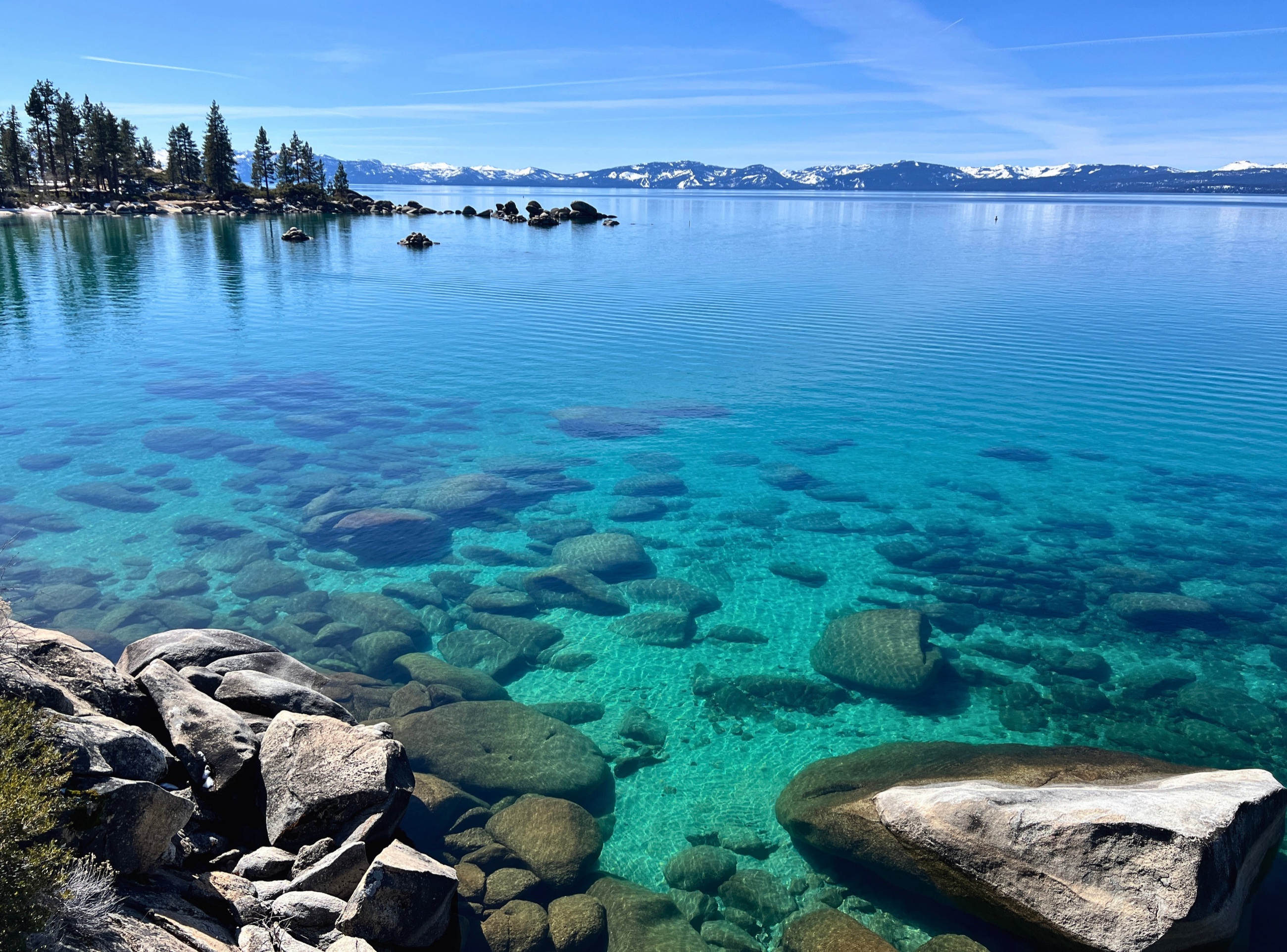 Clear water, granite, and lingering snow along the eastern shore of Lake Tahoe.
Virginia City, an old silver-mining town built into the hillside above the Comstock Lode, became a favorite stop: wooden boardwalks, saloons still doing business, and a view down into the valley that explained why the boomtown was built exactly there.
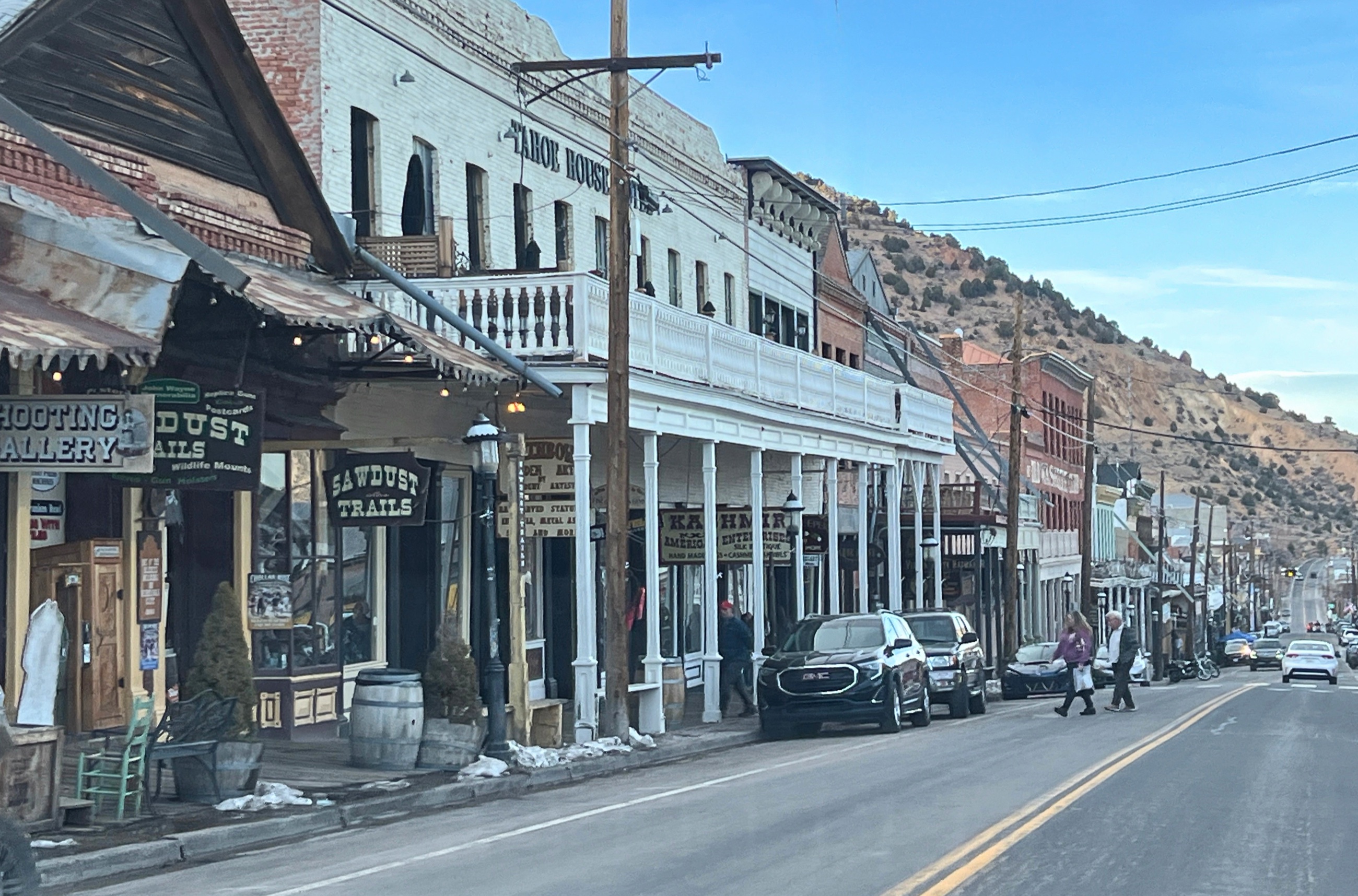 Historic storefronts lining C Street in Virginia City, built along the steep slope above the Comstock Lode.
South of Reno, the road toward Carson City, Nevada’s state capital, included hot springs and a good reason to stop on the way back.
That same range of reach extended further outward. Over the course of the year in Reno, road trips carried into wine country, national parks, and small towns across the American West, each one documented separately as its own Field Note.
Music at Several Scales
Reno’s summer arts calendar opens in July with Artown, a monthlong festival running since 1996 with more than 350 performances across the city. Its single busiest day is Dancing in the Streets, produced by MidTown Reno: an afternoon and evening of free, all-ages music and dance spread across six stages in the MidTown district, with murals painted live and street performers working the crowd between sets.
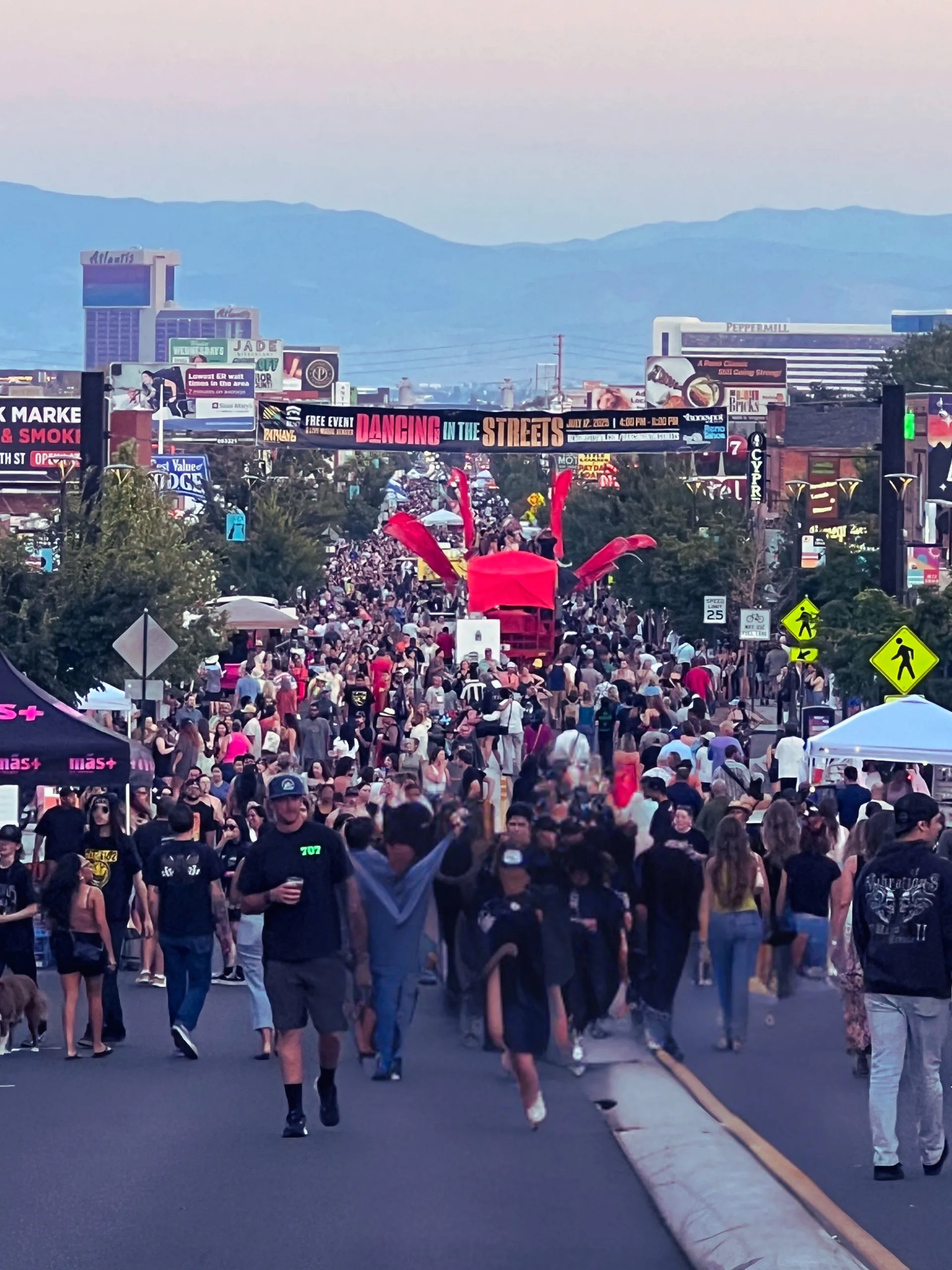 Dancing in the Streets brought free music and performance to Midtown Reno.
At the Grand Sierra Resort, Alison Krauss and Union Station brought one of American roots music’s most accomplished groups to a large local stage. Willie Watson opened with Appalachian ballads and road stories. Jerry Douglas played dobro with the fluency that comes from decades inside the tradition. Krauss’s voice remained precise without sounding clinical, supported by musicians who understood how much restraint the songs required.
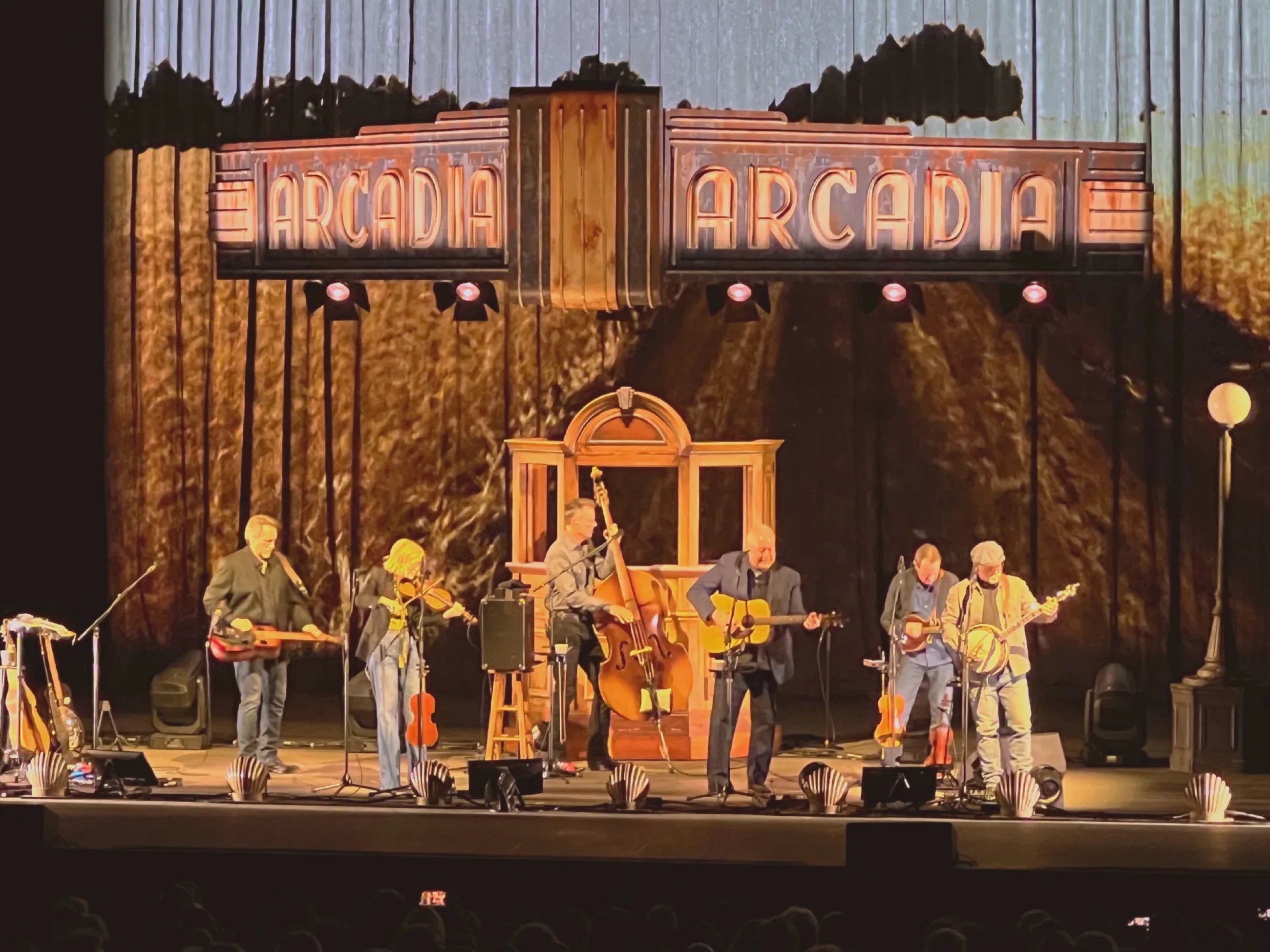 Alison Krauss and Union Station at the Grand Sierra Resort.
The concert belonged naturally in Reno. The Grand Sierra Resort is a casino property, yet the evening was defined by acoustic instruments, close listening, and music shaped far from Nevada. Reno’s entertainment economy often creates room for cultural experiences that extend well beyond the casino floor.
Smaller venues offered another side of the same civic life. A free Battle of the Bands competition in Sparks gave six local acts thirty minutes each, with the audience voting after every set.
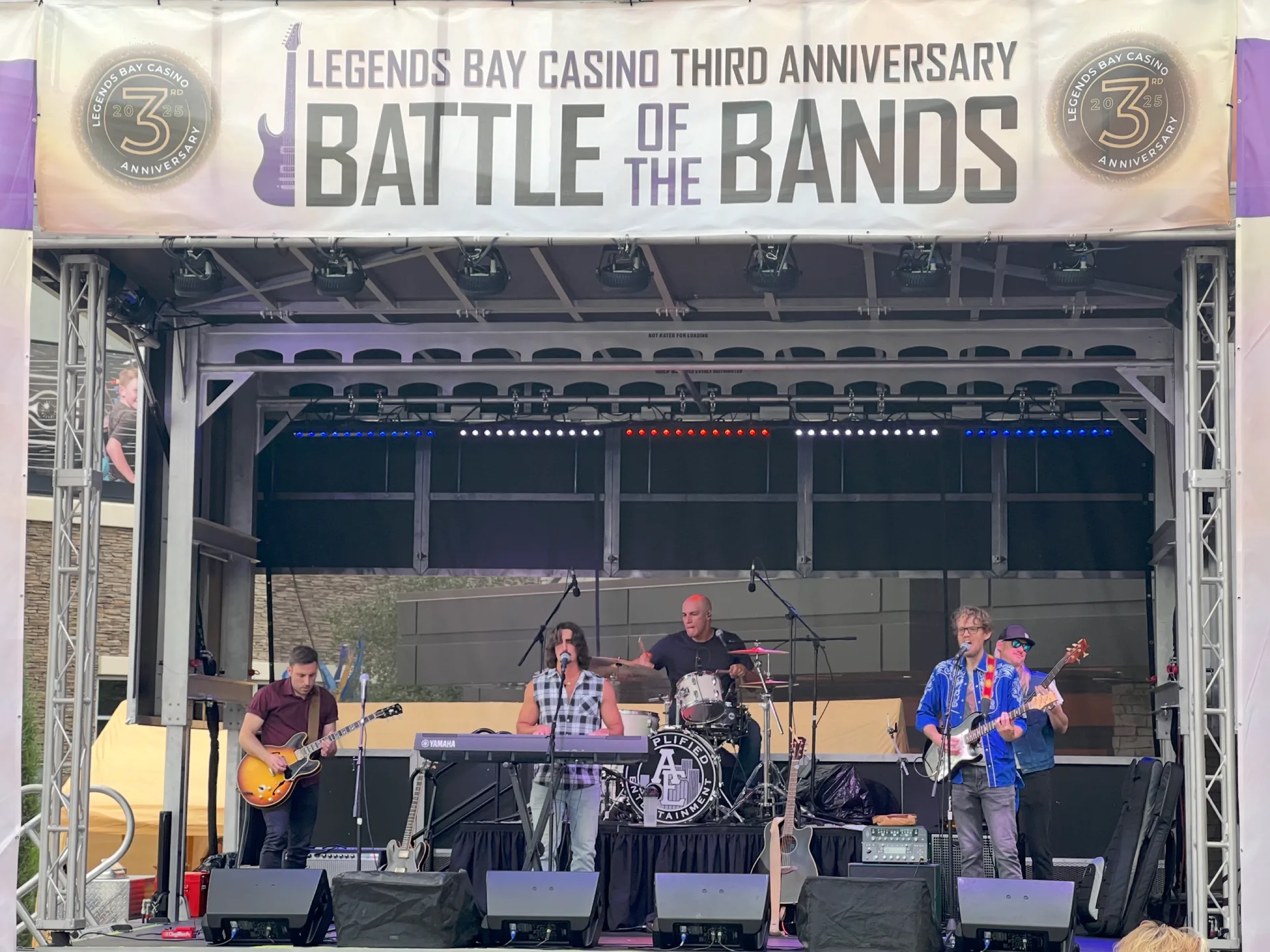 Six local acts competed before an audience vote in Sparks.
The same weekend, Reno-Tahoe CityFest took over Rancho San Rafael Park, the same field that hosts the Balloon Race each September. Local churches partnered with Palau Ministries to bring two days of music and food trucks to the park, free to attend. Rhett Walker and the band Cain played through steady rain to a crowd that stayed anyway, and Andrew Palau closed the weekend with a message on gospel hope and community.
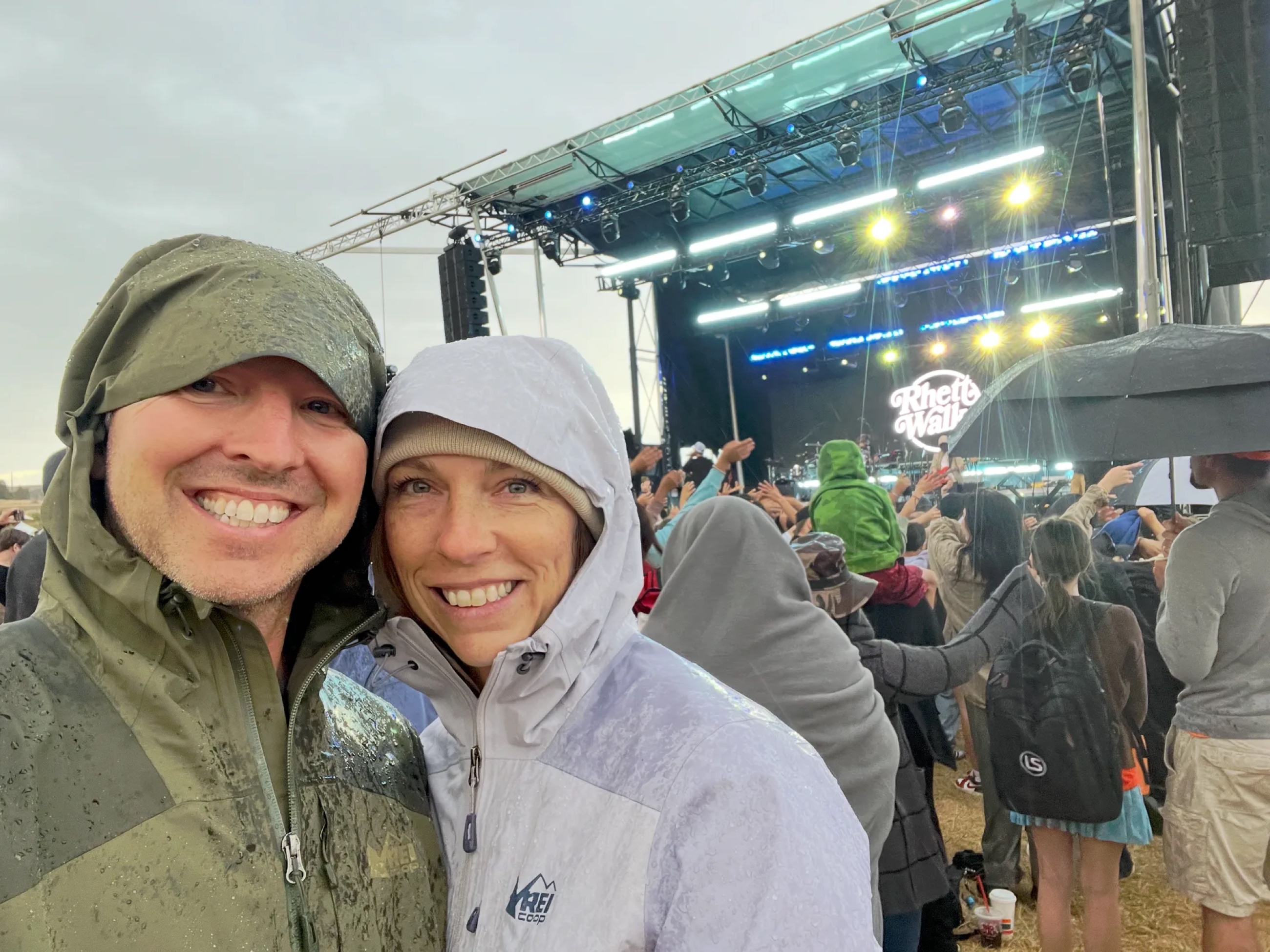 Reno-Tahoe CityFest continued through steady rain at Rancho San Rafael Park.
As the rain broke, a double rainbow arched over the park, a detail not lost on a crowd gathered there for a Christian festival.
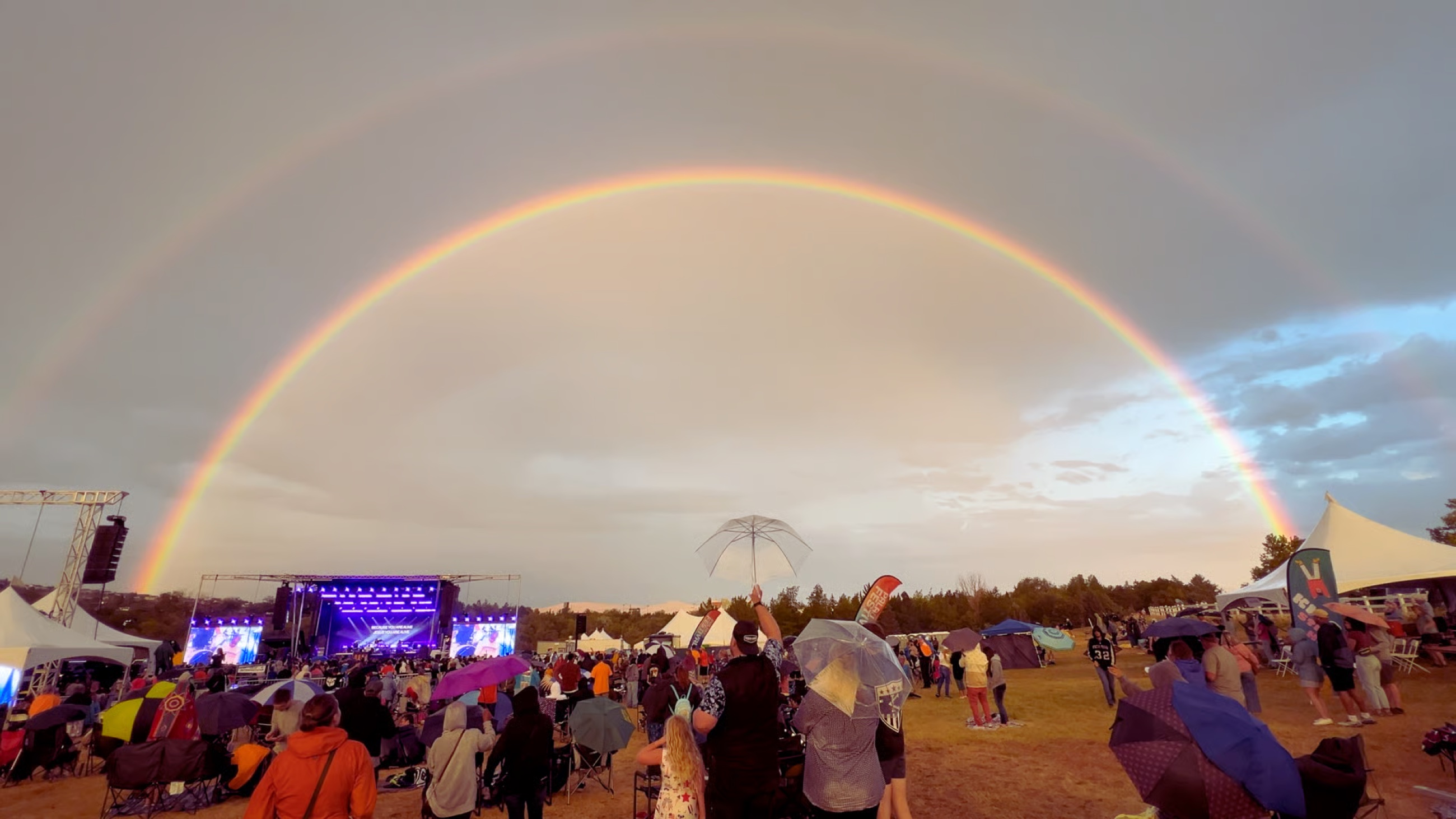 A double rainbow over Rancho San Rafael as the rain began to clear.
Later in the season, Reno Public Market hosted Kimmi Bitter and The Westside Twang, a San Diego group drawing from countrypolitan, surf rock, and desert twang. Families ate at nearby food stalls while students, retirees, and couples gathered around the stage.
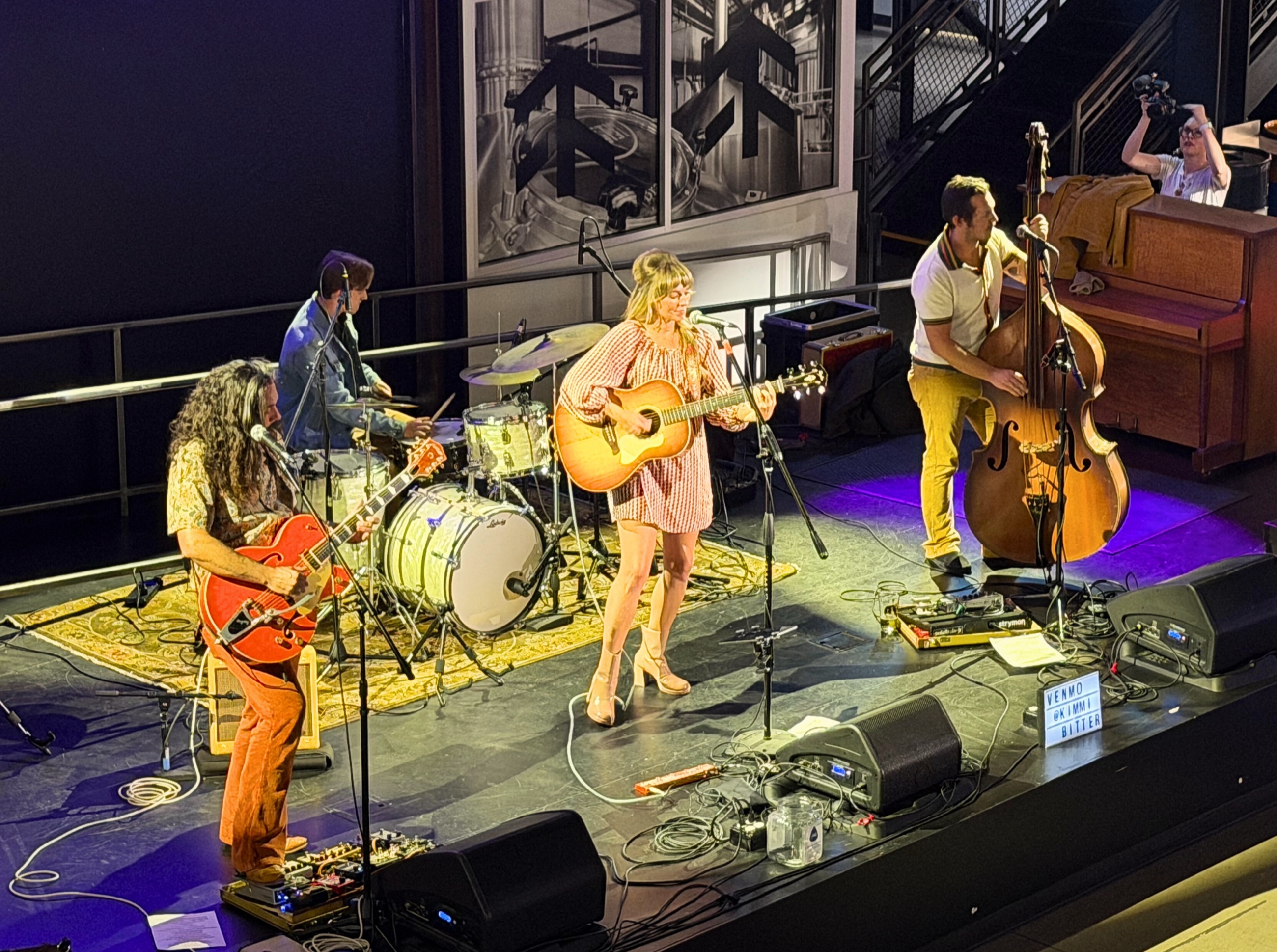 Kimmi Bitter and The Westside Twang at Reno Public Market.
An open-air dance in the middle of downtown, a nationally recognized bluegrass group, local bands competing before a welcoming crowd, a rain-soaked festival audience that stayed for the music anyway, and a touring regional act in a converted warehouse all fit within the same season. Reno was large enough to attract serious performers and small enough for cultural life to remain accessible.
Before Sunrise at Rancho San Rafael
The Great Reno Balloon Race begins in darkness. Spectators arrive at Rancho San Rafael Regional Park before dawn, carrying blankets and coffee into a field where balloon crews are already working. Burners flare against the cold morning air. Envelopes slowly take shape on the ground, then rise above the crowd as the first light reaches the valley.
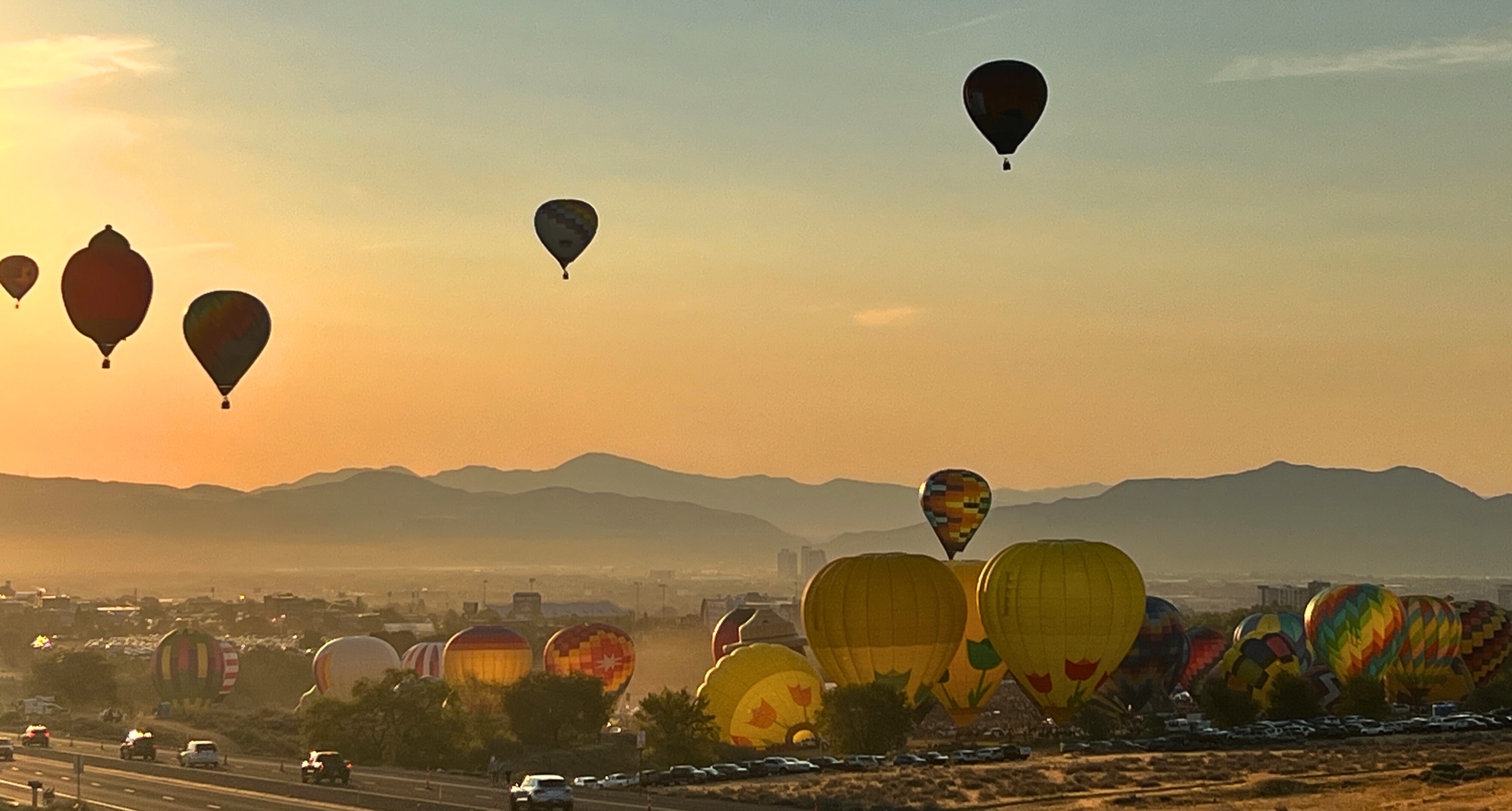 The Great Reno Balloon Race at sunrise over Rancho San Rafael.
Watch the accompanying short: The Great Reno Balloon Race
The event has taken place each September since 1982 and has become one of Reno’s defining public traditions. Its familiar sequence depends on the hour. The glow comes first, followed by Dawn Patrol and the mass ascension after sunrise. Isolated bursts of flame gradually become a sky filled with color.
The setting matters as much as the balloons. Rancho San Rafael sits close to downtown but opens toward the surrounding slopes and broad Nevada sky. As balloons lift, they drift above a landscape residents see throughout the year. For a couple mornings, the familiar horizon is occupied by something temporary and carefully coordinated.
Families arrive while most of the city is still asleep. Children watch crews prepare the baskets. Photographers wait for clear light. Volunteers, pilots, vendors, and spectators share the field with little separation between the machinery of the event and the people who have come to see it.
Waiting there, at that hour, for something the city already took for granted, was an early lesson in paying attention to a familiar place. The balloons rise only when conditions allow, and the crowd understands that the morning belongs partly to forces beyond the schedule.
Downtown for the Italian Festival
By October, another annual tradition changes the center of the city. For two days, the Great Italian Festival fills downtown Reno with long tables, live music, food stalls, grape stomping, and the scent of red sauce simmering along Virginia Street.
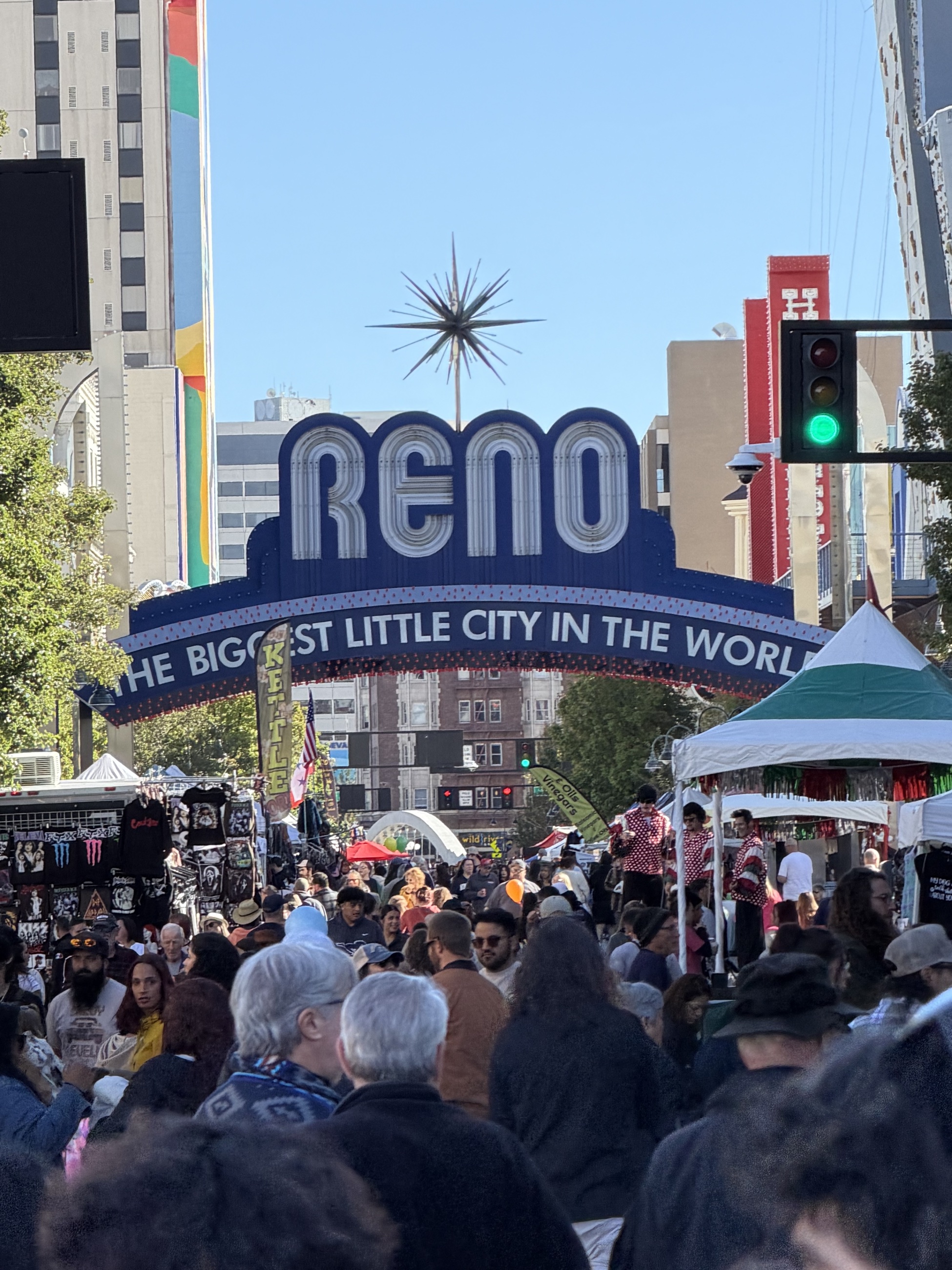 The Reno Arch above the Great Italian Festival crowd.
The family sauce cook-off gives the festival its center. Slow cookers hold sugo, ragù, Bolognese, arrabbiata, and marinara. Some recipes use pork, beef, or sausage. Others rely on mushrooms, eggplant, wine, cream, basil, or crushed red pepper. Families stand beside their entries, serving samples and explaining techniques traced to grandmothers from Calabria or Sicily.
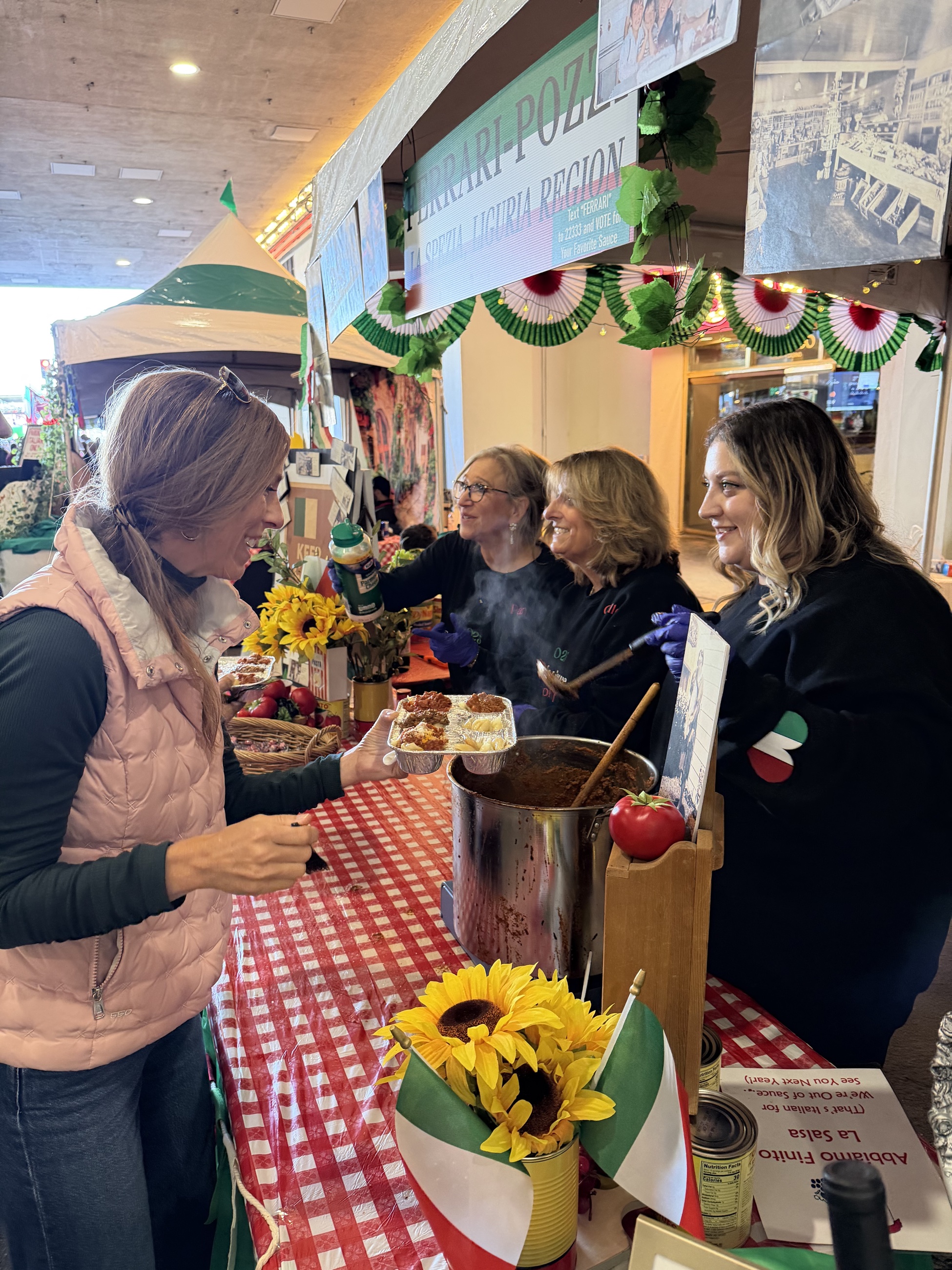 Stephanie tasting entries at the Great Italian Festival’s family sauce cook-off.
The detail keeps the festival rooted in households. The recipes have histories, preferences, and disagreements behind them. One family favors a long simmer and a rich meat sauce. Another defends a sweeter, lighter marinara. The cook-off makes those differences public without detaching them from the people who preserved them.
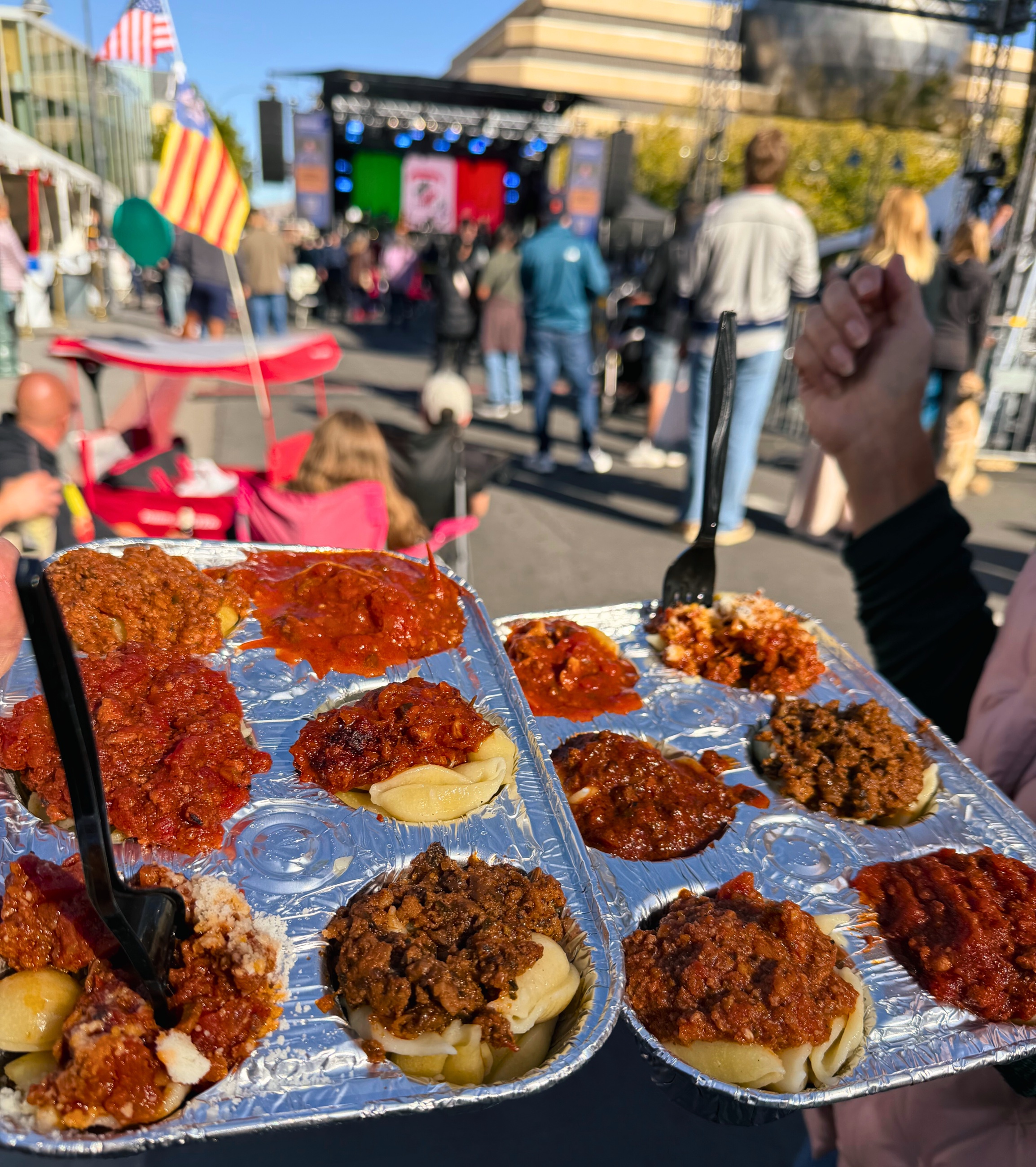 Sauce tasting trays from the family cook-off.
Reno’s Italian community developed through immigration tied to ranching, railroad work, restaurants, churches, social clubs, and small businesses. The festival carries that history forward through participation. Older residents speak Italian with friends. Children and grandchildren join the dancing. Contestants climb into wooden barrels and stomp grapes while juice drains into bowls below.
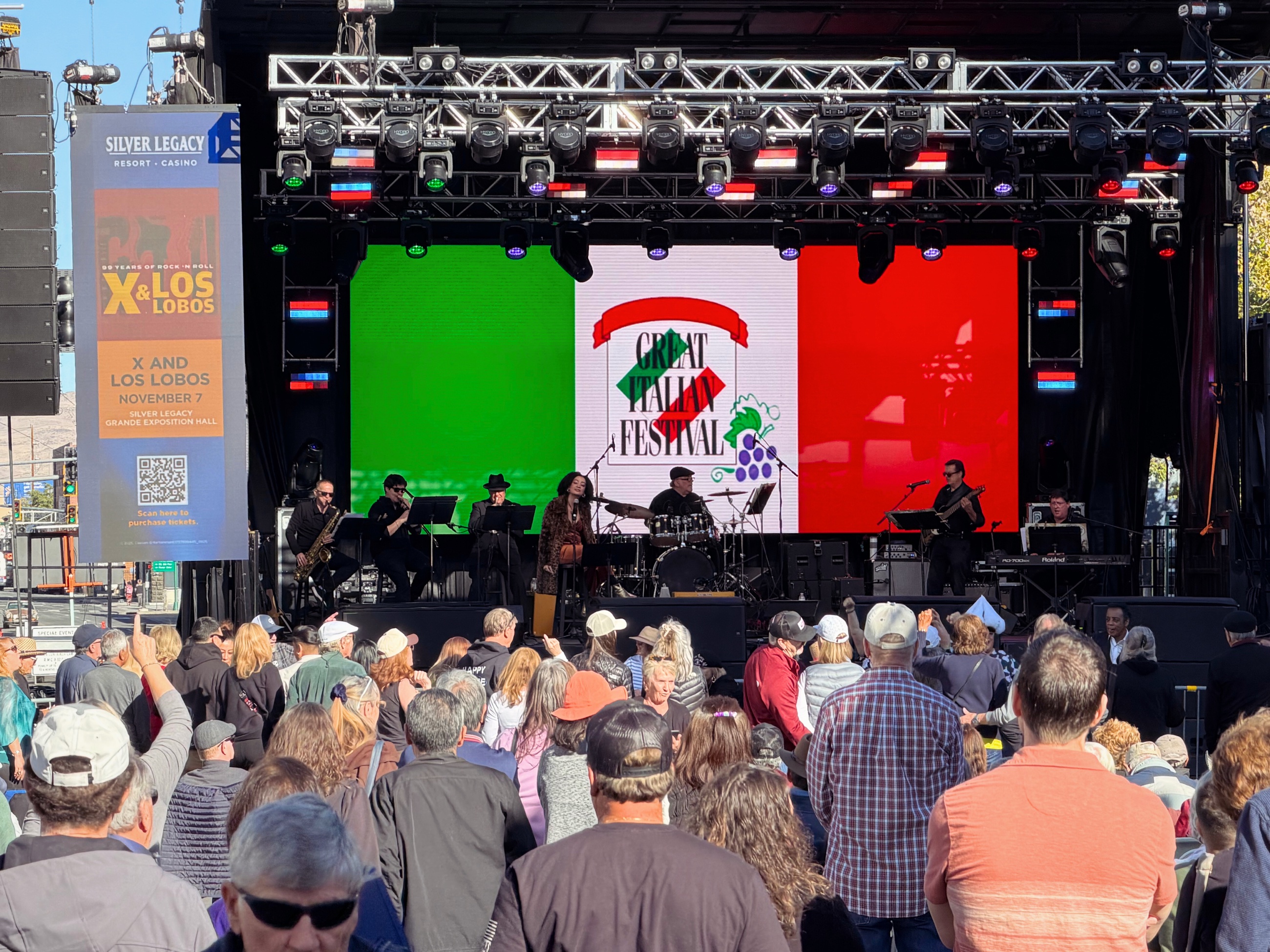 Live music and a downtown crowd at the Great Italian Festival.
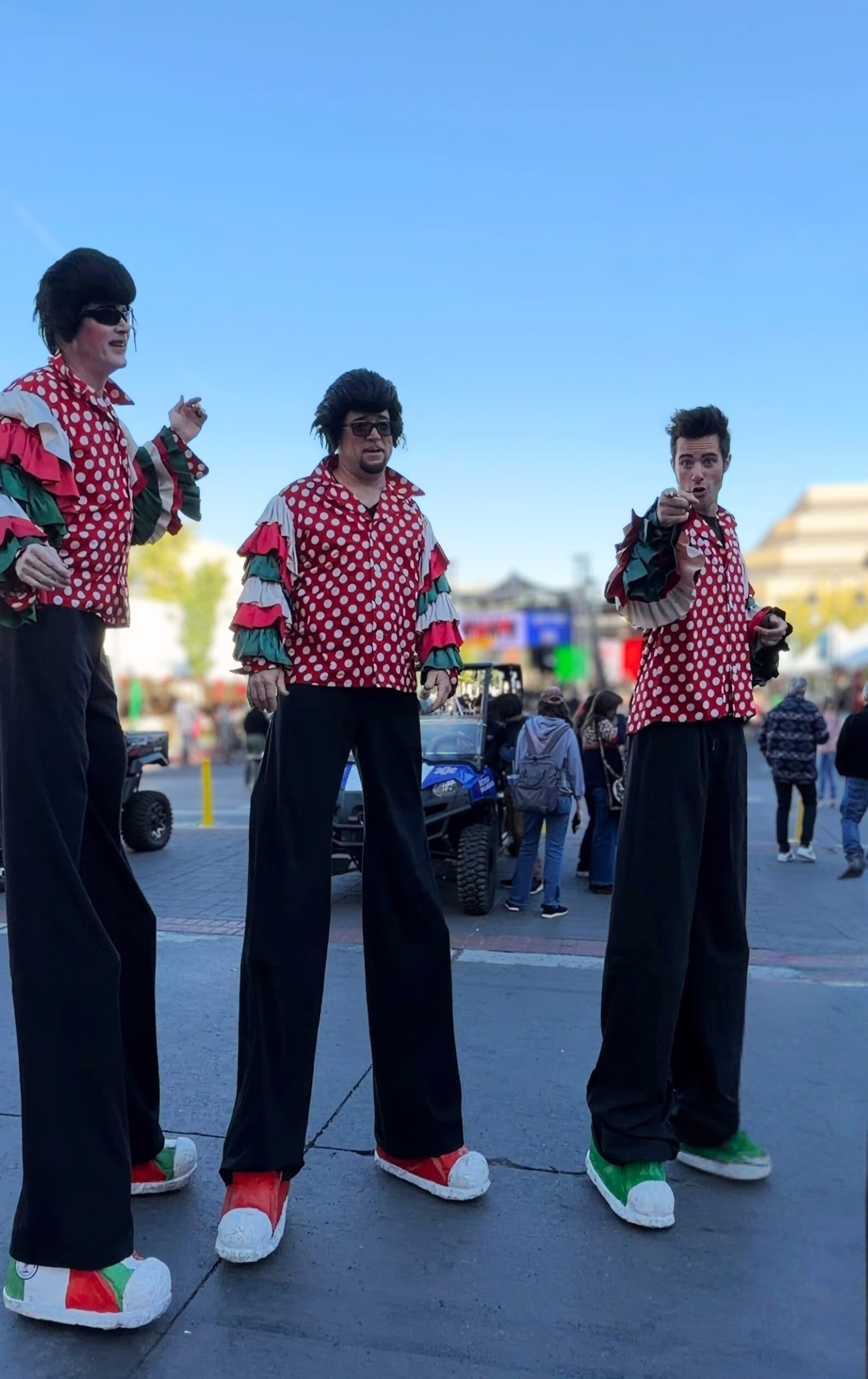 Festival performers adding another layer to the weekend’s public celebration.
Downtown is often read first through casinos and illuminated signs. During the festival, the same streets become a setting for family recipes and inherited customs, a part of Reno that has existed for generations and rarely announces itself outside these two days.
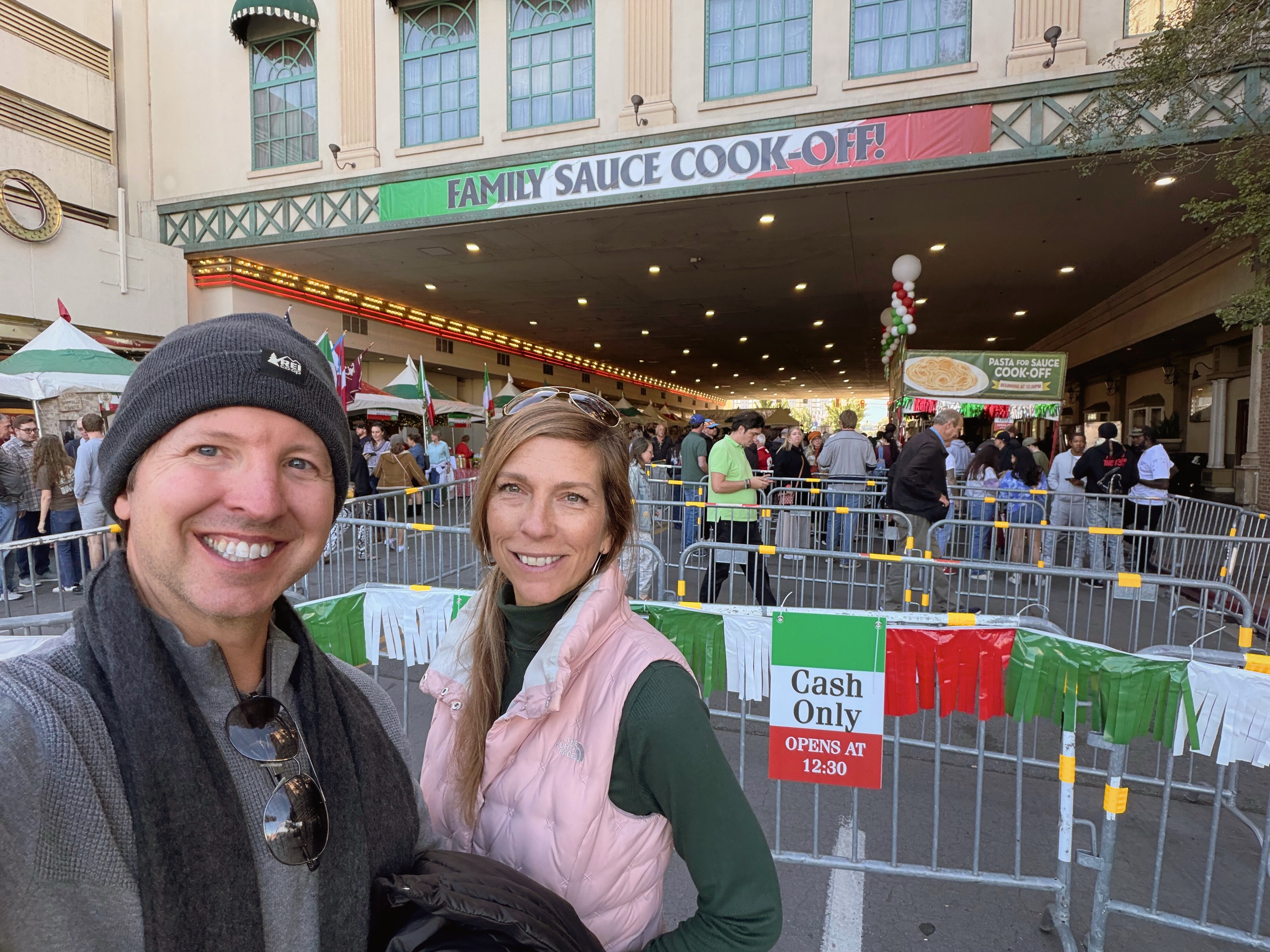 At the Great Italian Festival in downtown Reno.
The City Beyond the Casino Corridor
Reno Public Market represents a more recent layer of local culture. The converted warehouse gathers food stalls, coffee, bars, maker spaces, and live music under one roof. Families share tables with students and retirees. A group can order Salvadoran food from Los Cipotes while someone else chooses Indian food or a drink from another counter.
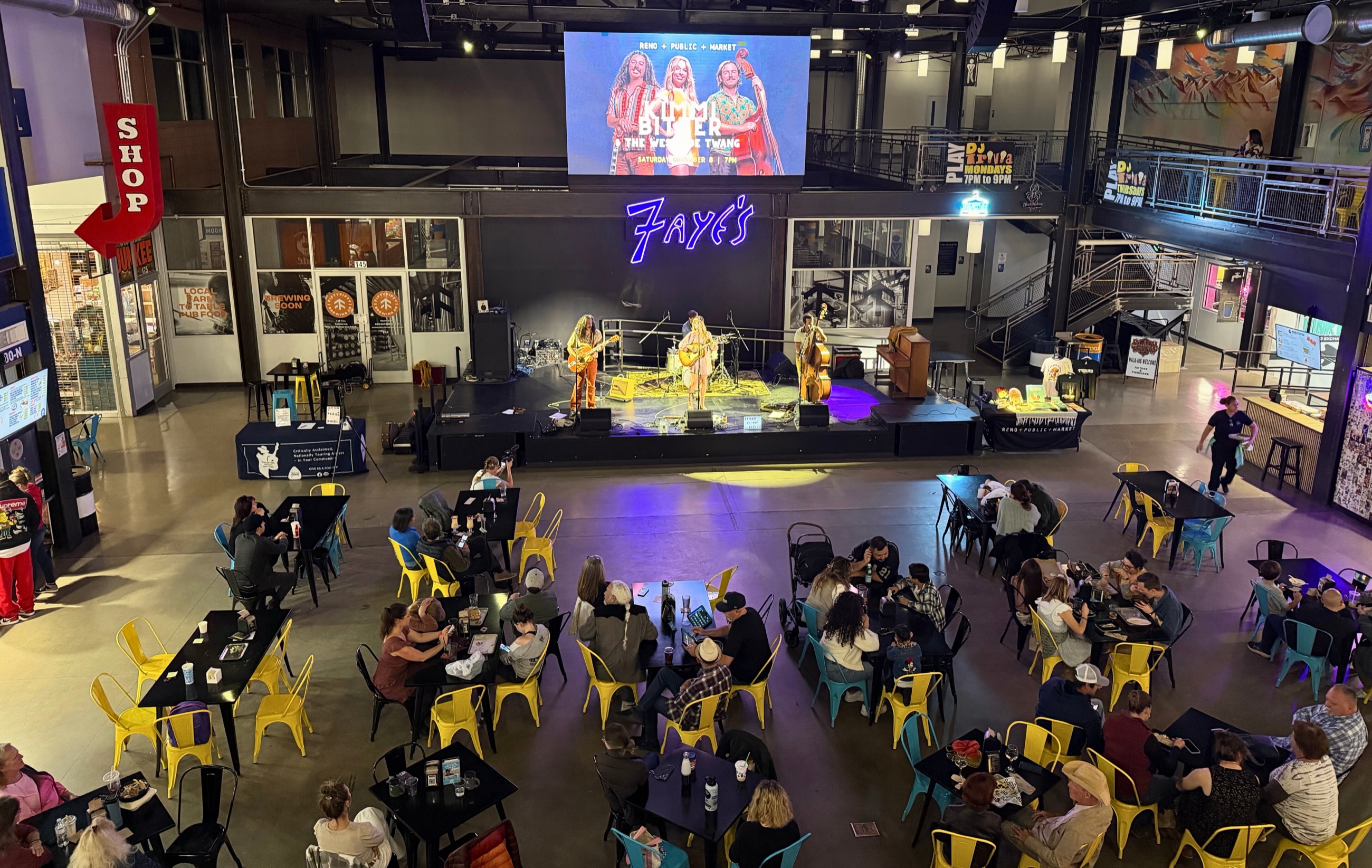 Reno Public Market bringing food stalls and live music into a shared hall.
The market functions as a destination, but a family can also drop in on a Tuesday night without planning around it. Returning matters. A first visit introduces the building. Later visits show how the room changes according to the performer, crowd, and season.
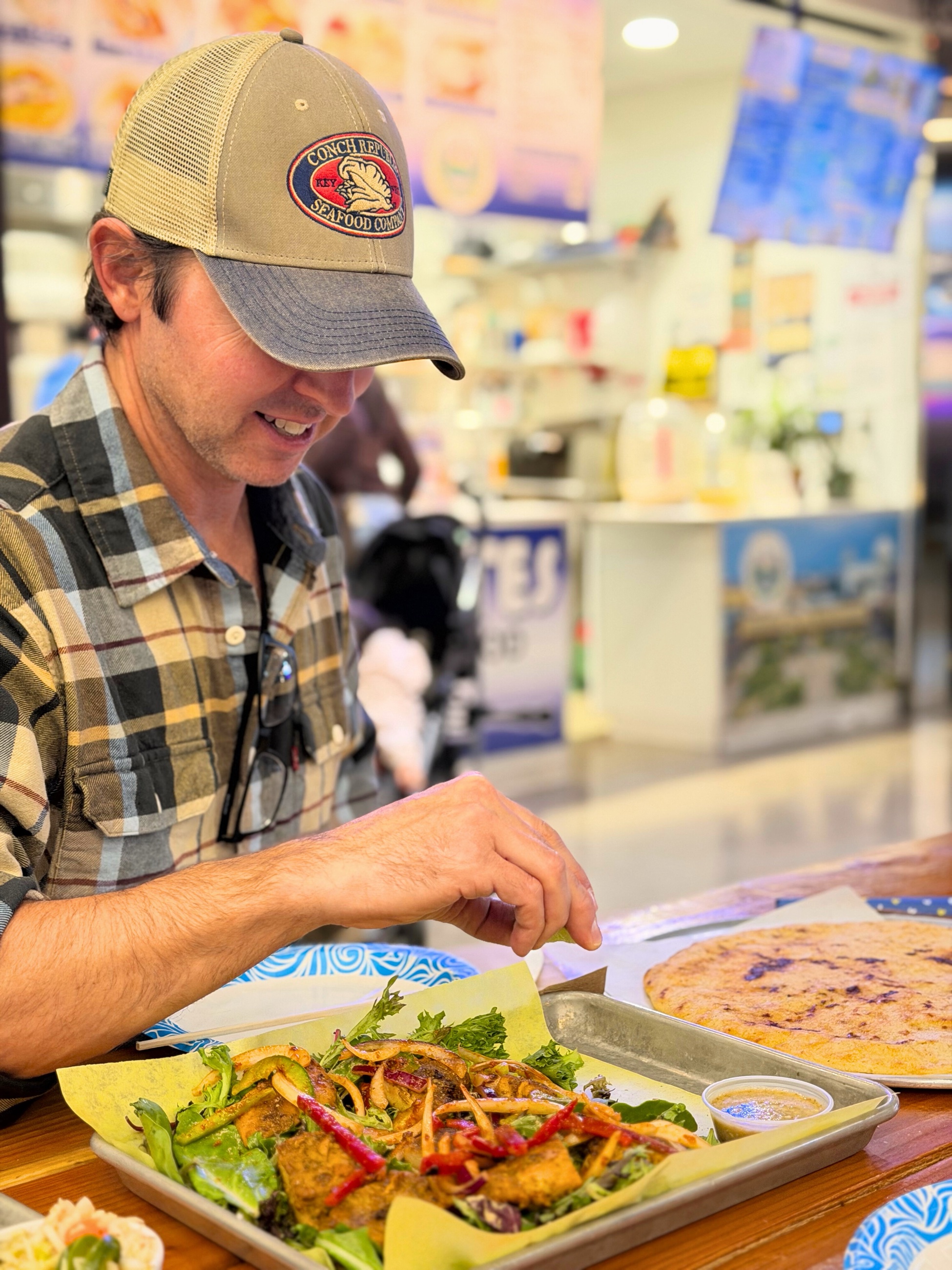 Dinner at Reno Public Market on a weeknight, no occasion required.
Midtown offers a related view of Reno’s development. Independent restaurants, coffee shops, bars, galleries, and small businesses have created a district with a character separate from the casino core. The area broadens the city’s cultural map and gives residents more reasons to spend time along streets that once carried far less activity.
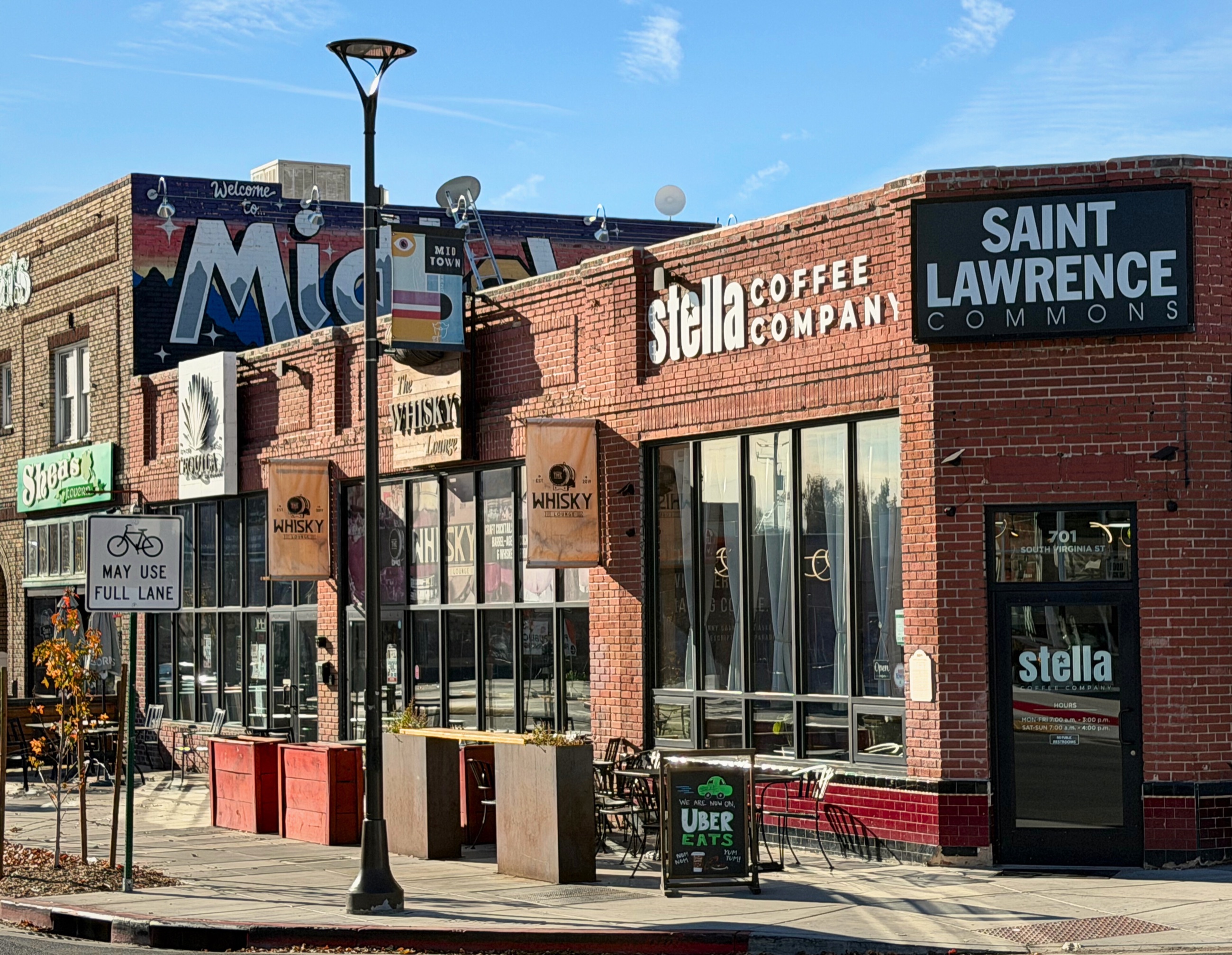 Independent businesses and neighborhood streets in Midtown Reno.
The change shows up in new businesses and shared public spaces, block by block, without a citywide rebranding campaign behind it. Reno Public Market can host a touring band while local food vendors serve dinner. Midtown patios fill when the weather allows. The Truckee River corridor connects downtown with parks, events, restaurants, and walking routes. Together, these places show a city adding new cultural forms alongside its established identity.
Documenting a Familiar Place
The earliest Some Great Place newsletters were built from these same experiences: a foothill walk, a concert, dinner on the patio, a downtown festival, an afternoon at the public market, the first cold morning of the season. None of it required travel beyond the region. The work was in recording it accurately and setting it in relation to what came before.
That discipline changed what counted as material. The gap between a summer morning and a summer afternoon explained the high desert better than a paragraph on climate could. A crowd waiting in the dark at Rancho San Rafael said more about civic life than a description of the balloons themselves. A conversation about a family’s sauce recipe connected a downtown street festival to migration and memory without anyone needing to point it out.
It also exposed a habit to break: reaching for a broad conclusion after every outing, or re-explaining the project instead of showing it. Reno supplied enough concrete material, in its weather, food, music, and public gatherings, to make those declarations unnecessary.
Reno was never only a collection of festivals, restaurants, and nearby trails. It was a lived geography, close enough to observe over the length of a season: a high-desert city with short distances, visible mountains, cold mornings, hot afternoons, and public spaces where different parts of the community regularly crossed paths. Documenting it did not require treating every outing as a lesson. It required paying attention long enough to see the city in proportion.
That was the beginning of Some Great Place. The first place examined closely was the one whose streets, weather, and habits had already become easiest to overlook.
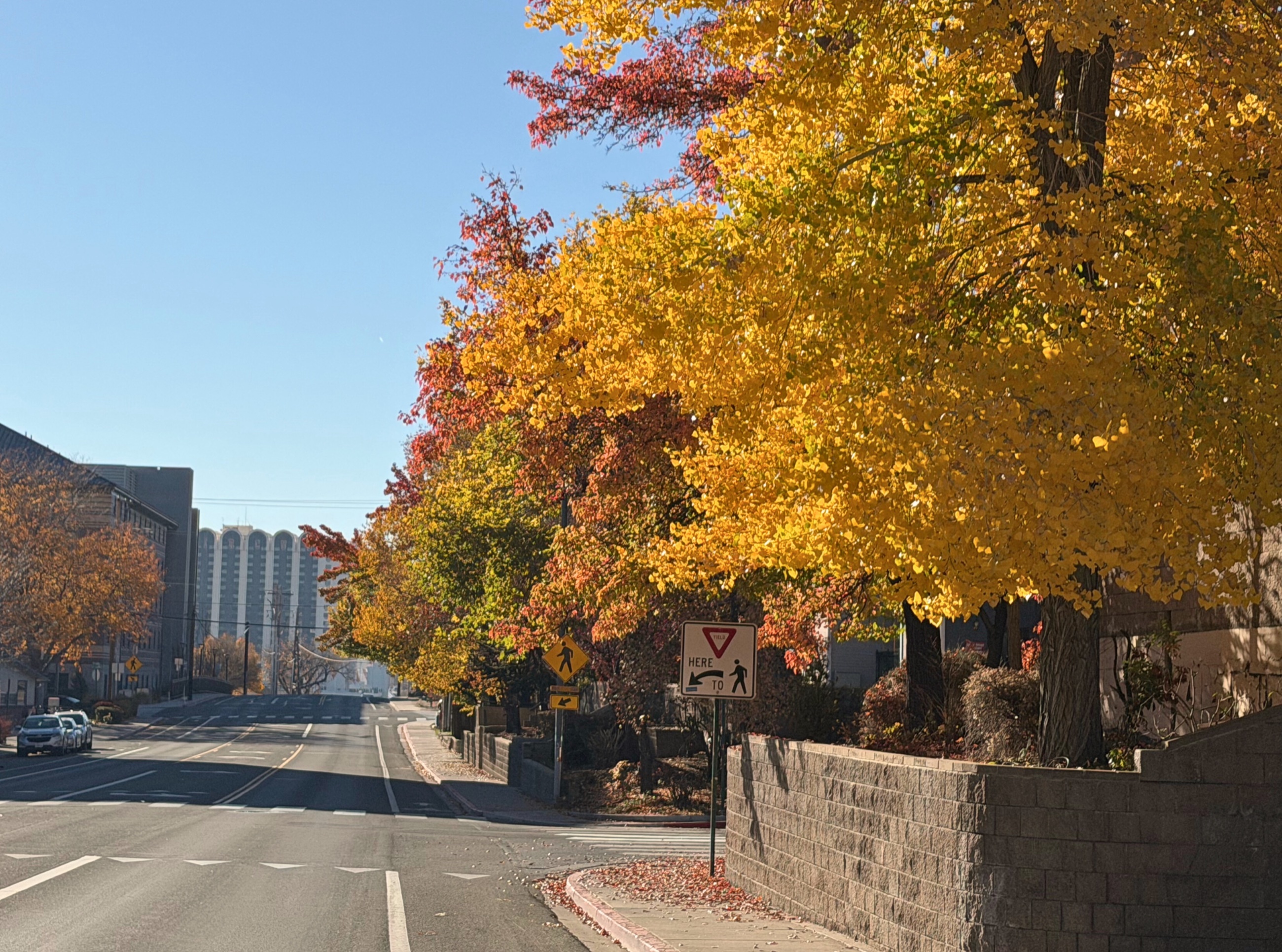 Autumn color along a familiar Reno street.
Practical Notes
- Setting: Reno sits at approximately 4,500 feet in northern Nevada’s high desert. Dry air, strong sun, and large swings between morning and afternoon temperatures are common.
- Foothill walks: Summer outings are most comfortable early morning or near sunset. Carry water even on short routes.
- Skiing: Reno sits roughly forty minutes from Northstar and within reach of Palisades, Heavenly, and several other Tahoe resorts. A season pass makes sense for anyone spending a full winter in the area.
- PBR Reno: Held at the Reno Events Center in February as part of the PBR Pendleton Whisky Velocity Tour. Distinct from the Reno Rodeo, a separate PRCA event held in June.
- Virginia City and Carson City: Virginia City sits above Reno via NV-341, also known as Geiger Grade, roughly 35 minutes southeast. Carson City, Nevada’s state capital, is about 35 minutes south of Reno; several hot springs sit along the route.
- Artown: Runs citywide throughout July. Dancing in the Streets, its single-day centerpiece, is produced by MidTown Reno rather than Artown itself, free to attend, held along South Virginia Street in the MidTown district. The date shifts year to year (mid-July); check current listings.
- Great Reno Balloon Race: Held at Rancho San Rafael Regional Park in early September. Main activity begins before sunrise; arrive well before dawn and expect cold conditions on the field.
- Great Italian Festival: Held downtown in October. Virginia Street closes for food stalls, entertainment, the family sauce cook-off, and grape stomping.
- Music: Grand Sierra Resort hosts major touring performers. Reno Public Market and smaller local venues offer more informal live music.
- Neighborhoods: Midtown, the Truckee River corridor, and Reno Public Market give the clearest introduction to Reno beyond the casino core.