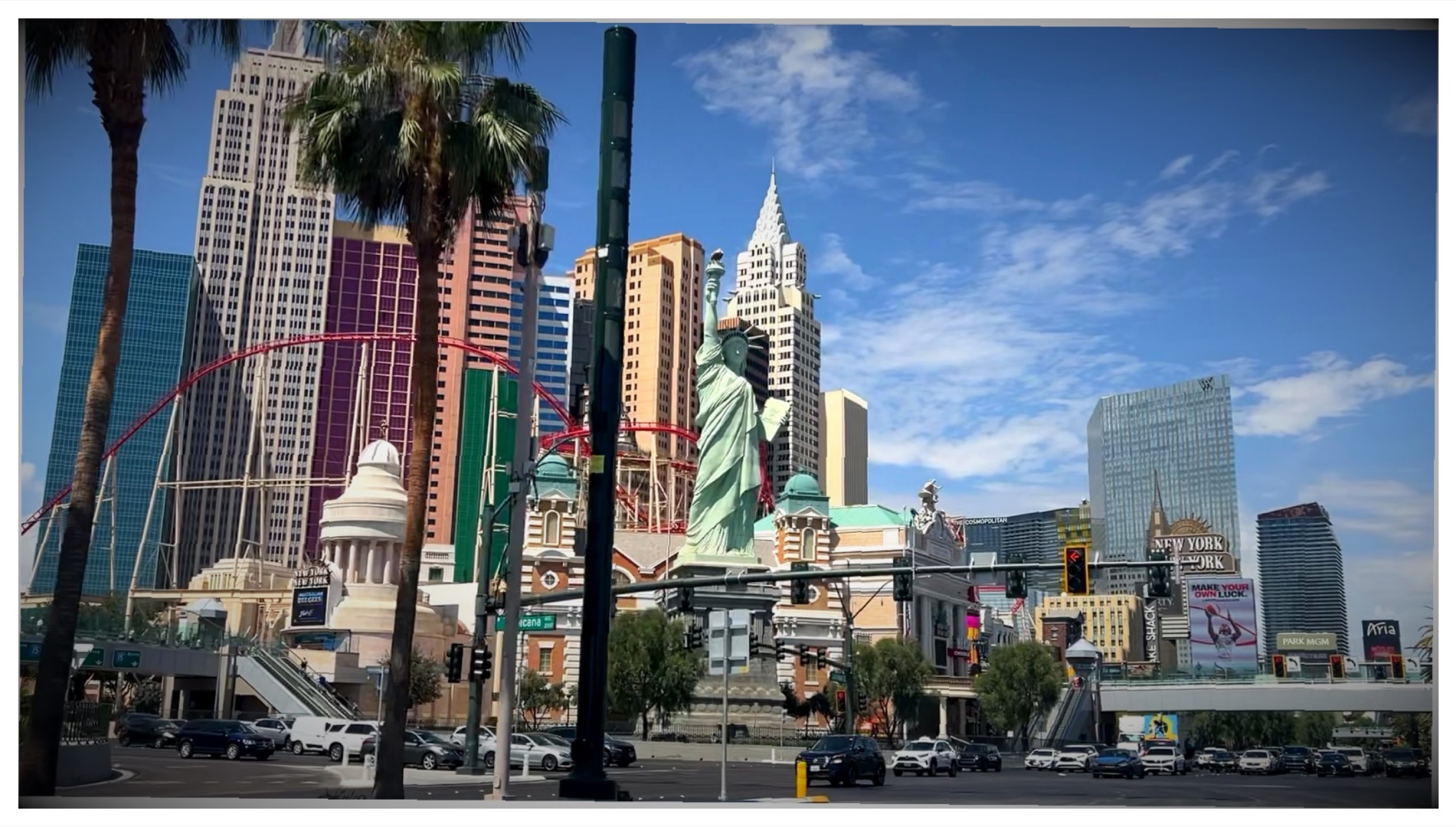
 The New York-New York skyline and a replica Statue of Liberty, familiar places remade as theater at the edge of the Mojave.
After six days threading through red rock canyons and sleeping under International Dark Sky territory, we rolled into Las Vegas with desert dust on our shoes and the silence of Bryce Canyon still close behind us.
This was not a Vegas vacation in the usual sense. It was a deliberate pause between wilderness and the next chapter of the road: one night to take in the city’s spectacle before continuing north.
Watch the accompanying short: Honest Vegas
From Desert Dust to the Strip
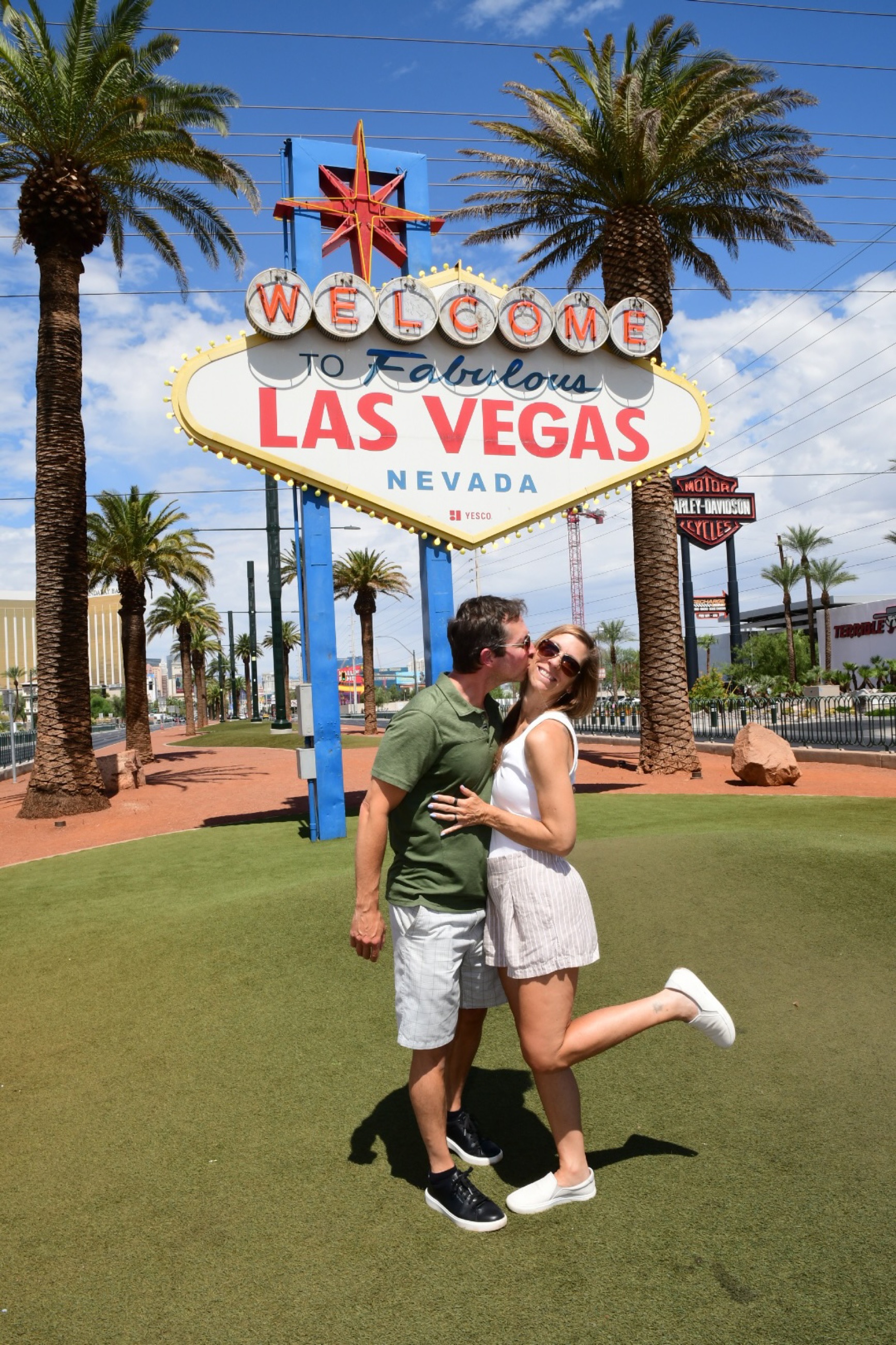 A rite of passage at the Welcome to Fabulous Las Vegas sign: a landmark where visitors from around the world pause to mark their arrival.
Las Vegas makes more sense when approached from the desert rather than the airport.
After days in Zion, Bryce Canyon, and Valley of Fire, the Strip did not feel like a separate world so much as an extreme response to the same landscape. Out beyond the glass towers, the Mojave remains visible. The city rises from it, argues with it, and depends on it.
The contrast was immediate: dust to marble, camp food to cocktails, dark skies to neon, silence to constant designed stimulation. Vegas compresses experience into a few bright blocks. The national parks stretch it across distance and time.
A Work Reset in the Arts District
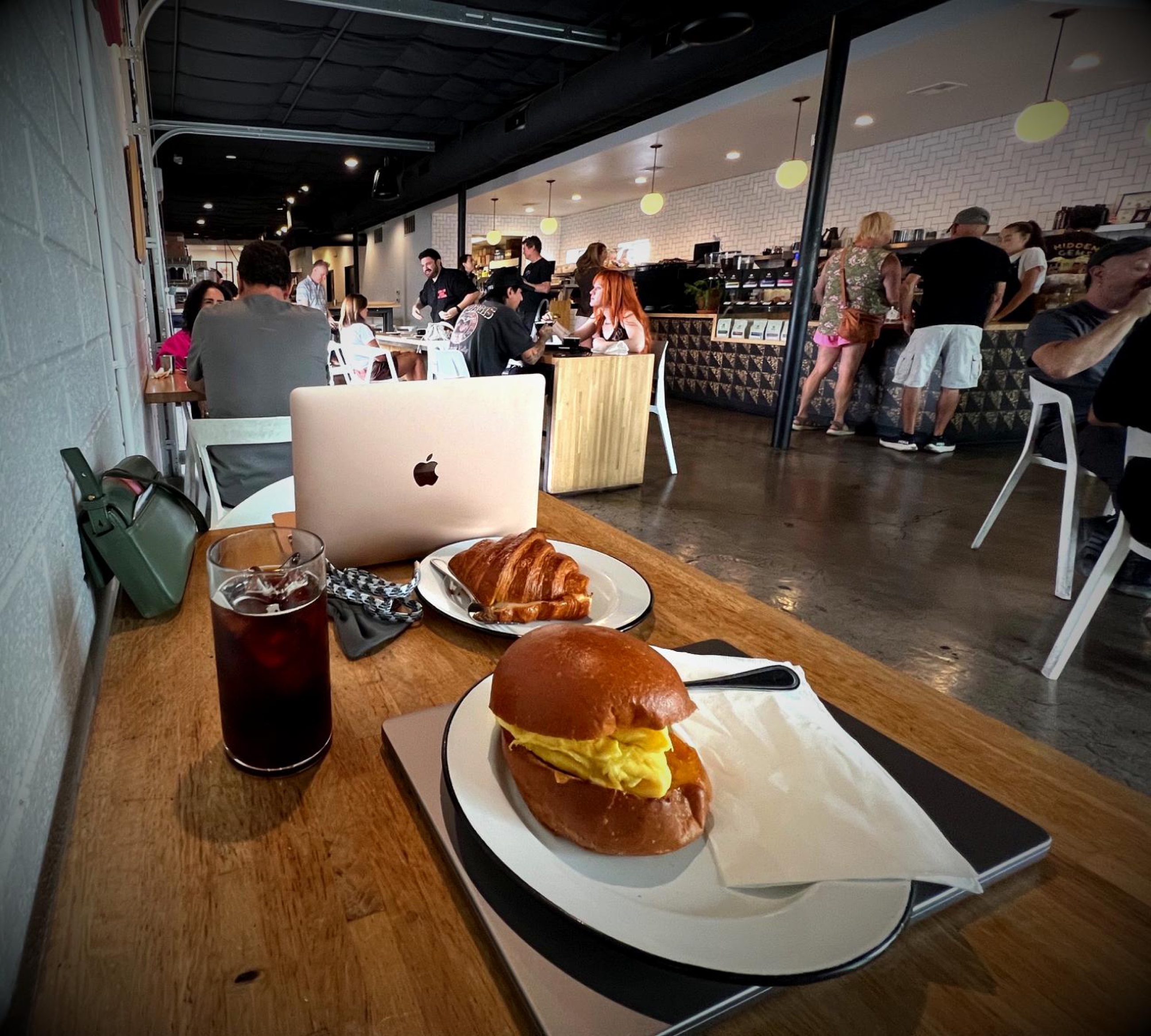 Nomad reality: breakfast sandwiches and iced coffee fueling three hours of work at Vesta in the Arts District before stepping into Vegas spectacle.
The transition from BLM camping to climate-controlled luxury happened in stages.
First came Vesta Coffee Roasters in the Arts District, where we claimed a corner table and spent three hours catching up on work over breakfast sandwiches and strong coffee. The bill was $32 for both of us, including Wi-Fi that actually worked and the kind of focused productivity that desert camping rarely allows.
Nomadic life runs on this kind of balancing act: ordinary work demands set against movement, weather, distance, and opportunity, worked out one afternoon at a time.
Our accommodation choice helped. Vdara Hotel & Spa operates as a non-casino hotel, which gave us some distance from the slot machine floor while keeping us within walking distance of the main attractions. A respectful tip at check-in secured an upgrade to the 40th floor with unobstructed views of the Bellagio fountains, which became our own private theater for the evening.
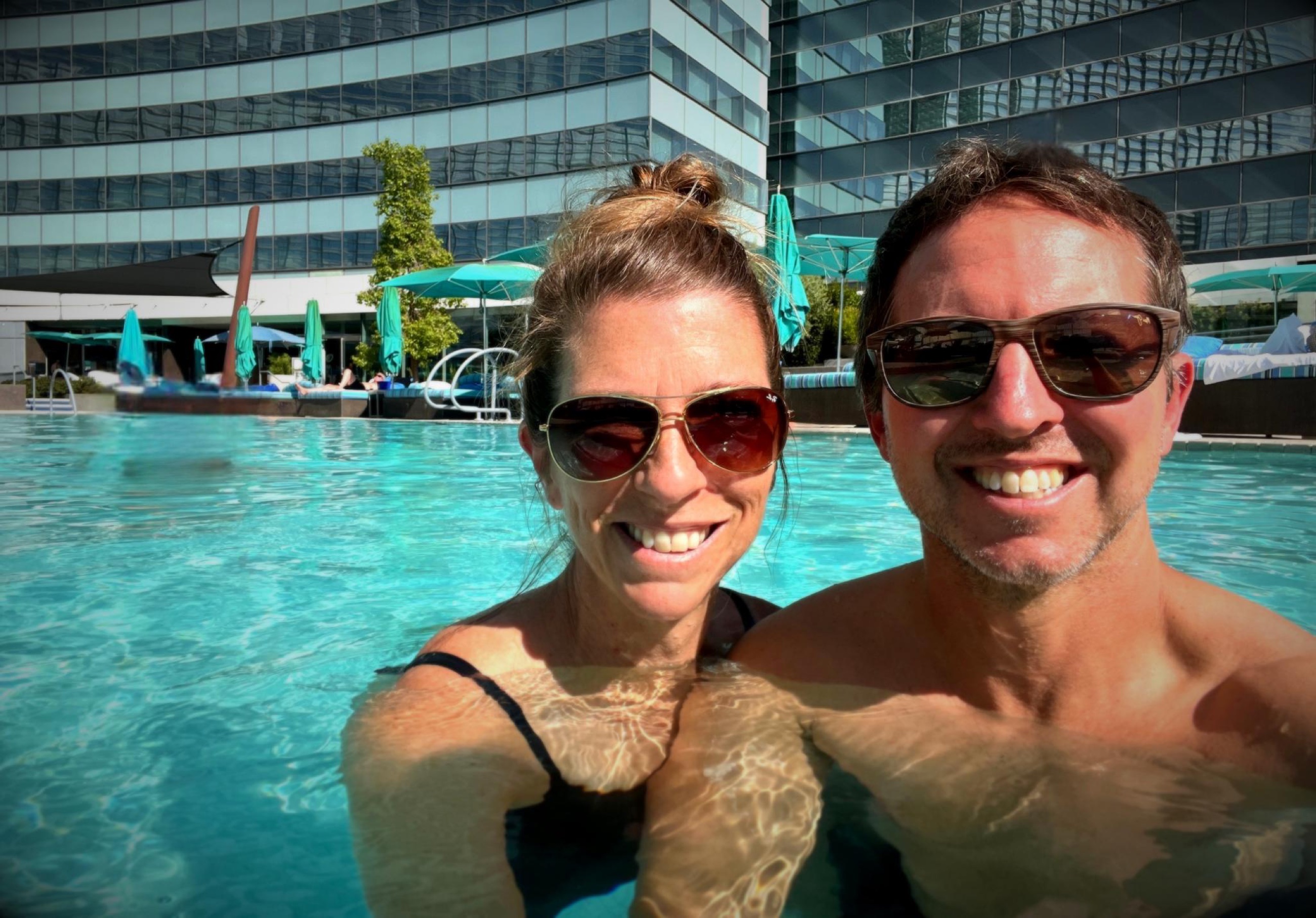 An afternoon pause at the Vdara pool: a quieter retreat from the Strip’s energy, framed by glass towers and desert sun.
Las Vegas as Theater
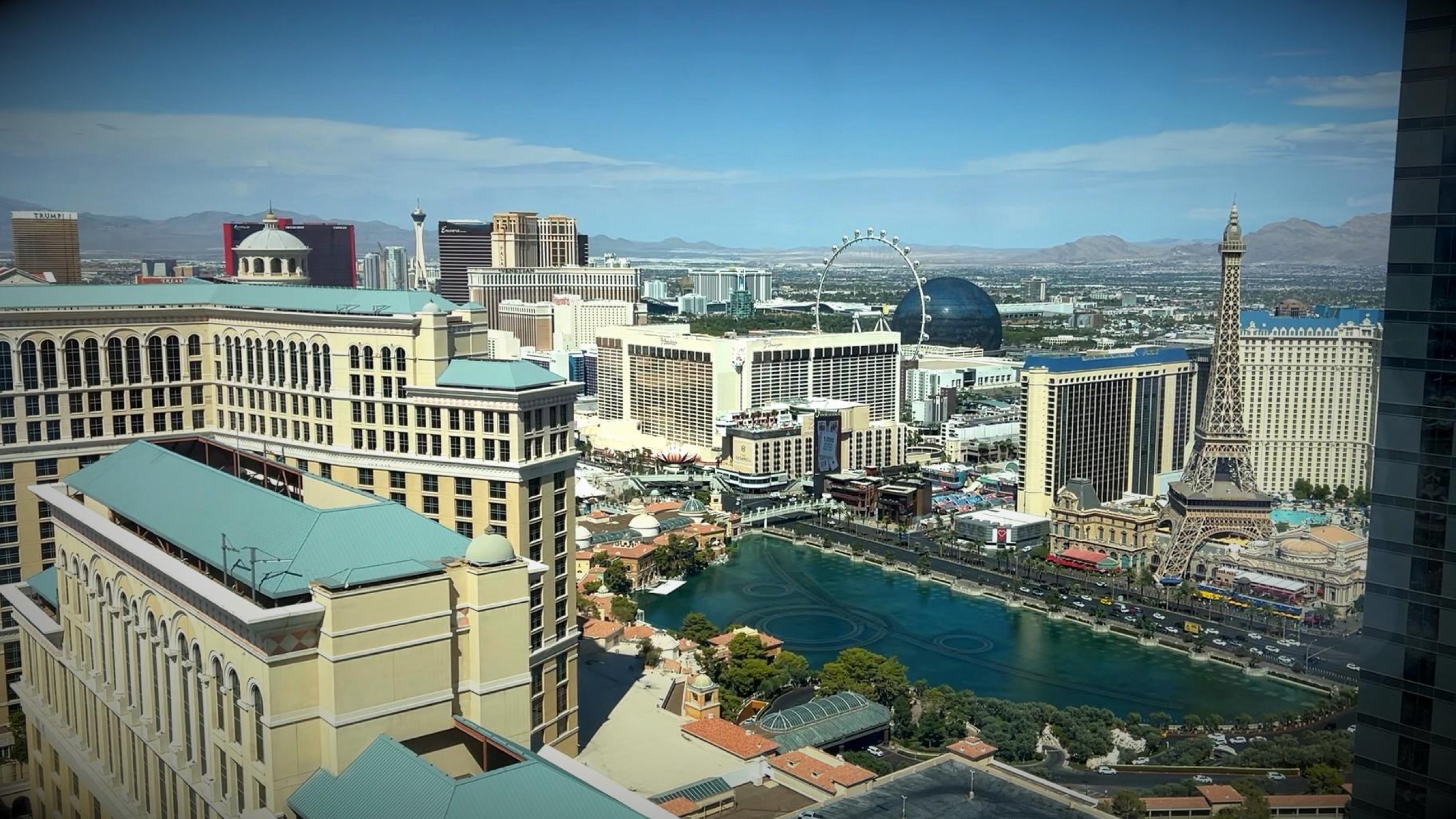 The payoff of a folded $20: Bellagio fountains, Paris Las Vegas, and desert mountains from our 40th-floor window.
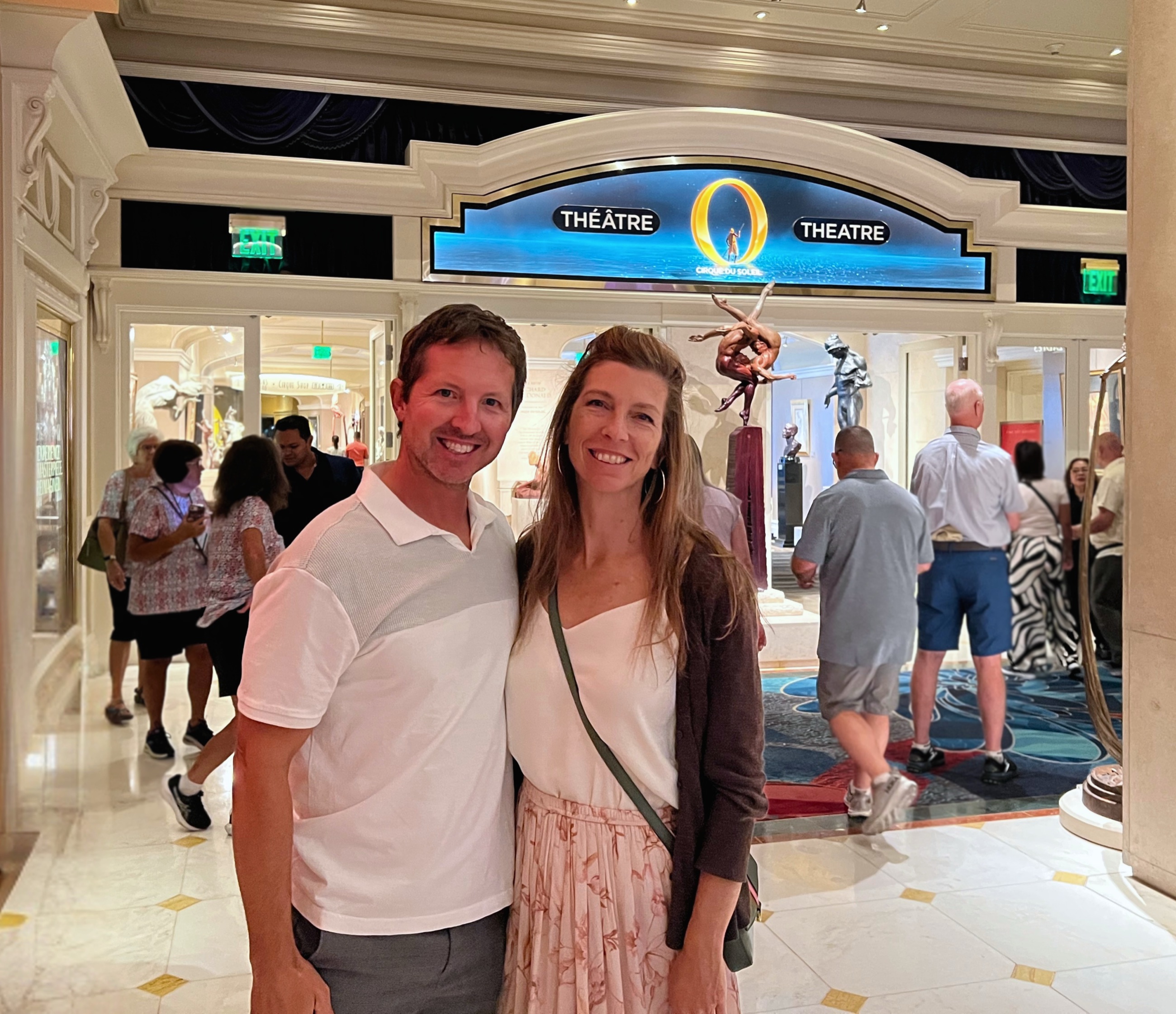 Outside the Bellagio theater before “O,” one of the few Strip productions staged in a theater built specifically for it.
“O” by Cirque du Soleil deserves its reputation as one of Vegas’s most sophisticated productions. Performed above and within a pool holding 1.5 million gallons of water, the show blurred the boundary between athleticism and stagecraft. Acrobats emerged from the water. Aerial silk performers moved above swimmers below. The technical infrastructure served the performance with rare precision.
The pool floor could rise and lower in sections, creating islands and depths that appeared and disappeared as part of the choreography. The Bellagio theater was built around “O,” not adapted for it: the venue, water, seating, and machinery all serve one performance, creating theatrical possibilities a traditional stage cannot.
After the show, we joined the crowd outside for the Bellagio fountains, where more than a thousand water jets moved in time to music. From there we walked the Strip past street entertainers, musicians, magicians, costumed characters, and visitors from every direction.
We also wandered through the grand casino lobbies: the Venetian and Palazzo, their interconnected halls built around Italian-inspired architecture, and Paris Las Vegas, with its half-scale Eiffel Tower and replicas of Parisian landmarks including the Arc de Triomphe. Each resort creates its own version of somewhere else, compressed into accessible theater.
Back at the room, the fountains performed every fifteen minutes until midnight, visible from the window: a private encore to the evening below.
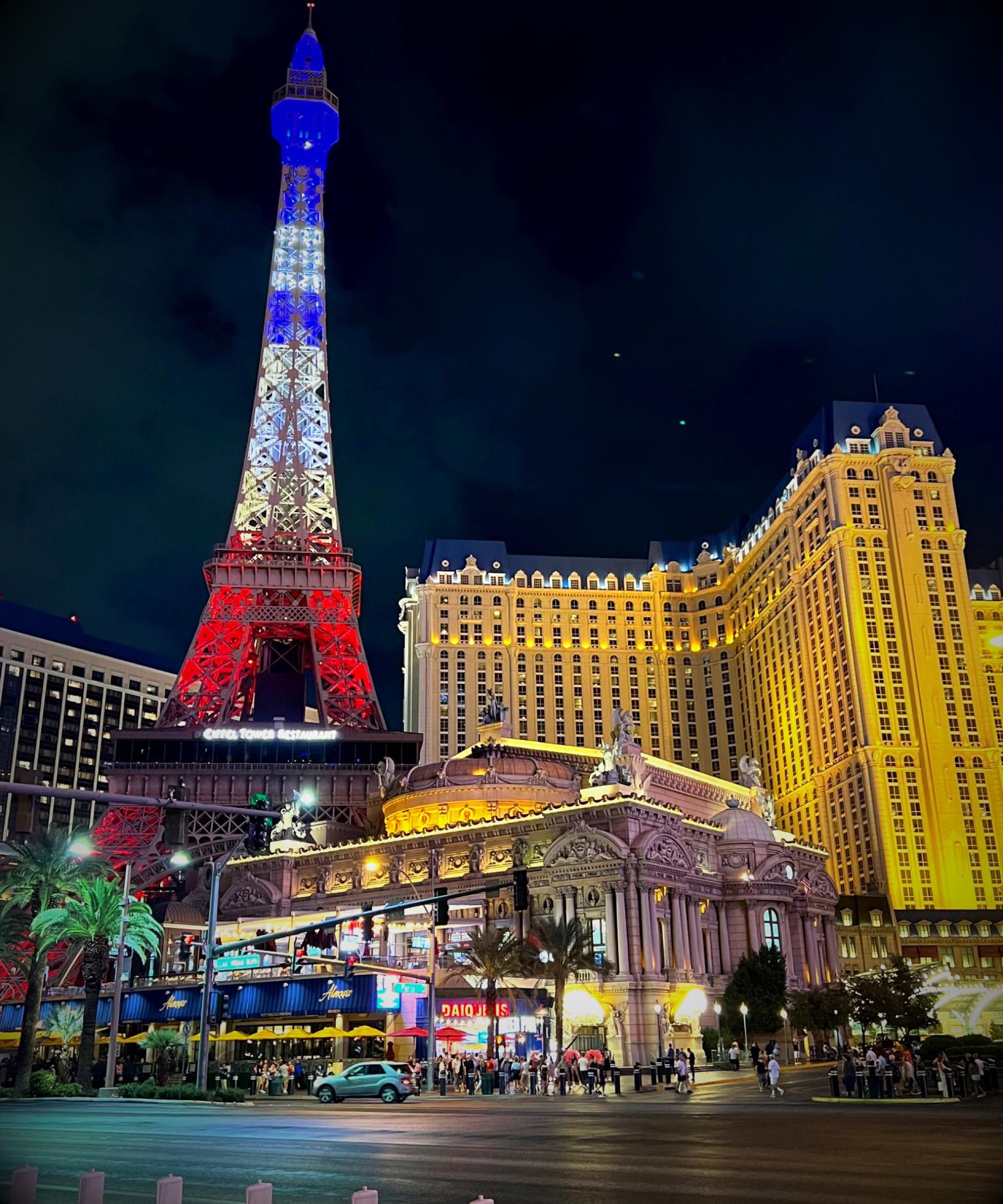 The Eiffel Tower at Paris Las Vegas lit in tricolor, one of the Strip’s most recognizable silhouettes against the night sky.
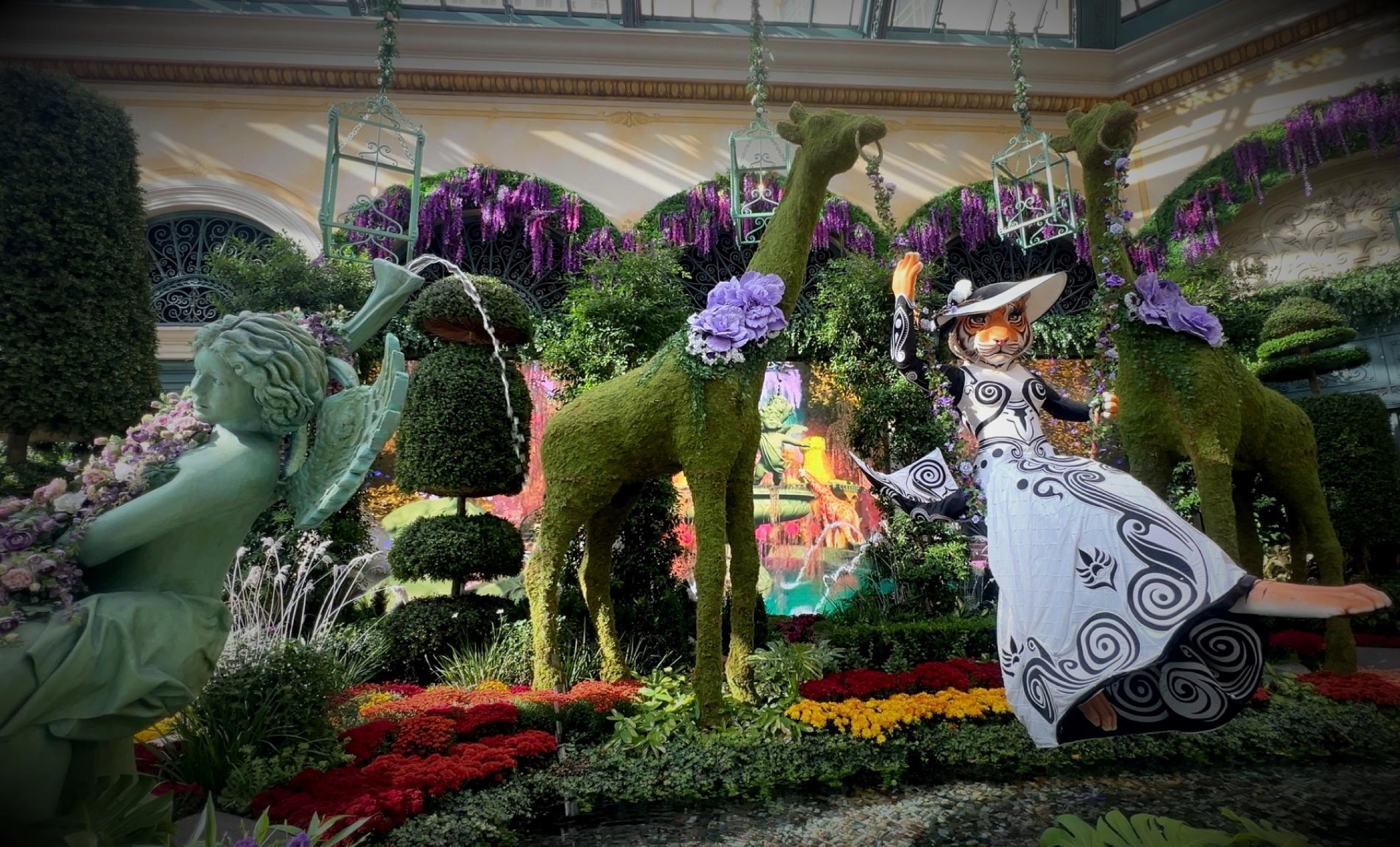 Baroque splendor inside the Bellagio Conservatory, where flowers and sculpture filled the space with theatrical color, accompanied by classical music.
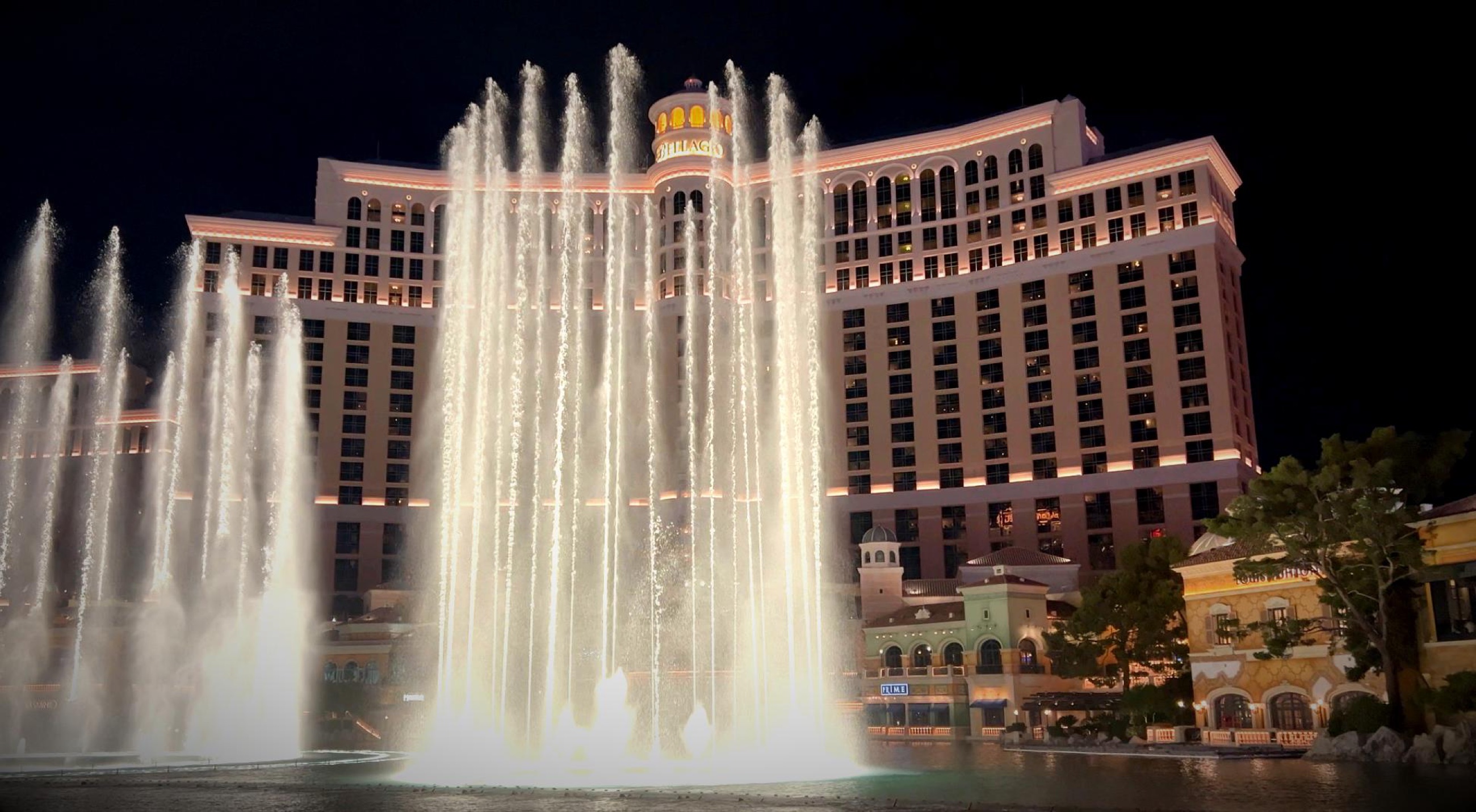 The Bellagio fountains in full performance, jets of water choreographed to music against the hotel’s illuminated façade.
What We Ate
Noodles at Bellagio provided our introduction to Vegas dining: pan-Asian cuisine executed with the precision expected at that price point. We started with potstickers that arrived crisp on the bottom and tender on top. The pad thai balanced sweet and savory notes without excessive oil, and the barbecue pork arrived aromatic and properly glazed.
At $125 for dinner including cocktails, it was relatively affordable by Bellagio standards. The experience prioritized atmosphere as much as flavor: competent, well-presented, and fully aware that the meal was part of the evening’s larger production.
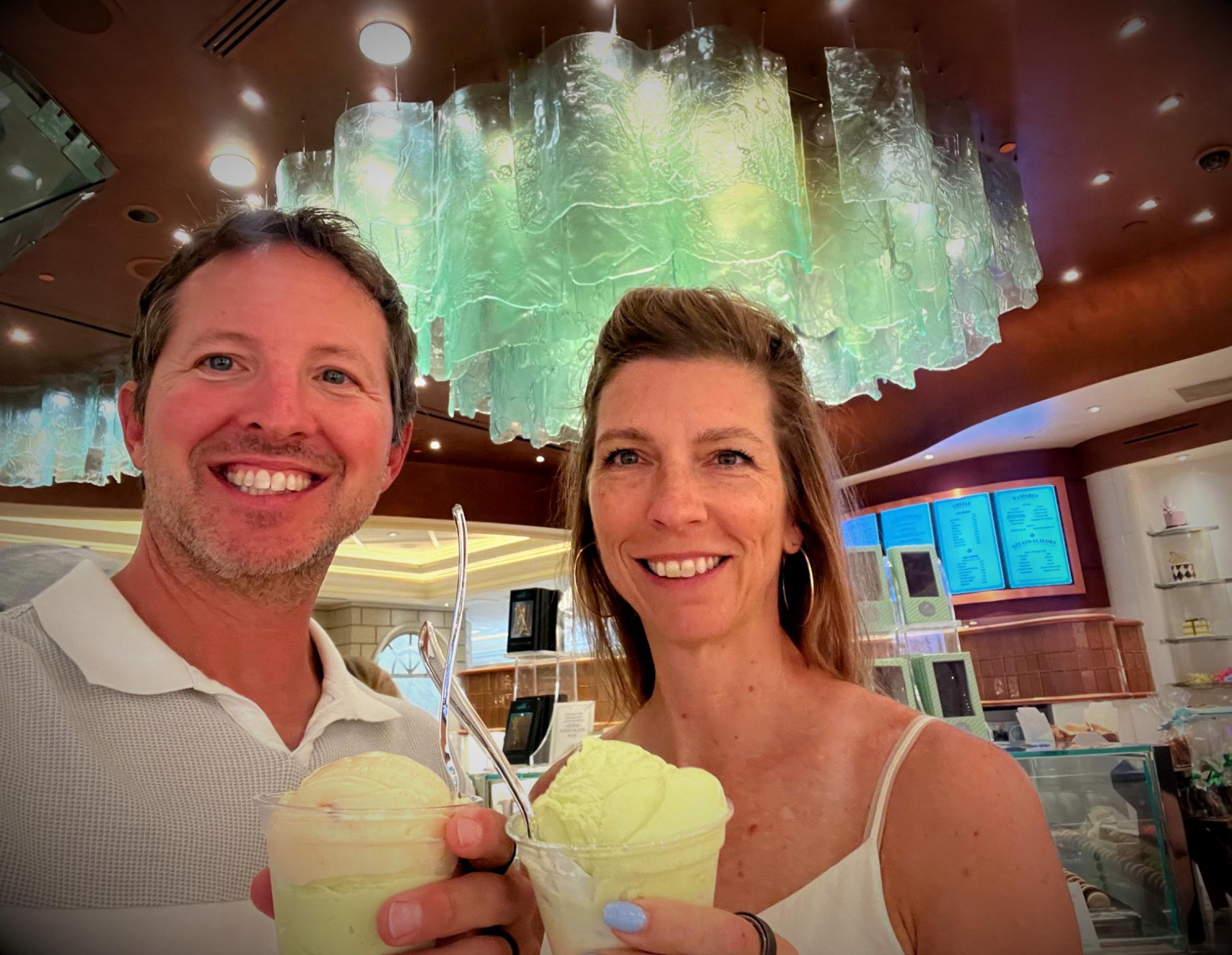 Gelato at Bellagio Patisserie: a sweet pause before carrying it into the Conservatory gardens.
Dessert came from Bellagio Patisserie, where gelato served as both refreshment and an excuse to linger near the fountains. The quality matched expectation: rich, properly textured, and priced for the location.
The more revealing coffee stop came the next morning at Dark Moon Coffee Roasters in Henderson. Here was Vegas beyond the performance: a neighborhood roastery serving excellent cold brew to locals who lived and worked outside the Strip’s orbit. We bought a bag of their signature blend, our one tangible souvenir from a city that specializes in temporary experiences.
The Cost of One Night in Vegas
Vegas operates on a different economic logic than the national parks we had been exploring.
The complete cost breakdown:
- Accommodation: $168, including resort fees
- Brunch at Vesta: $32
- Dinner at Noodles: $125, including cocktails
- Morning coffee and pastries: $30
- “O” tickets: $455
- Gelato, parking, and tips: about $40
Total Vegas experience: about $850.
The road trip advantage was significant. We had no airfare or rental car cost, and driving from our Nevada base made it possible to combine Vegas with a longer desert parks route.
For comparison, our six-day camping tour through Zion, Bryce, and Valley of Fire cost roughly $300 total plus gas, including one necessary hotel night in Overton because of desert heat. Vegas compresses expense into intensity. The national parks spread value across time and landscape.
The $20 upgrade tip worked exactly as advertised. A folded bill passed with ID and credit card resulted in fountain views worth far more than our standard room rate. That kind of hospitality economy is part of Vegas: upgrades, comps, timing, and presentation all operate within the city’s larger charm offensive.
Leaving Through Henderson and Tonopah
Morning departure kept things simple: coffee and pastries from the Starbucks in the hotel lobby before heading out. Lunch came from our usual road provisions: meat sticks, protein bars, and almond butter packets somewhere between Las Vegas and Tonopah.
The final meal of the trip was A&W in Tonopah, $18 for both of us. Tonopah calls itself the “Queen of the Silver Camps,” and its history still includes Wyatt Earp, mining fortunes, and the Thomas Flyer’s stop for fuel and repairs during the 1908 Great Race from New York to Paris.
After the intensity of Las Vegas, burgers in a small Nevada town felt like a proper re-entry into the unvarnished landscape of the interior West.
What Las Vegas Reveals After the Desert
Las Vegas succeeded in doing exactly what it promises. For 24 hours, we inhabited a world where fountains moved to music, acrobats rose from water, and the desert receded behind glass and light.
From our hotel window, though, the mountains remained visible in the distance. They framed the city and kept the spectacle honest.
Las Vegas may be America’s most direct city. It does not disguise its nature. It thrives because it understands itself as spectacle, excess, theater, and artifice. After several days in red rock country, that clarity was easier to appreciate. The city was not a contradiction to the desert route. It was the route’s loudest counterpoint.
We came for one night and left fulfilled. That was enough.
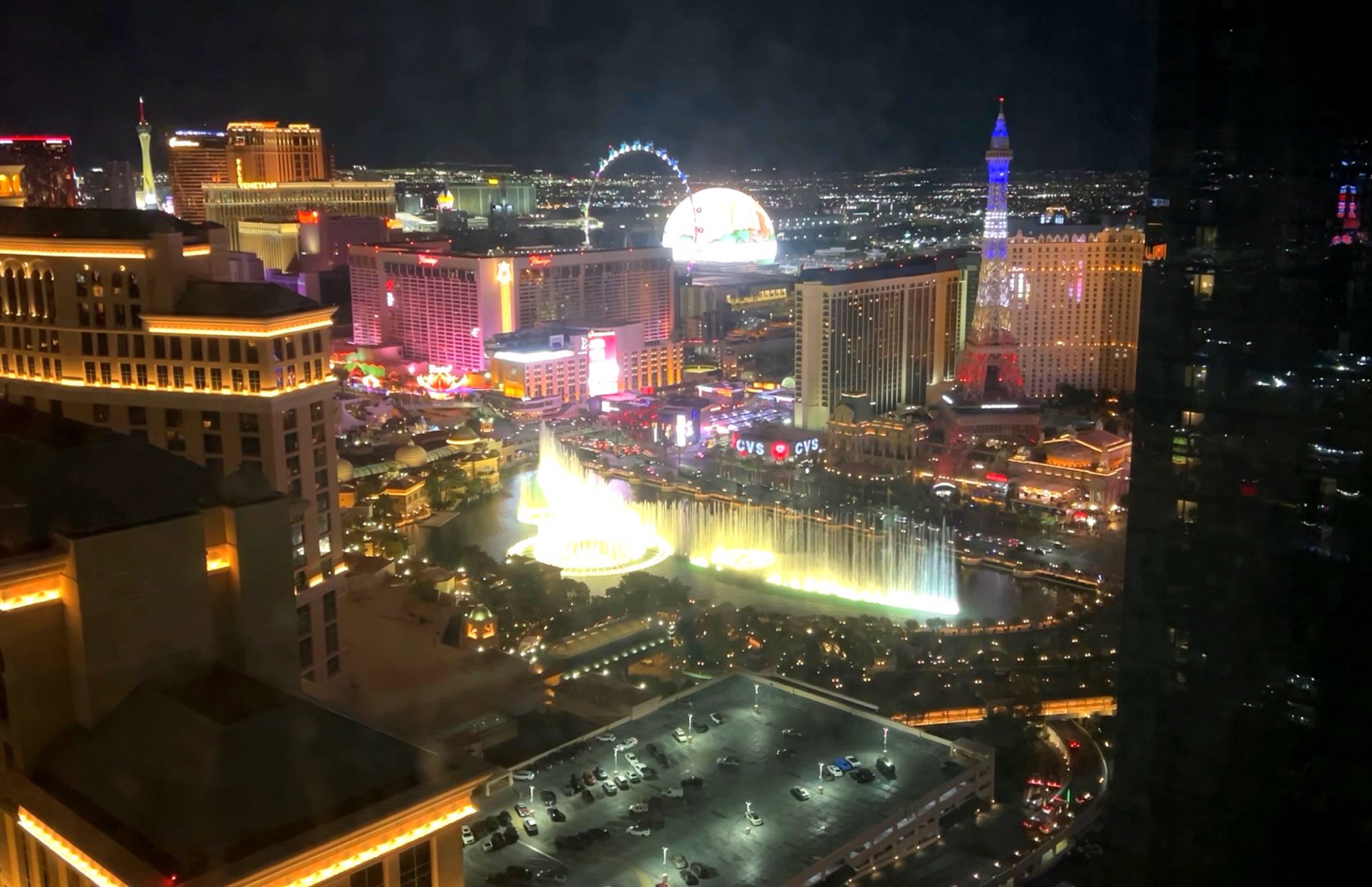 The Strip from our 40th-floor window, still glowing beneath the desert mountains beyond it.
Practical Notes
- Best arrival strategy: Approach Las Vegas by car if pairing it with Nevada, Utah, or Arizona desert country. The contrast is sharper and the logistics are easier.
- Good work stop: Vesta Coffee Roasters in the Arts District worked well for a three-hour catch-up block.
- Hotel strategy: Vdara is a strong choice if you want Strip access without sleeping inside a casino.
- Upgrade note: A respectful $20 tip at check-in produced a meaningful room upgrade for us, though results are never guaranteed.
- Major splurge: “O” was the expensive centerpiece of the stop at $455 for two good seats.
- Best off-Strip coffee: Dark Moon Coffee Roasters in Henderson was the strongest everyday coffee discovery.
- Route logic: Las Vegas works well as a one-night contrast between desert parks and the long drive back north through Tonopah.