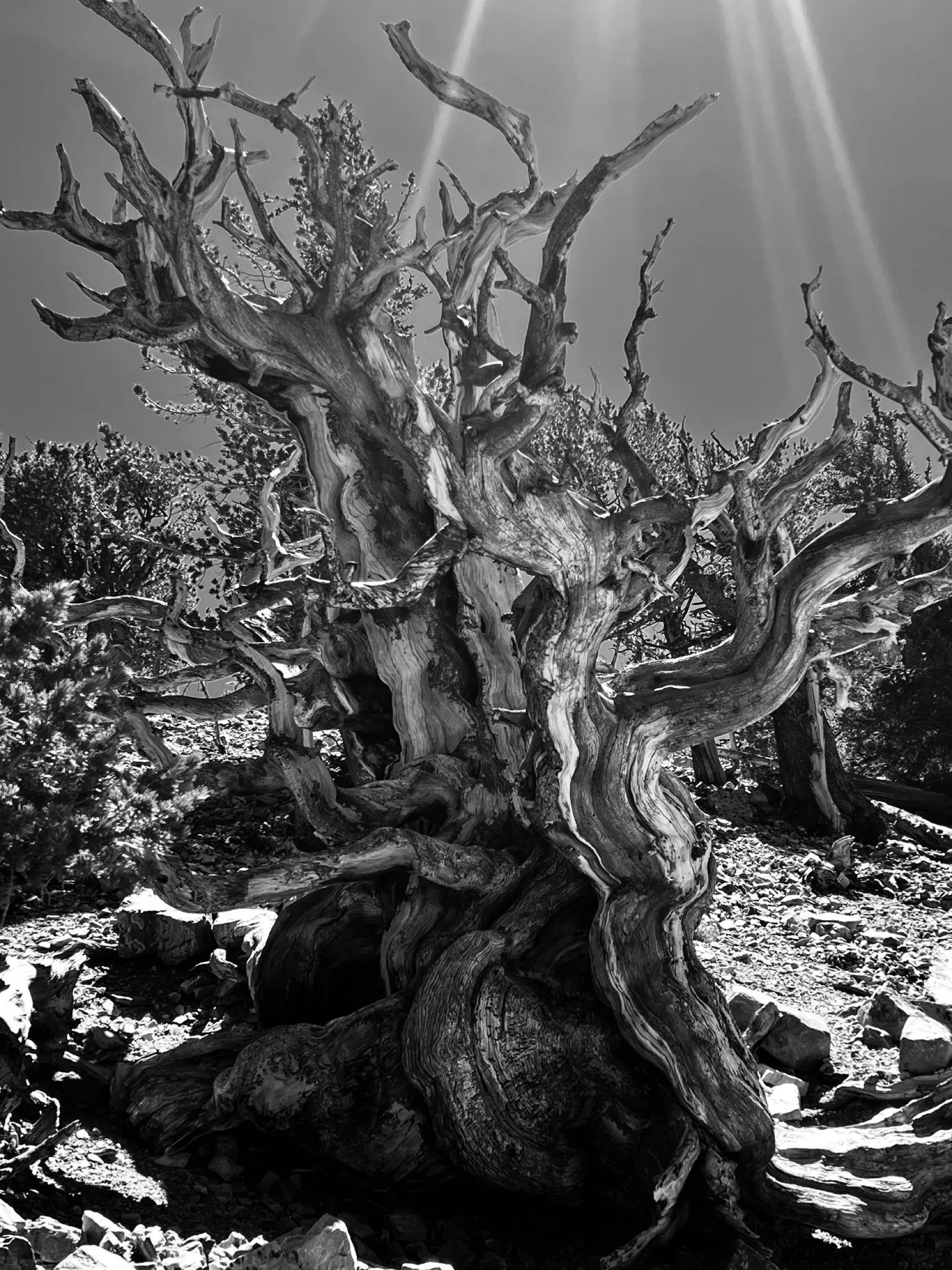
 Ancient bristlecone pine, Great Basin National Park.
Some Great Place began with a long international route on the calendar, but the preparation for that life started in the American West. Nevada gave us a practical education before the wider journey began: long drives, thin services, fast weather changes, limited signal, and the discipline of carrying what we needed.
Great Basin National Park sharpened that lesson. We drove Highway 50, crossed open desert and small Nevada towns, and spent three days near a park that holds its own conditions at elevation. At 10,000 feet, the air cooled quickly. Cooking took longer. Cell service disappeared. The landscape made ordinary assumptions less useful.
The oldest things there made the strongest impression. Bristlecone pines, some more than 4,000 years old, grow slowly in severe conditions: high elevation, limestone soil, wind, cold, and dry air. They do not make patience sentimental. They make it visible.
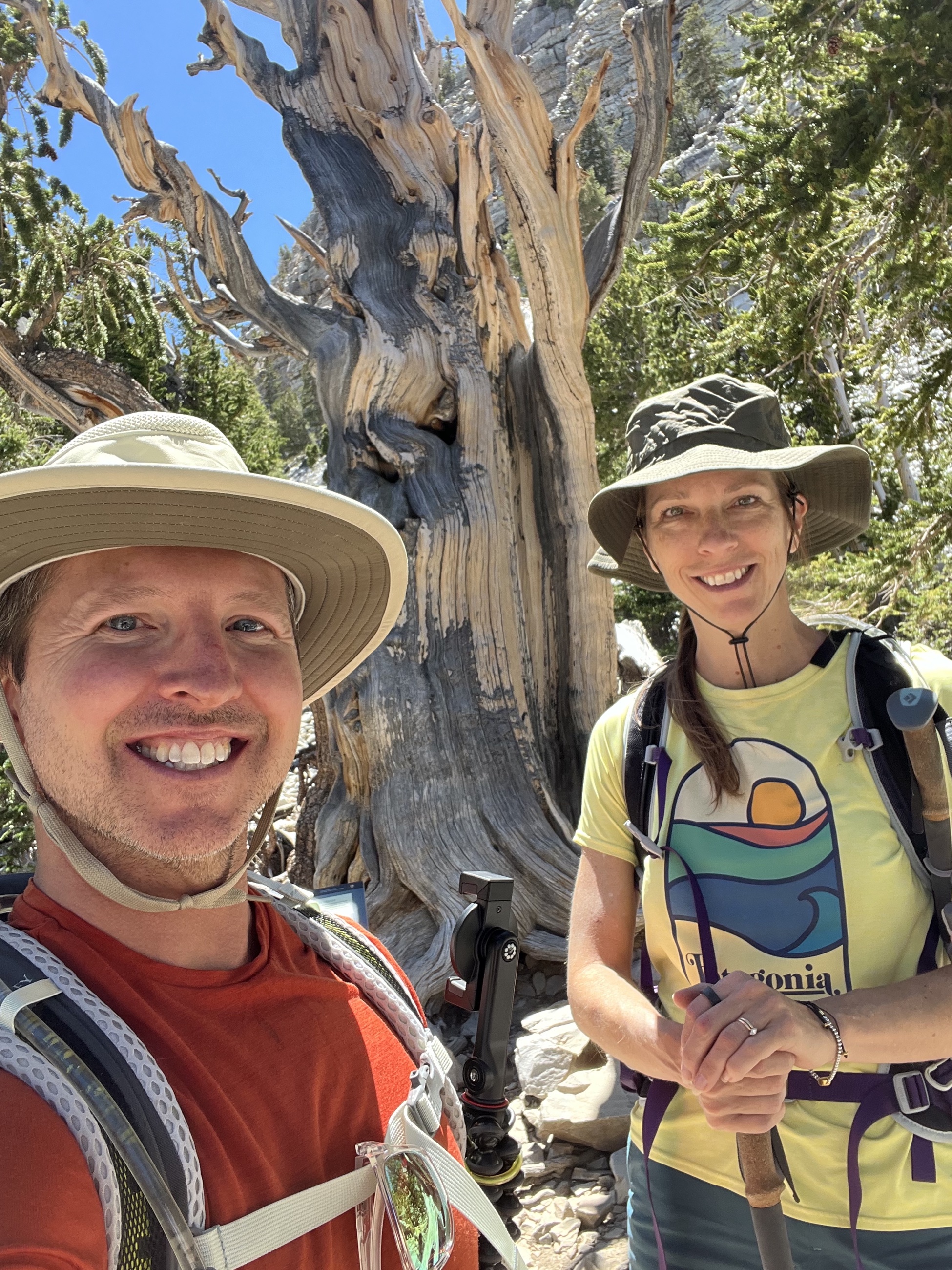 Bristlecone Pine, Great Basin National Park.
Watch the accompanying film: Exploring Great Basin National Park: Ancient Pines, Dark Skies & The Loneliest Road in America
Highway 50 Into Nevada’s Hidden Country
Highway 50 has been called the Loneliest Road in America, though the name can make the drive sound emptier than it is. The road crosses a working landscape of old mining towns, open range, high desert basins, and mountain ranges that rise suddenly from long stretches of sagebrush.
The distance is the point. Austin, Eureka, Ely, Ward Charcoal Ovens, Stokes Castle, and Sand Mountain all sit within the broader geography of the route. Some are quick stops. Some deserve more time. Together, they make the drive to Great Basin feel less like a transfer and more like an introduction to Nevada’s interior.
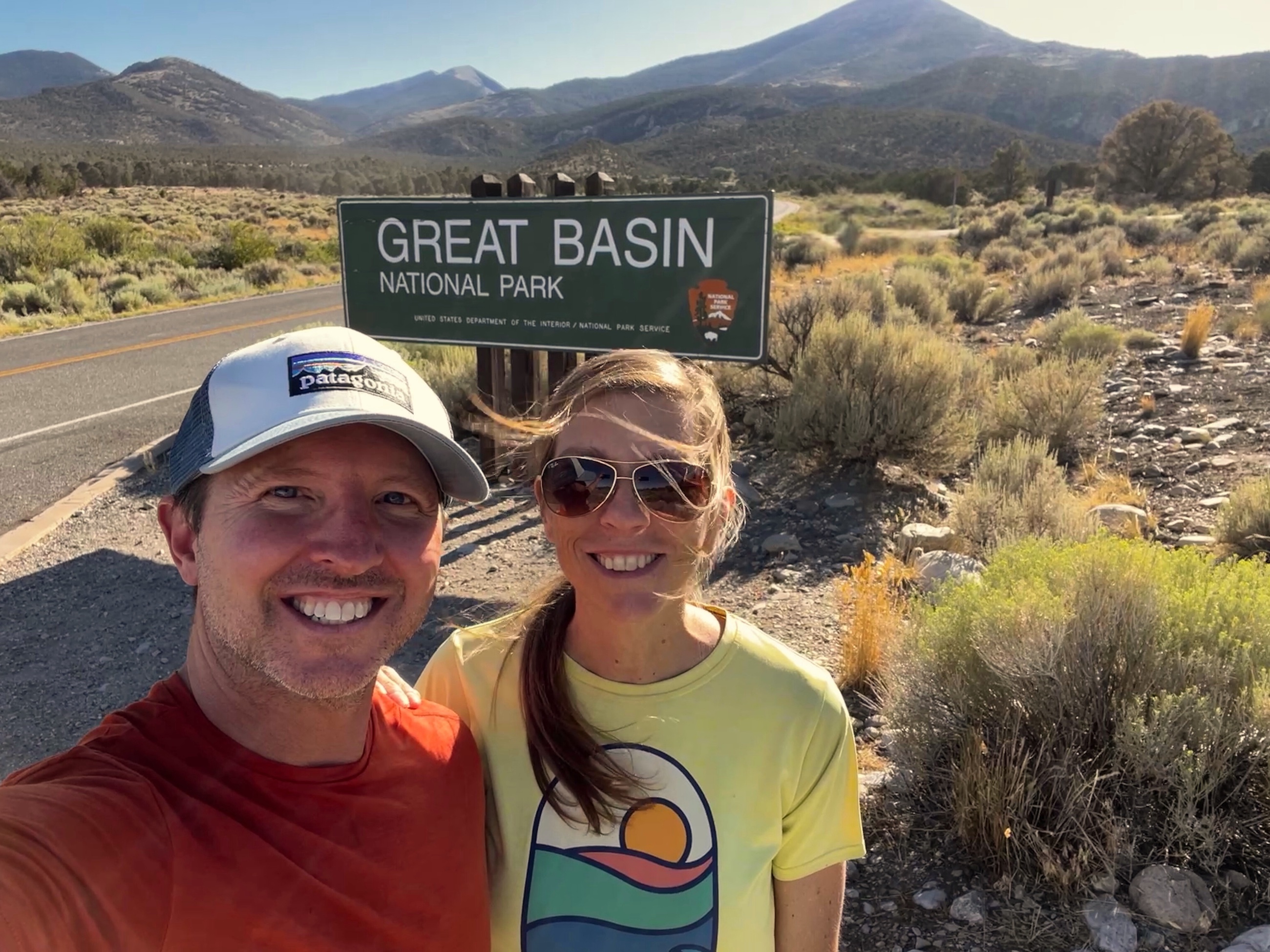 Great Basin National Park Entrance.
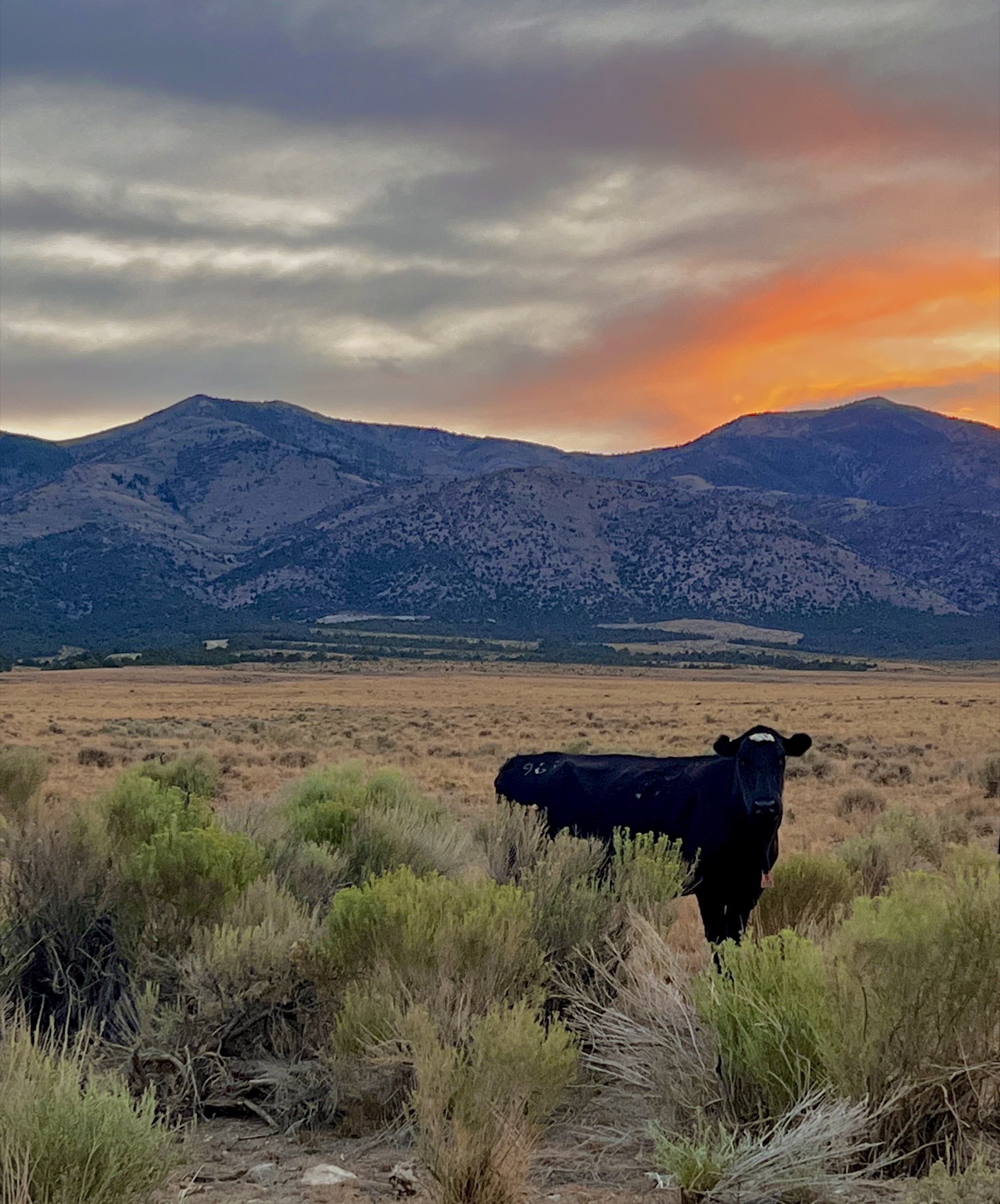 Open range cow at sunset in the high desert.
Car Camping at Elevation
Our 2017 Subaru Outback car-camping setup was one of the real tests of the trip. Reno reached 87°F (31°C) the same day overnight temperatures near the park dropped to 35°F (2°C), a swing of more than fifty degrees Fahrenheit (about 29°C) in a six-hour drive. Gear that looked adequate at home had to work in mountain air.
The setup held. The Kelty Tru.Comfort Doublewide sleeping bag and Luno window screens made the car workable for two nights. The larger lesson was less about any single piece of gear than the way elevation changes the whole system. Sleep, cooking, water, batteries, clothing layers, and morning pace all required more attention than they would have at lower elevation.
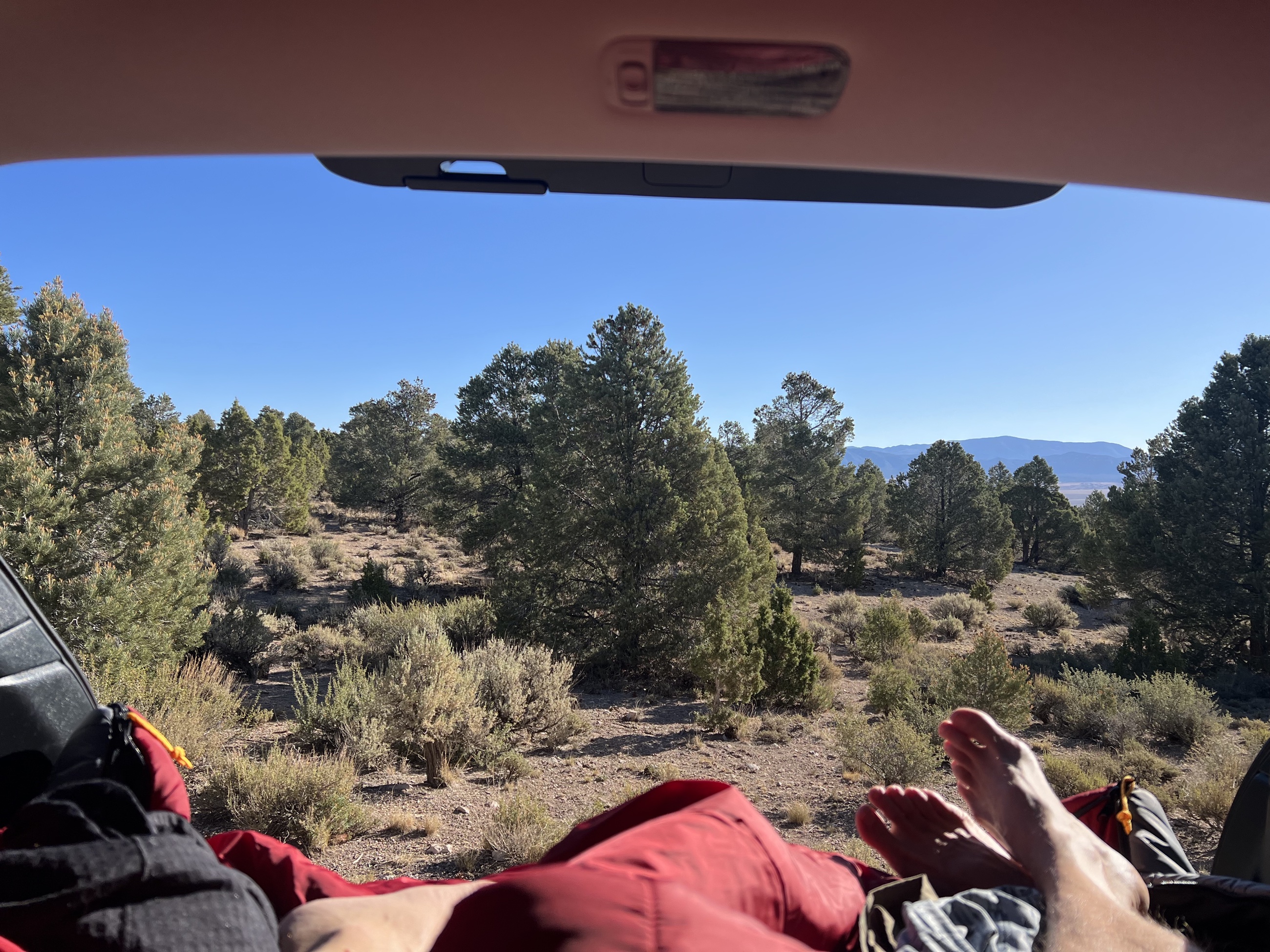 Car camping in the Subaru Outback.
The lack of cell service also changed the work. With no easy reflex to check messages, upload footage, or research details in real time, the mobile office became simpler. Notes had to sit. Ideas had to develop offline. The Samsung T7 portable SSD became part of that routine, giving us a way to protect footage in the field until Wi-Fi returned.
Lehman Caves and Underground Nevada
Lehman Caves gives Great Basin a second register. Above ground, the park is defined by distance, elevation, trees, and open sky. Underground, the scale tightens into rooms, passages, stone curtains, shields, and formations built through mineral-rich water and time.
The published story of the caves often begins with Absalom Lehman, the rancher who documented them in the 1880s and began charging visitors for tours. The Shoshone people knew caves in the area long before that documentation drew broader attention. The result is a place with layered meanings: geological, Indigenous, settler, scientific, and touristic.
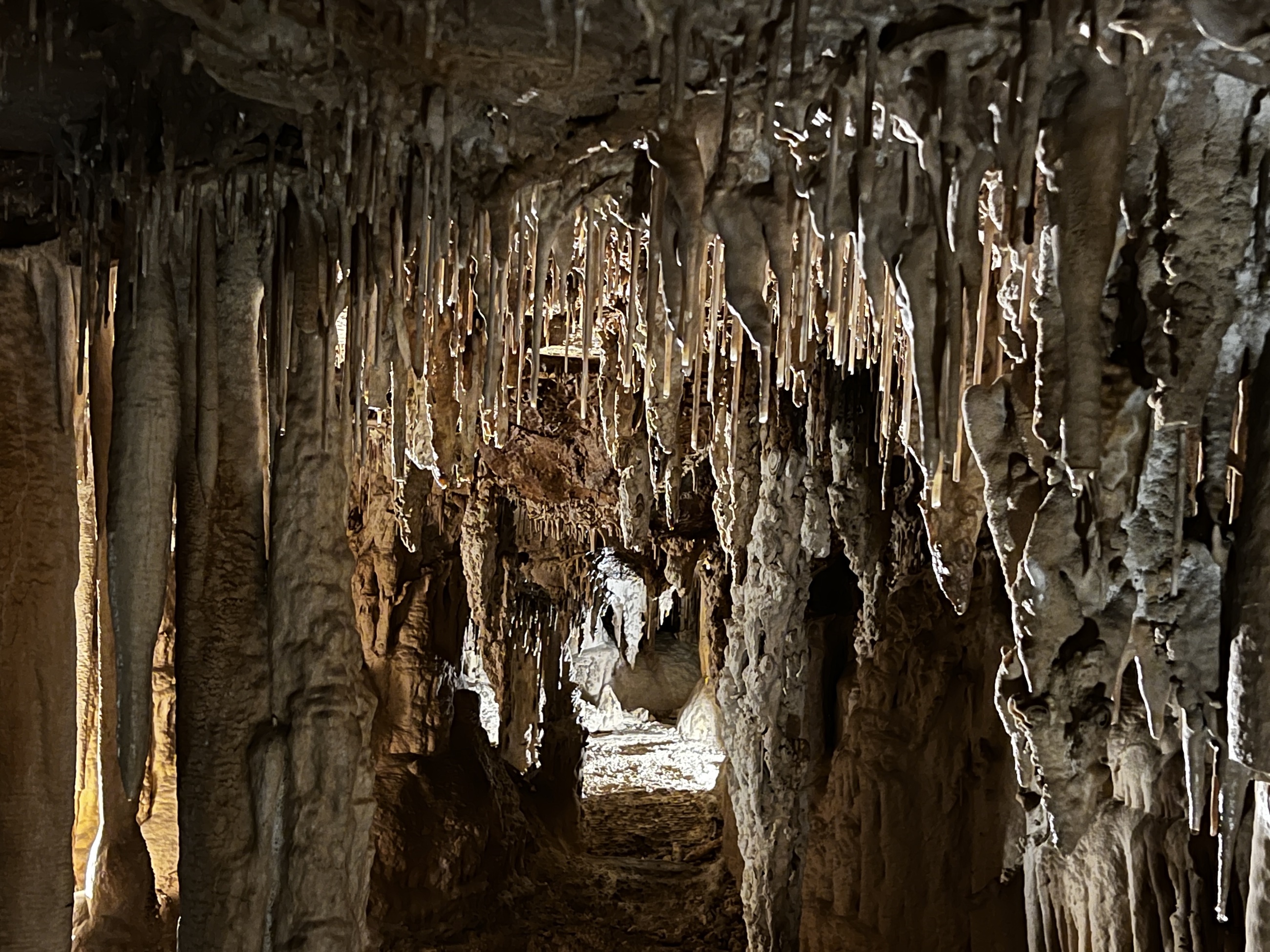 Lehman Caves, Great Basin National Park.
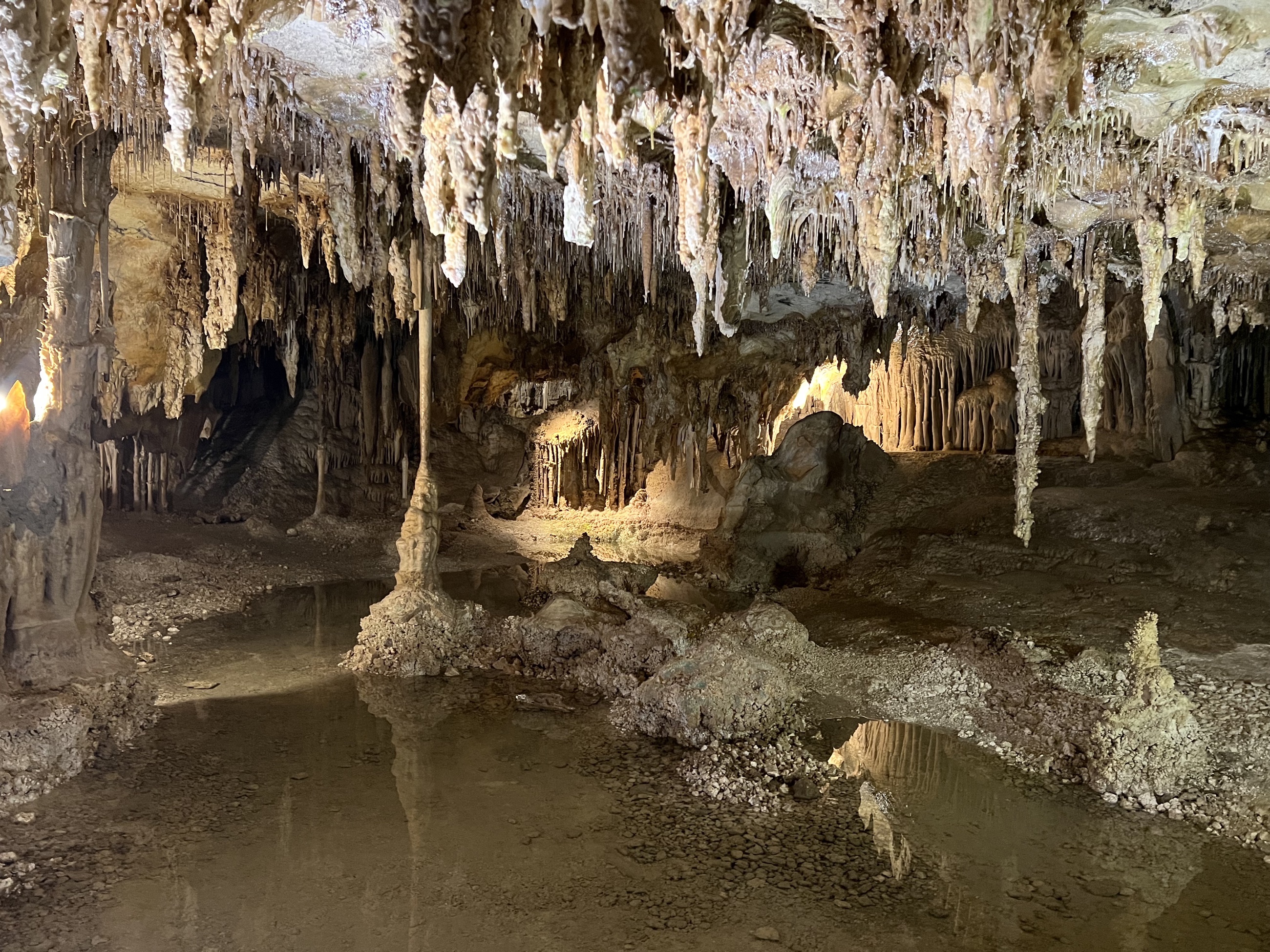 Lehman Caves.
The cave tour also gave the trip a needed contrast. After long roads and exposed slopes, the underground world felt concentrated. It was another reminder that Nevada’s best travel often requires intention. The strongest places are rarely accidental stops from the interstate.
Wheeler Peak and the Bristlecone Pines
Wheeler Peak rises to 13,063 feet, high enough to give Great Basin a sense of alpine Nevada that surprises people who know the state mostly through desert highways. The drive upward changes the air and the vegetation quickly. Sagebrush gives way to aspen, fir, stone, and eventually the exposed country where bristlecone pines survive.
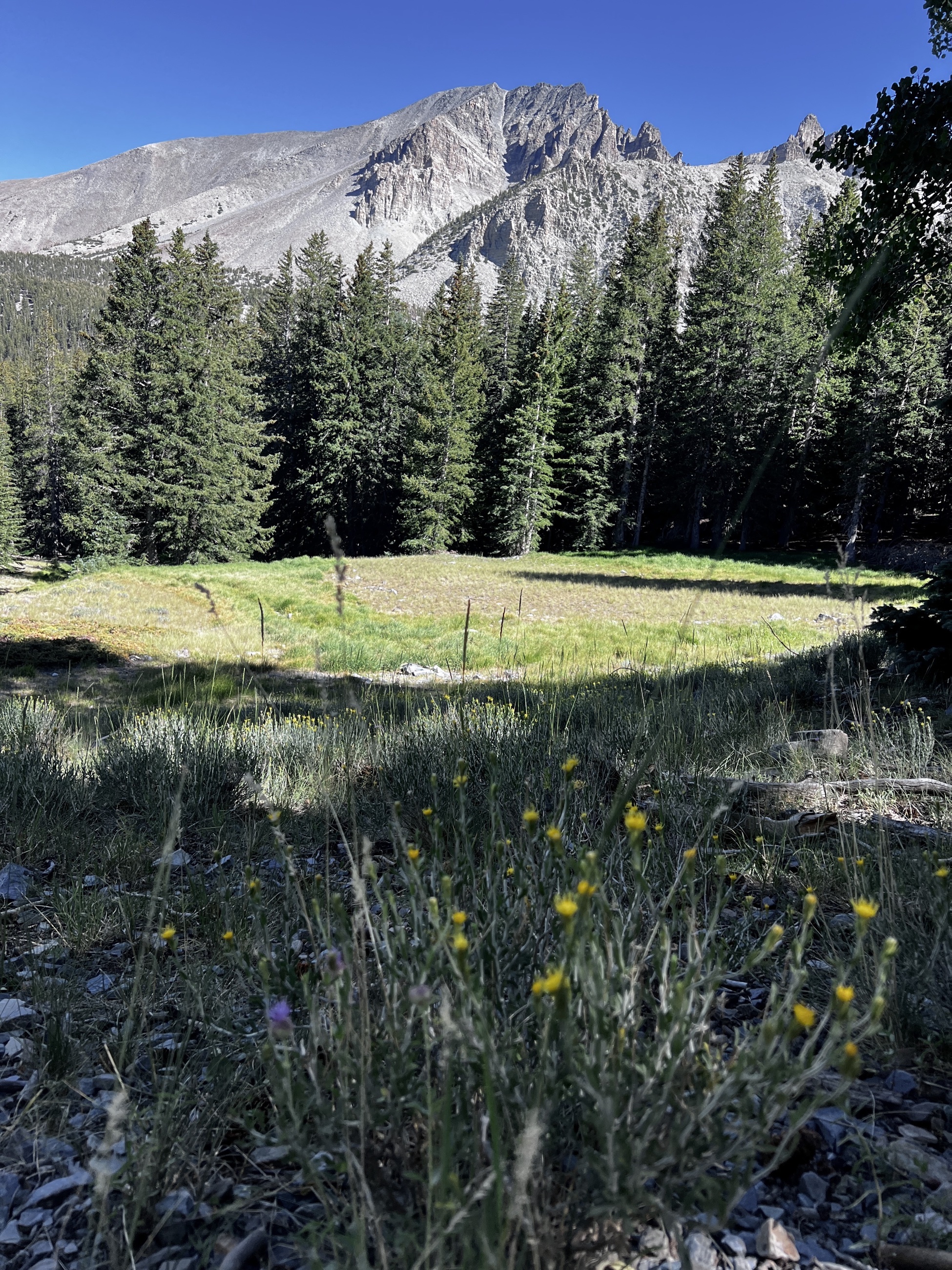 Wheeler Peak, 13,063 feet.
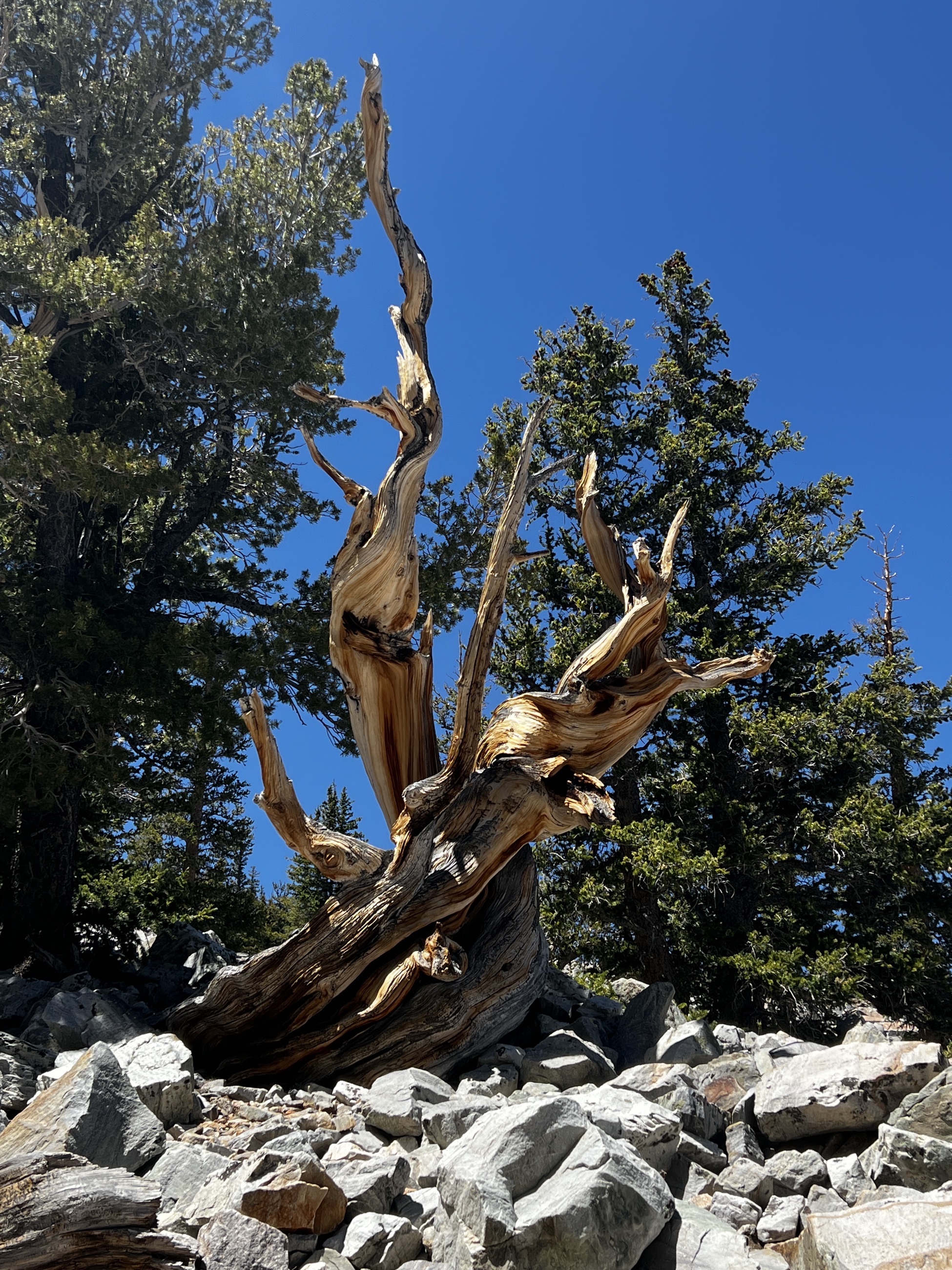 Ancient Bristlecone Pines.
The bristlecones were the center of the trip. They grow in poor soil and severe weather, adding only a little each year. Some were already ancient when Rome was young. Their age can become an abstraction unless you stand near them and see how the trunks carry damage, adaptation, and survival in the wood itself.
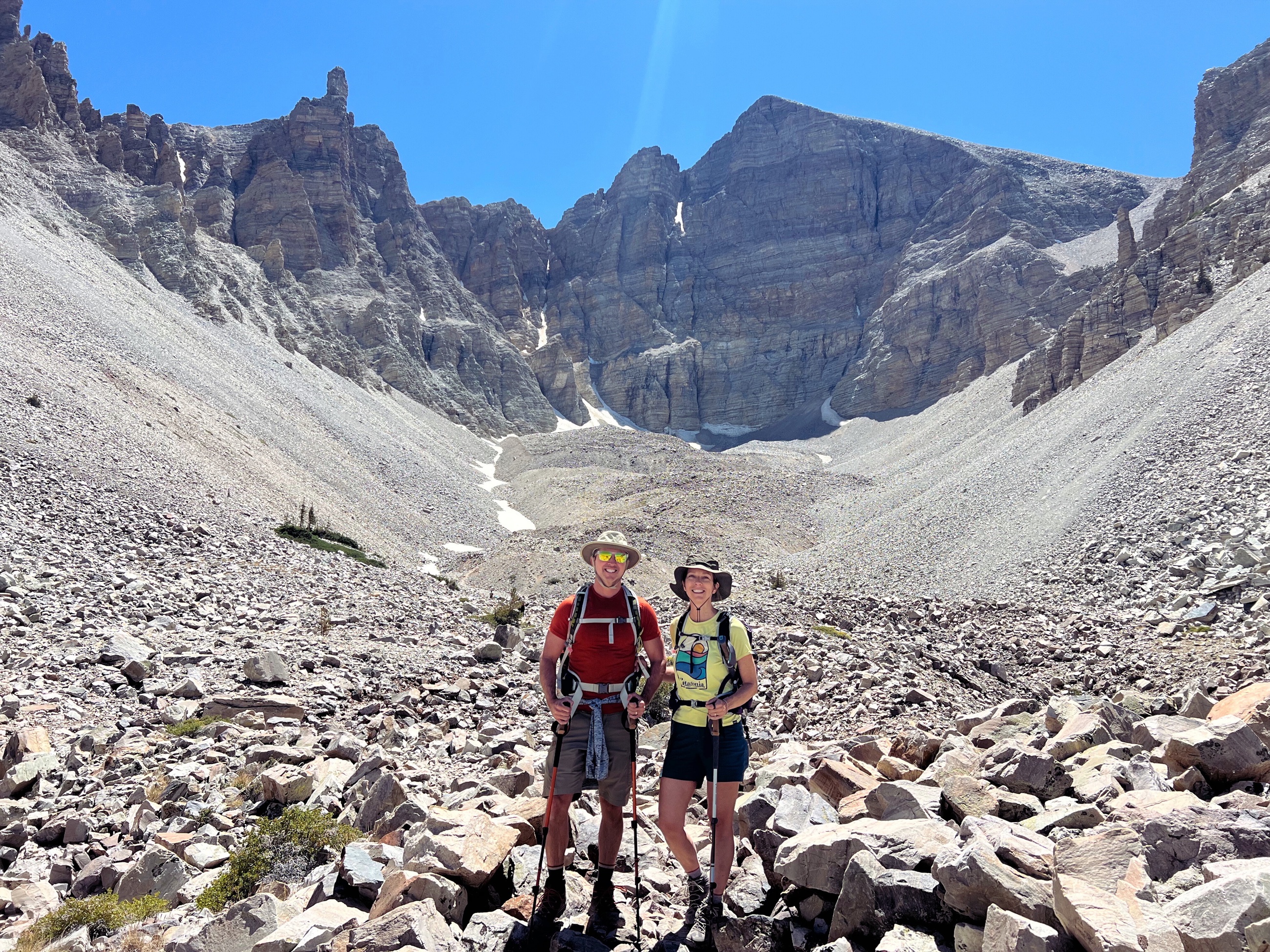 Wheeler Peak Glacier cirque, Great Basin National Park.
The glacier cirque below Wheeler Peak added another measure of time. The scene worked as geological evidence, a visible record of ice, pressure, erosion, and retreat. The park keeps putting human planning into proportion.
Ely After the Park
Ely was the practical town anchor for the trip. After hiking, camping, and driving through the high desert, a straightforward meal mattered. Smash N Grab inside the Jailhouse Casino served hand-formed smashburgers with house-cut fries, the kind of food that made sense after a long road day and another hike ahead.
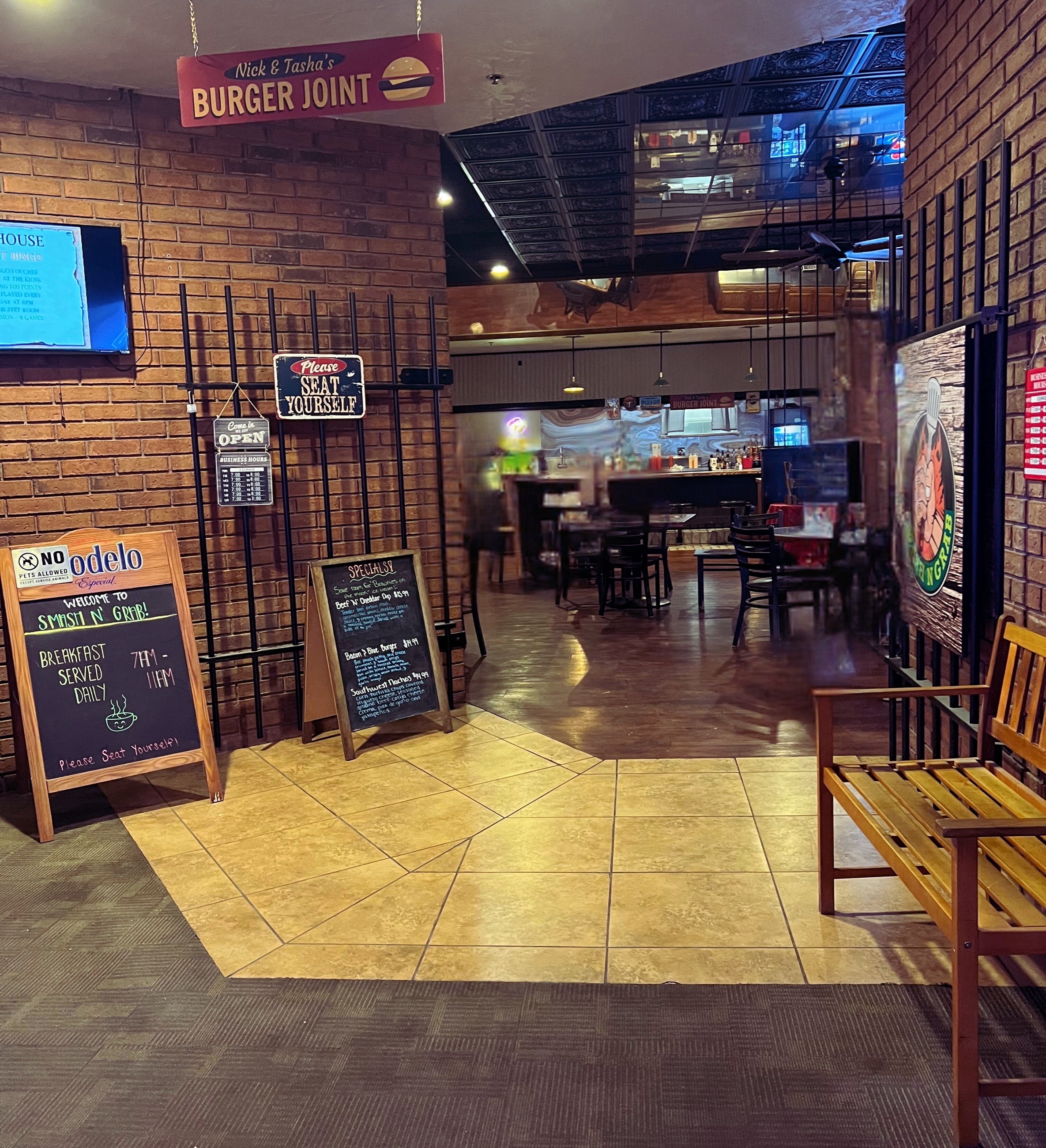 Smash N Grab Burger Joint, Ely, Nevada.
This is part of what makes the Great Basin route work. The park is remote, but it is not disconnected from daily Nevada life. Ely, the campground, the cave tour, the burger counter, the road towns, and the open range all belong to the same travel experience.
What Ancient Things Made Plain
The high desert changes the scale of a week. Beside a 4,000-year-old tree, a two-year journey feels brief. Plans that seem large from a kitchen table look smaller against wood that has endured drought, wind, cold, fire, and centuries of weather.
Planning still mattered. The old trees simply resized it, measured against centuries of drought, wind, cold, and fire. They were not dramatic in the way travel writing often wants places to be. They were patient, spare, and exact. They survived by growing slowly, adapting to difficult ground, and holding to the conditions given to them.
That was the lesson Great Basin offered before the larger journey began. Movement does not have to mean haste. Preparation does not have to mean control. Some places teach through abundance. Great Basin taught through limits: thin air, slow growth, long roads, cold nights, and a sky large enough to make the day feel newly measured.
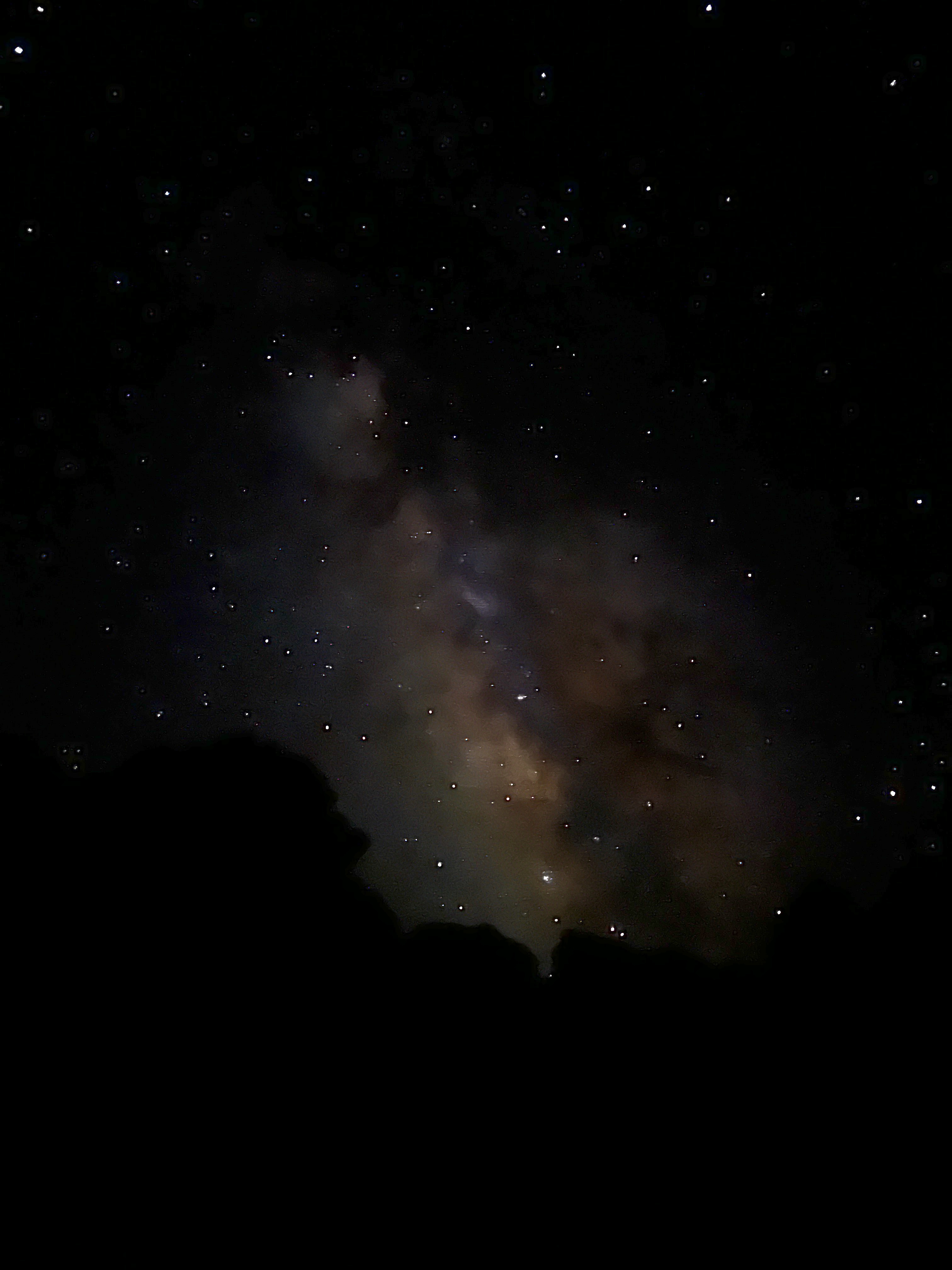 The Milky Way, Great Basin National Park.
Practical Notes
- Route: We drove Highway 50 from the Reno area toward Great Basin National Park, using the road itself as part of the trip rather than treating it only as transit.
- Park stay: We spent two nights camping near Great Basin and three days in the area.
- Elevation: Conditions changed quickly above 9,000 feet. Expect cooler temperatures, thinner air, and slower cooking times.
- Overnight temperature: The car-camping night dropped to about 35°F (2°C) while Reno reached 87°F (31°C) the same day.
- Camping cost: Two campground nights were about $70.
- Lehman Caves: The cave tour cost about $24 for two and gives the Great Basin plan a useful contrast to the park’s high-elevation landscape.
- Food and supplies: Camp food and hiking snacks ran about $125. Freeze-dried meals were useful but carried a premium.
- Fuel: Round-trip gas was about $75.
- Other small costs: Gear replacements such as headlamp batteries and stove fuel were about $12.
- Dining: Dinner in Ely came to about $30.
- High-altitude cooking: Freeze-dried meals that normally took about eight minutes needed closer to fifteen. Build in extra time and fuel.
- Offline workflow: Do not count on real-time research, cloud backups, or consistent messaging near the park. Save maps, confirmations, notes, and filming plans before leaving service.
- Creator gear: A small tripod, external microphone, compact light, portable SSD, travel adapter, and power bank were enough for a light field setup without turning the trip into a production.
- Nearby stops: Austin, Eureka, Ely, Ward Charcoal Ovens, Stokes Castle, and Sand Mountain can all fit into a broader Highway 50 route if the schedule has margin.