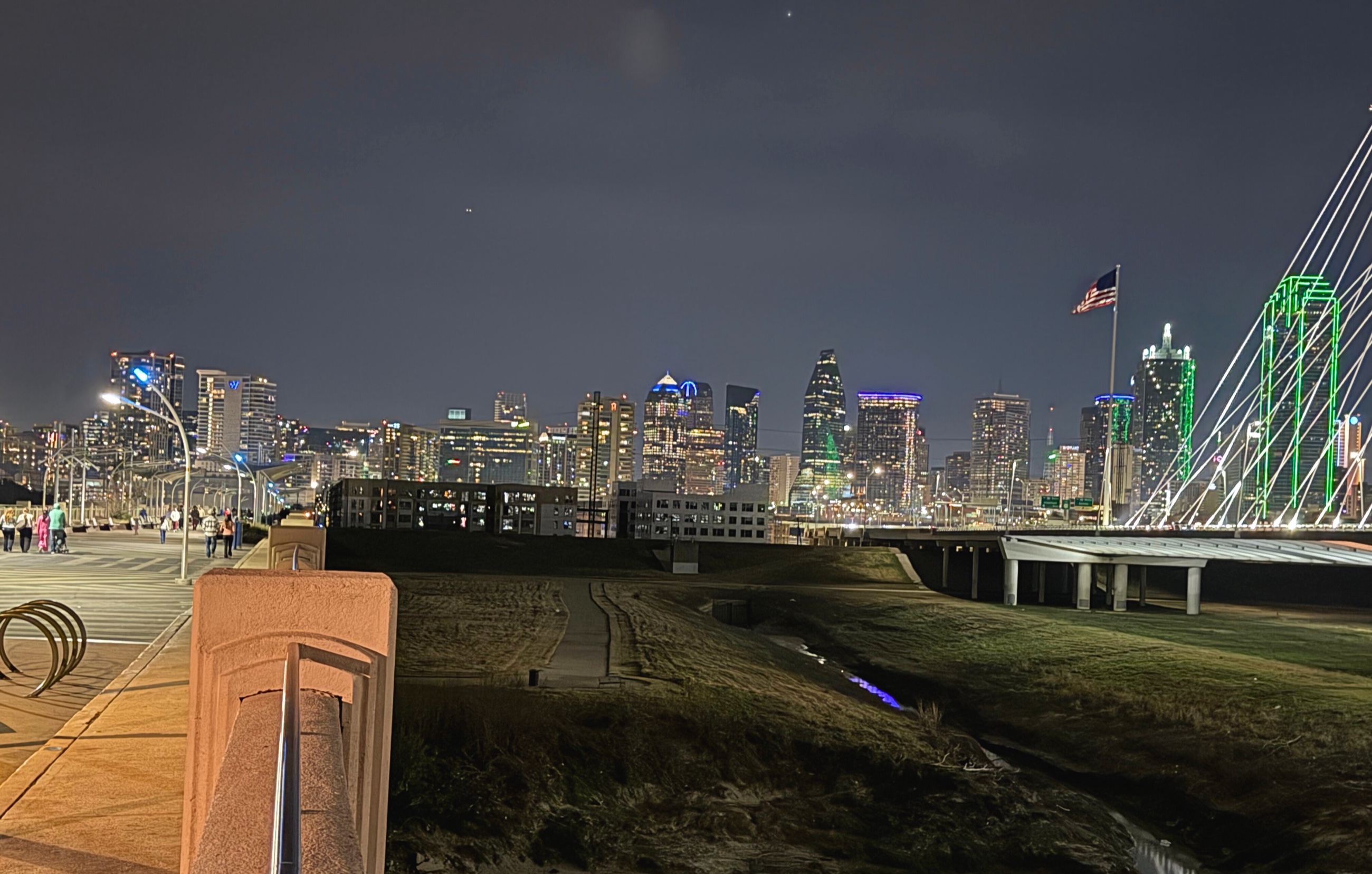
 Dallas by night.
Dallas was the last familiar ground before the longer journey began. It is where this all started, long before Tenerife was ever on a map.
We drove in from Reno in mid-December, arriving with just enough time to settle in before Christmas. Tenerife would come at the end of January. In between lay the kind of stretch a departure actually needs: family gathered close, a wedding, routines finding their shape again, and one Texas ice storm that made sure we left this ground the way we’d found it, prepared.
Dallas worked here as an origin chapter twice over: the place we were leaving from, and the place that had once sent us on our way. We’d come back for the people who mattered, and to close this chapter as carefully as we hope to open the next.
Watch the accompanying film: Dallas in January | Everyday Life
Coming Home for Christmas
We first left Texas in December of 2013, headed for Seattle on the strength of a job relocation and not much else beyond a sense that it was time to go. Twelve years passed. A full chapter unfolded in the Pacific Northwest, followed by fifteen months in Reno that turned out to matter more than we expected. Then, this December, we loaded a truck and pointed it toward Texas again, retracing a longer and different road than the one we’d taken out.
The drive took three days and two overnight stops before the final run into North Texas. We arrived in mid-December, unloaded the truck, and packed a storage unit with the pieces of a life that would wait for us in boxes for the next two years. Then the moving gave way to something far better: our kids flew in to join us for the holiday, and the days ahead filled quickly with family dinners, old streets, and the joy of a full house at Christmas.
Christmas itself was everything the season should be for us: full, warm, and centered on what actually matters. We gathered as a family, attended a service together, sang the carols we’ve always sung, and sat down to a table that felt like both a celebration and a gift. The story we were there to mark, the birth of Christ, the hope of Emmanuel, God with us, sat easily alongside our own smaller story of arrival. One long loop was closing after twelve years away. A much larger one was about to open. Both, in their own way, were about showing up.
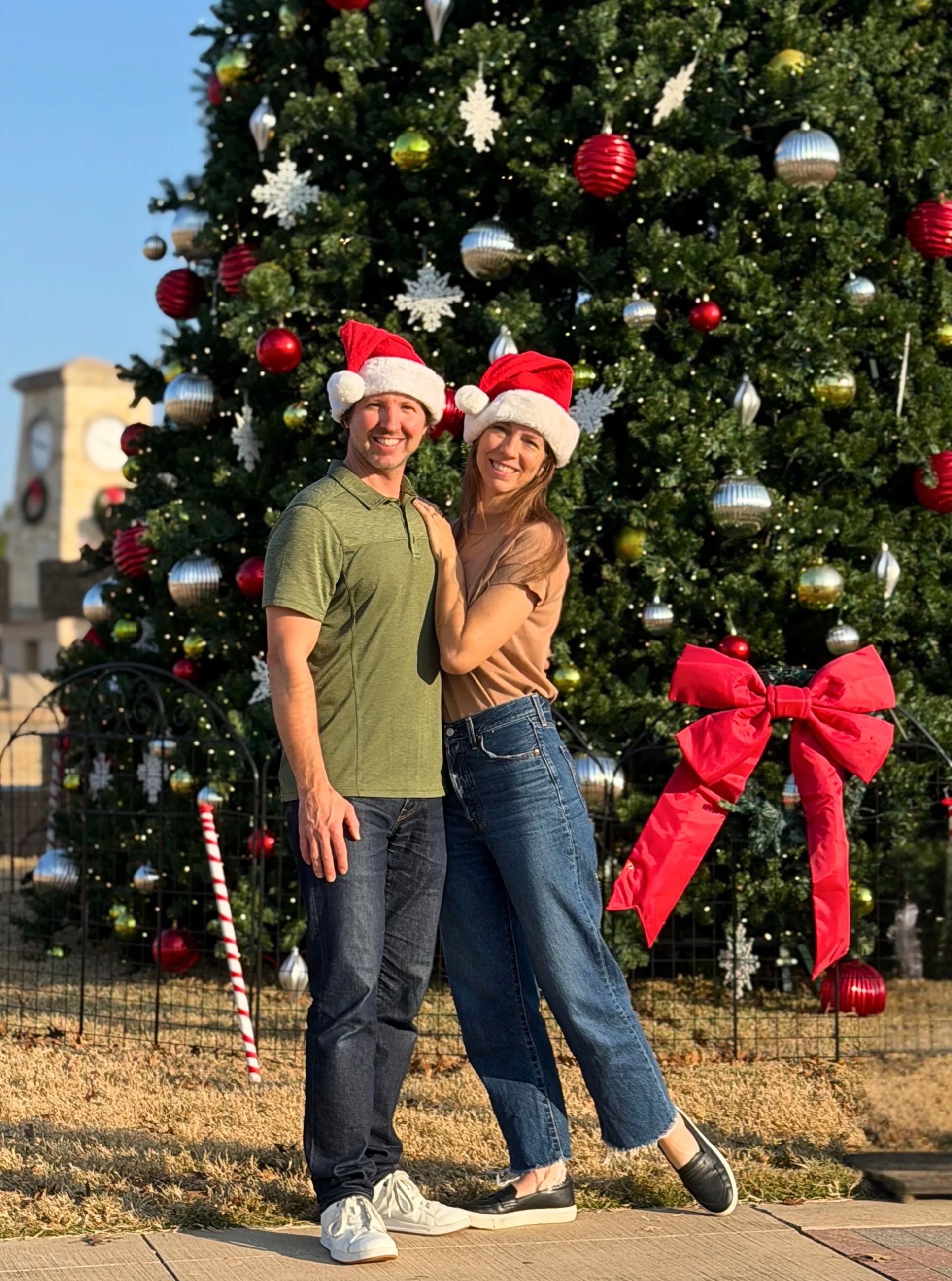 Santa hats and a full circle. Christmas in Texas after twelve years away.
Beginning the Year on Known Ground
January 1 has a way of making even familiar places feel briefly new again. We eased into the year by returning to what already held our attention: the neighborhood streets, White Rock Lake, the Katy Trail, a local gym membership, workdays finding their shape again.
Being back in Texas after twelve years away gave the turn of the year some extra weight. We used it to think plainly about what to carry into the year ahead. We wanted to keep what already worked: gym mornings, unhurried starts, thoughtful work, good food, and time set aside for the people around us. We wanted to improve on margin and presence, the pull to rush toward the next chapter before finishing the one in front of us. And we wanted to cut what didn’t serve the work or the people gathered around us, mostly noise, and spending without a clear purpose behind it. None of it amounted to resolutions. It was closer to taking stock before a much longer stretch of road.
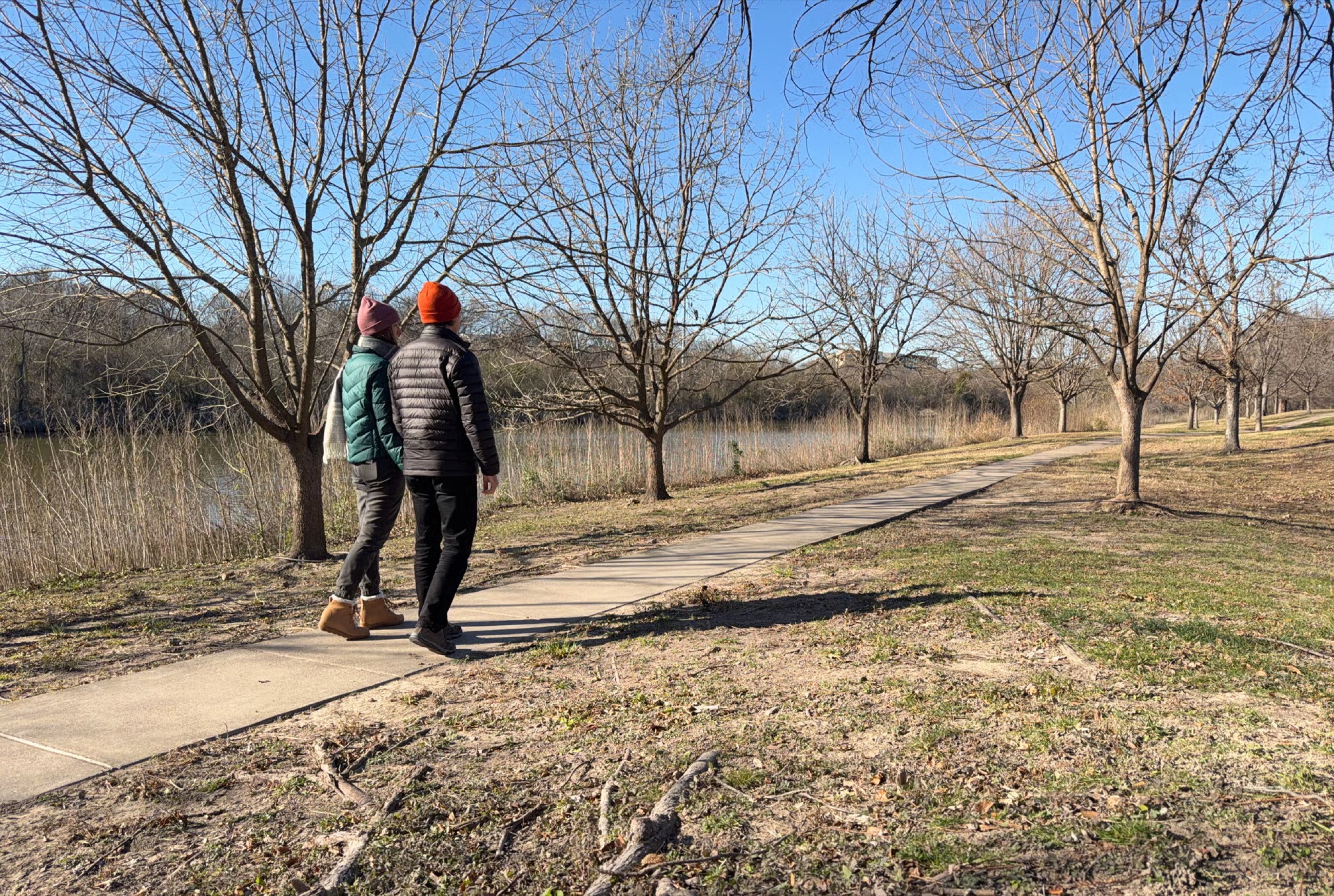 A familiar path, walked slowly.
Some days stayed close to home: coffee, work, a walk, dinner, a fire pit, a game, a show. Other days pushed outward toward cafés, markets, galleries, parks, and the parts of Dallas that kept surprising us with how much had changed since we last lived nearby.
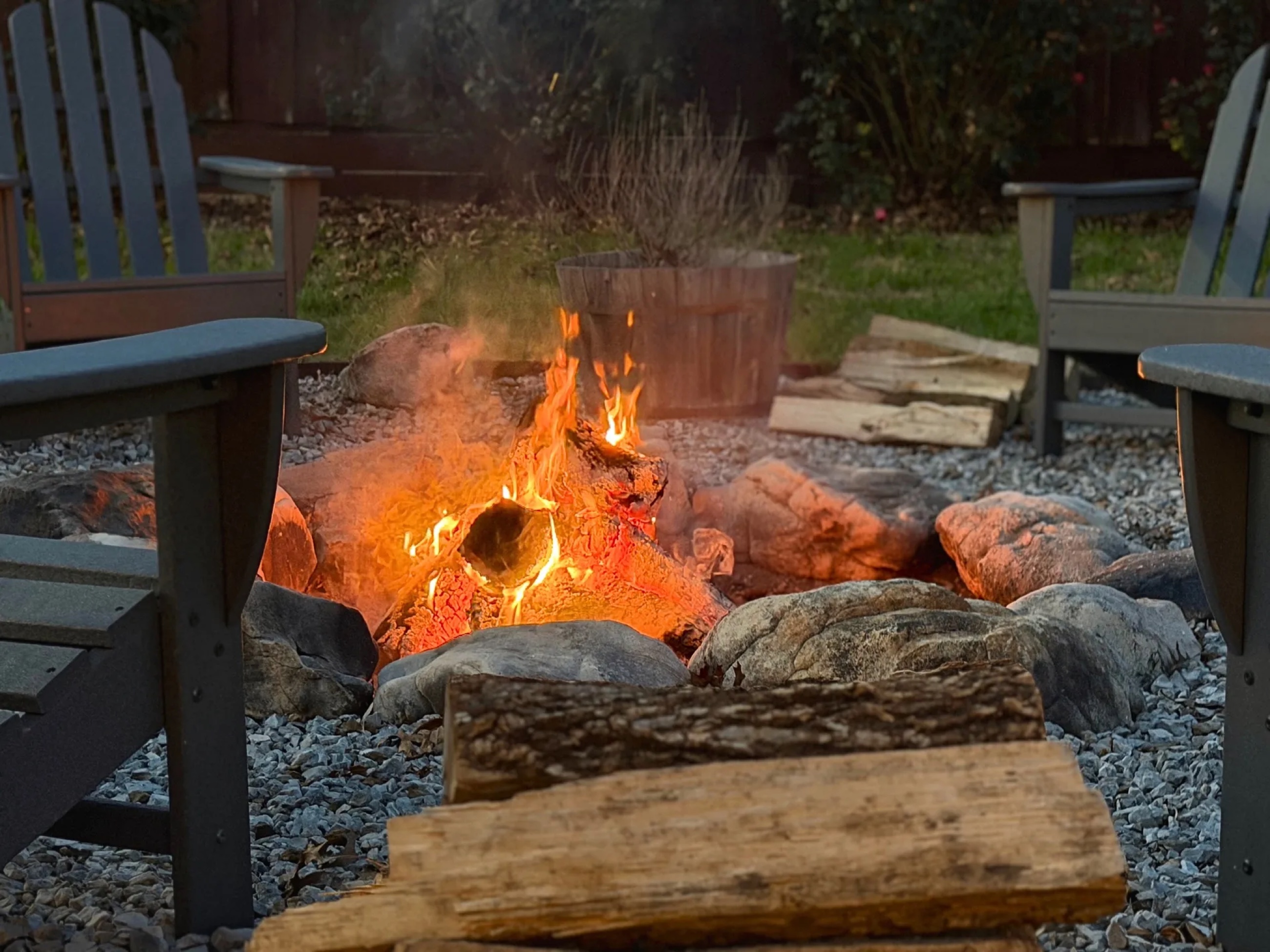 A fire pit and an early night in, the kind Dallas made room for all month.
The aim of the month was never reinvention. It was orientation: settling back into a shape we knew, before that shape changed completely.
Dallas at Street Level
We spent several days moving through the Dallas Farmers Market, Deep Ellum, Bishop Arts, the AT&T Discovery District, and the Arts District. These are public-facing parts of Dallas. The better moments came at street level: a pastry at La 57 Bakery, coffee at Palmieri Café, winter produce at The Shed, murals in Deep Ellum, and a slower stop at Oak Cliff Coffee Roasters in Bishop Arts.
Dallas often reveals itself through scale. Streets are wide. Districts spread. New construction changes the edges of old neighborhoods. Still, the city is more legible when approached through smaller exchanges: a vendor table, a painted brick wall, a café patio, a park bench, a corner recognized after time away.
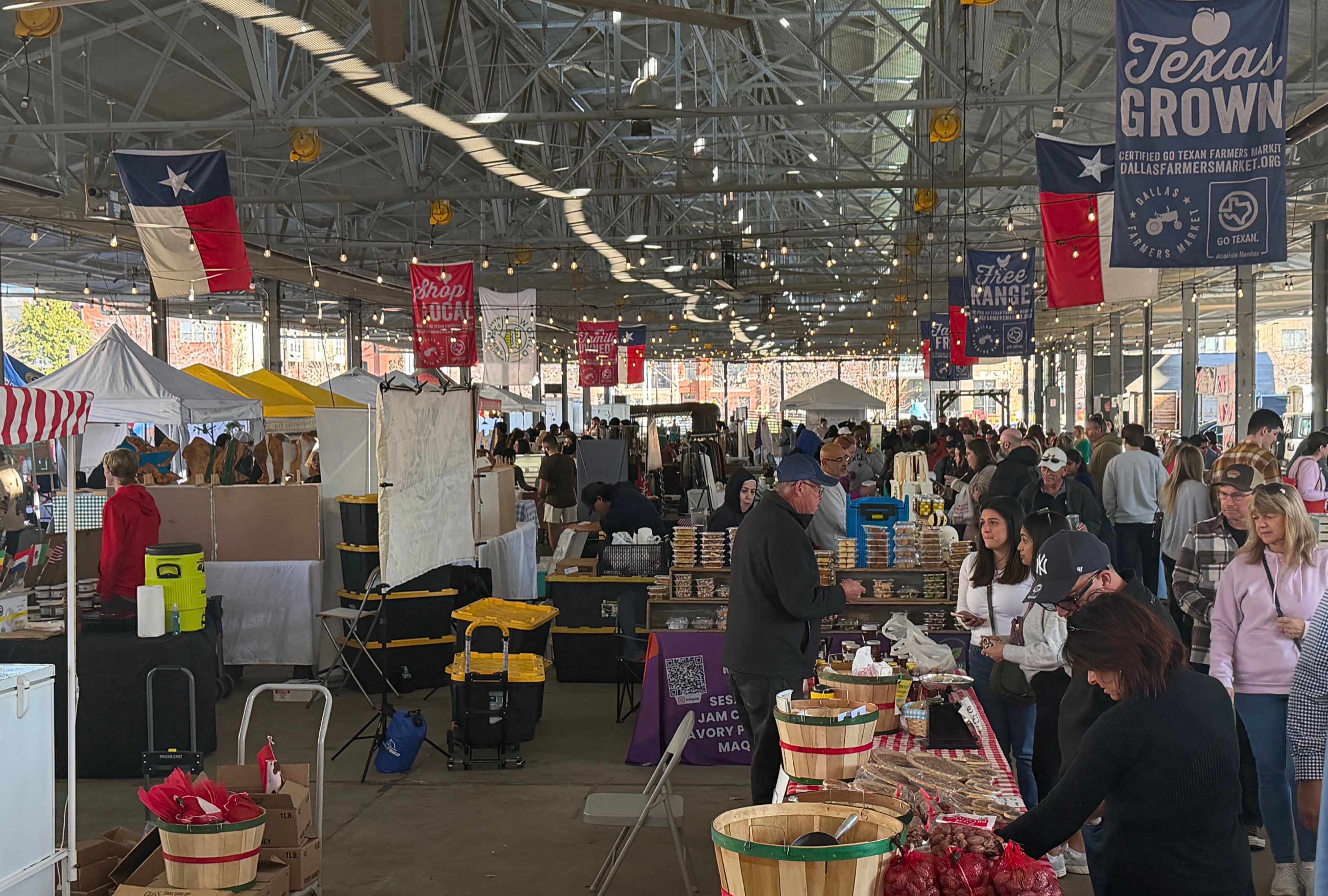 Dallas Farmers Market. Texas-grown produce, local vendors, and the exchange that builds community.
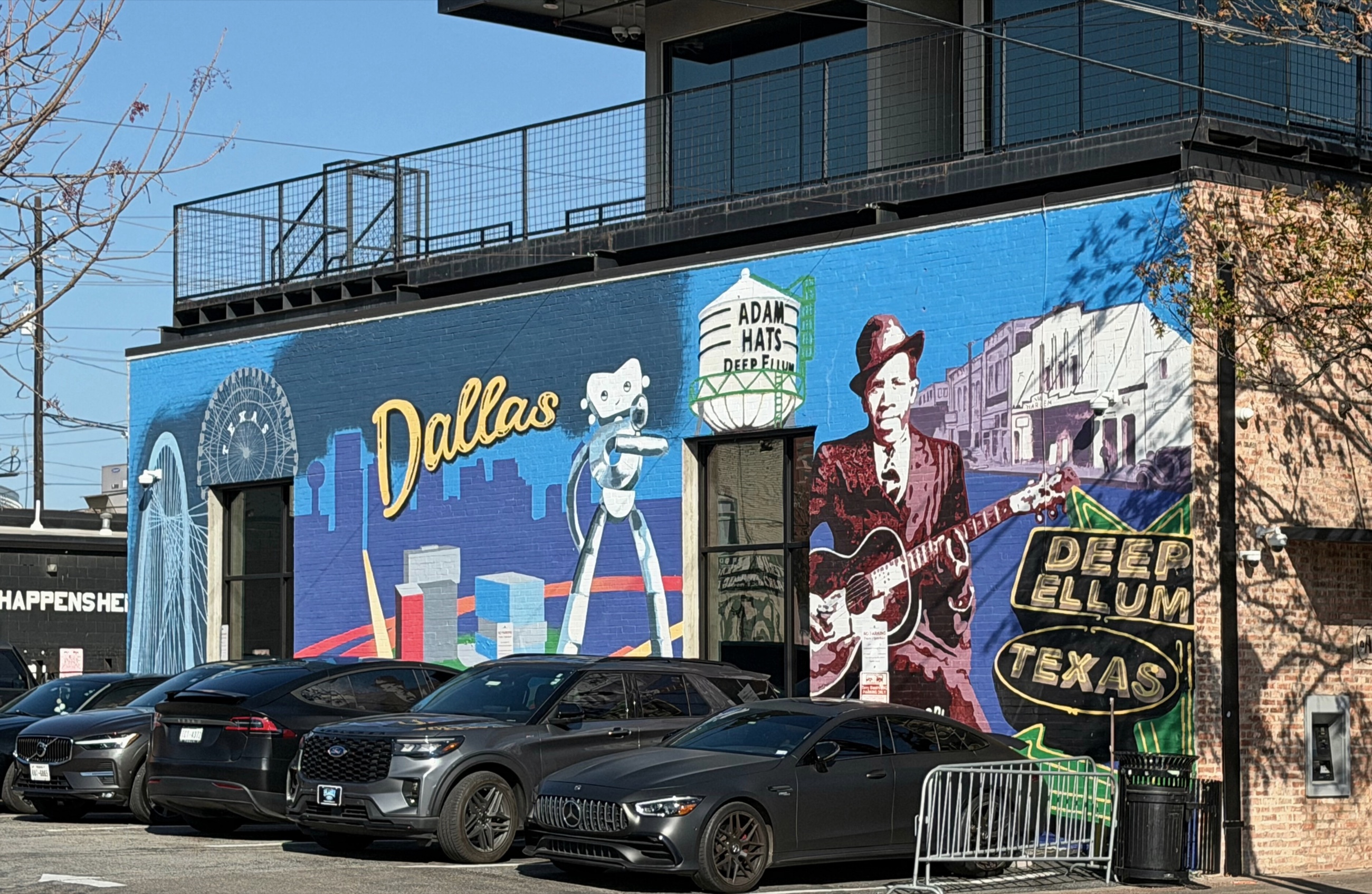 Music, grit, and memory painted on brick in Deep Ellum.
The AT&T Discovery District showed another side of the city: screens, water, hardscape, and engineered civic activity in the middle of downtown. Its polish stands in clear contrast to Deep Ellum’s grit, and the city moves easily between the two, sometimes within the same afternoon. Corporate scale, neighborhood memory, cultural investment, and roadside excess, all in the same day if you let them be.
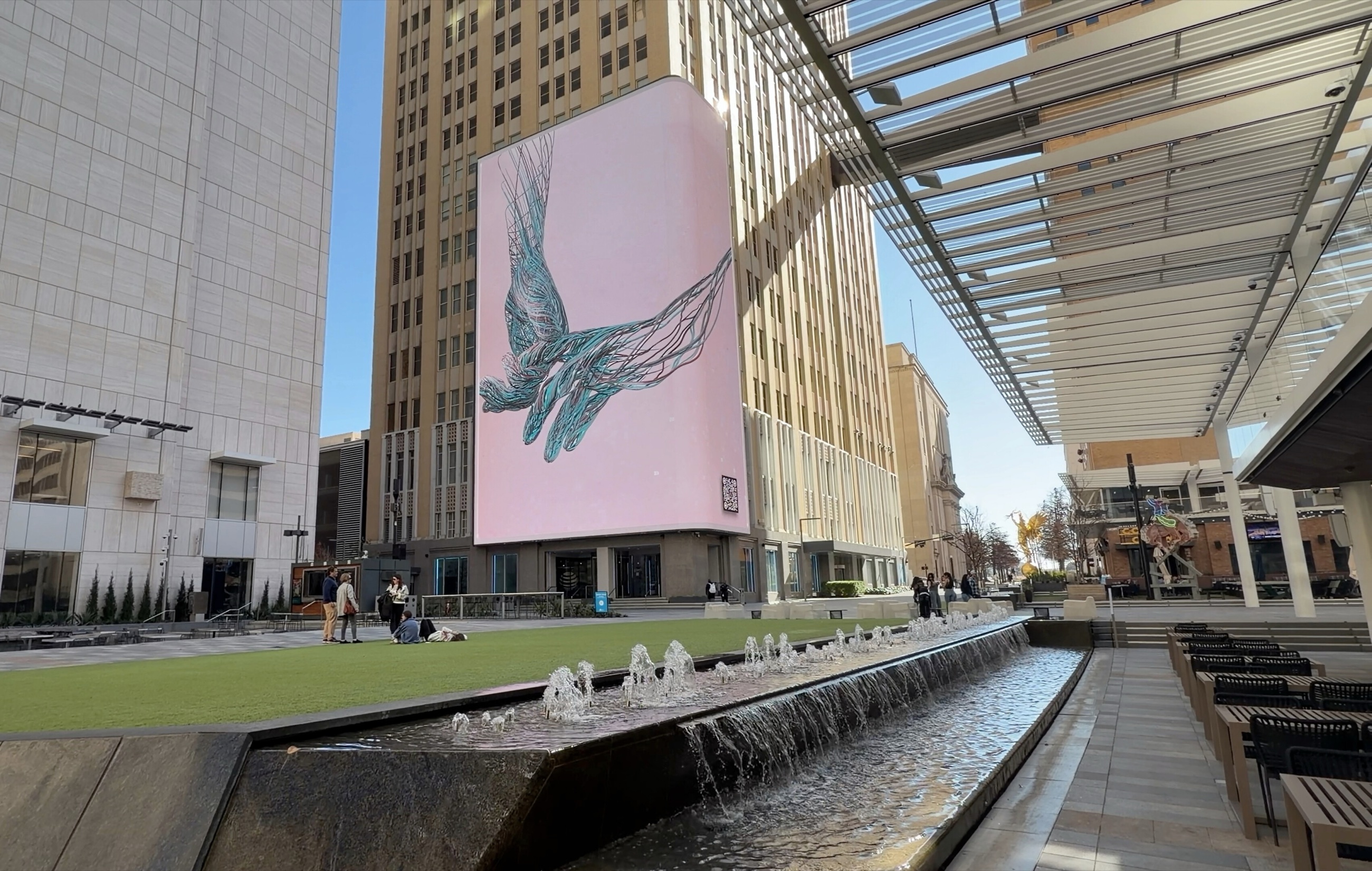 A modern civic square. Water moving, screens glowing at AT&T Discovery District.
Art, Parks, and a Changed City
We returned to the Dallas Museum of Art for the first time in more than a decade, timing the visit around first-Sunday free admission. That choice fit the way we hope to travel abroad as well: culturally serious, cost-aware, and willing to give proper time to institutions that hold memory in public.
The collection spans thousands of years of human creativity. We moved through enough of it to understand the museum’s breadth, then slowed where individual works rewarded closer looking. The specialty exhibitions, International Surrealism and Constellations, rewarded patience more than most galleries ask for.
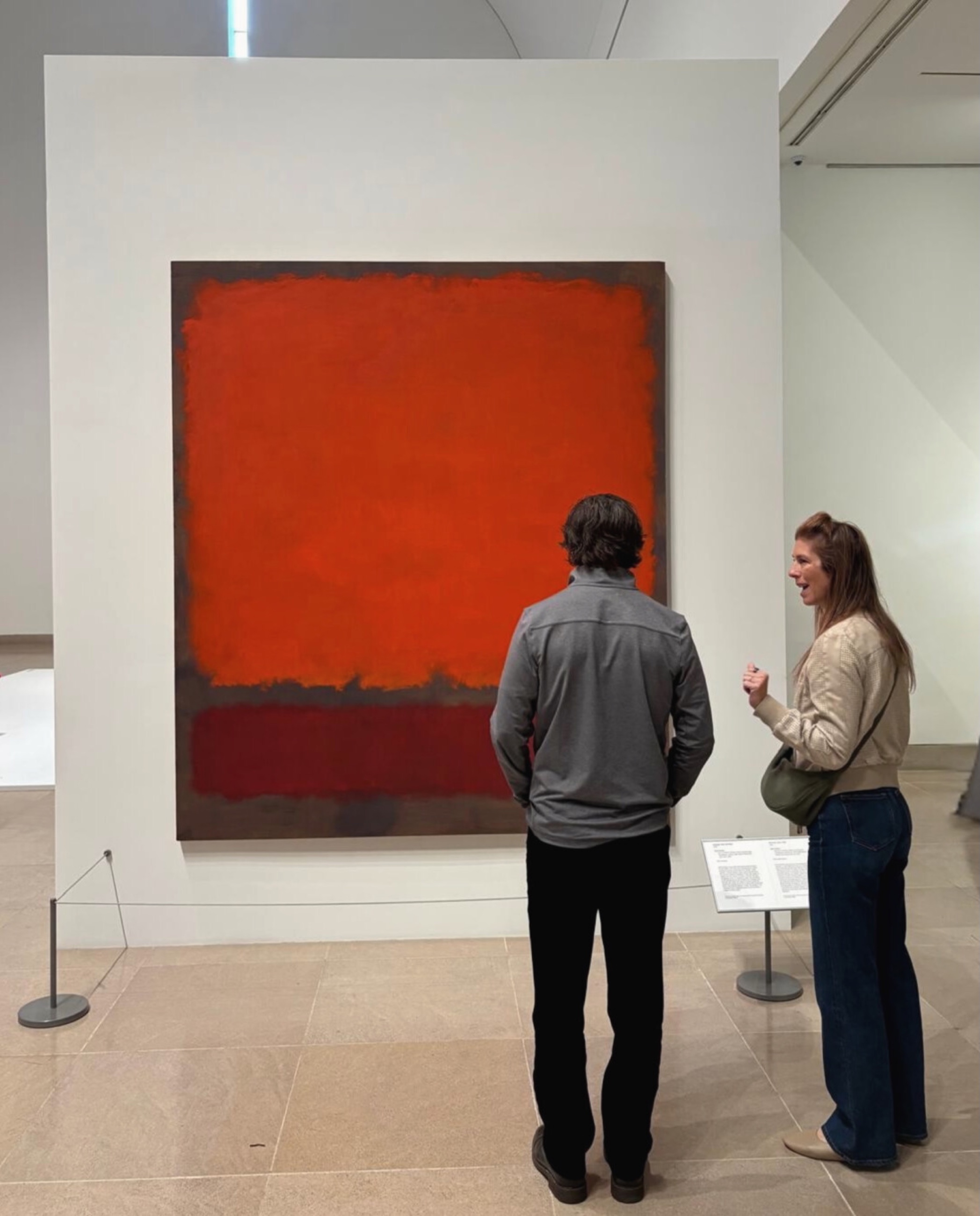 Mark Rothko at the DMA. Color, scale, and intensity.
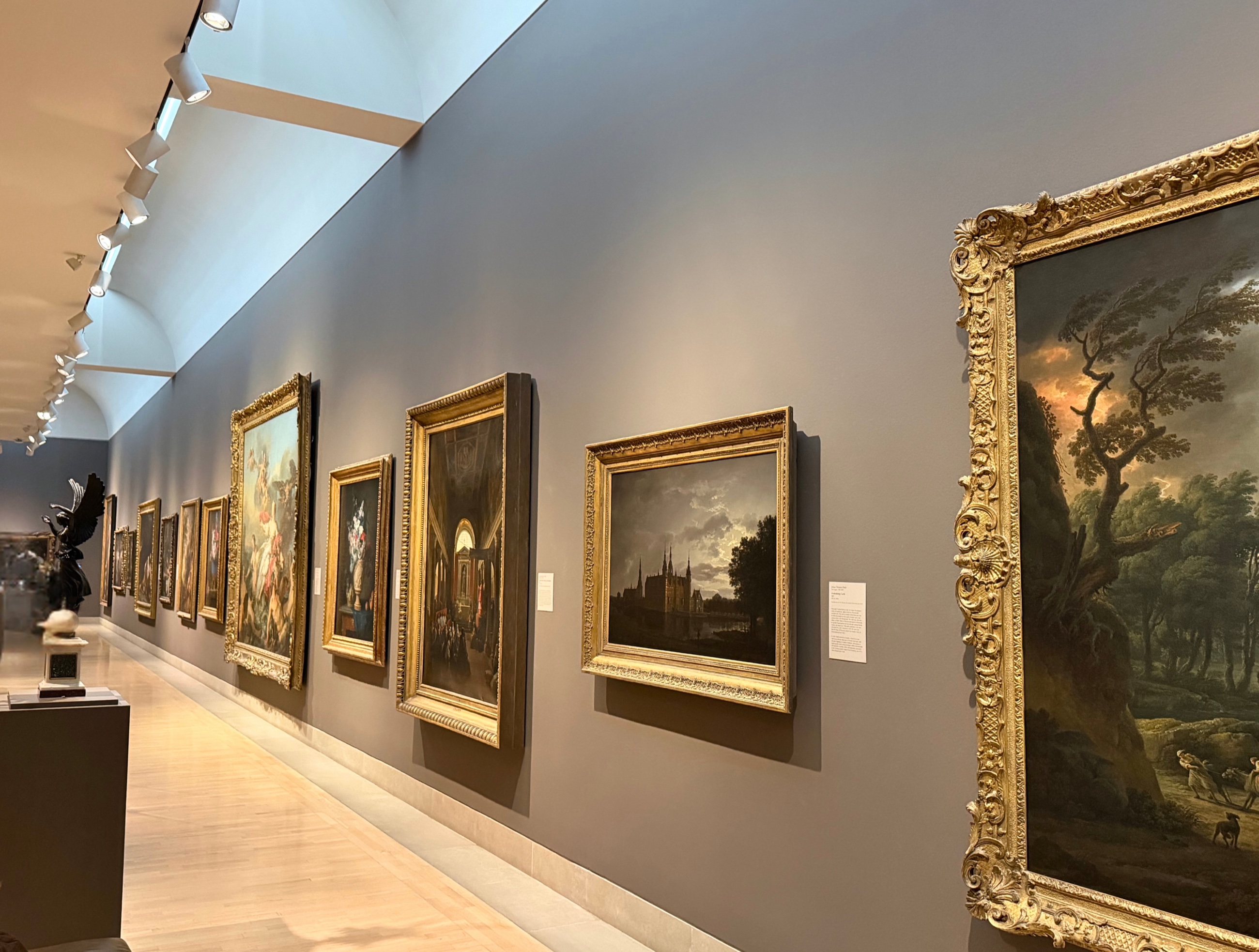 The galleries at the Dallas Museum of Art. Time, style, and attention, present.
After the museum, we walked through Klyde Warren Park and the surrounding Arts District, past the Winspear Opera House, the Meyerson Symphony Center, and the Wyly Theatre. The area felt more connected to the city than it had in memory, parks, food trucks, performance halls, museums, and downtown foot traffic all working together more convincingly than we remembered.
Klyde Warren Park remains one of Dallas’s better civic ideas: a deck park built over a freeway, turning infrastructure into a shared room for the city. On a mild January day, families spread out on the lawn, food trucks did steady business, and pedestrians crossed between museums and restaurants without the highway underneath ever announcing itself.
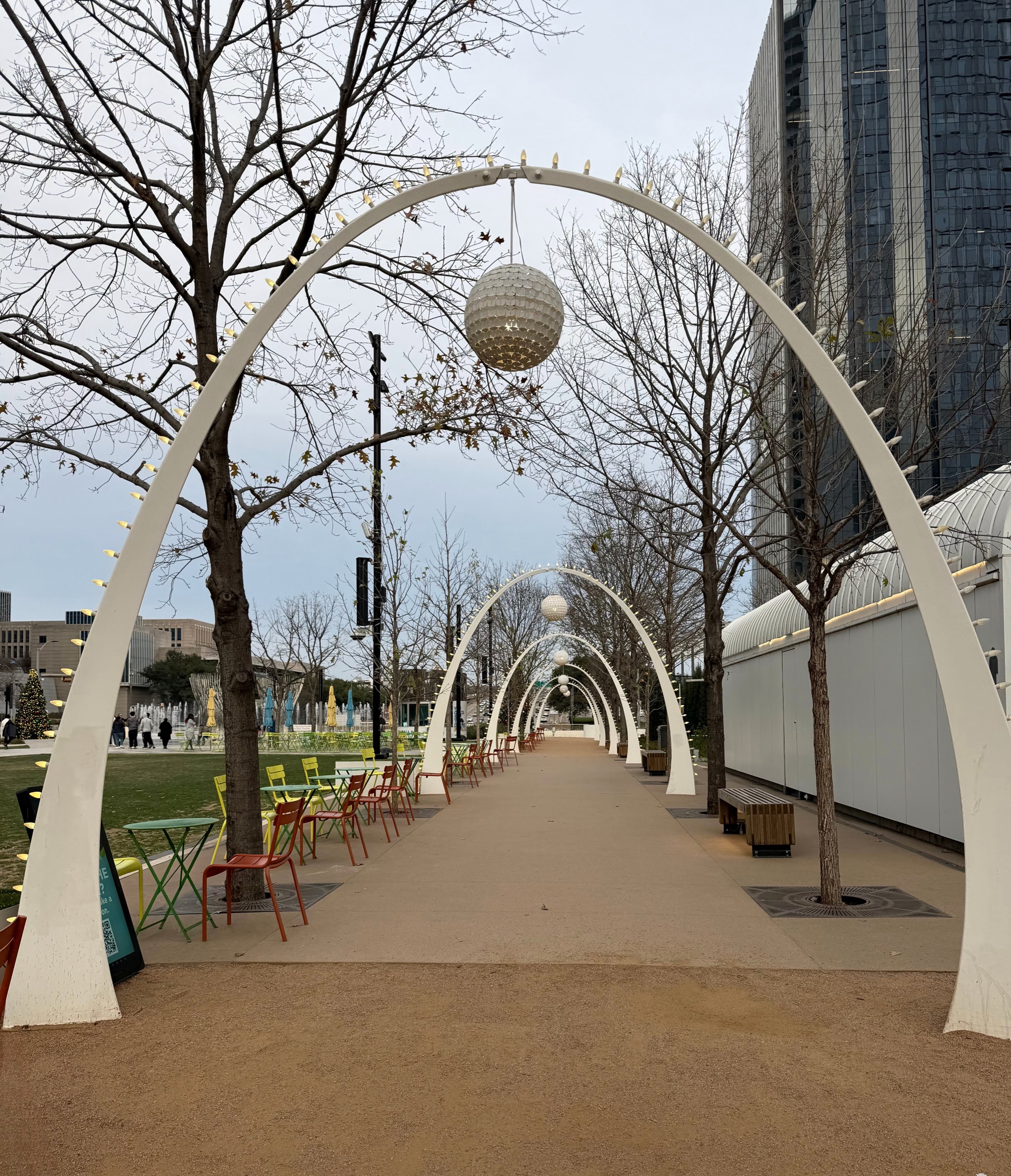 Inviting design. Walkable, human-scaled, and generous space at Klyde Warren Park.
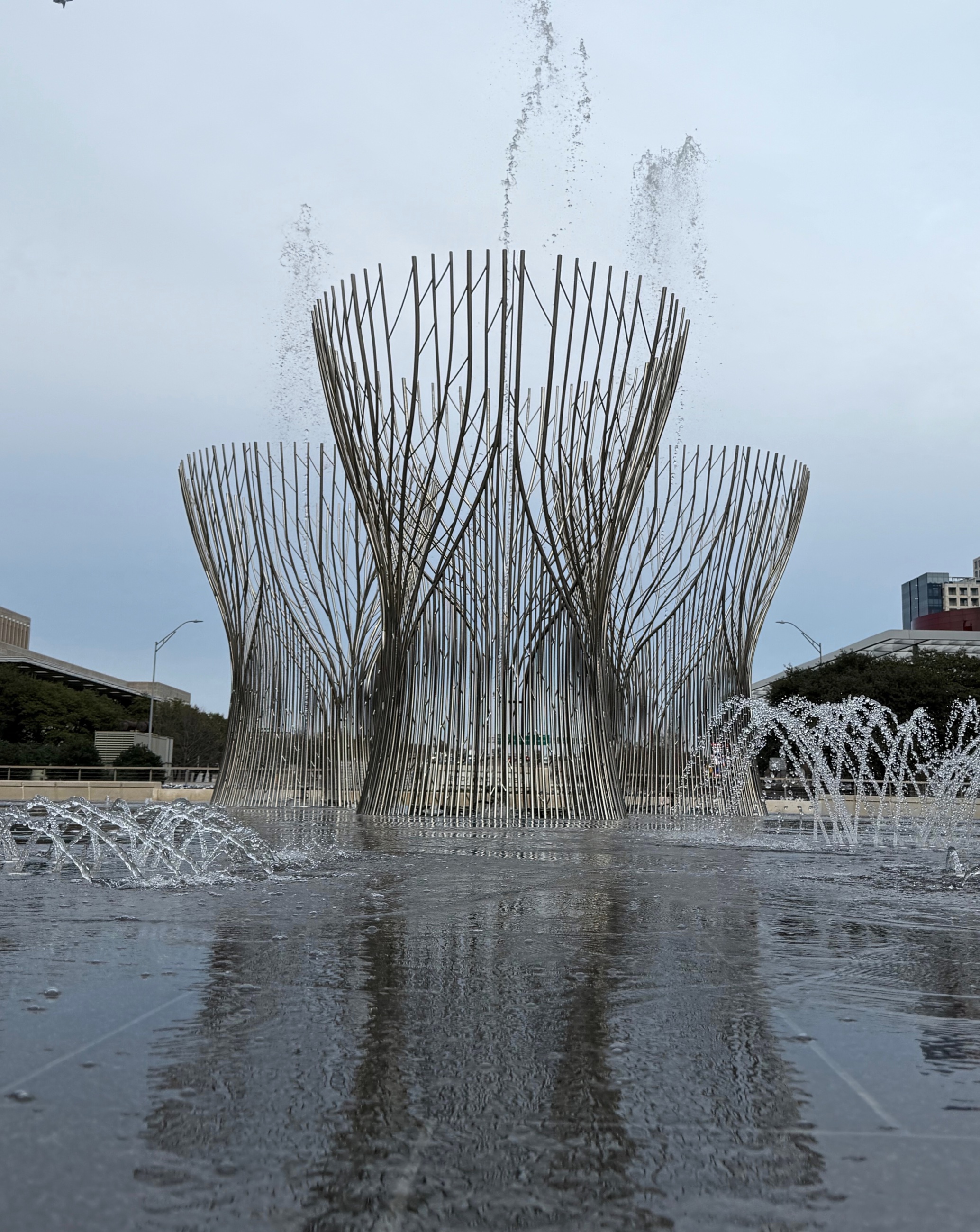 Stillness inside motion. Steel, water, and reflection at Klyde Warren Park.
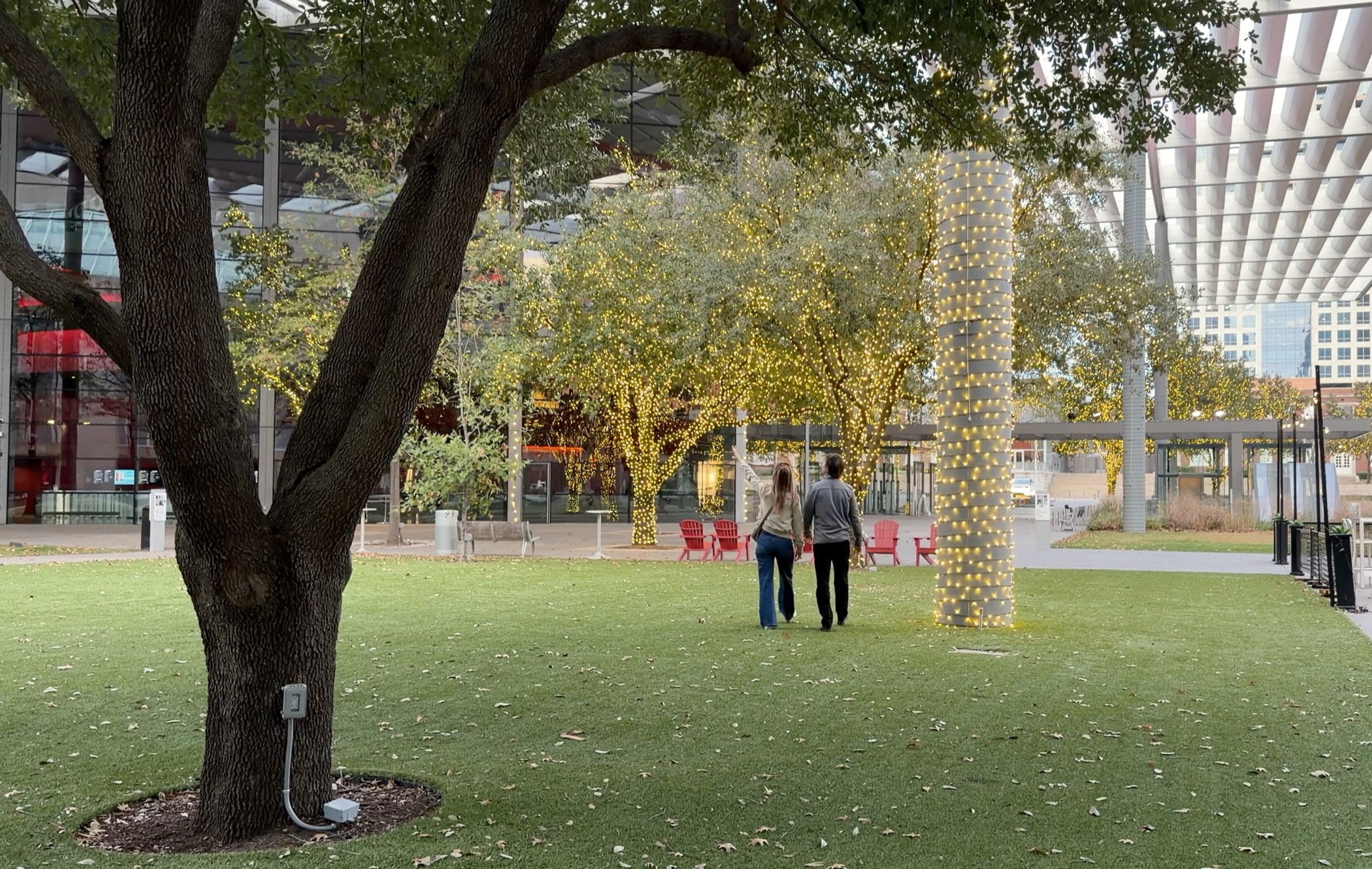 Between museums and music halls, daily life continues.
Tables, Coffee, and Gatherings
Dallas food in January meant returning to tables that already knew us. The stay was too brief for new loyalties to form, yet long enough to return to old ones.
At the Dallas Farmers Market, we picked up coffee and pastry, browsed winter vegetables, and sampled from vendors as we walked. In Deep Ellum, Le Bon Temps offered French fried beignets. Bishop Arts gave us coffee and a little more time on foot. In Garland, Fortunate Son gave us pizza in an outdoor beer garden on a warm afternoon. Torchy’s Tacos pulled us back more than once, the way a regular lunch spot should. Verona Italian Restaurant gave us a family pizza dinner on a slower night, a favorite among locals. Foxtrot on Knox Street became the kind of coffee stop that suggests a return visit before the cup is finished. And Well Grounded Coffee Community gave us more than coffee: the shop employs and trains women rebuilding their lives after trauma and homelessness, funding the model through what it sells rather than treating the mission as a footnote.
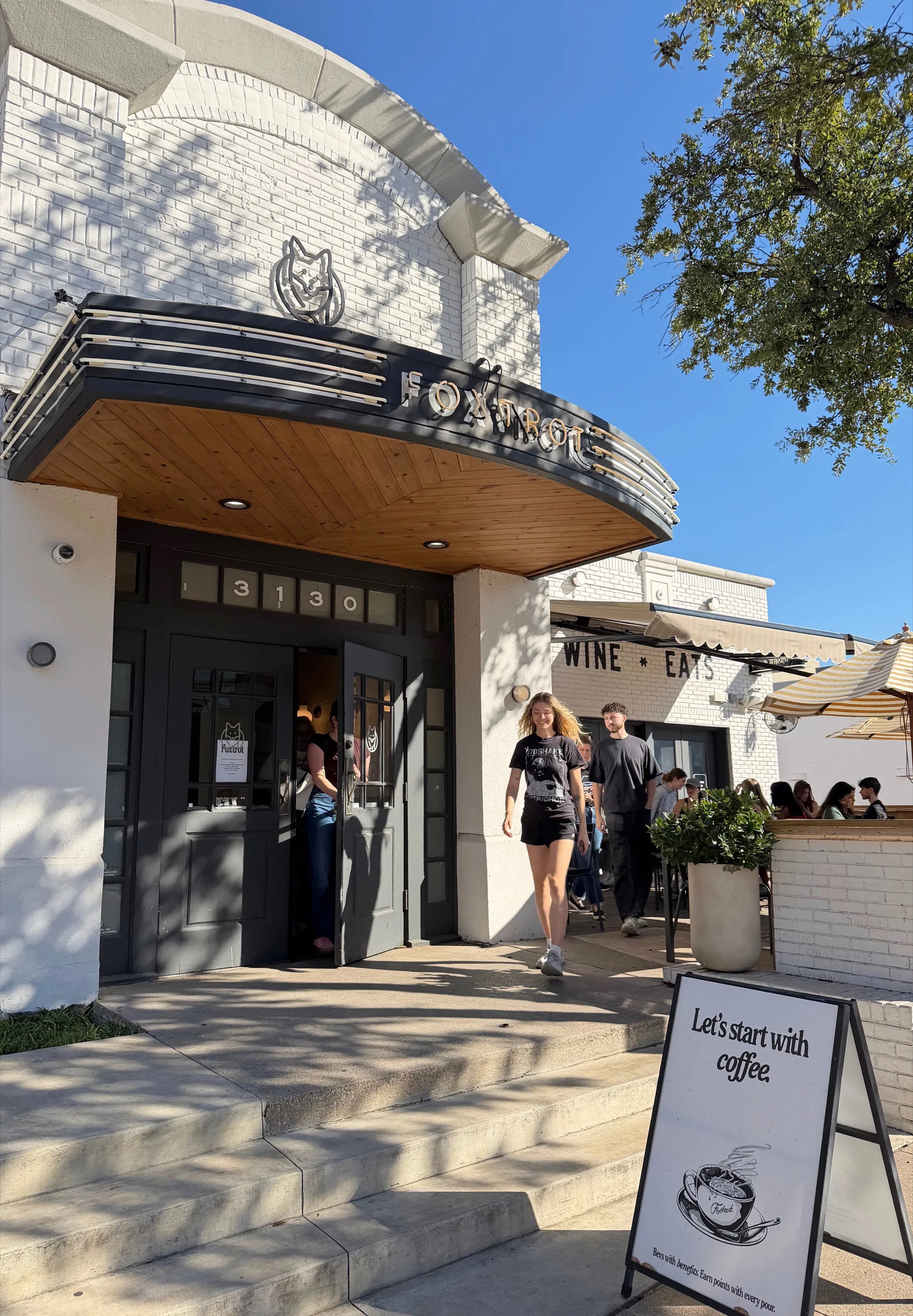 Foxtrot on Knox Street. Coffee, then one more errand before the day moves on.
The biggest gathering of the month, by far, was my youngest brother’s wedding, one more reason our kids had flown in for these weeks in Texas. The rehearsal dinner took place at Campisi’s, an Italian restaurant that has anchored downtown Dallas since 1946 and carries a reputation, half rumor and half local lore, reaching back to the city’s mid-century underworld. Long tables, red sauce, and toasts that overlapped each other set the tone before the wedding itself: a Catholic ceremony followed by a reception at the bride’s family home that ran late into the night with food, dancing, and the kind of noise a room makes when several generations occupy it at once. A niece’s basketball game a few days later was a smaller thing, but it mattered the same way: the everyday calendar of a family kept running right alongside the bigger occasions.
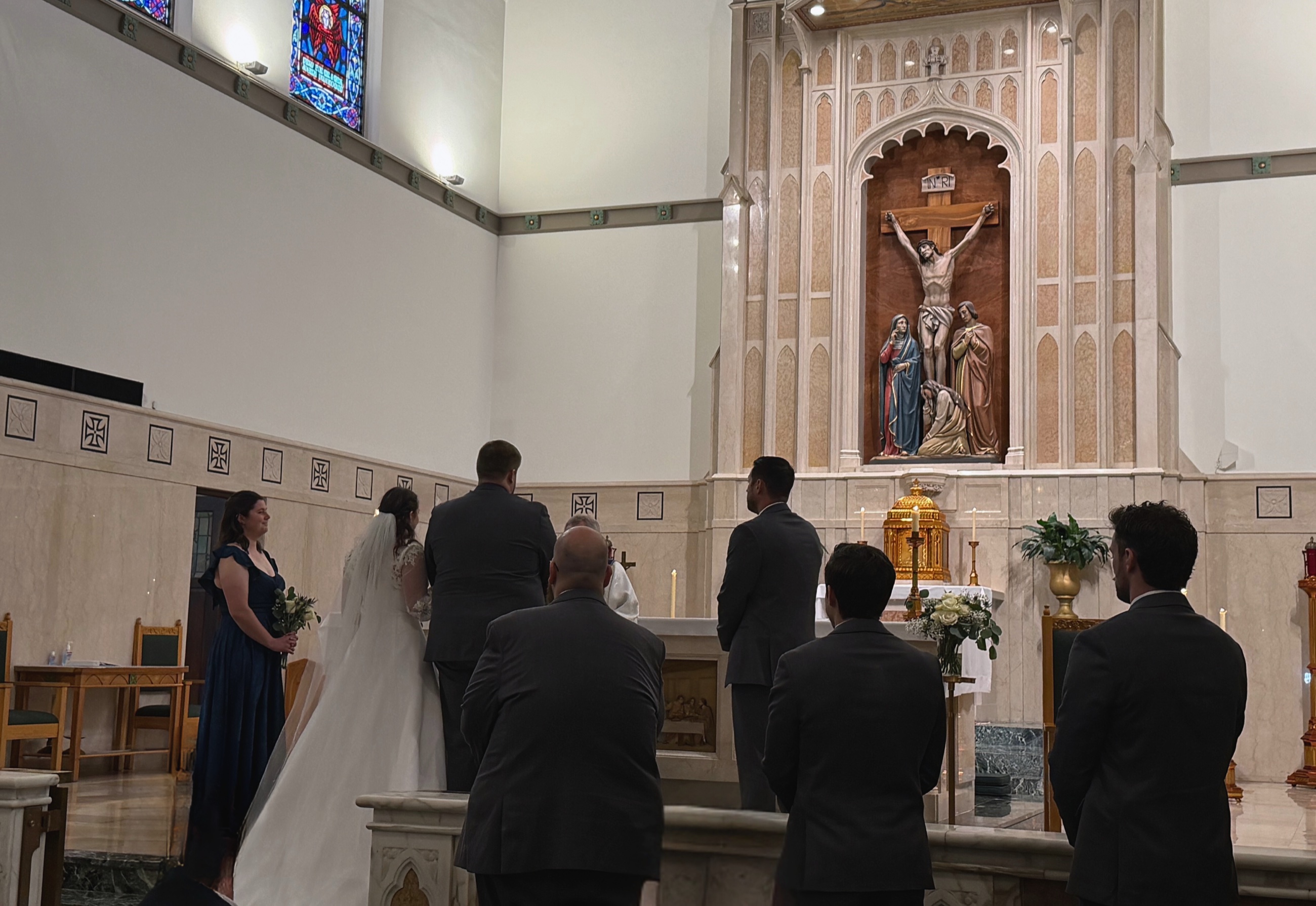 Vows exchanged at the altar, the Catholic ceremony that closed out the wedding weekend.
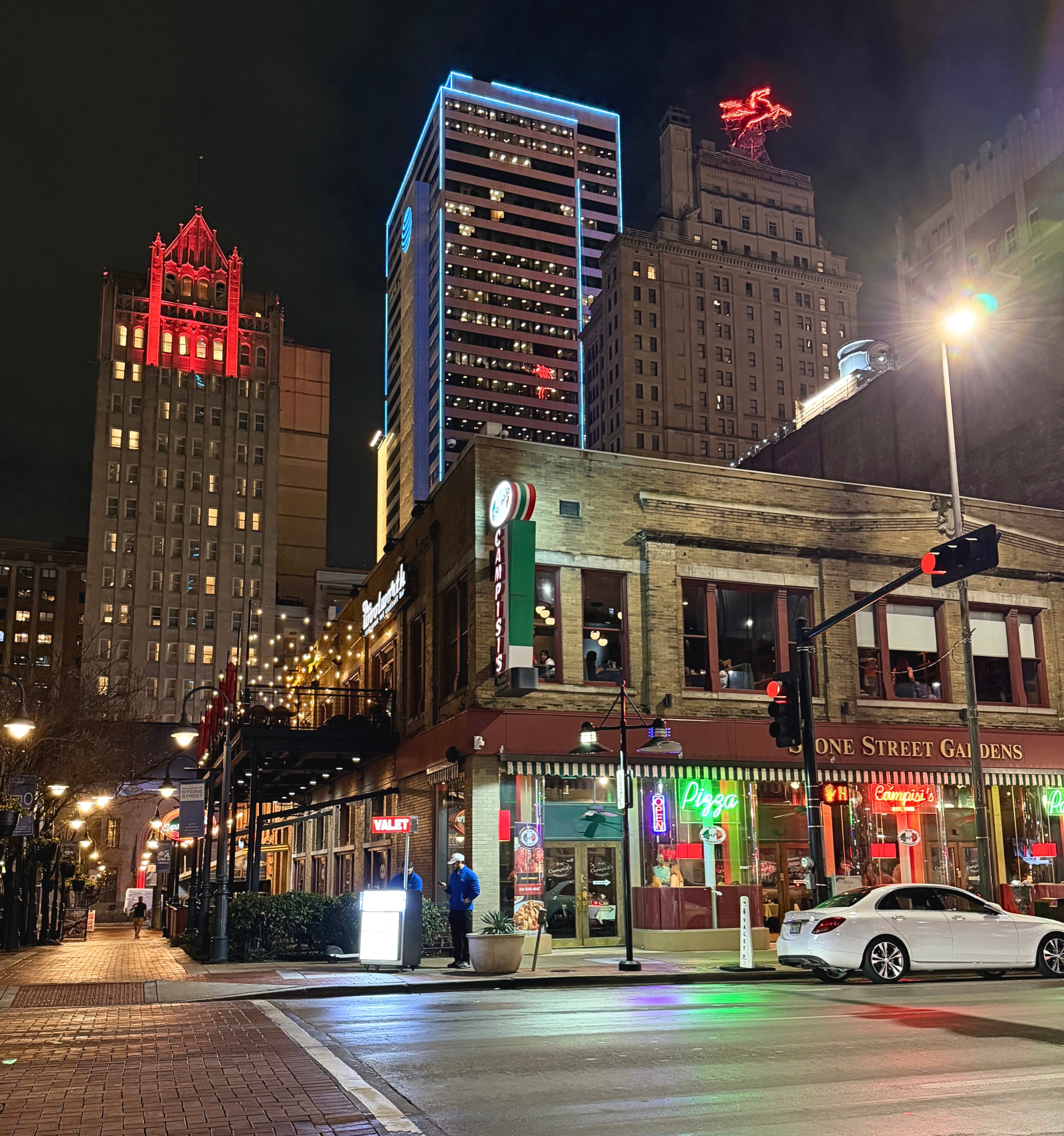 A downtown night of celebration at Campisi’s.
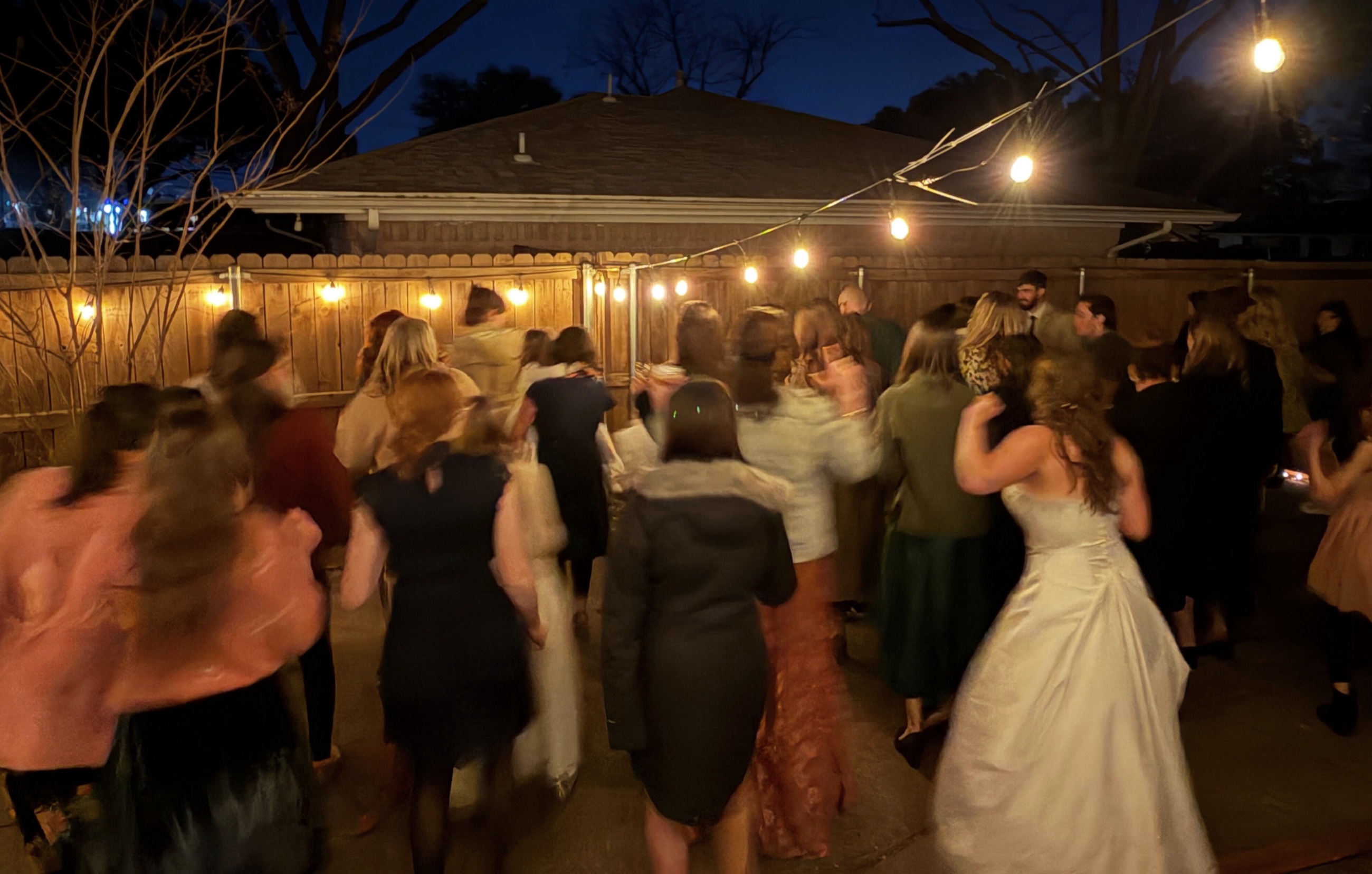 String lights and dancing at the reception, late into the night.
Meso Maya Downtown reminded us why it remains a steady favorite, especially for mole negro. Jimmy’s Italian Food Store delivered the Italian Stallion sandwich, generous and exactly what it should be. Terry Black’s BBQ brought smoke, country music, communal tables, and the Texas language of brisket and sides. On a rainy night, Greenville Avenue Pizza Company gave us neon signs, wet pavement, and pizza good enough to justify braving the weather for it.
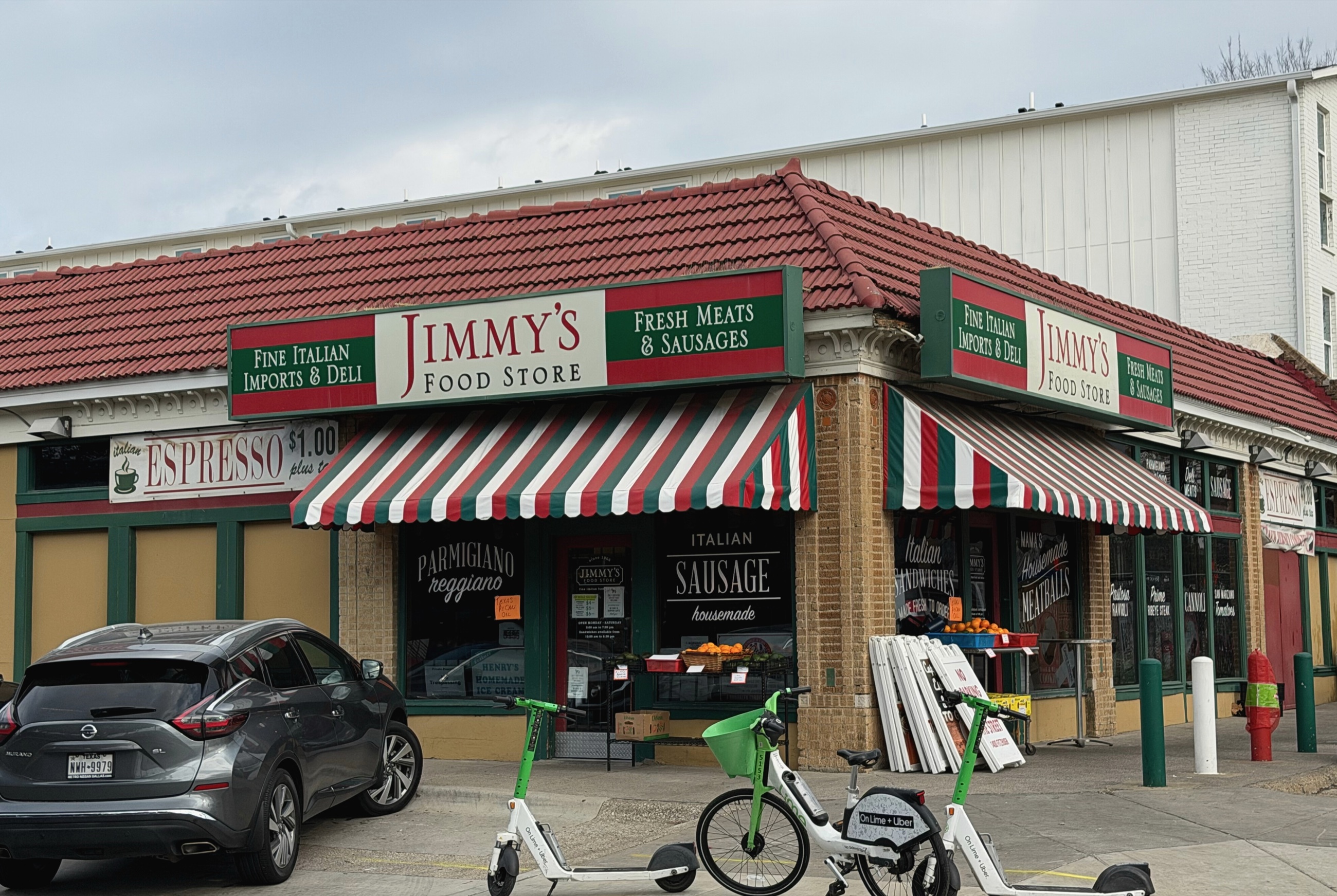 Jimmy’s Italian Food Store, a Dallas staple.
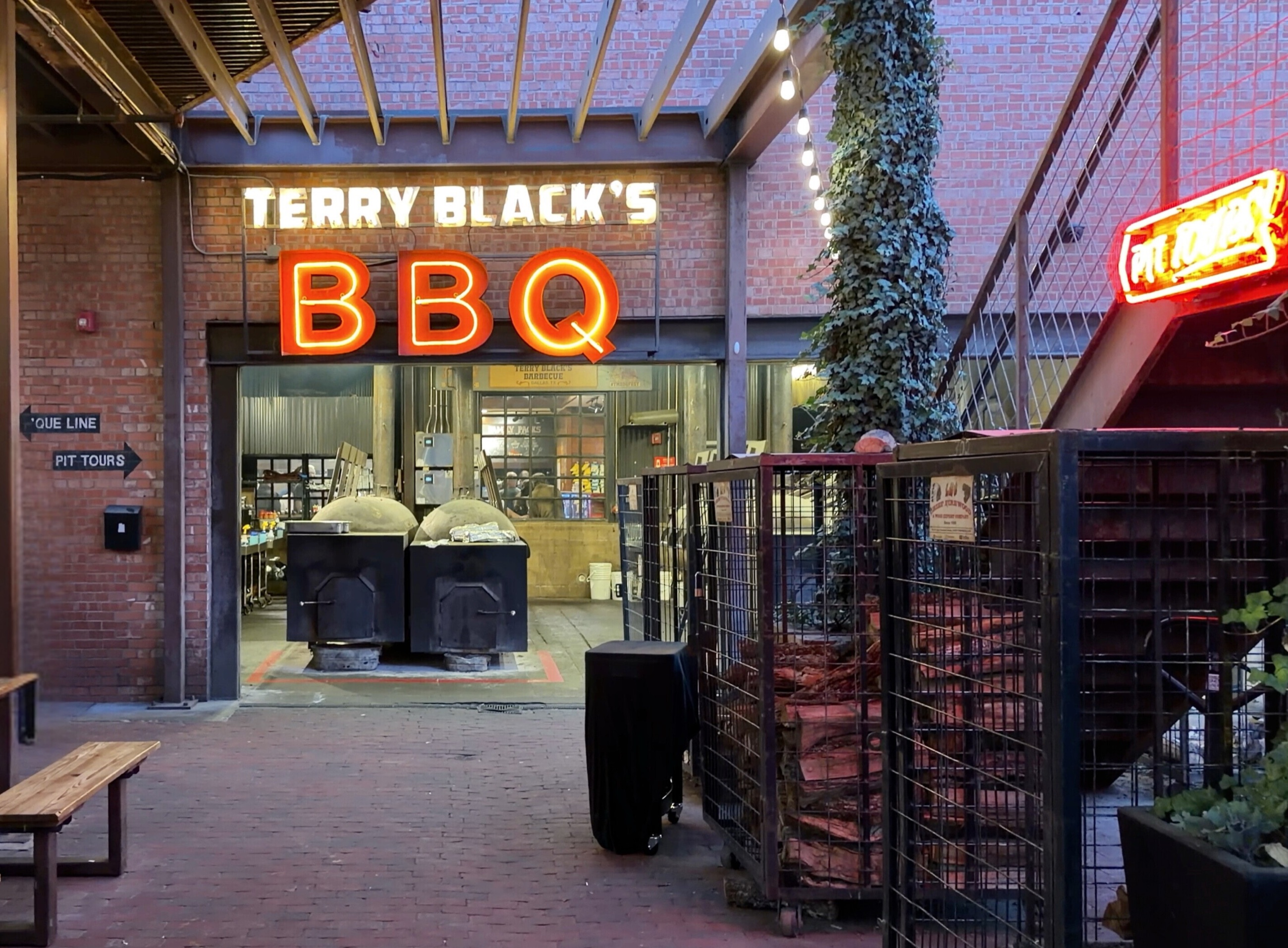 Smoke in the air, Texas tradition delivered at Terry Black’s BBQ.
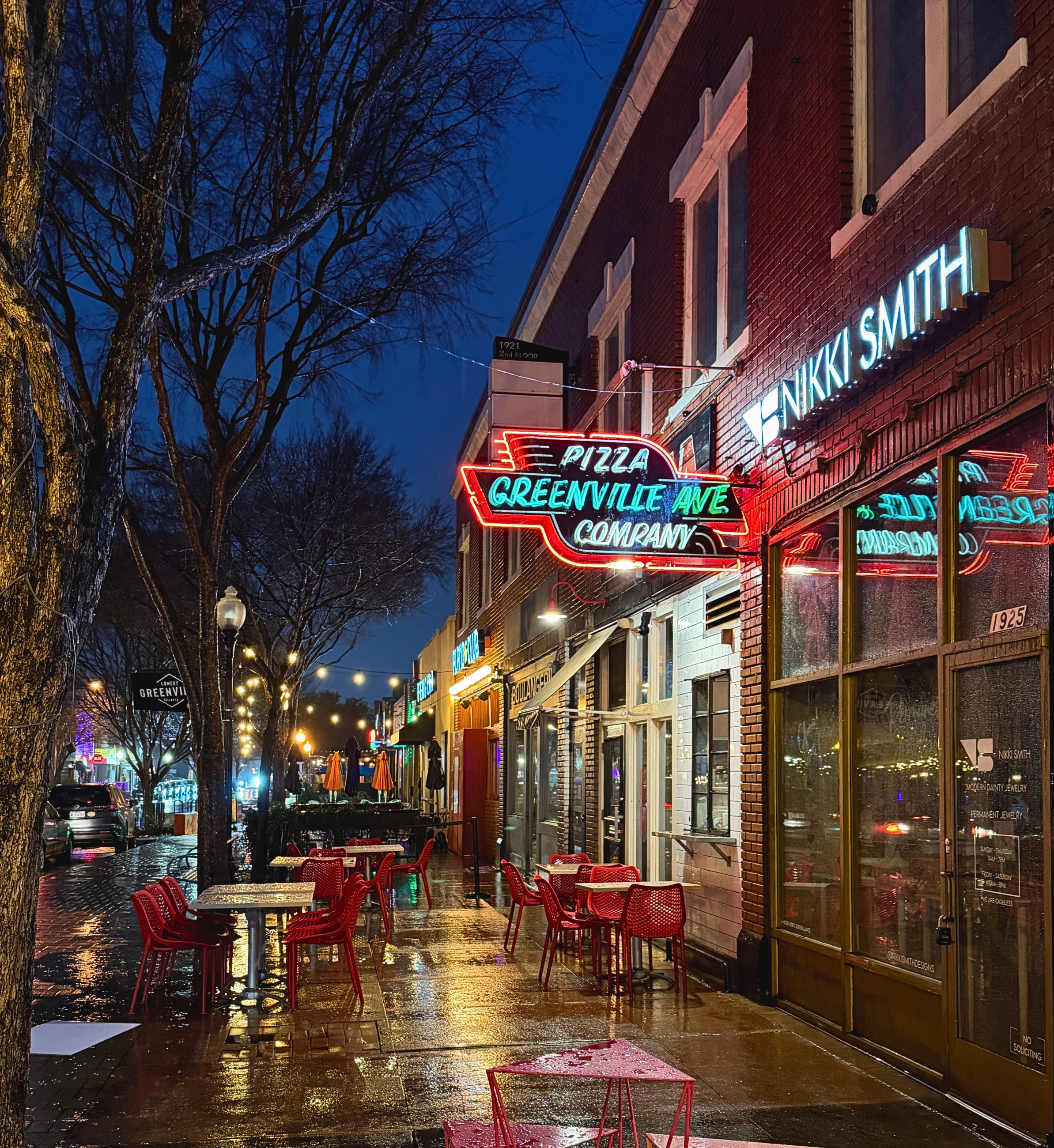 Neon and wet pavement on Lowest Greenville, outside Greenville Avenue Pizza Company.
Beyond the restaurants, the more important meals happened at home. Steak on the grill for New Year’s Eve. Brunch on New Year’s Day. Dinners around a table with kids and grandparents in the same room. Games afterward. Conversations with people we would soon be far from. It was a month that reminded us movement only means something when it stays connected to the people and commitments that make it matter.
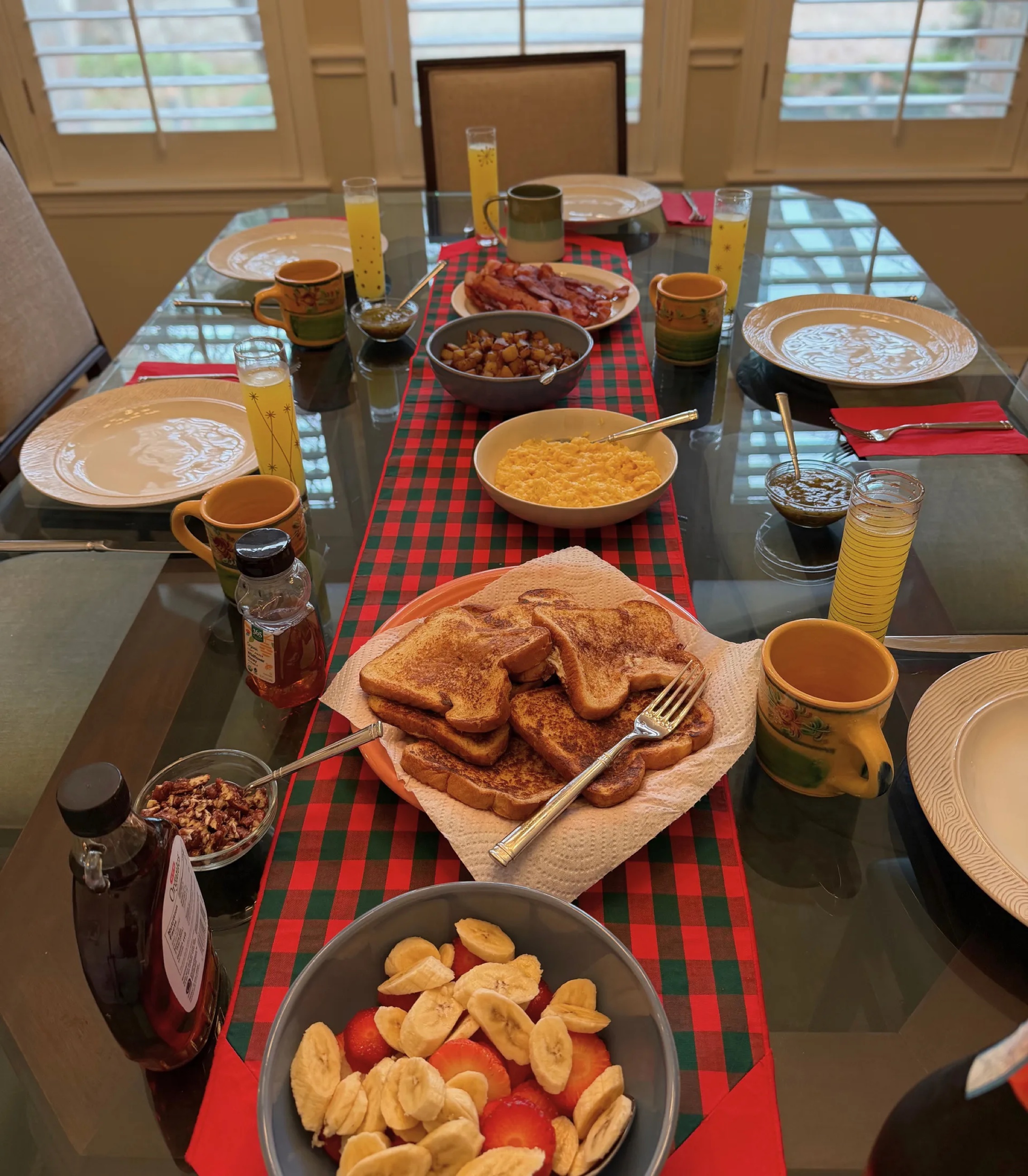 Brunch on New Year’s Day: French toast, bacon, fruit, and mimosas for a full table.
The Work of Getting Ready
Dallas also gave us time to close practical loops, the unglamorous work that any real departure requires.
Some of that work was administrative. We updated auto insurance from Nevada to Texas, completed the Texas vehicle inspection, handled registration, installed Texas plates, finalized driver’s license applications, completed voter registration, and prepared the car for long-term storage. The costs were not abstract: $18.50 for inspection, $201 for registration, $67 for driver’s licenses, and $107 for a car cover.
Other preparation was travel-specific. We continued booking major lodging and transportation roughly three months in advance. North Macedonia was finalized for April. Split was locked in for late April and May. Croatia followed close behind in the planning queue.
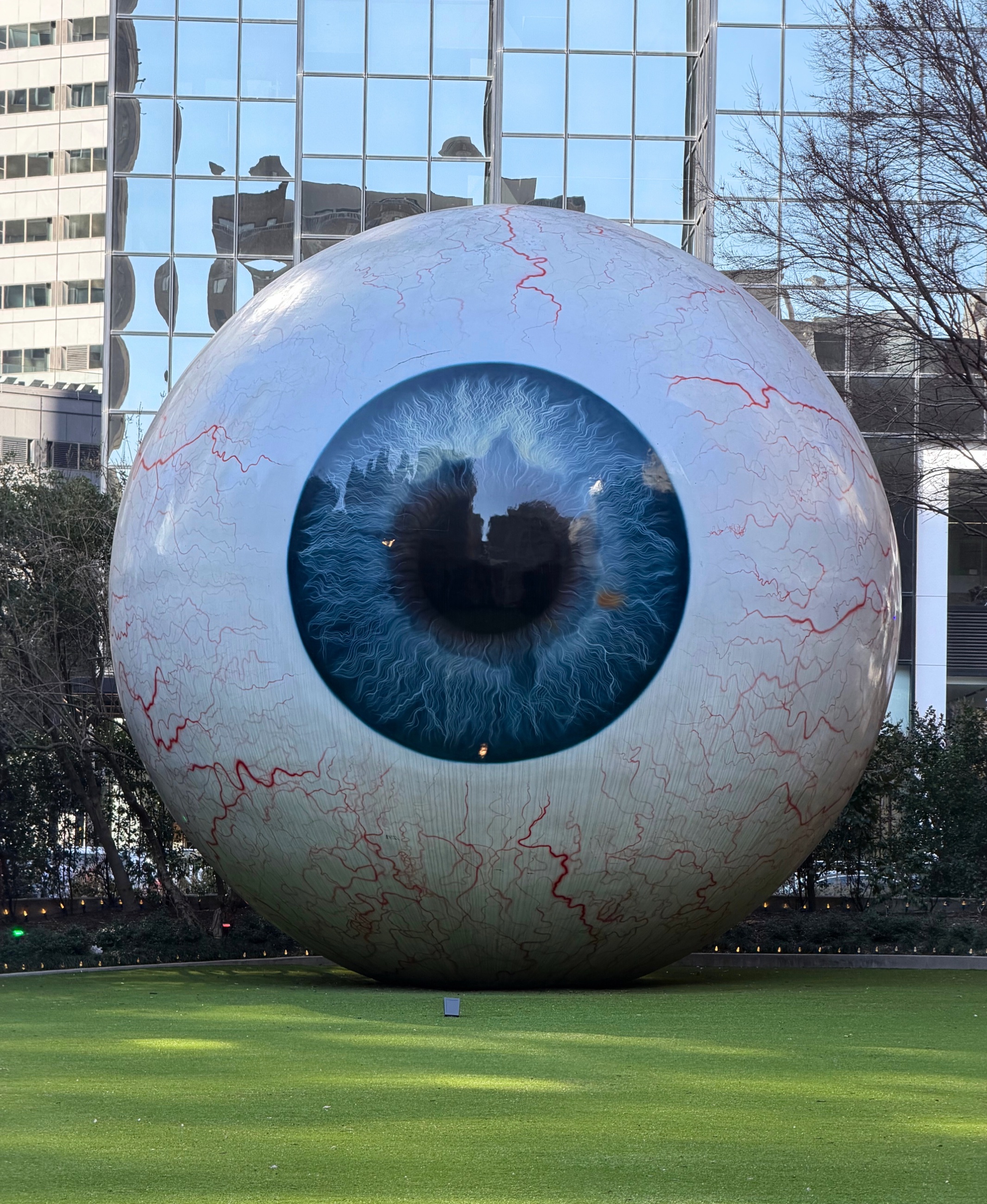 Tony Tasset, Eye. Paying attention to what supports the journey.
The communications stack came together here too. Google Fi would preserve U.S. number continuity and two-factor authentication. Airalo would provide a global backup eSIM. Google Voice would give us a stable public-facing number across countries. We selected Cigna Global for international health coverage, with an emergency and catastrophic focus, running close to $4,000 for the year. A final Amazon order and one more REI run closed out the remaining gear list.
Preparation has a cost. Improvisation has one too. We would rather pay upfront for systems that work than spend the first month abroad solving preventable problems.
A daily routine helped hold all of this together. Most mornings began around seven with a nutritional shake and a trip to the local gym, a $30-a-month, no-contract membership that made it easy to commit to for just these few weeks. Some mornings included the sauna, cold plunge, or massage chair. Afterward came work at home or a café, lunch, errands, a walk, more focused hours, and dinner. A longer travel life only works if routines like these can survive a change of address, and Dallas gave us one last place to prove it before the route went international.
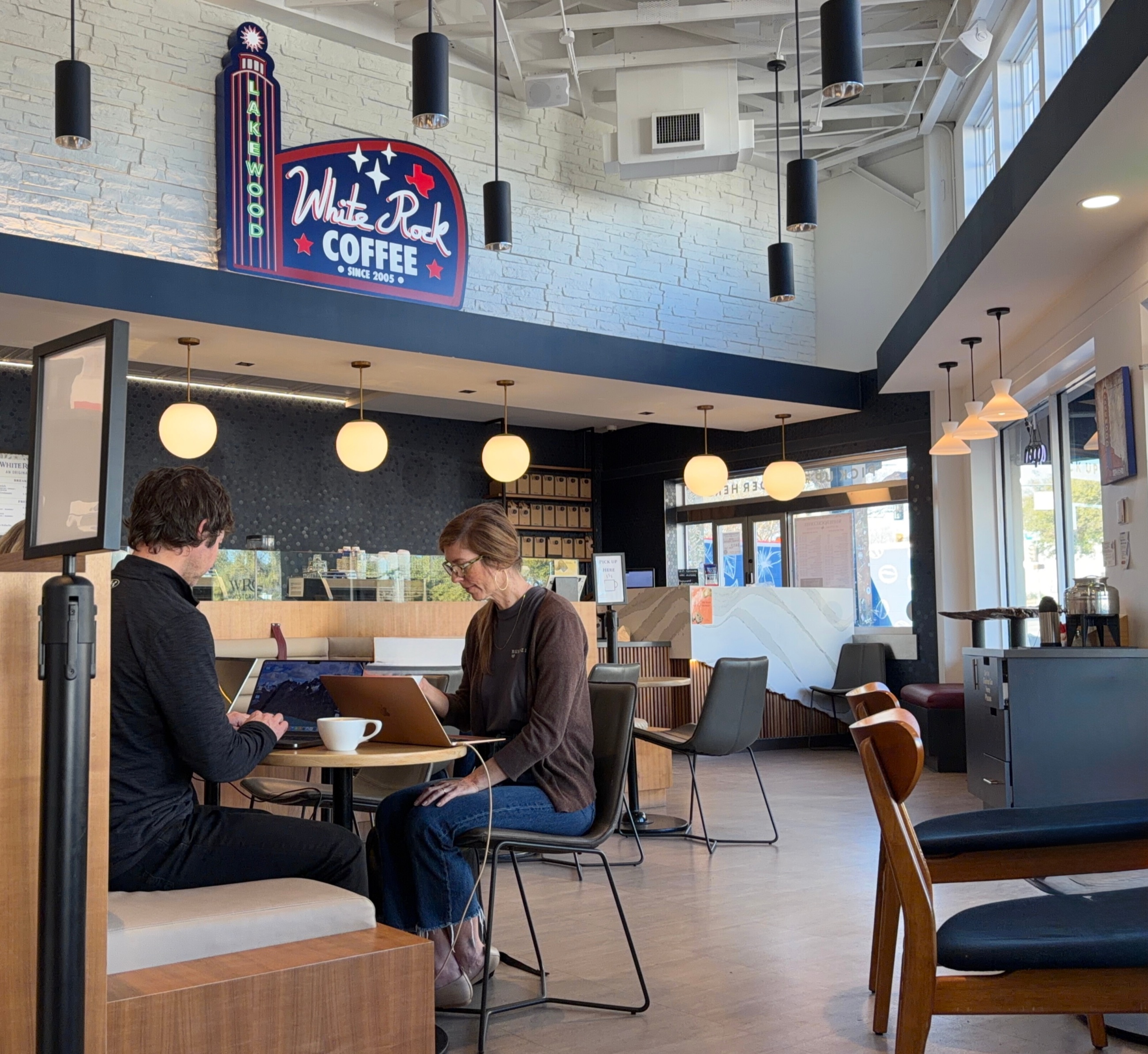 A work morning at White Rock Coffee.
Lake Texoma and the Texas Roadside
One weekend, we drove north to Eisenhower State Park for a picnic and short hike near Lake Texoma. After days of city movement and logistical preparation, the lake gave the week a wider horizon.
The outing was modest and useful: $5 for park entry, about $15 for picnic supplies, $6 for trail snacks, and roughly $12.50 in gas for a 150-mile round trip at $2.25 per gallon. About $38.50 for two people bought a full day outside, good food, and no need to hurry back.
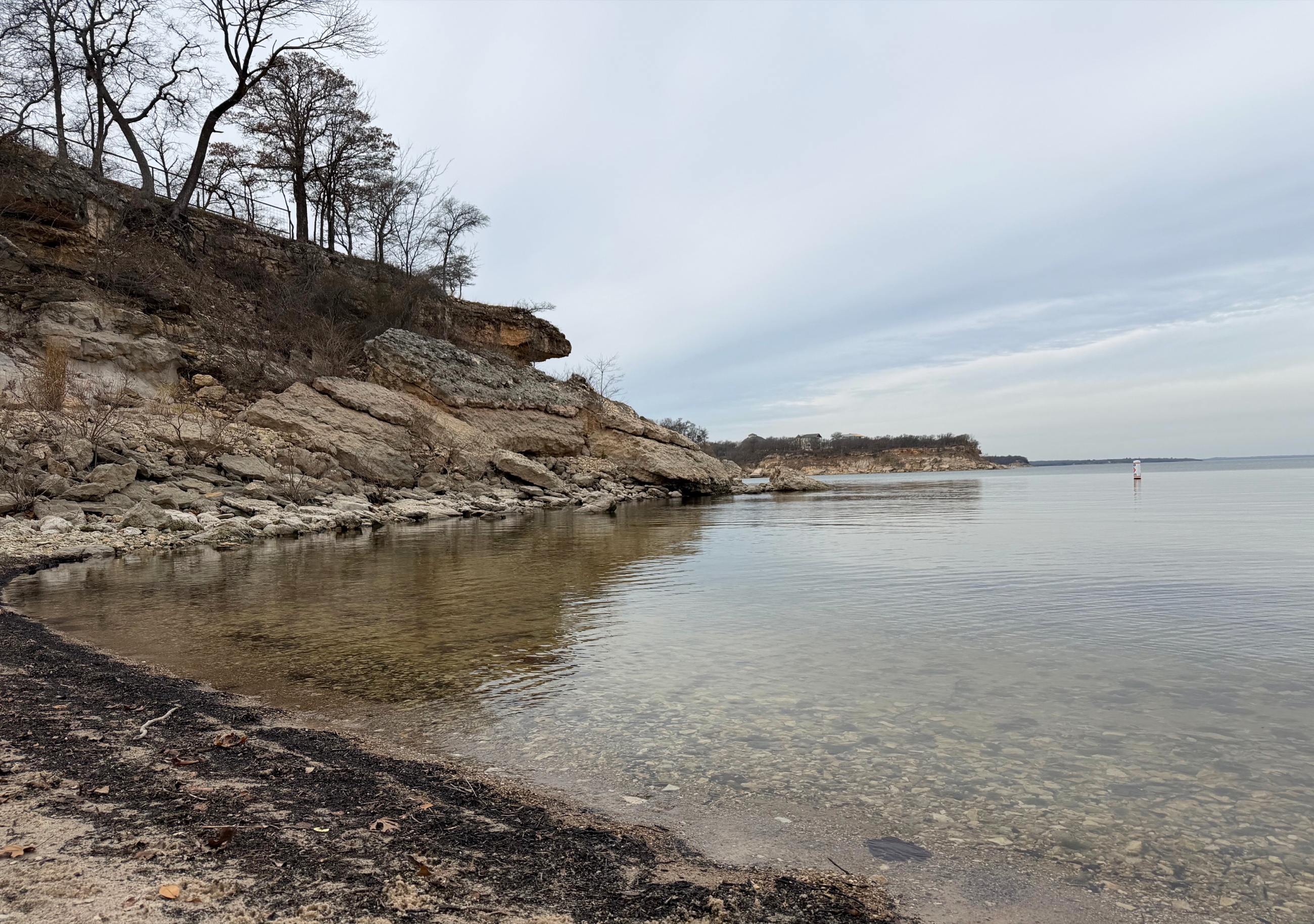 Lake Texoma at Eisenhower State Park. Space that supports momentum.
On the way back, we stopped at Buc-ee’s. The gas price caught our attention first. After months of seeing much higher prices out west, $2.25 a gallon felt almost startling. Buc-ee’s does not attempt subtlety: long rows of pumps, jerky in every possible form, smoked meats, Texas-branded snacks, and enough shirts, hoodies, hats, housewares, mugs, coolers, and travel gear to fill a small warehouse. Scale is the whole idea.
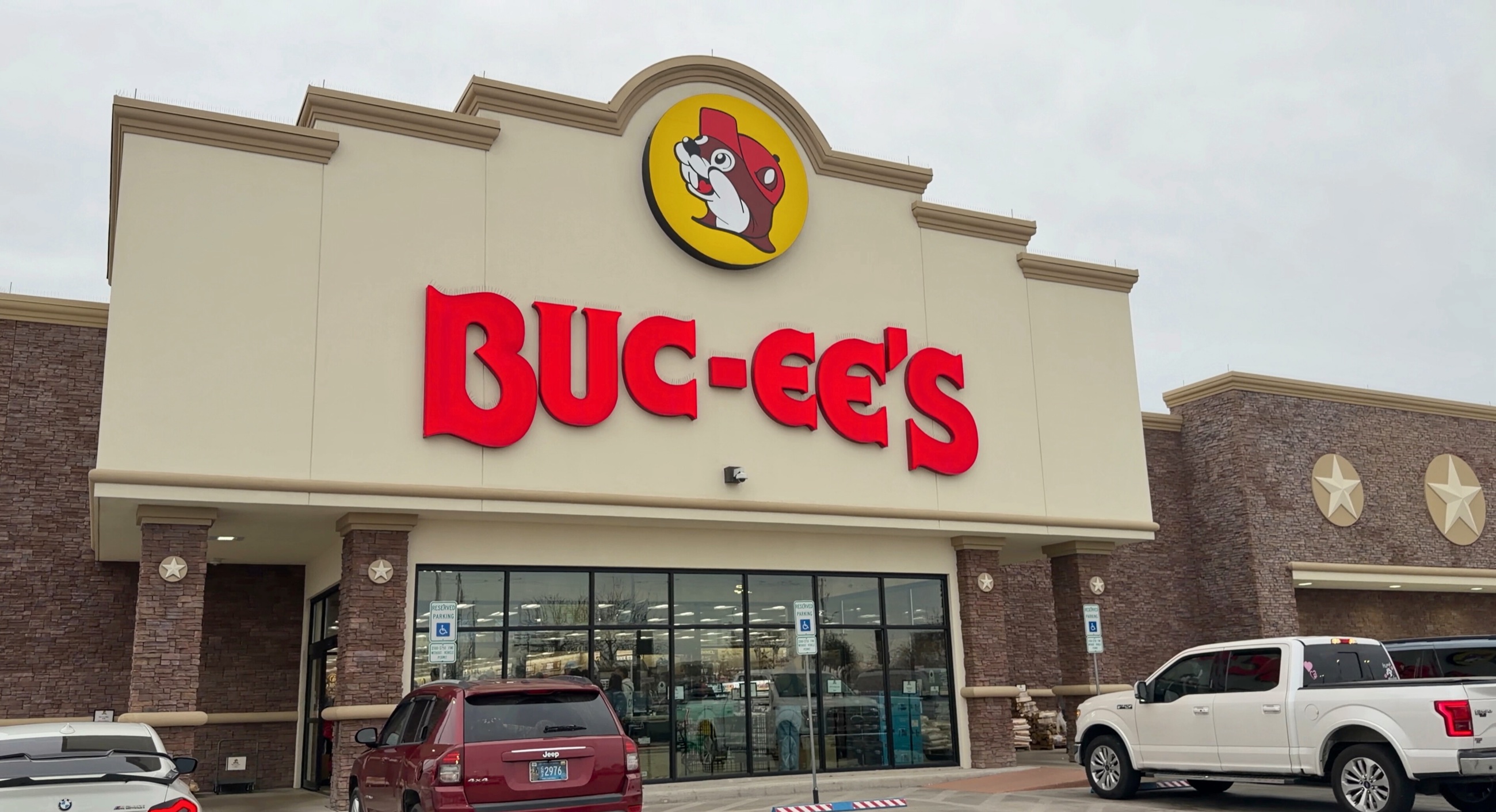 Buc-ee’s. A Texas roadside institution.
The Final Week Stateside
The final week in Dallas gave us a farewell we would not have chosen, and probably needed: ice.
The forecast shifted from caution to warning. Then the same pre-storm rituals began. Grocery carts filled. Shelves thinned. Neighbors and strangers moved with the same understanding that the city was about to be homebound for a while. Roads glazed over. Temperatures dropped toward single digits. Dallas went still.
We stayed in and cooked through most of it: pesto sausage ravioli, Tuscan chicken pasta, a pot of Moroccan chicken that filled the kitchen with cumin and cinnamon. French press coffee most mornings, a movie most nights, and the last preparations finished in the gaps between. Once the roads cleared enough, we re-entered daily life cautiously, using the melt-off window to close the last loops from a coffee shop and finish what needed to be done.
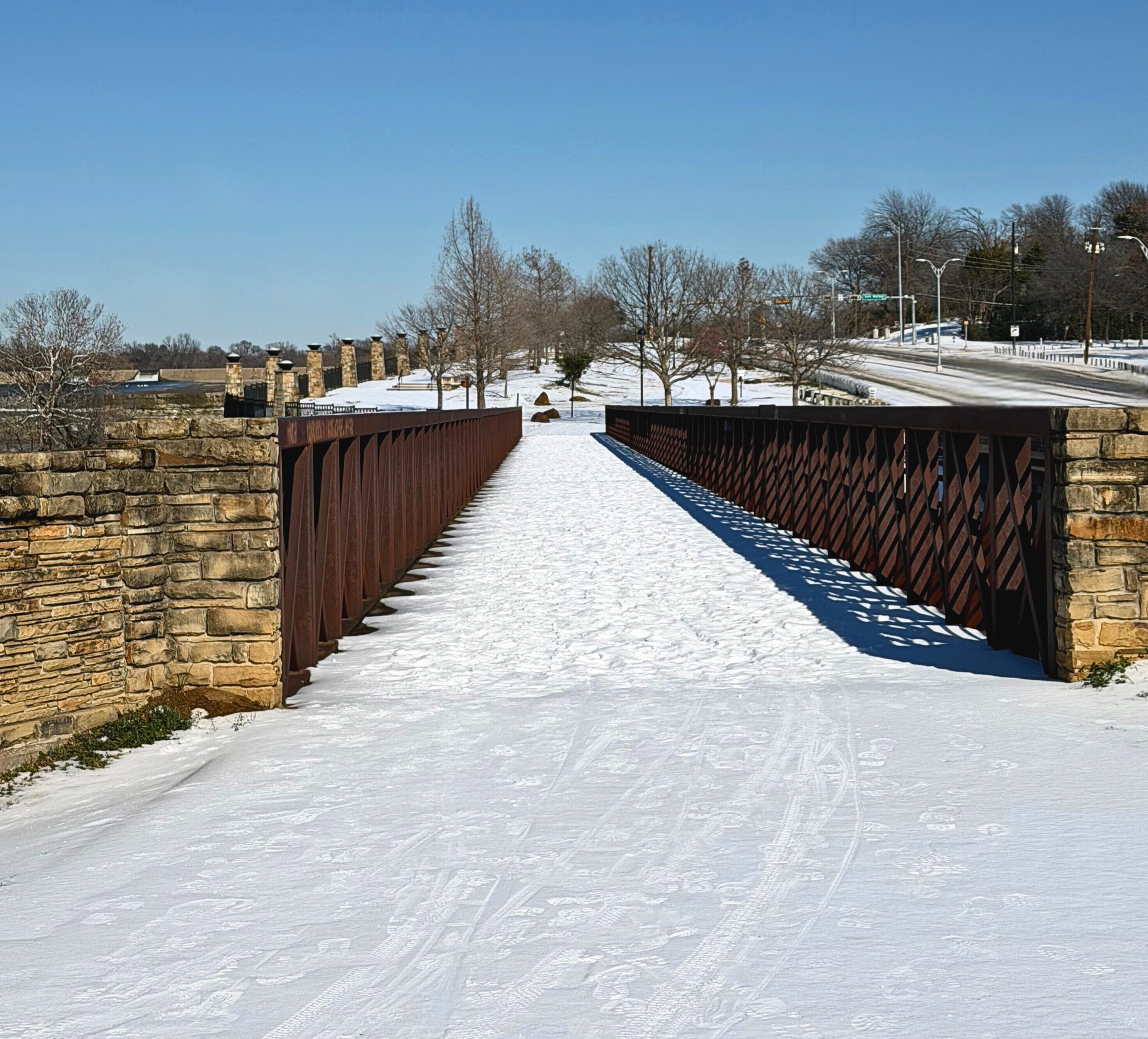 A snowy bridge across the spillway at White Rock Lake.
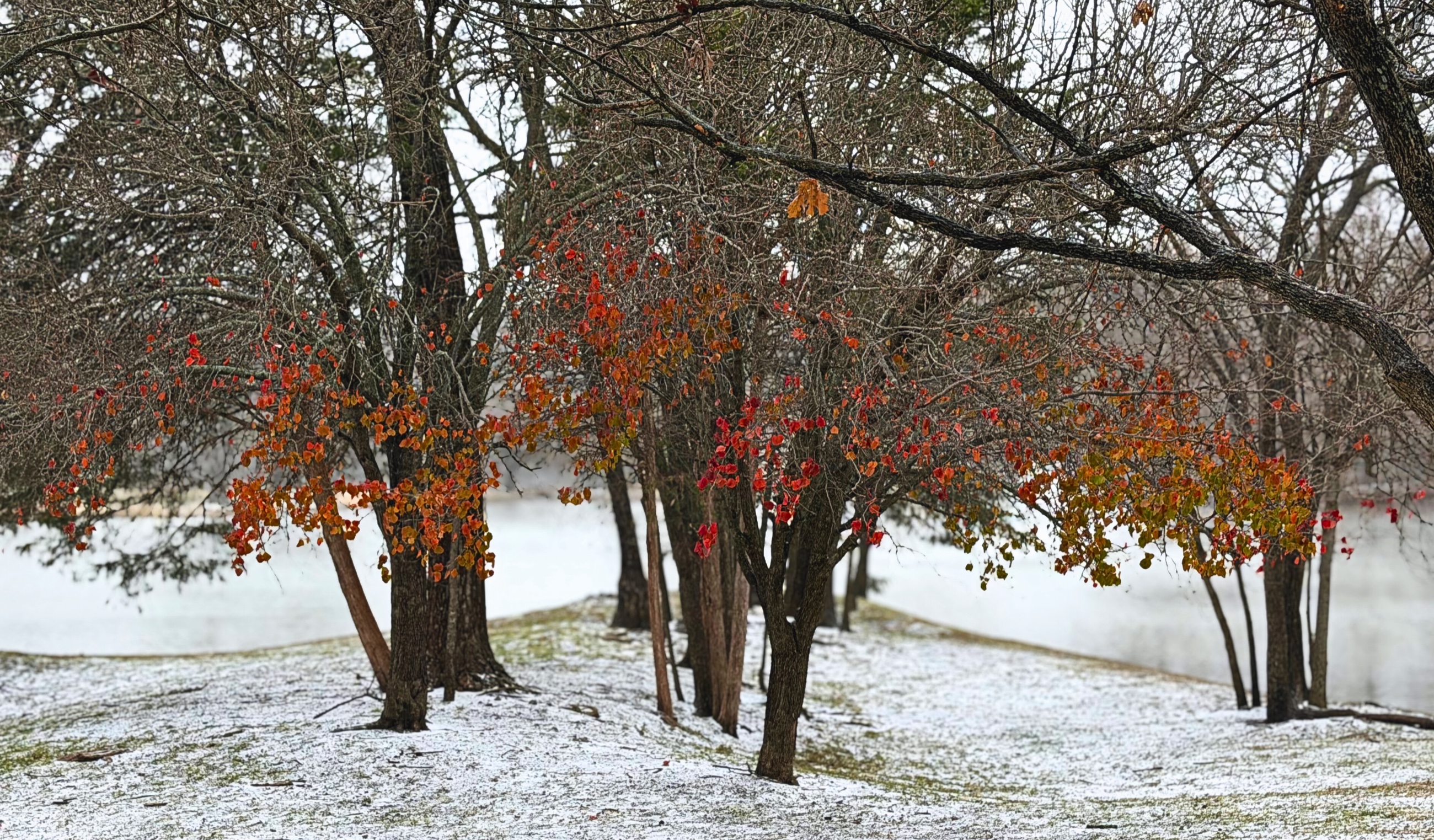 A last flash of color holding on against the snow, by a pond off White Rock Creek.
The storm clarified the difference between vacation and departure. A vacation can begin with a little disorder because return is built into the premise. Departure requires steadier preparation. When you leave for an extended season, you are loosening daily comforts: the streets you know without thinking, the same grocery shelves, voices nearby, the rooms and routes that no longer require orientation.
That week, the travel ahead became more concrete, and more exciting for it. The year runs through Tenerife, Marrakesh, Portugal, Istanbul, North Macedonia, Croatia, Montenegro, Albania, and Thessaloniki in Greece, before six weeks back in the United States that October and a longer stretch beginning in Buenos Aires that December. Twenty-six months. A next stretch of daily life carried somewhere else, structured by groceries and gym schedules and work hours the same as anywhere, but without a return flight already on the calendar.
Familiar Ground, Fresh Attention
Dallas mattered because it remained familiar. Its value came from already being known, from twelve years of memory layered under a few final weeks of attention.
It is tempting to treat the flight as where a journey like this actually begins. That leaves out too much. The real beginning was already underway in Dallas: the family dinners, the wedding, the kids home for the holidays, the routines rebuilt one gym morning at a time, and the steady churn of small preparations most travel stories never bother to show. All of it mattered as much as anything we would go on to photograph.
There is an old word for what came next: sojourner. Someone living temporarily among others, receiving their hospitality, learning the shape of a place without ever mistaking it for home. We hold that posture with real anticipation, not apprehension. Twenty-six months is a great deal to take in, and we mean to approach all of it the way we tried to approach these final weeks in Texas: attentive, grateful, and trusting that the same God who steadied twelve years between Texas and this moment will steady whatever comes next.
We left Dallas carrying more than luggage. We carried the people who had gathered around us all month, the joy of a full house at Christmas, and a clearer sense of purpose than we’d had in years: to work, to live, to observe, and to understand. To hold the extraordinary and the everyday in the same frame. To move through the world with attention, gratitude, and hope.
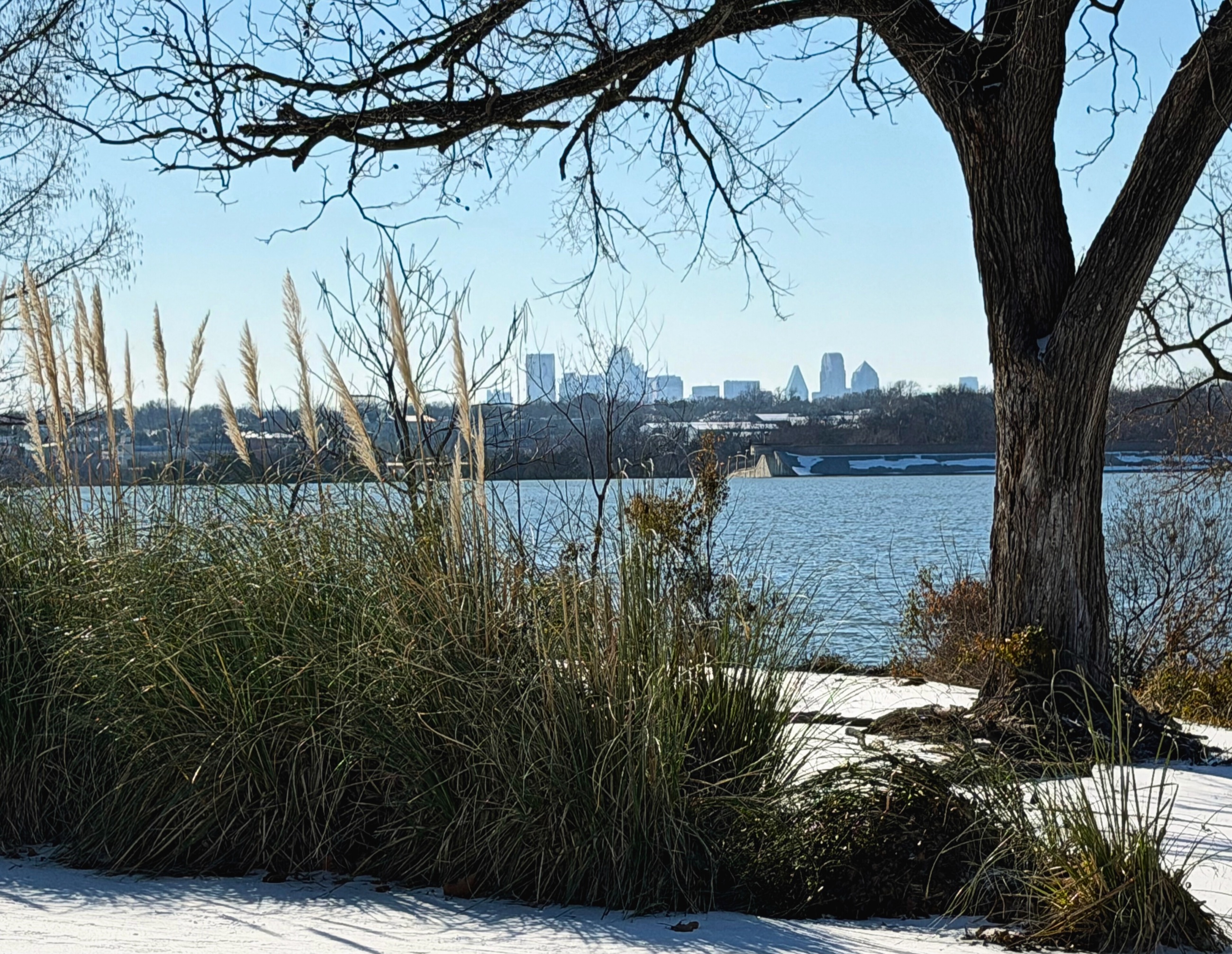 The Dallas skyline across snow and water, as we turn the page.
Practical Notes
- Best framing for this stop: Dallas works here as an origin chapter, not a destination guide. Its value is the combination of family, a wedding, practical preparation, daily routines, and known places before departure.
- Best Dallas cultural pairing: The Dallas Museum of Art, Klyde Warren Park, and the surrounding Arts District make a strong half-day route, especially when timed around free admission.
- Good everyday Dallas loop: Dallas Farmers Market, Deep Ellum, and the AT&T Discovery District pair well for a market, mural, and downtown public-space day.
- Coffee and work stops: White Rock Coffee worked well for a focused work block. Foxtrot on Knox Street was a useful neighborhood coffee stop. Expect roughly $8 to $12 when working from cafés.
- Food worth preserving from this chapter: La 57 Bakery, Palmieri Café, Oak Cliff Coffee Roasters, Fortunate Son, Torchy’s Tacos, Verona Italian Restaurant, Well Grounded Coffee Community, Campisi’s, Meso Maya Downtown, Jimmy’s Italian Food Store, Terry Black’s BBQ, Intrinsic BBQ, and Greenville Avenue Pizza Company all served different parts of the month.
- Gym routine: A $30 no-contract monthly gym membership made the short Dallas reset practical and helped preserve morning structure.
- Texas residency and vehicle setup: Inspection was $18.50, registration was $201, driver’s licenses were $67, and the Subaru car cover for long-term storage was $107.
- Travel systems finalized in Dallas: Google Fi for U.S. number continuity ($44/month), Airalo as backup data, Google Voice for a stable public number, Cigna Global for international health coverage (about $4,000 annually, emergency and catastrophic focus), final Amazon and REI gear orders, and long-stay lodging booked several months ahead.
- Eisenhower State Park day trip: Park entry was $5. Picnic supplies were about $15, trail snacks about $6, and gas roughly $12.50 for a 150-mile round trip at $2.25 per gallon. Total cost was about $38.50 for two.
- Best use of a domestic runway before long travel: Prioritize family time, healthcare, banking, insurance, vehicle storage, communications setup, digital cleanup, gear reduction, and daily routines before the first international base.