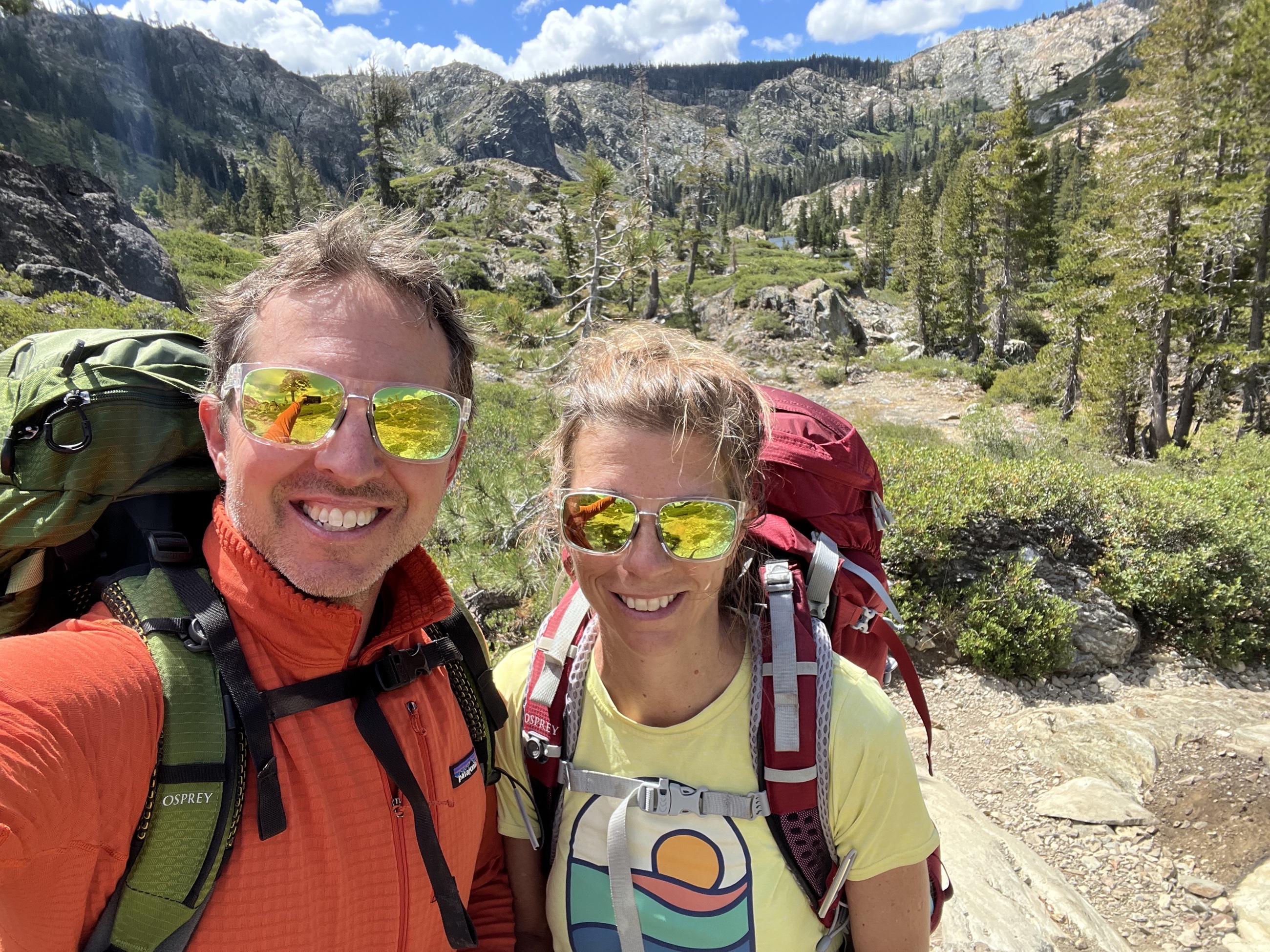
 Trail miles and mountain air, making our way deeper into the Sierra.
Some Great Place began with a long international route on the calendar, but the preparation for that life started closer to home. The American West became a training ground for the habits we would need later: packing deliberately, moving efficiently, accepting changing weather, and learning how much attention each landscape requires.
Lakes Basin gave that preparation a sharper edge. We left the high desert and carried our packs four miles into California’s Lakes Basin Recreation Area, climbing 1,135 feet to Rock Lake at 6,300 feet. The lake sits below granite walls, removed enough from the road to make arrival feel earned. By morning, the surface held the light cleanly, and the acts of filtering water, making coffee, and repacking gear felt like part of the place rather than interruptions to it.
A few days later, the same week moved us from alpine granite to Lake Tahoe’s eastern shore. We watched Twelfth Night at the Lake Tahoe Shakespeare Festival, walked from Hidden Beach to Sand Harbor, and floated in clear August water before the sun dropped behind the western peaks. The distance between Rock Lake and Sand Harbor is not great on a map, but each day required a different kind of preparation: one carried on our backs, the other shaped by the ease of a summer afternoon beside the lake.
Watch the accompanying film: Backpacking the Lost Sierra
Into the Lakes Basin
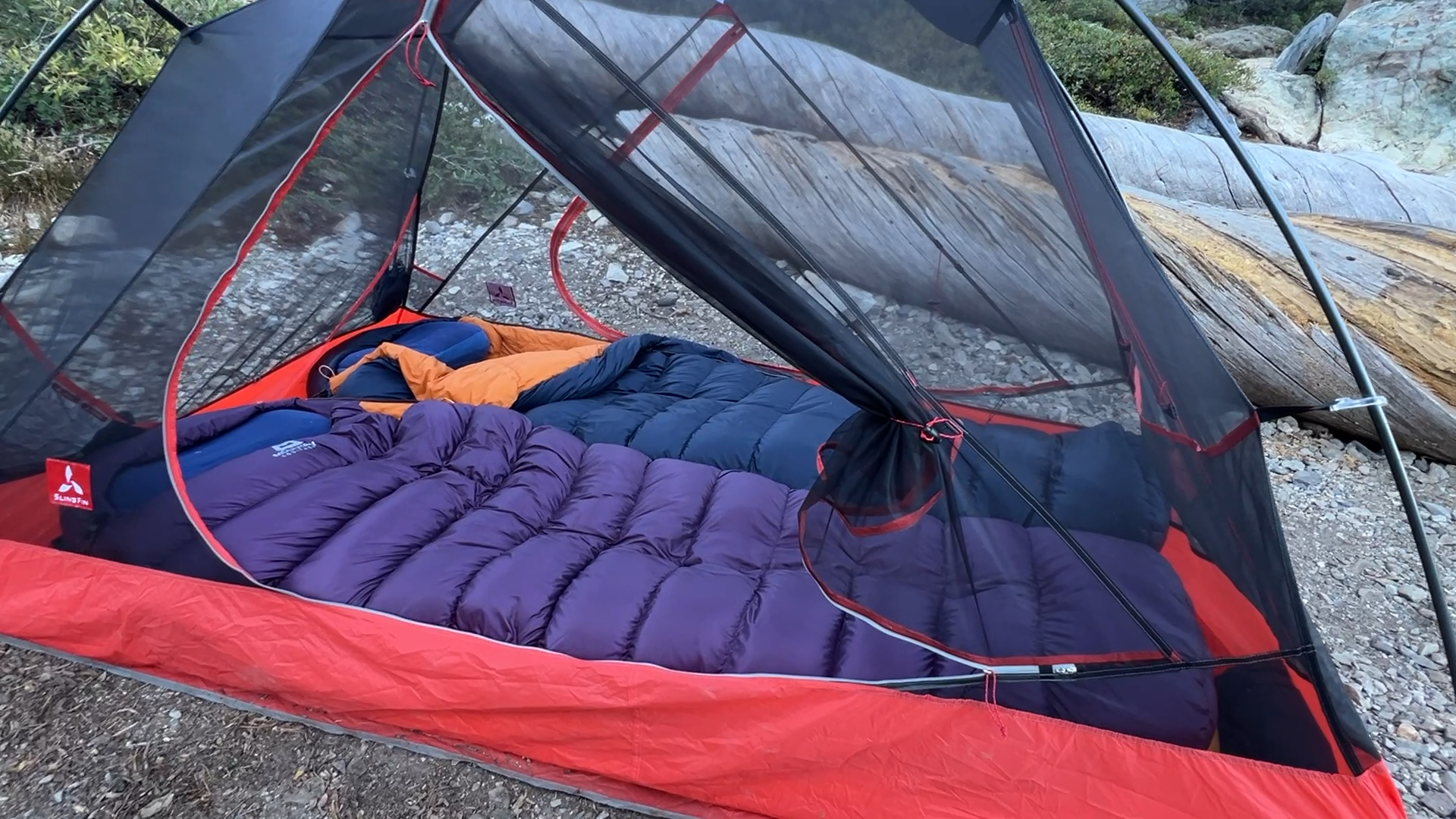 Backpacking setup in the Sierra: light, compact, just enough for rest.
The Lakes Basin Recreation Area sits in California’s northern Sierra, a region often folded into the wider idea of the Lost Sierra. It has the essential forms of the range without the heavier pressure of the better-known national parks: granite shelves, cold water, lodgepole pine, steep approaches, and a network of lakes connected by trails that can feel both accessible and remote.
Our route into Rock Lake was direct enough to manage in an afternoon, but substantial enough to test the full overnight system. Pack weight mattered. So did foot placement, temperature shifts, water planning, and the small decisions that become large when carried uphill. Stephanie’s pack came in around 27 pounds, while Sam’s was around 34 pounds. Those numbers were workable, but they also made every extra item justify itself.
At camp, simplicity became the advantage. The tent, sleep pads, sleeping bags, pillows, stove, water filter, and warm layers all had to earn their space. Even the camera setup had to be modest. We carried a small, lightweight tripod for key shots, which was enough for the kind of filming we could reasonably do while backpacking.
Around Mount Elwell
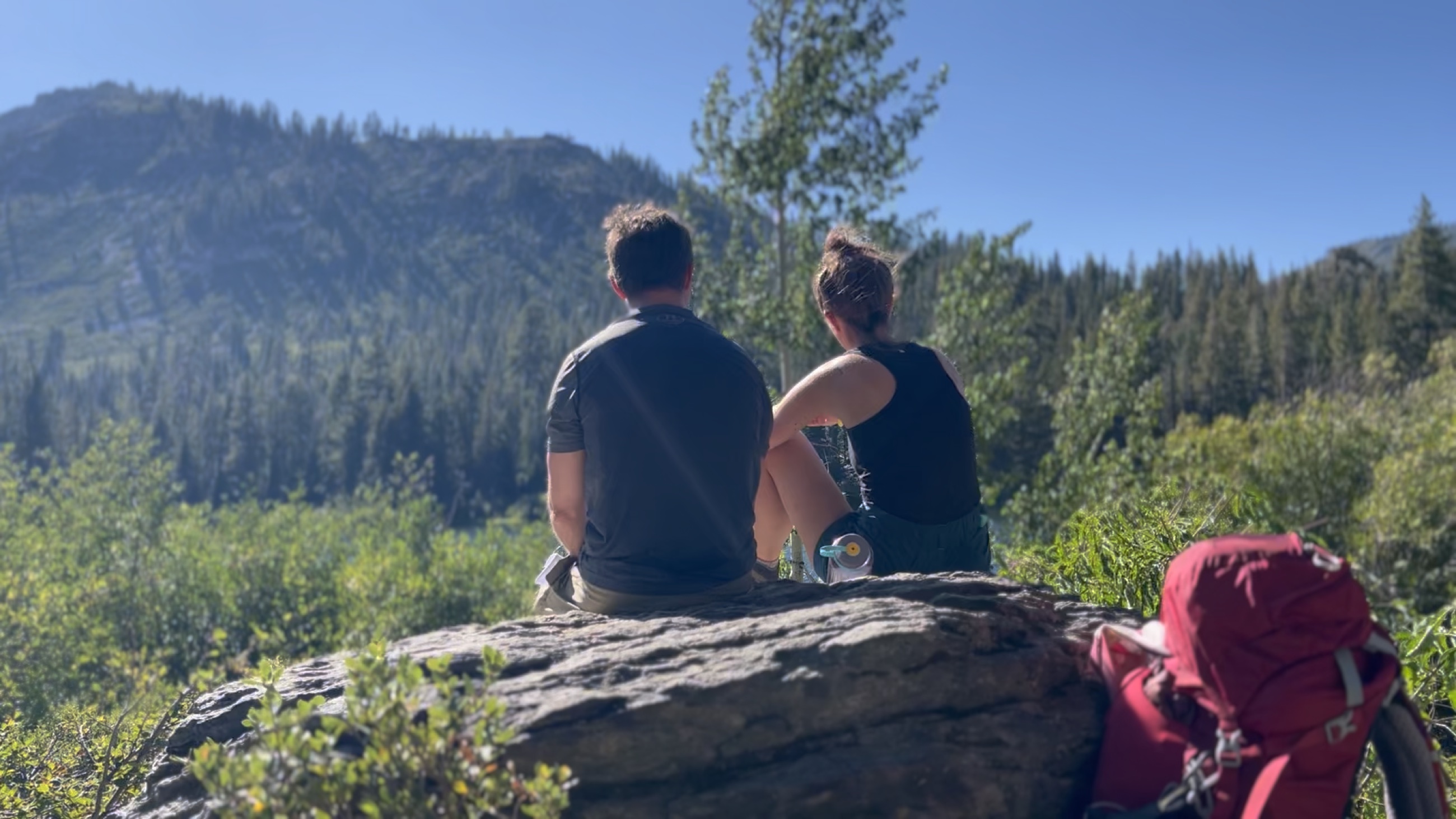 Lunch overlooking Grass Lake.
Day two became the longest single hike of the season: 14.6 miles around Mount Elwell with day packs only. The route included a section of the Pacific Crest Trail and moved past a sequence of alpine lakes: Grass Lake, Wades Lake, Rock Lake, Jamison Lake, Smith Lake, and Long Lake.
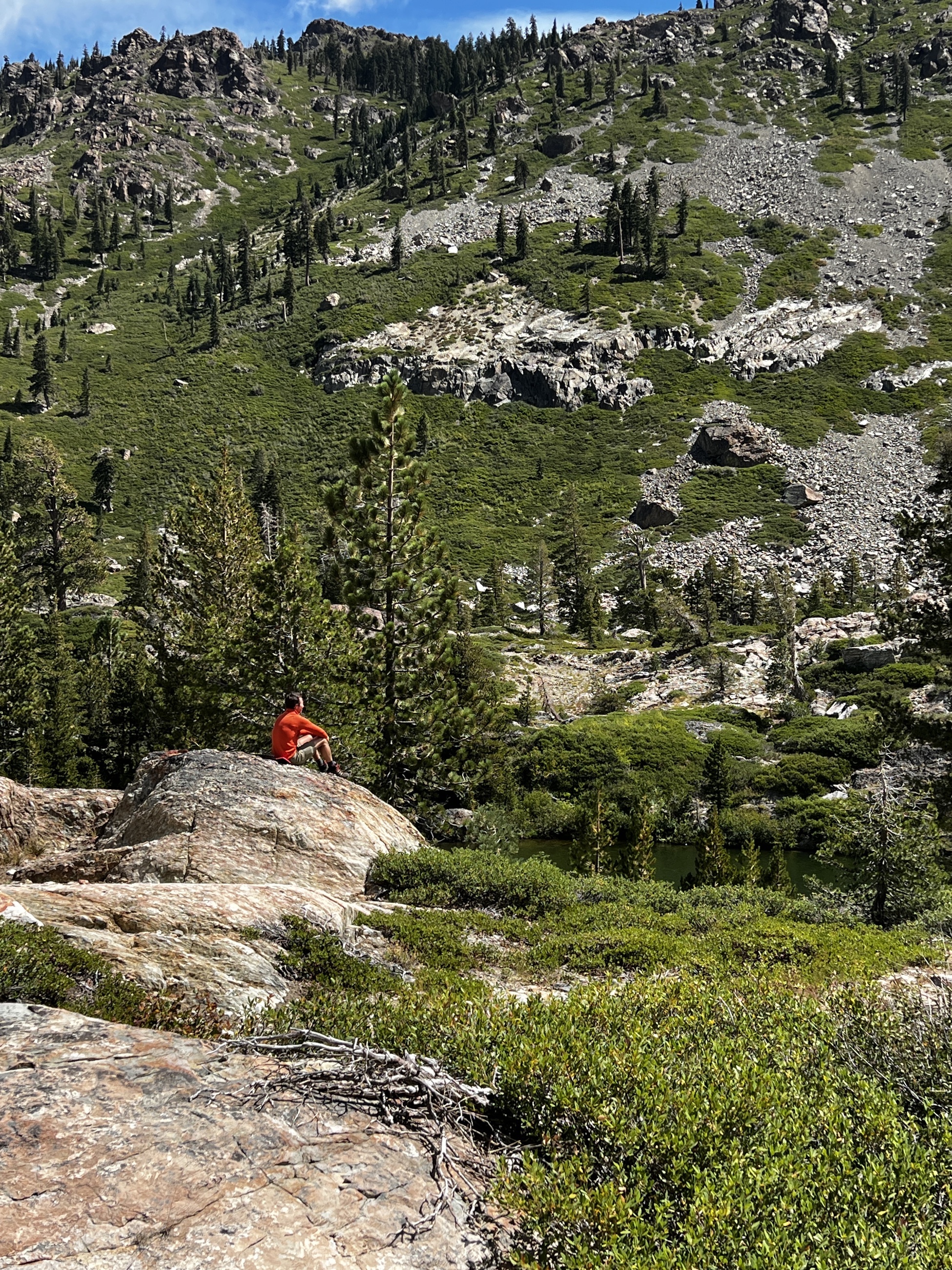 A pause among granite, timber, and high country below Mount Elwell.
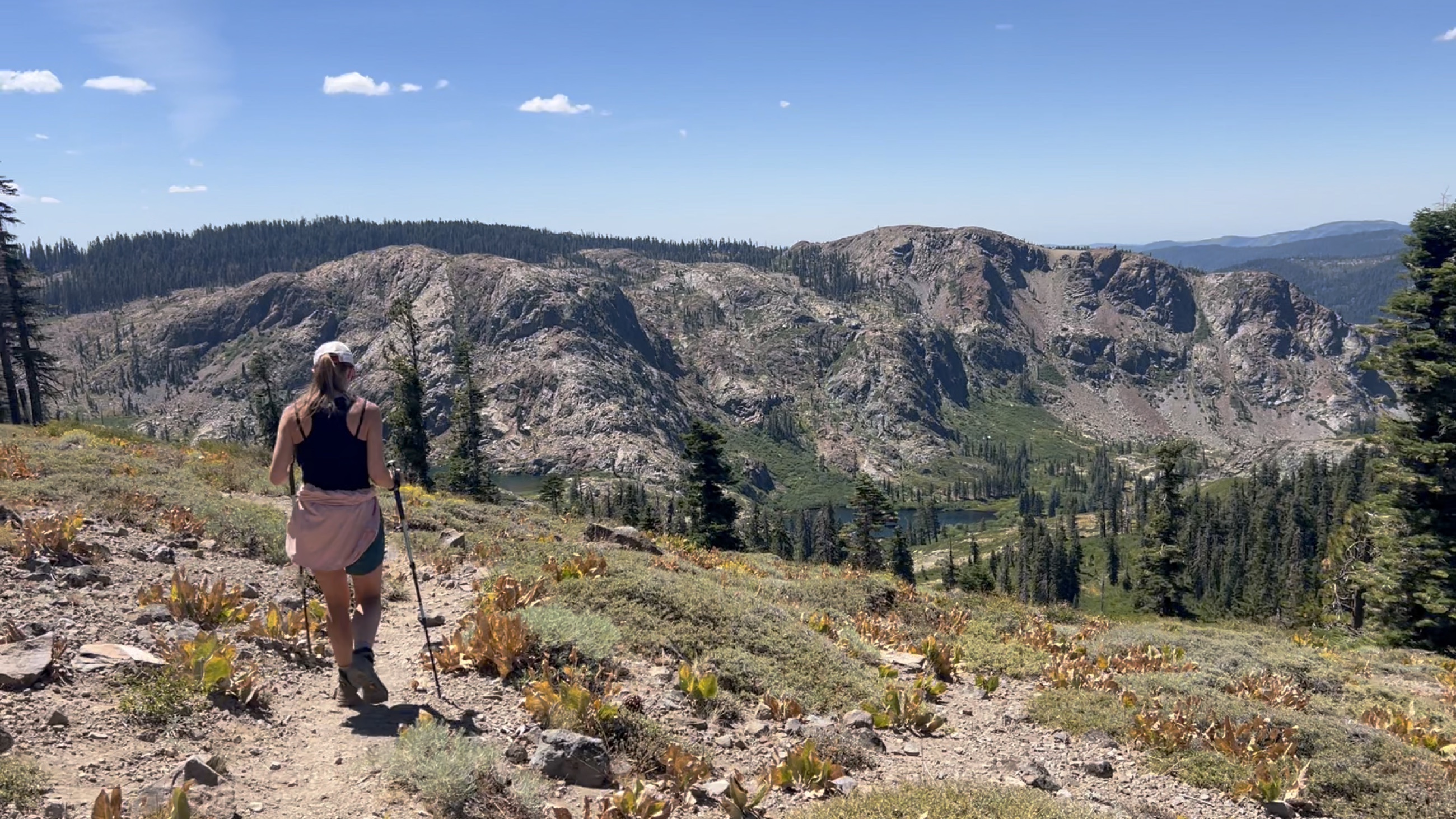 Following a stretch of the Pacific Crest Trail across high country.
The day had the plain discipline of mountain travel. No single section was especially complicated, but the total distance required steady pacing, adequate food, careful water use, and the willingness to keep moving after each lake made stopping appealing. The country revealed itself in intervals rather than grand gestures: a granite passage, a shaded descent, a blue basin opening below, a stretch of trail that seemed to hold the whole afternoon in place.
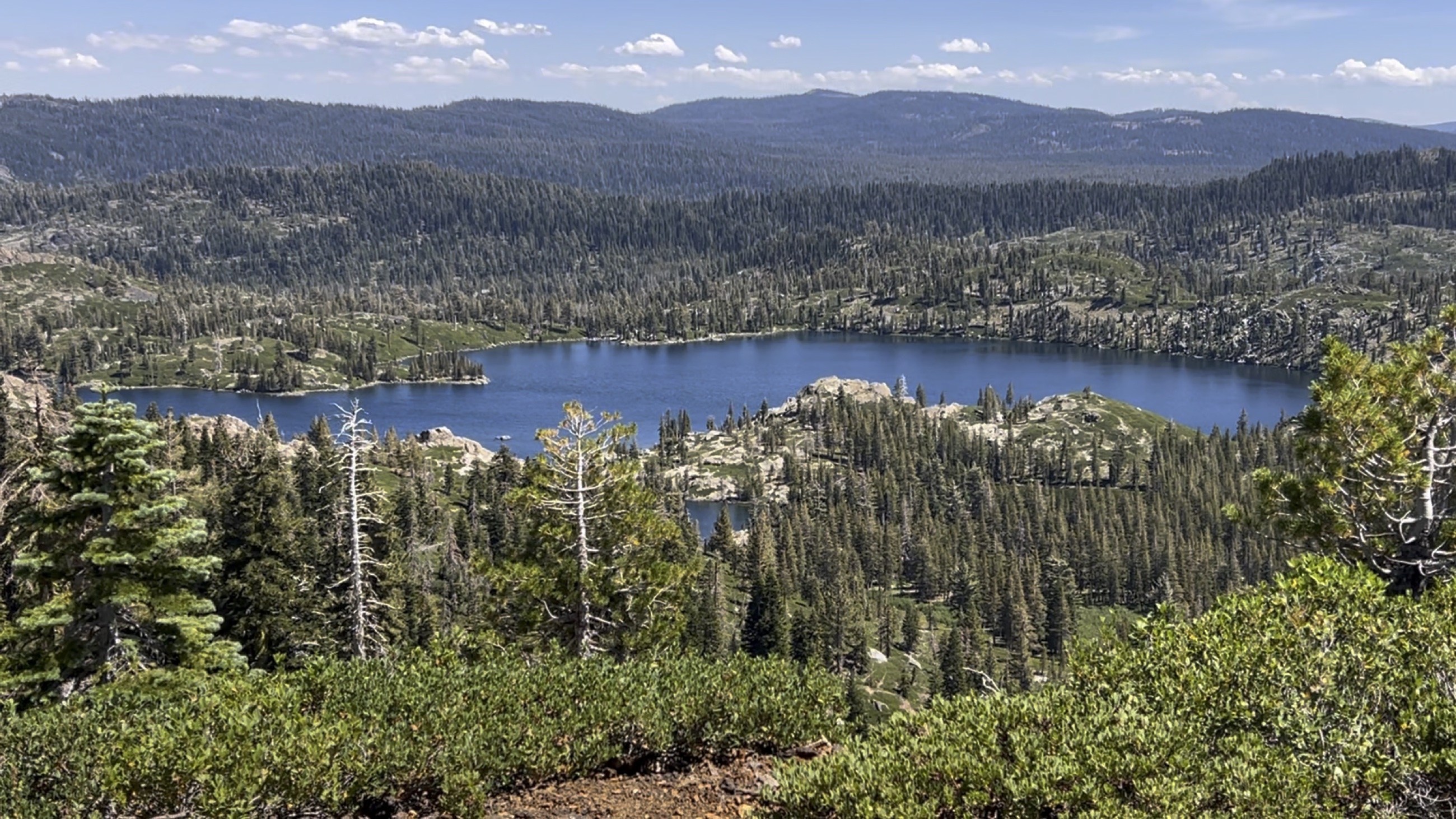 Looking down on Long Lake, one of many alpine lakes along the trail.
We took cold plunges at Rock Lake and Long Lake, swimming long enough to feel the shock of the water and the relief that follows. Mountain lake swimming has a way of reducing the body to basics: breath, skin, sun, and the quick calculation of how long is enough.
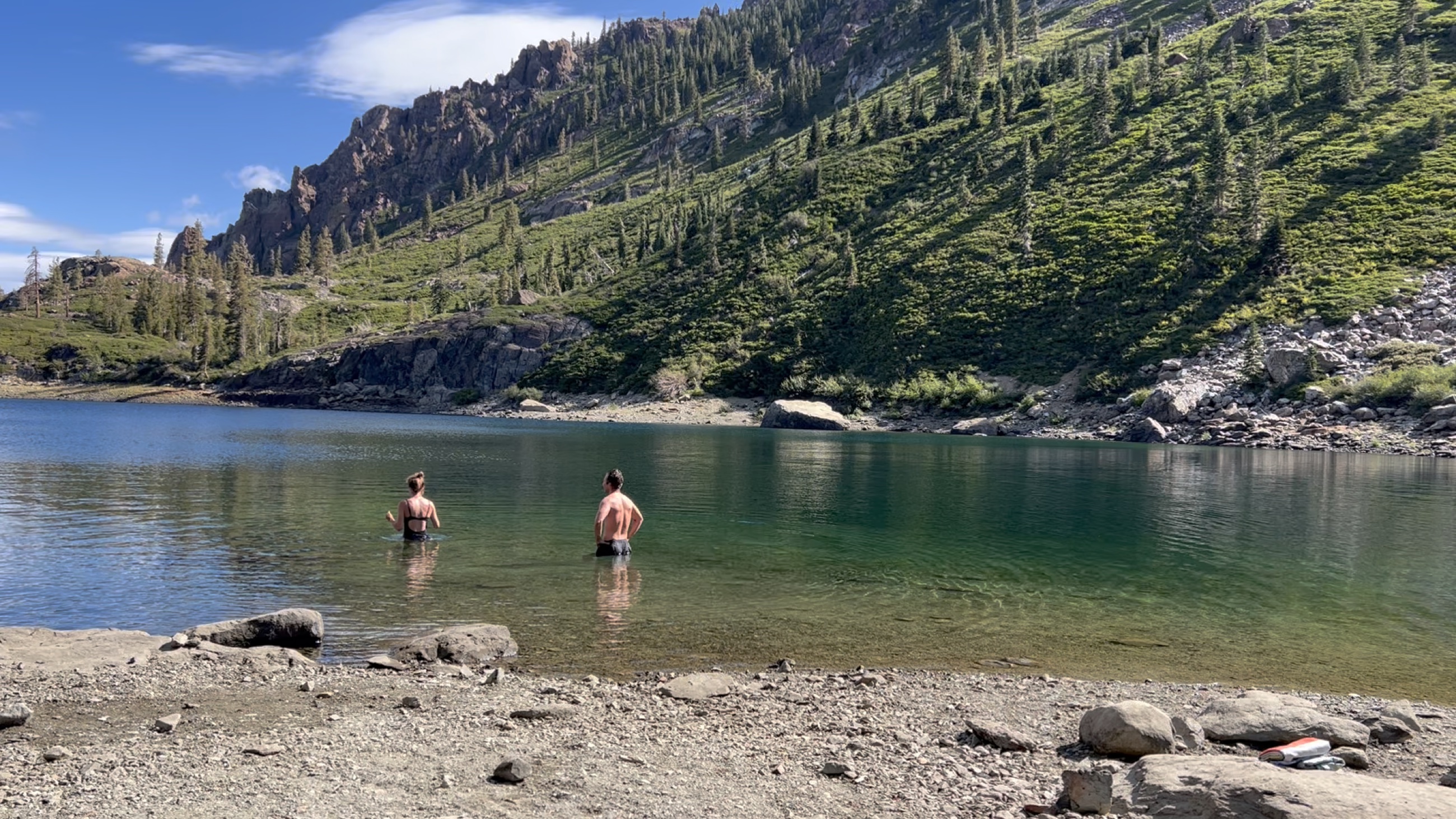 Refreshing cold plunge at Rock Lake.
Backcountry food worked the same way. Freeze-dried meals became satisfying because they followed effort. Instant coffee tasted better because it was hot, simple, and held over a lake in the morning air. Effort supplied the seasoning. Freeze-dried meals and instant coffee needed nothing more than a long day behind them.
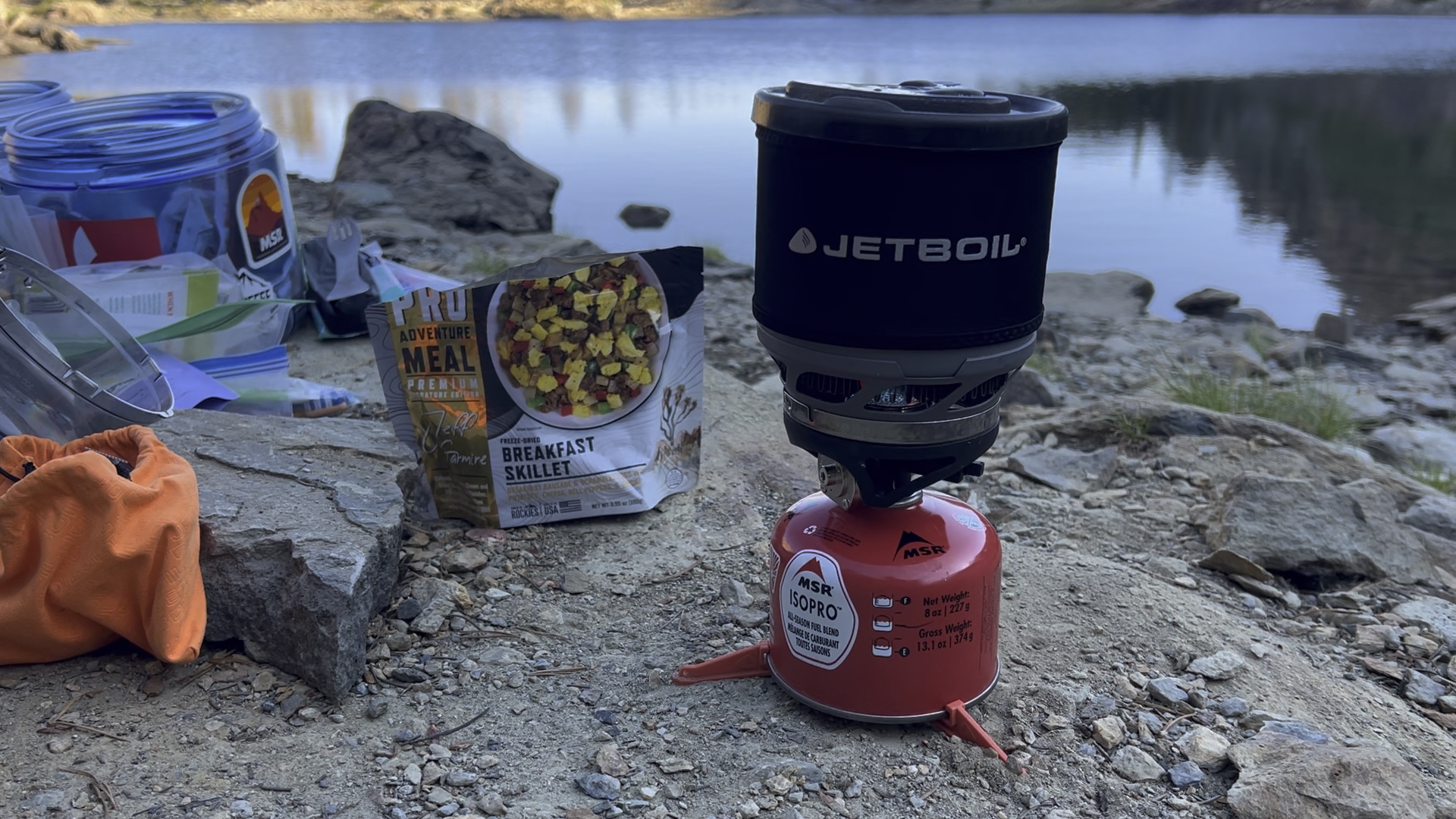 Breakfast beside Rock Lake, where simple food made sense after the miles.
Sand Harbor After the Trail
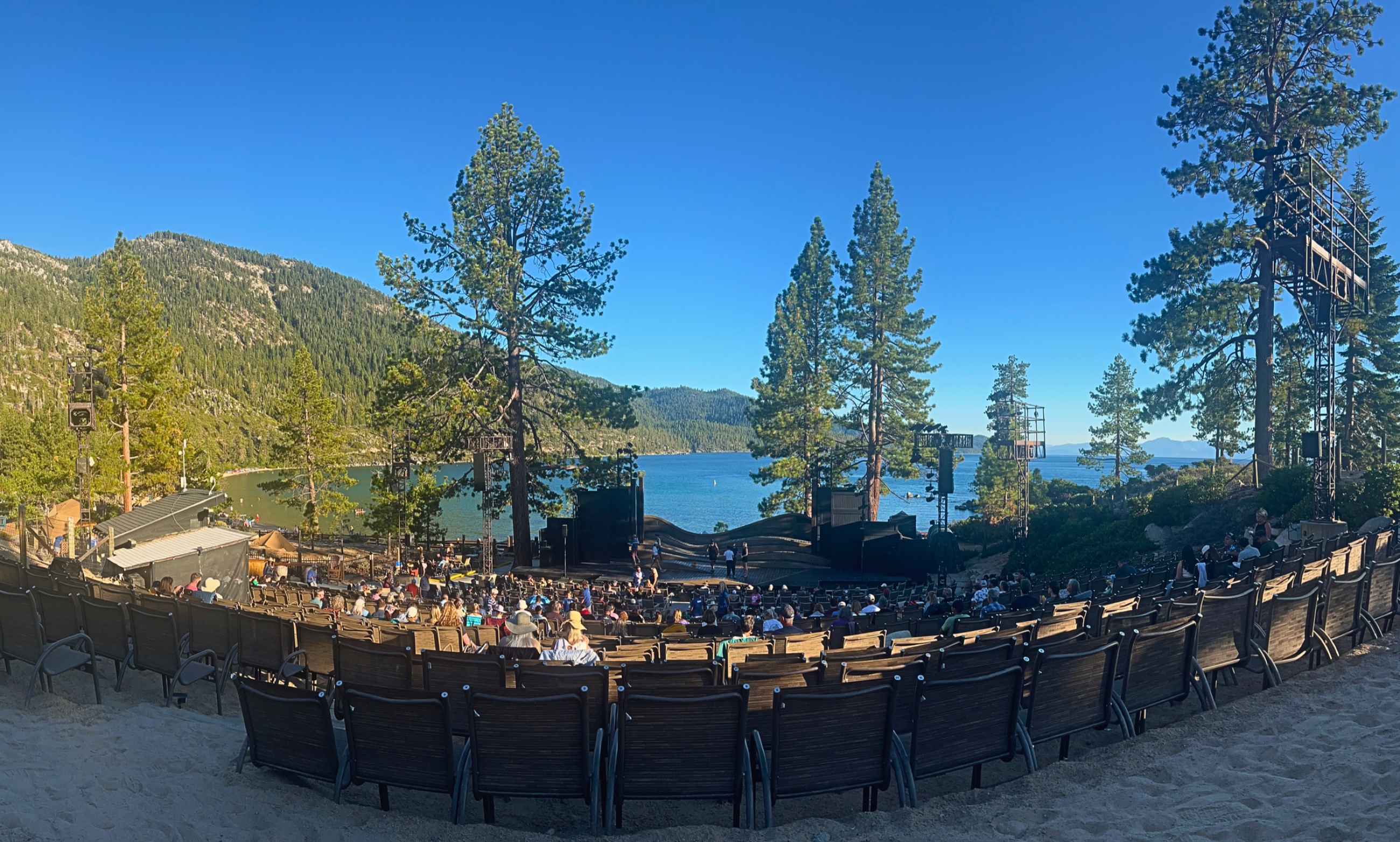 Shakespeare on the shore of Lake Tahoe.
After the Lakes Basin trip, we returned to Reno and spent part of the week at Lake Tahoe. The Lake Tahoe Shakespeare Festival at Sand Harbor offered a different kind of outdoor experience: theater by the water, evening air, and the Sierra Nevada turning slowly darker behind the stage.
The production was Twelfth Night, which suited the setting better than expected. Comedy travels well outdoors when the audience is relaxed and the light is doing half the work. Tahoe can easily be reduced to scenery, but that evening showed how a major landscape can also hold civic life: people arriving with blankets, finding seats, eating before the show, and watching a familiar play in an unusually beautiful place.
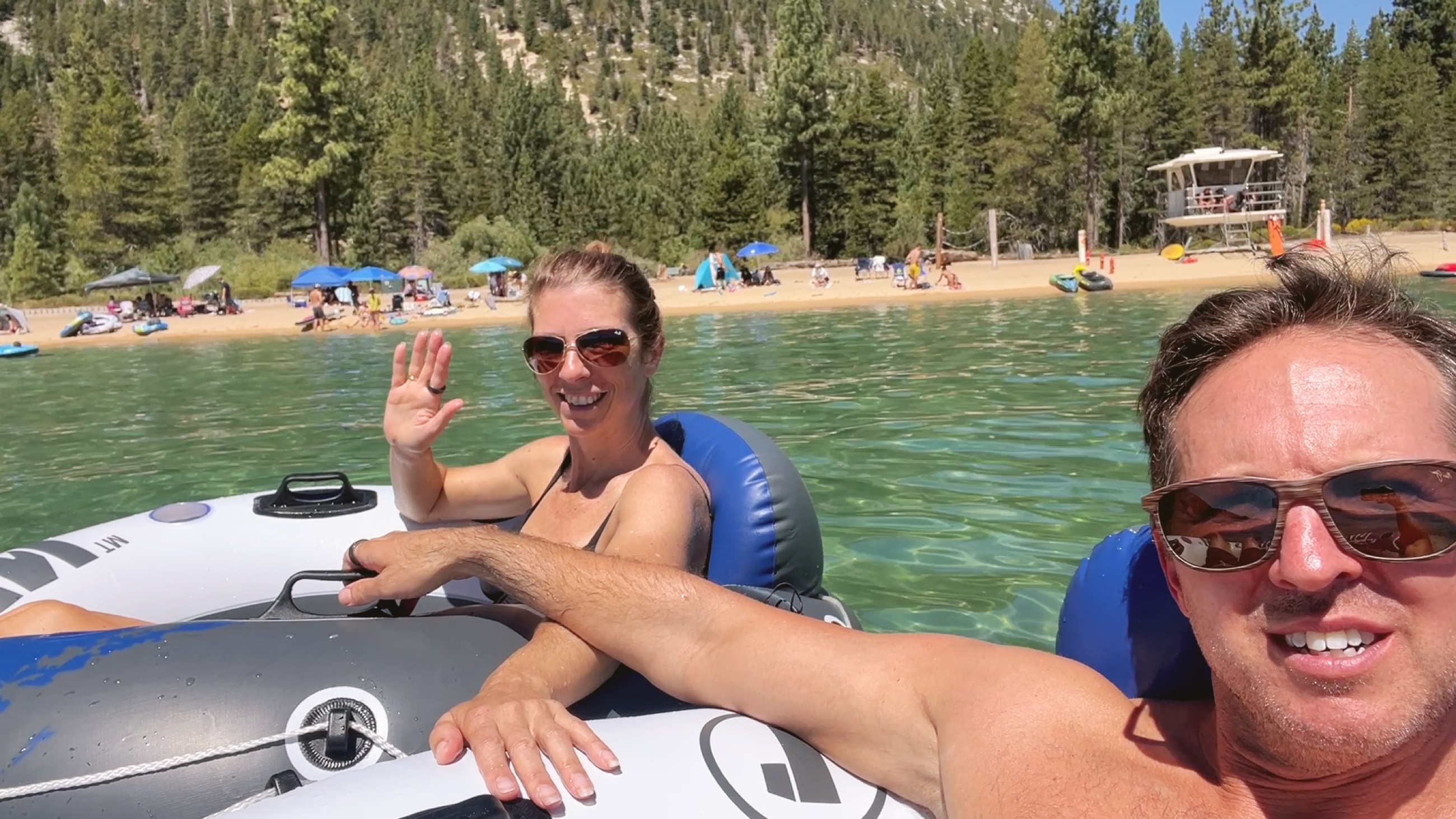 A summer afternoon afloat on Tahoe’s clear water.
We also walked the Tahoe East Shore Trail from Hidden Beach toward Sand Harbor. The path follows the shoreline for a couple of miles, with clear water below and boulders catching the late-day sun. After the mileage of Lakes Basin, the walk felt almost effortless. We floated in the blue water during the afternoon, then stayed long enough to feel the day change as the sun slipped behind the western peaks.
What the Mountains Made Plain
Regional travel has a way of exposing weak assumptions. Nevada’s desert had taught us shade, dust, and heat management. The Sierra added layers, cold water, shoulder-season sleep systems, and respect for elevation. Even within a few hours of home, each place required a different arrangement of gear, pace, and attention.
That was the larger lesson of the week. The real test of travel preparation happens under real conditions: whether we can adjust without drama when something fails. A stalled water filter matters more beside a lake than it does in a gear list. A 20-degree sleeping bag proves its usefulness when temperatures drop after sunset. A lighter tripod becomes valuable when every ounce has already been carried uphill.
The same principle would eventually carry into longer travel abroad. A place becomes more intelligible when we arrive prepared enough to pay attention. Lakes Basin and Tahoe were close to home, but they helped clarify the kind of movement we were trying to practice: deliberate, observant, and responsive to the demands of the ground underfoot.
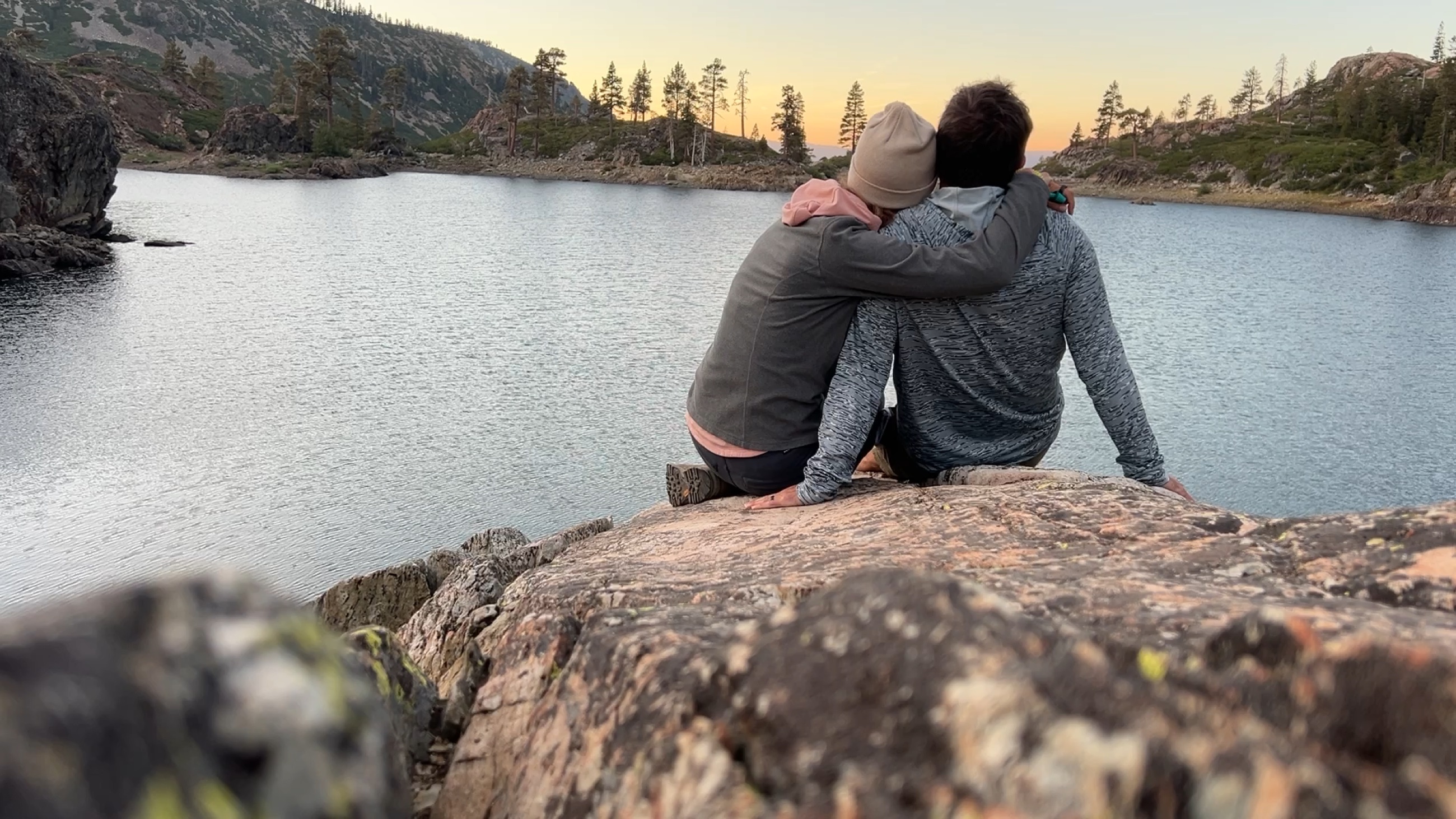 Evening light from the rocks above Rock Lake.
Practical Notes
- Route: We backpacked about four miles into Rock Lake in California’s Lakes Basin Recreation Area, with roughly 1,135 feet of elevation gain.
- Camp elevation: Rock Lake sits around 6,300 feet, high enough for cooler overnight temperatures even in summer.
- Longest hiking day: The Mount Elwell loop was about 14.6 miles with day packs and included a section of the Pacific Crest Trail.
- Lakes along the route: Grass Lake, Wades Lake, Rock Lake, Jamison Lake, Smith Lake, and Long Lake.
- Pack weights: Stephanie carried about 27 pounds. Sam carried about 34 pounds.
- Sleep system: A 20-degree sleeping bag setup was useful for the overnight conditions at Rock Lake.
- Water filtration: Our Platypus GravityWorks system stalled and needed a full backflush. A Katadyn BeFree bottle worked as the backup. Test water systems before each trip.
- Food: Simple freeze-dried meals and instant coffee were enough for the backcountry portion. The effort did much of the seasoning.
- Tahoe add-on: The Tahoe East Shore Trail from Hidden Beach toward Sand Harbor is an easy and scenic way to pair walking with swimming.
- Cultural stop: The Lake Tahoe Shakespeare Festival at Sand Harbor is a strong late-summer pairing of theater and landscape.