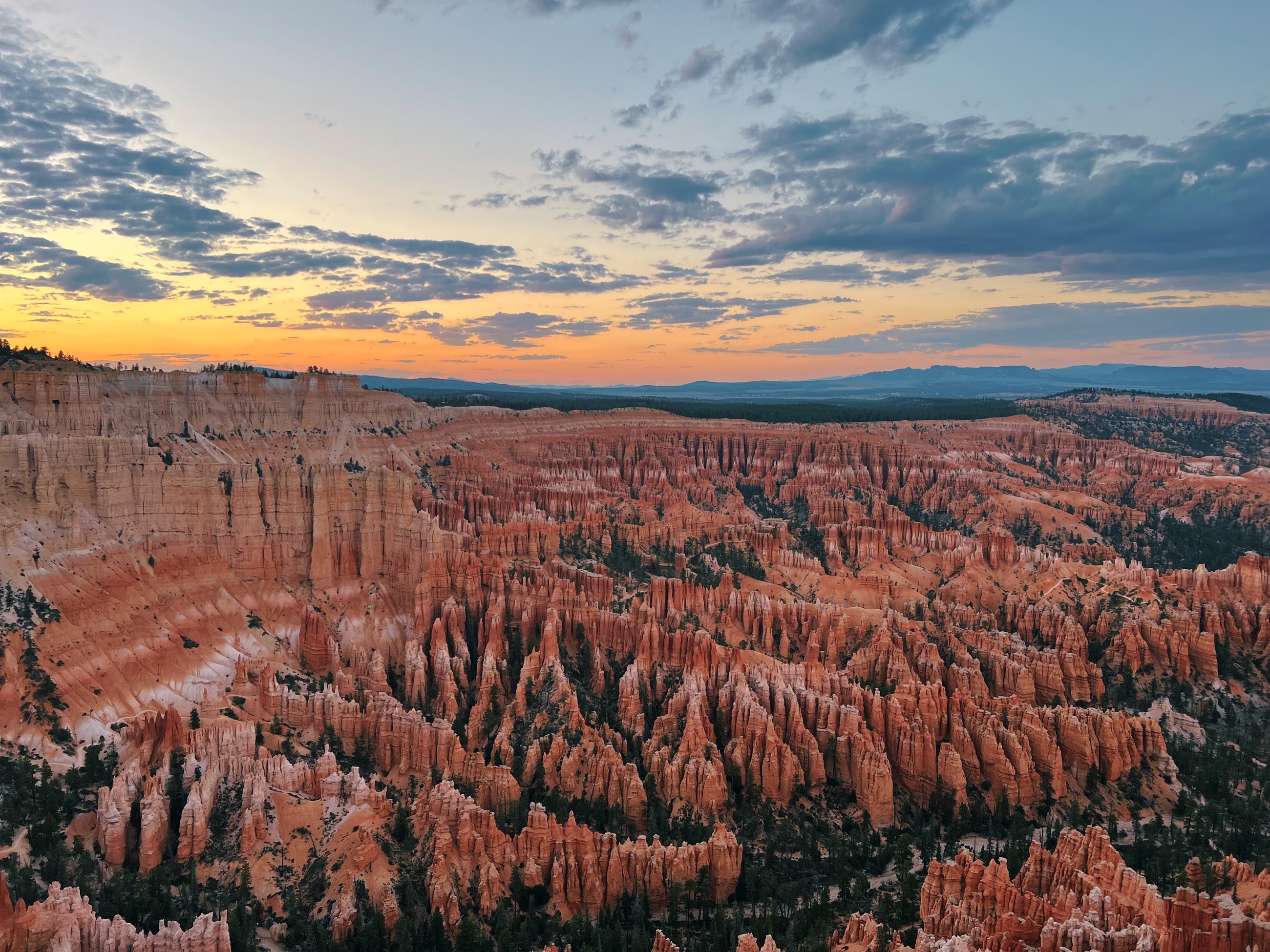
 Sunset over the amphitheater at Bryce Point.
Some Great Place began with a long international route on the calendar, but the preparation for that life started in the American West. Zion had given us river miles, heat, sandstone walls, and the discipline of early starts. Bryce Canyon changed the terms almost immediately.
The park sits high on the Paunsaugunt Plateau, where elevation, cold nights, and eroding limestone create a different kind of desert experience. Instead of Zion’s enclosed canyons, Bryce opened into a carved amphitheater of hoodoos, fins, windows, and narrow passages. The forms were smaller in scale than Zion’s walls, but more intricate.
We arrived after the drive from Zion, set up camp outside the park, watched sunset from Bryce Point, woke later under dark skies, and returned before dawn for Sunrise Point and breakfast along the rim. By afternoon, we were below the edge, walking the Queen’s Garden and Navajo Loop through the amphitheater itself.
Watch the accompanying film: Bryce Canyon: Hoodoos, Dark Skies, and Dawn Light
Bryce Point at Sunset
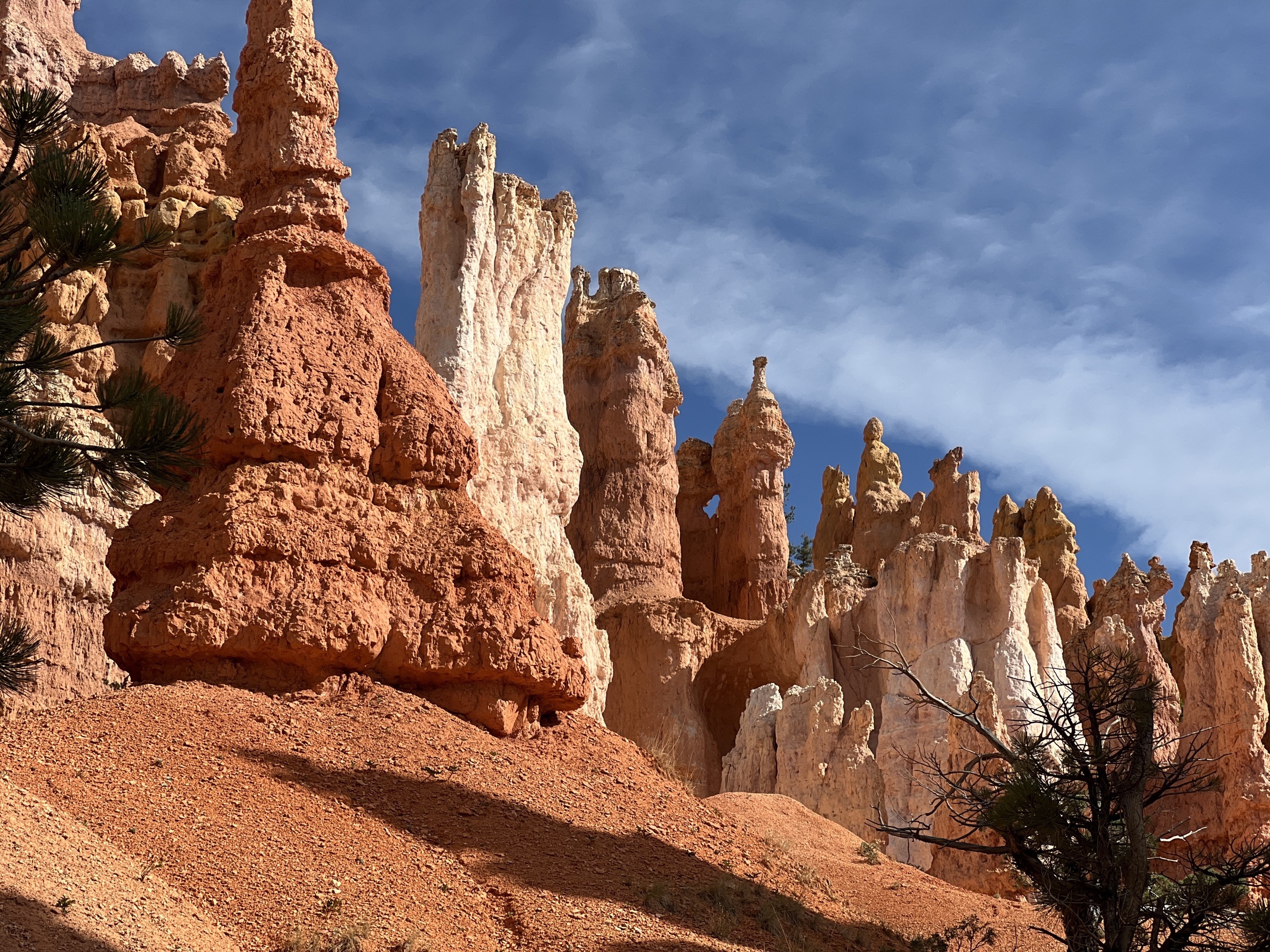 Hoodoos in the amphitheater.
Bryce Point was the first real encounter with the amphitheater. From the overlook, the land falls away into rows of limestone spires, with bands of orange, cream, and pink shifting as the sun lowers. The view is broad, but the eye keeps moving toward the individual forms: towers, walls, slopes, notches, and narrow spaces where shadow collects.
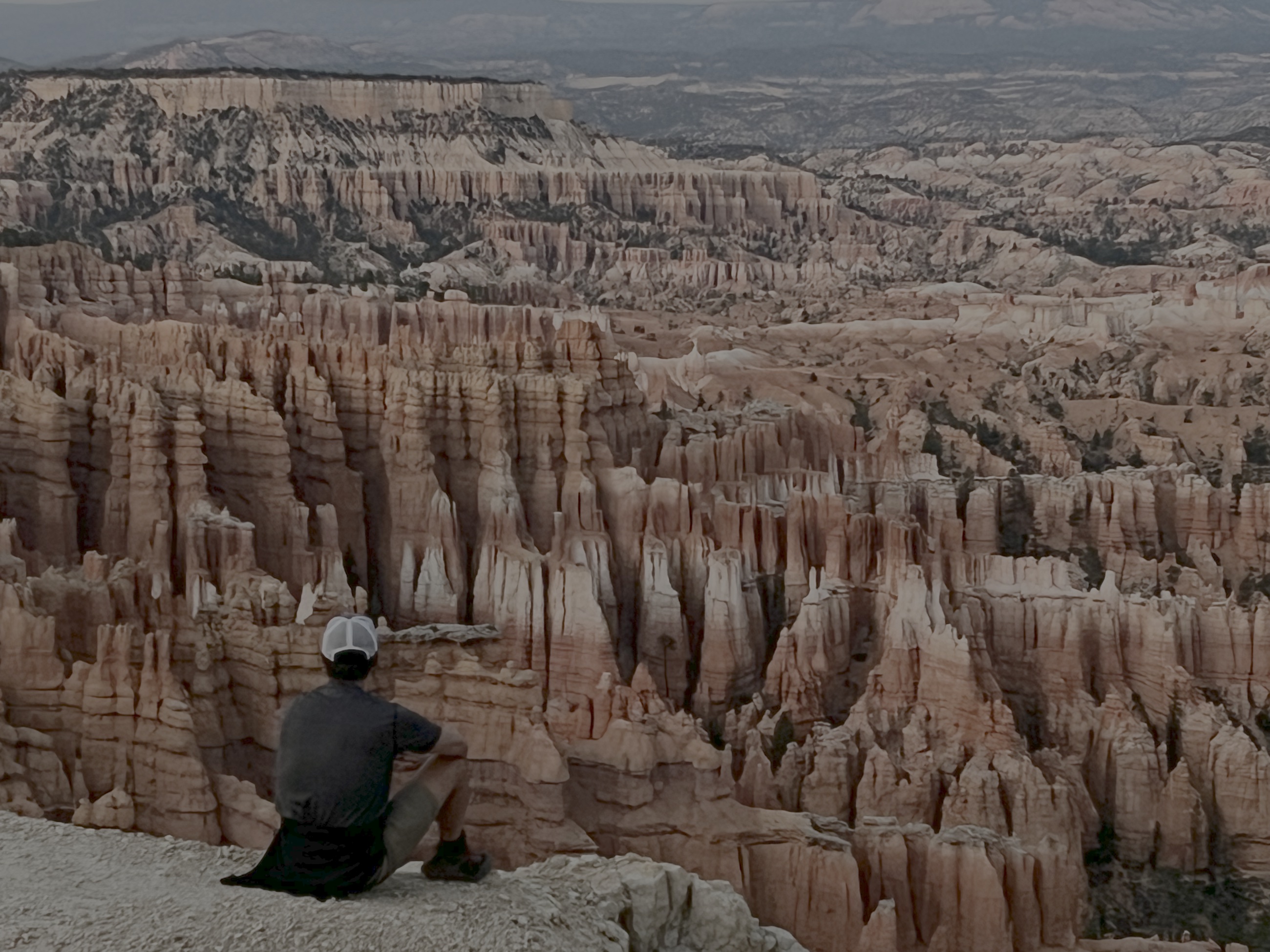 Taking in the amphitheater from the rim, where the hoodoos seem to continue farther than the eye can settle.
The common language around Bryce often turns quickly to fantasy. That is understandable, but the better impression may be architectural. The hoodoos stand like columns and buttresses, formed by frost, water, and time rather than design. At sunset, the effect is less like spectacle than illumination. The same forms that look pale and almost brittle at midday deepen into stronger color, then slowly lose their edges as the light leaves the amphitheater.
Camp Above 8,000 Feet
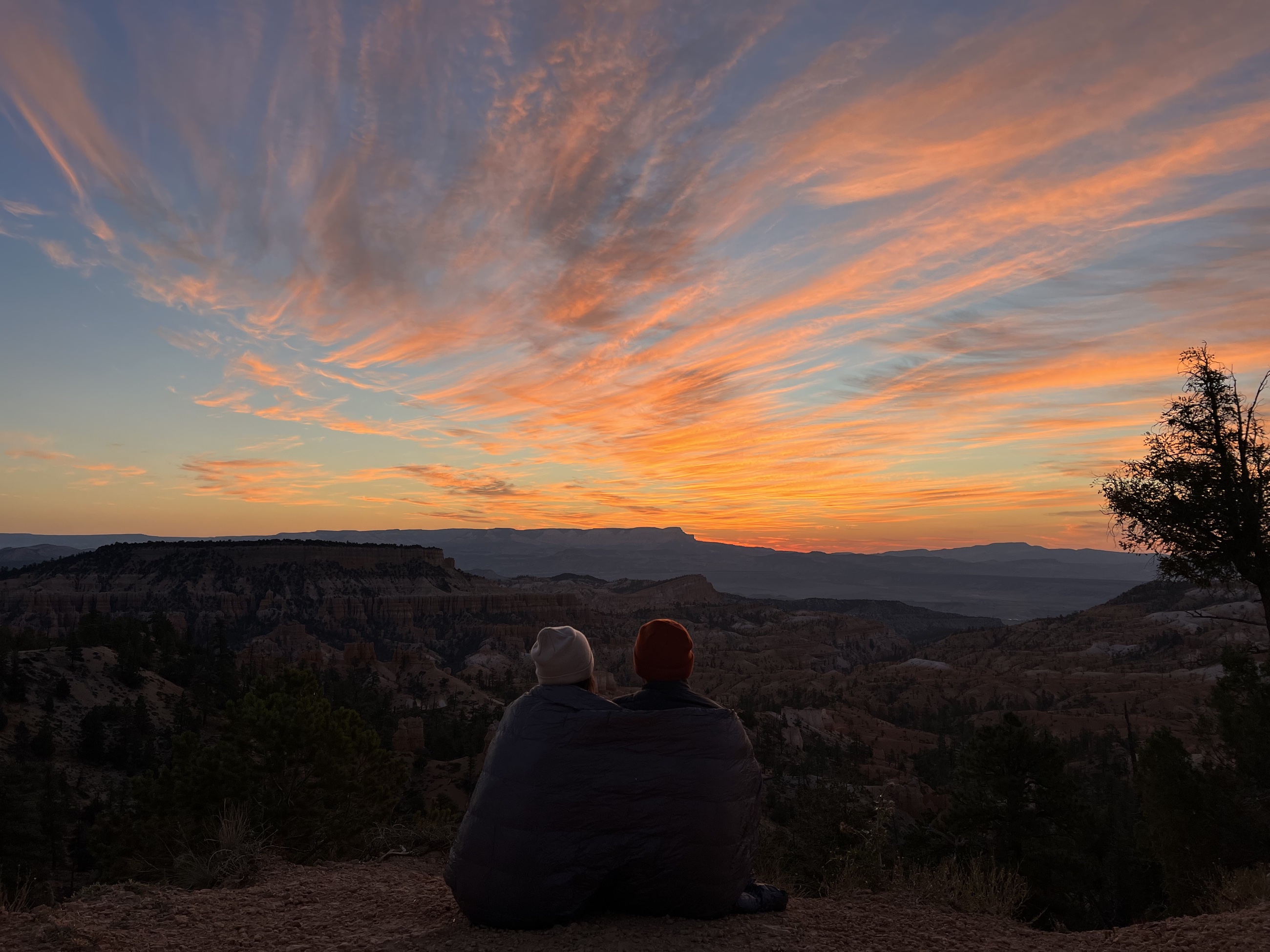 Cozy dawn moments at Sunrise Point.
The shift from Zion to Bryce was physical as much as visual. Zion had required heat management: early starts, careful exertion, and a more limited middle of the day. Bryce sits around 8,000 feet, and the night air made the season feel different within a few hours of arrival.
We camped outside the park on public land and used three-season sleeping bags through roughly 40-degree nights. That made the morning feel clean and bracing rather than punishing. Coffee, layers, and the slow work of breaking camp became part of the day rather than a delay before the day began.
The elevation also changed how we moved. At Bryce, a later hike could still feel sensible. The cool air gave the trails a different pace, and the landscape made dawn and evening feel like the natural anchors of the visit.
Sunrise Point and the Rim
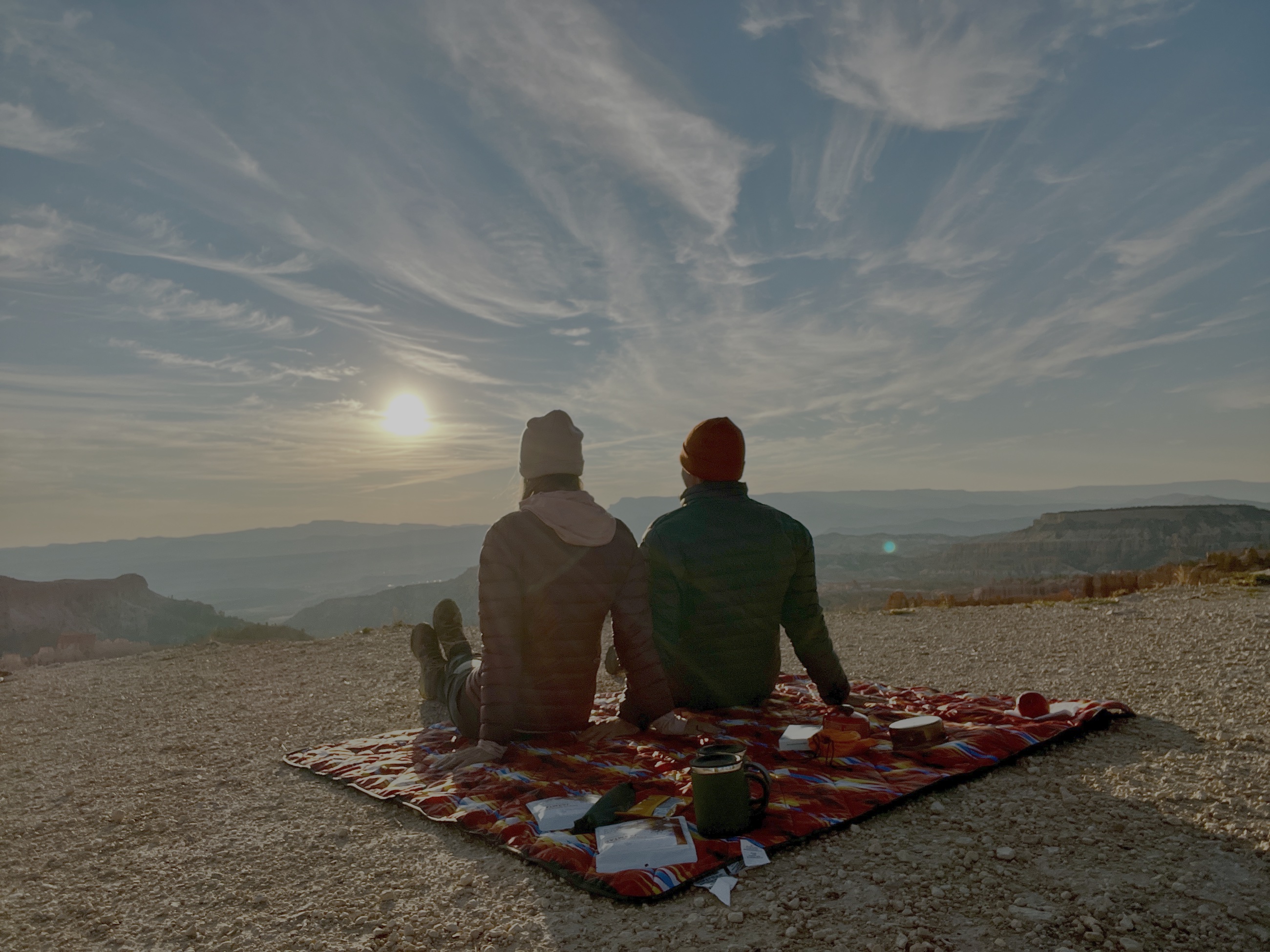 Picnic breakfast on the rim at Sunrise Point.
We returned before dawn for Sunrise Point, carrying breakfast rather than rushing through the overlook and leaving. The first light arrived gradually. Violet shadows gave way to amber, then to the clearer color of morning as the hoodoos separated from one another.
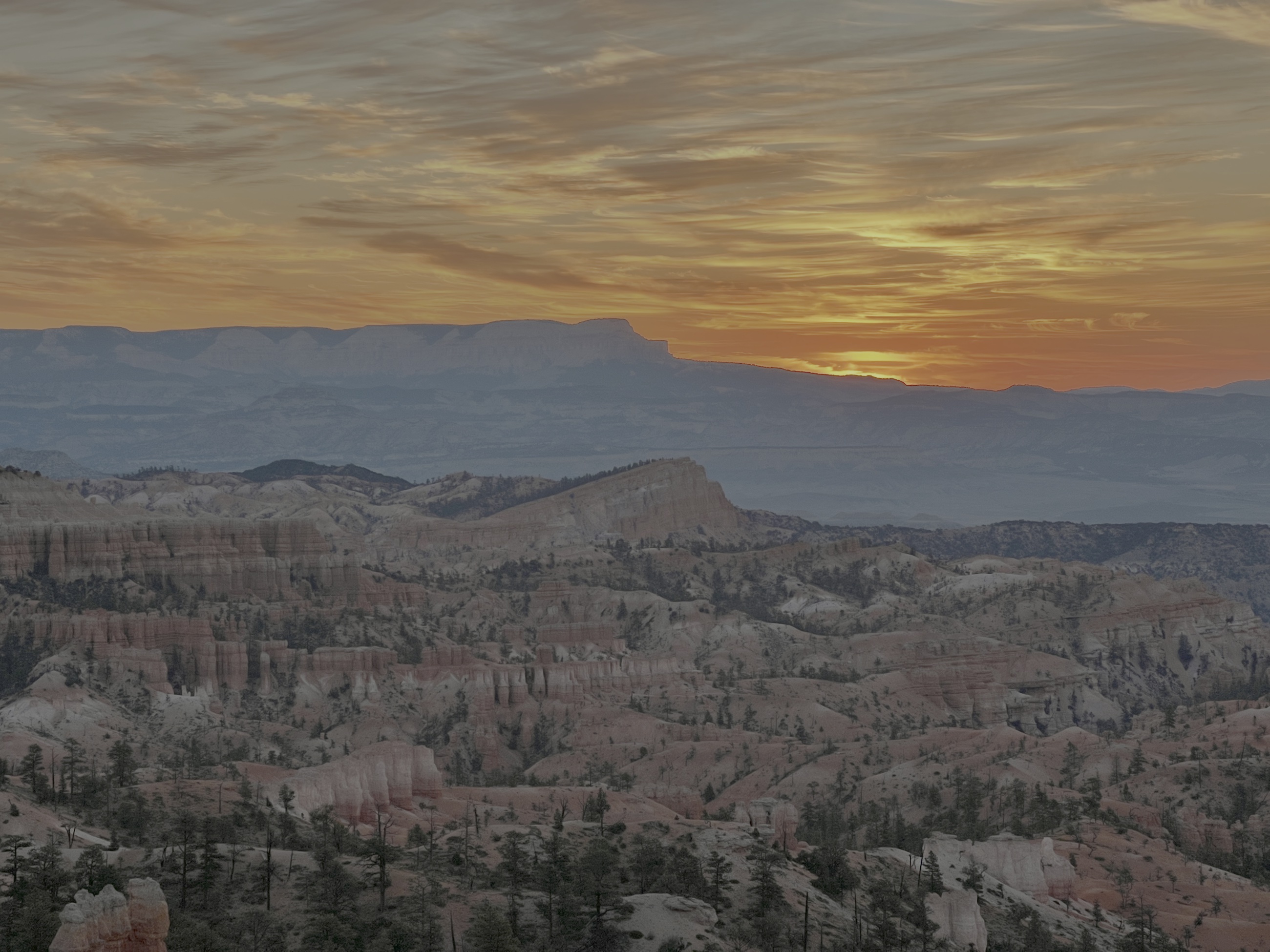 Sunrise reaching the amphitheater at Sunrise Point.
Breakfast on the rim was simple: oatmeal, coffee, and camp food, eaten with one of the better views in the park before most of the day’s visitors had arrived. The food needed nothing added. The setting did that work.
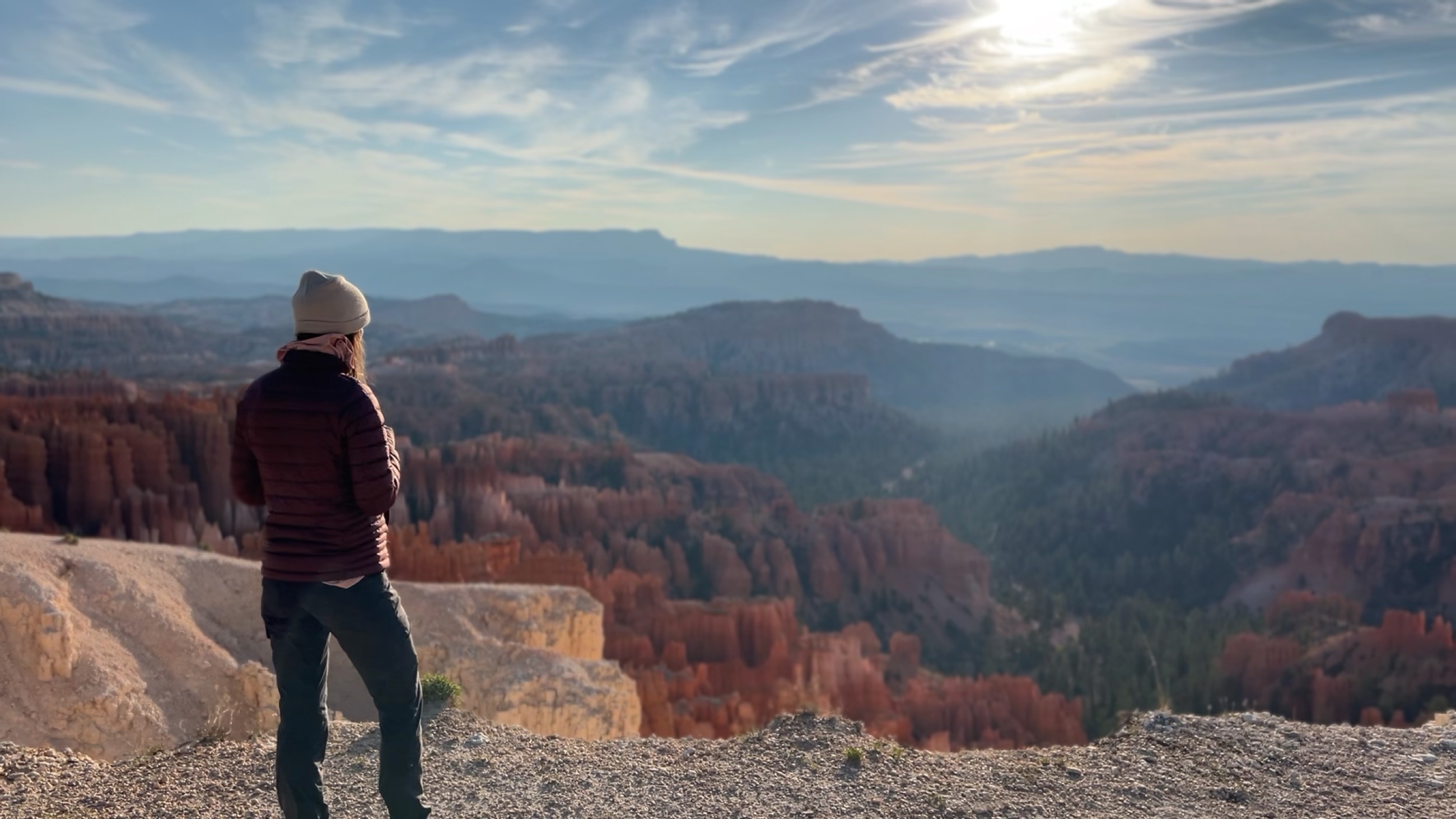 Morning view over Bryce Amphitheater.
The most accessible section of the Rim Trail between Sunrise Point and Sunset Point gives a clear introduction to the amphitheater without requiring a major hike. It is short, paved, and efficient, but still visually rich. Other sections of the rim are rougher and more exposed, especially outside ideal conditions, so the easy stretch is a good first pass rather than a lesser one.
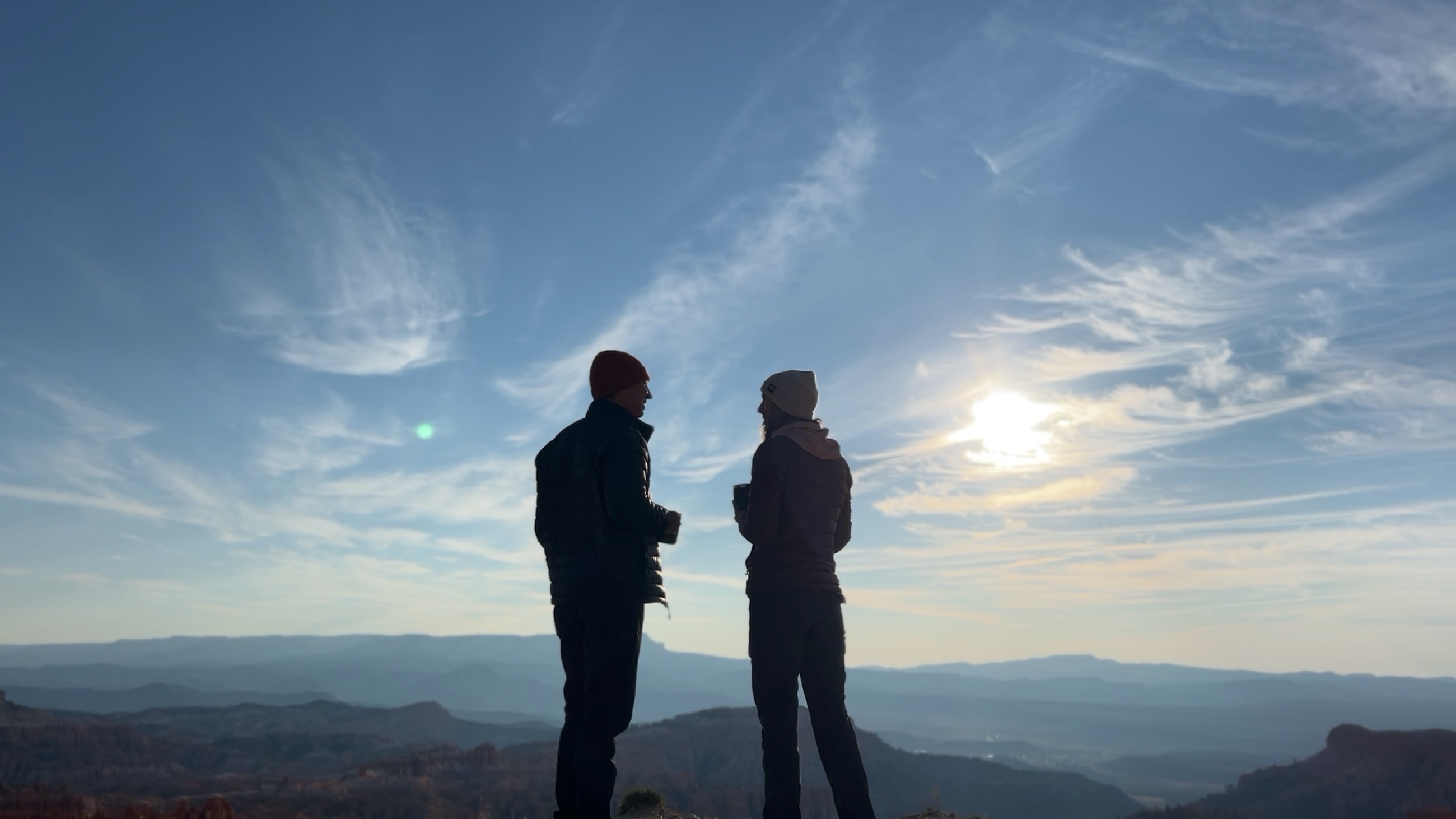 Coffee on the rim.
Queen’s Garden and Navajo Loop
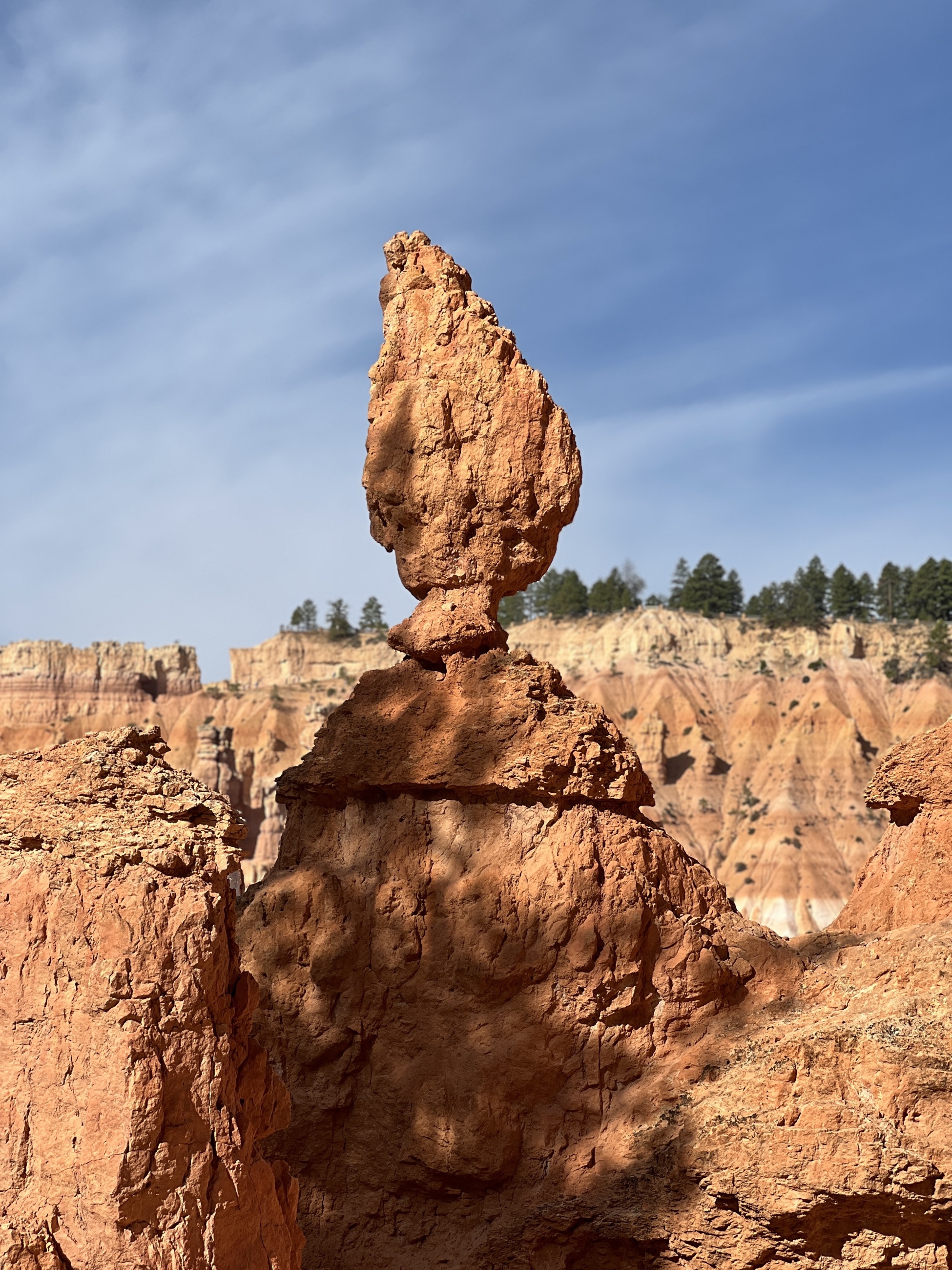 Balancing hoodoo in Bryce Canyon.
The Queen’s Garden and Navajo Loop took us from the rim into the amphitheater. From above, Bryce can seem almost delicate. From below, the formations become more varied and physical. The trail passes between walls, around hoodoos, beneath windows, and through sections where Douglas firs rise in narrow spaces that look too improbable to support them.
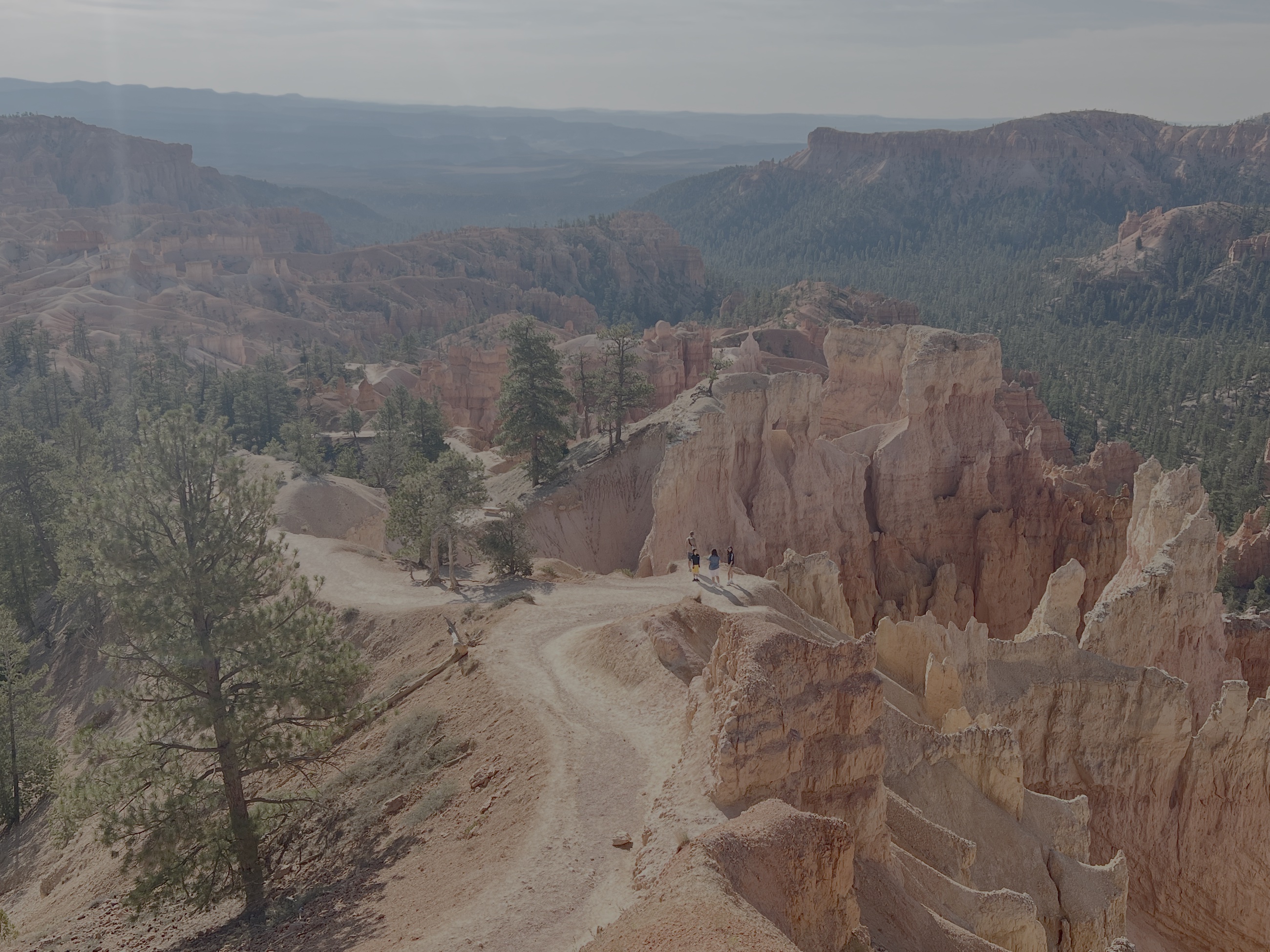 The trail dropping into Bryce Canyon, where the scale of the hoodoos becomes clearer on foot.
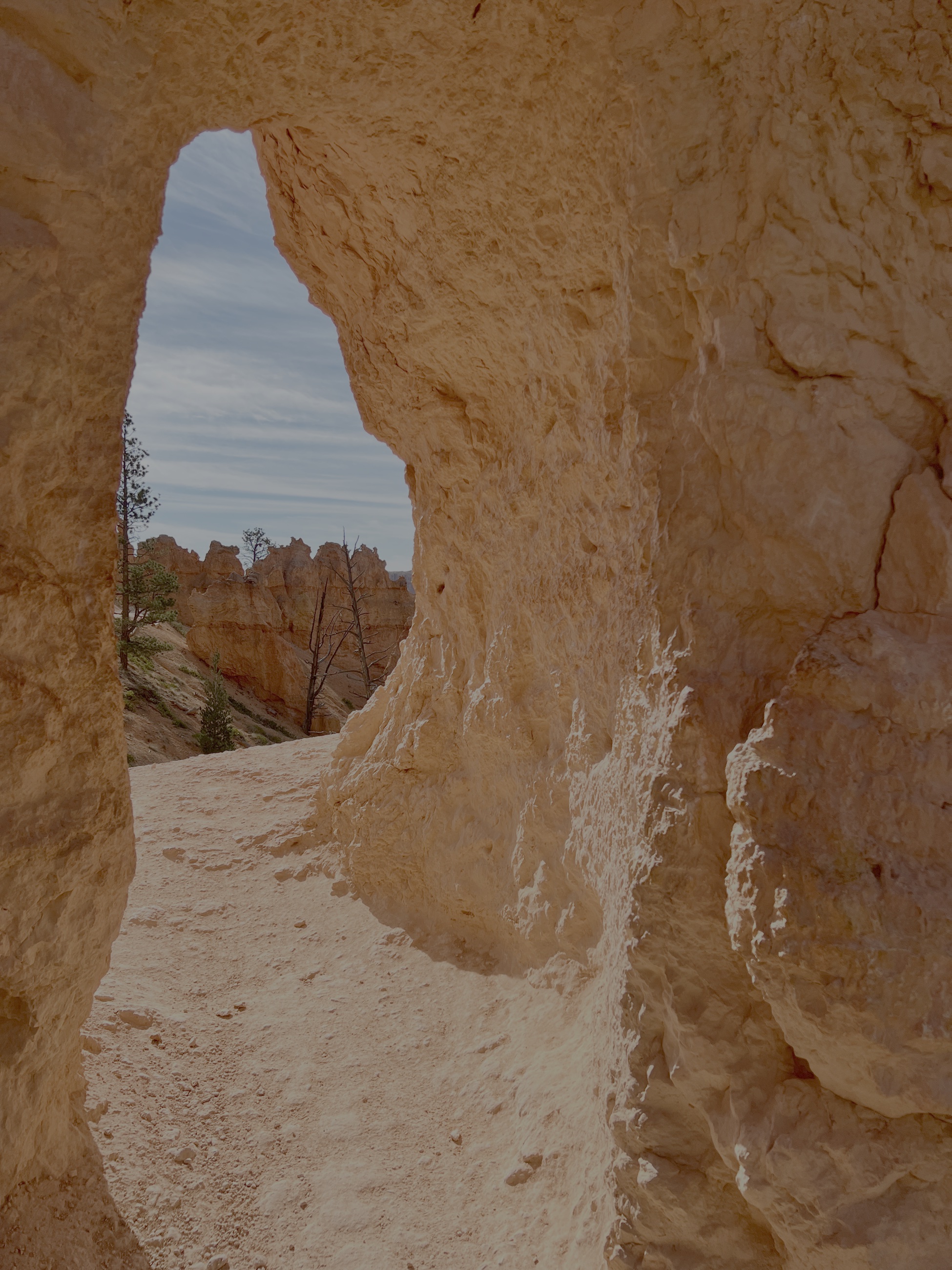 Rock window on Queen’s Garden Trail.
This is one of Bryce’s best short hikes because it changes perspective so quickly. The rim gives the whole amphitheater at once. The trail below gives proximity: stone surfaces, tree roots, switchbacks, sandy footing, and the bodily awareness of climbing back out.
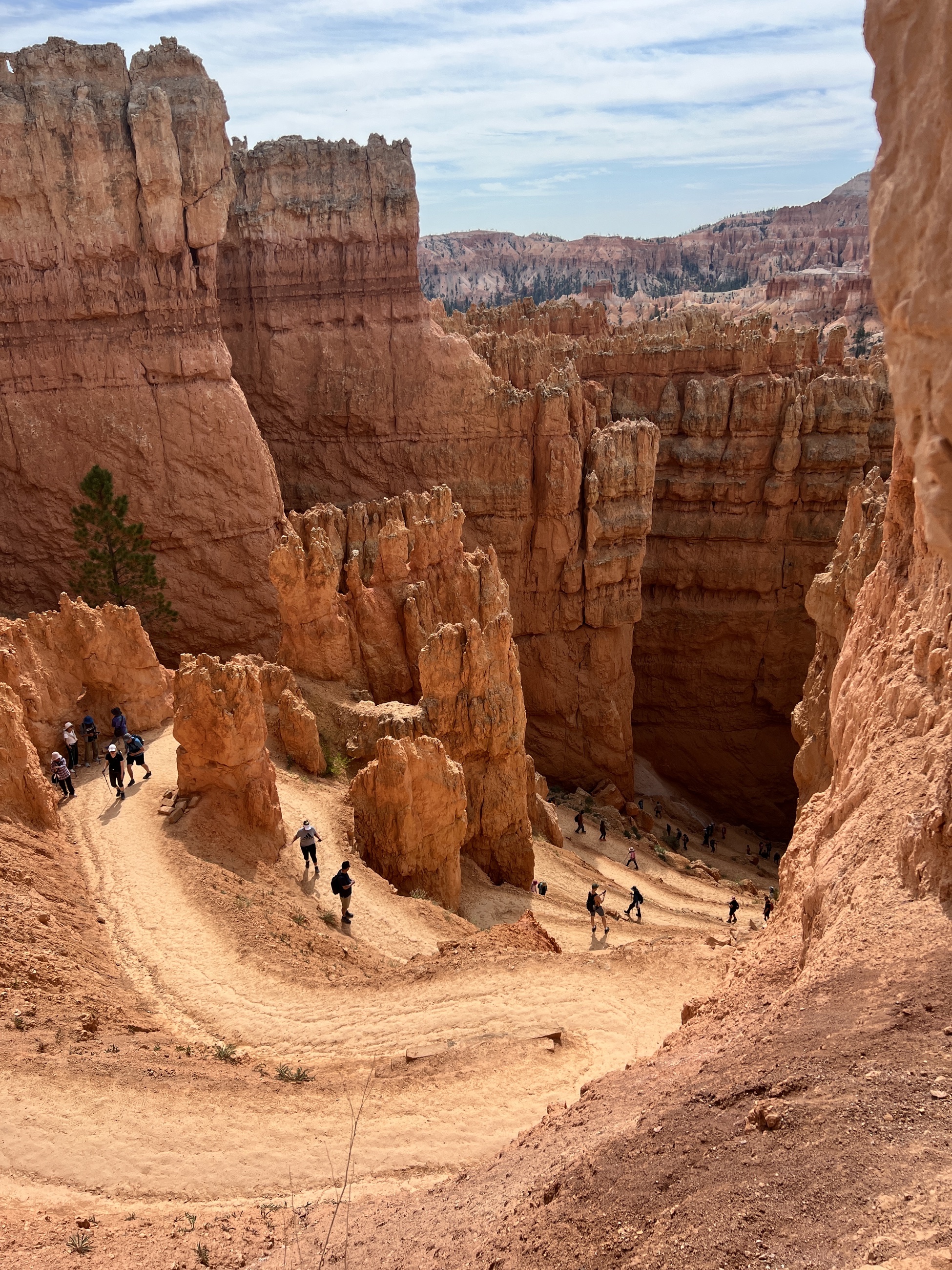 Hiking up Wall Street switchbacks.
The Wall Street switchbacks are the demanding finish, made harder by the thin air at 8,000 feet. They also make the hike feel complete. Bryce is easy to admire from overlooks, but the trail adds a necessary correction, turning the formations from scenery into a landscape you move through.
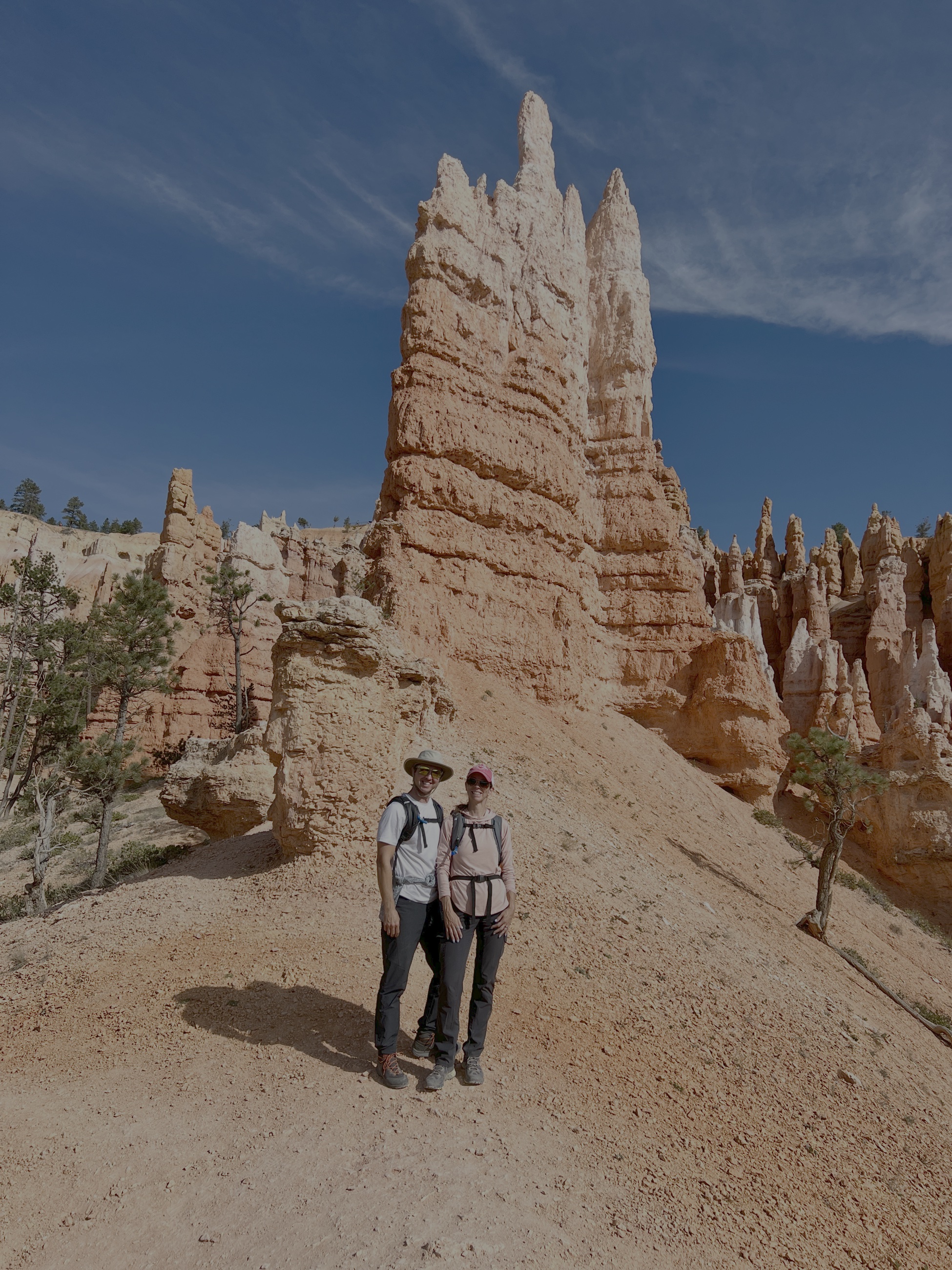 Among the hoodoos on Queen’s Garden Trail.
Human Stories in the Stone
Bryce Canyon’s name comes from Ebenezer Bryce, a Mormon settler who grazed cattle in the amphitheater in the 1870s. His only recorded comment on the terrain, “a hell of a place to lose a cow,” has outlasted him by more than a century, precisely because it puts ordinary work beside extraordinary land. The amphitheater can look formal and almost ceremonial from an overlook, but it was also part of a working landscape for people trying to scratch a living out of a hard region.
The Paiute name for the hoodoos gives the place another layer. They are the Legend People, To-when-an-ung-wa, said to have been turned to stone by Coyote as punishment for bad deeds, later translated as Anka-ku-was-a-wits, or red painted faces. Paiute custom holds that the full story is told only in winter, so what is public is the name and its outline, not the complete telling. That is enough to know the landscape carries memory, warning, and explanation, not emptiness.
Those two ways of seeing Bryce should not be flattened into a single lesson. One is practical and settler-era. The other is older, narrative, and Indigenous. Together, they remind modern visitors that national parks are never only natural spaces. They are also human landscapes, with names, stories, claims, losses, and meanings that predate the overlook signs.
Tropic, Showdowns, and Red Canyon
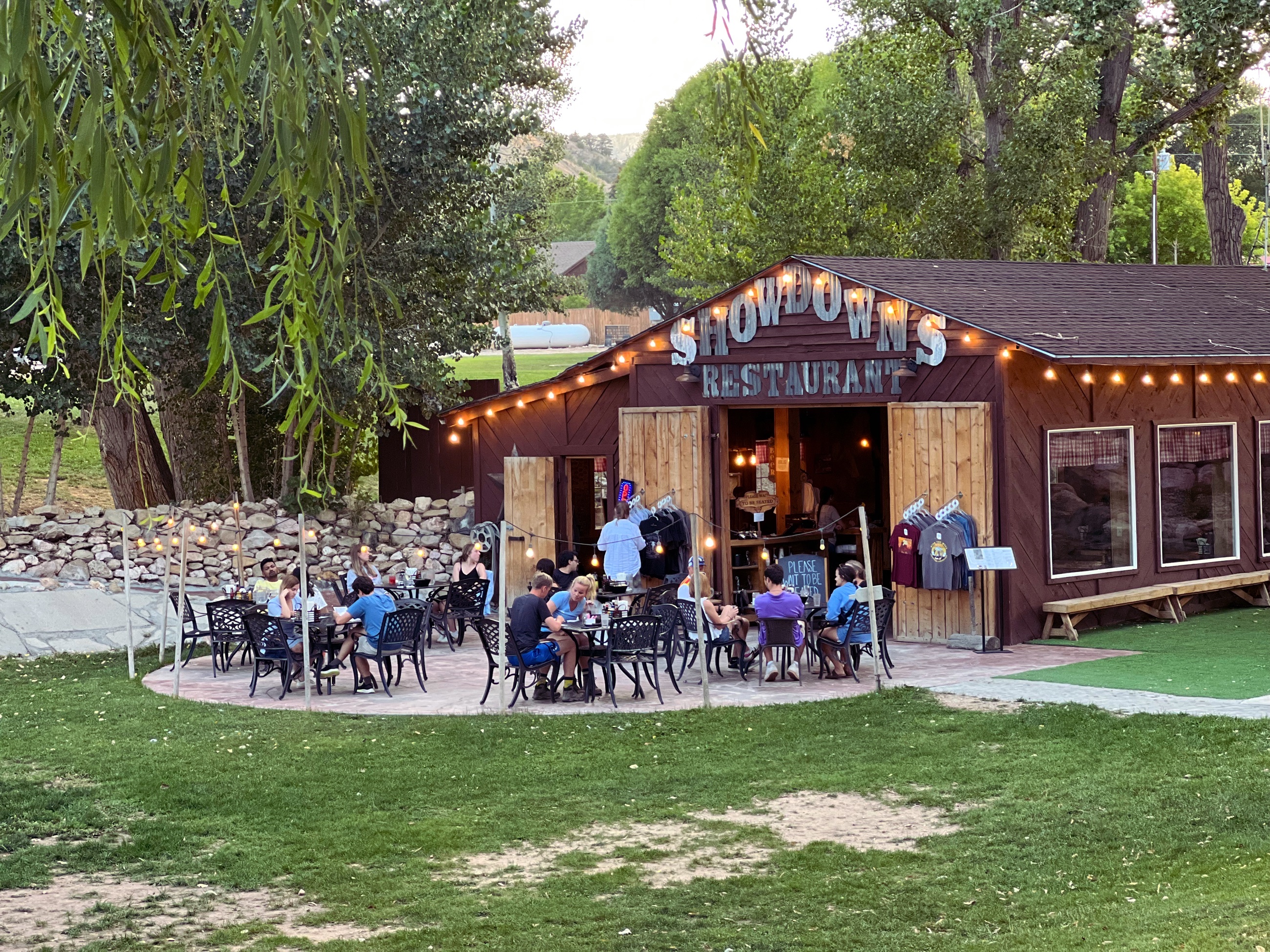 Summer evening barbecue at Showdowns.
Most of our meals at Bryce were intentionally simple: oatmeal, snacks, protein bars, meat sticks, and freeze-dried camp meals. We saved our one real restaurant meal for Showdowns in nearby Tropic, where barbecue, drinks, live music, patio tables, and a summer evening came to $68 for the two of us.
It was the right kind of meal after camp food: local, casual, and specific to the setting. The brisket mattered, but so did the lawn, the music, the children moving around the tables, and the sense that the evening belonged to the town rather than to park traffic alone.
On the way out, we stopped at the Pink Ledges Trail in Red Canyon, inside Dixie National Forest. The loop is short, roughly one mile, and gives a final look at vermilion rock, small hoodoos, and desert forms without the scale or crowds of the national park. It worked well as a transition: still connected to Bryce’s geology, but already pulling the day back toward the road.
What Stayed With Us
Bryce Canyon is easy to describe in elevated language, but the stronger memory is practical and sequential: cold air before sunrise, coffee on the rim, changing light, a simple breakfast, soft trail dust, carved stone, a barbecue patio in Tropic, and one last red-rock walk before leaving.
The visit also clarified how much elevation matters in the American West. A short drive can change temperature, light, sleep, appetite, and the way a day should be planned. Zion and Bryce sat back to back on the calendar, but each demanded its own terms.
For Some Great Place, that was part of the preparation: learning to see famous places while adjusting to the conditions of each one, heat, cold, light, distance, cost, energy, and timing. Bryce rewarded that adjustment with some of the clearest hours of the trip.
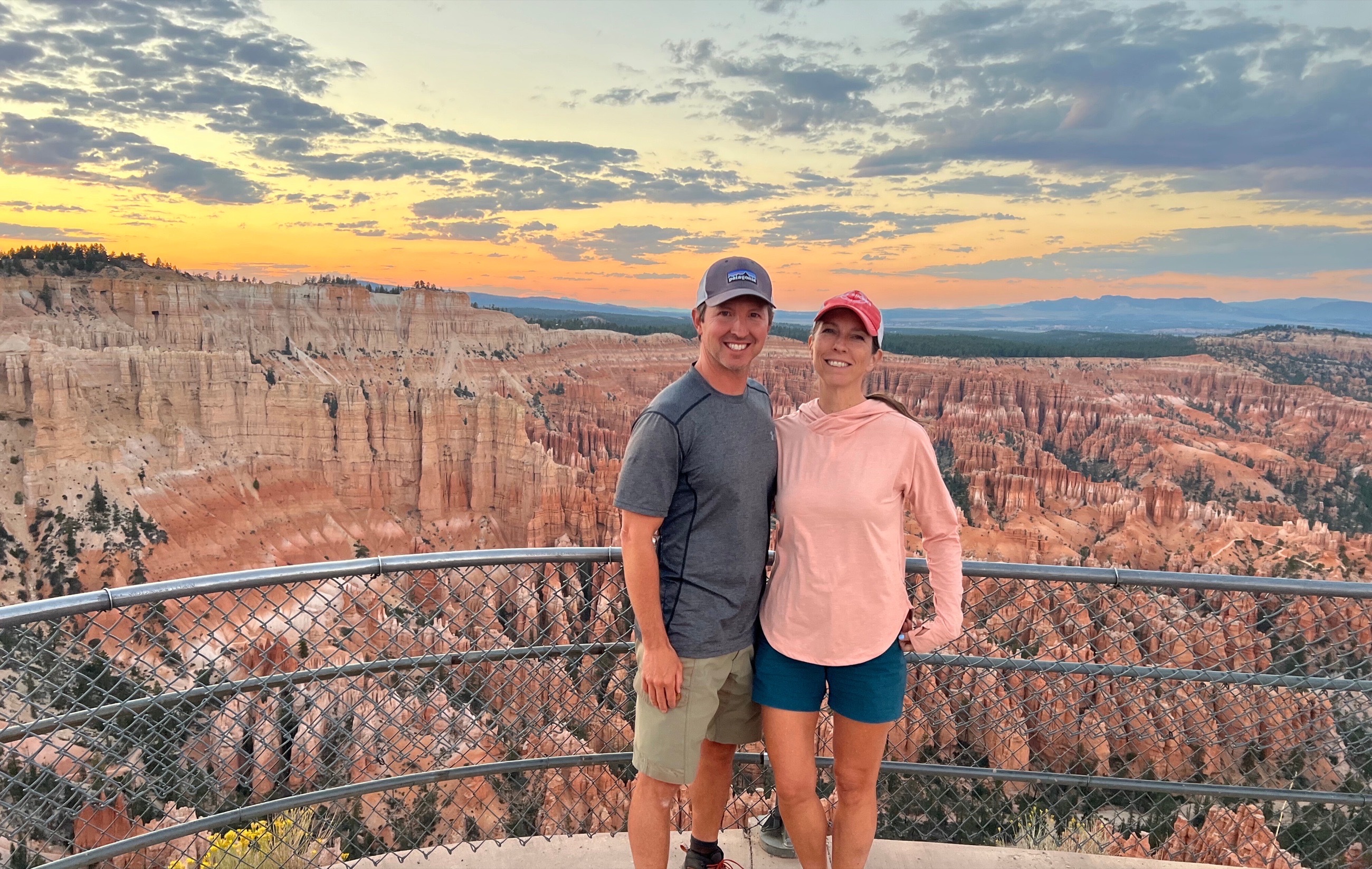 At Bryce Point near sunset, with the amphitheater opening below us.
Practical Notes
- Best sunrise stop: Sunrise Point is straightforward and rewarding, especially if you arrive early enough to settle before first light.
- Best sunset stop: Bryce Point gives a broad view across the amphitheater and strong late-day color.
- Easy rim walk: The paved section between Sunrise Point and Sunset Point is about 0.5 mile one way and works well for a low-effort overview.
- Best short hike: Queen’s Garden and Navajo Loop is roughly three miles and gives the strongest shift from overlook to inside-the-amphitheater perspective.
- Camping: We camped for free on public land outside the park. At this elevation, be prepared for cold nights even in warm-season travel.
- Food: Showdowns in Tropic came to $68 for two people, including barbecue, drinks, and live music on the patio.
- Park entry: Our America the Beautiful annual pass covered admission.
- Nearby stop: Pink Ledges Trail in Red Canyon is an easy one-mile loop and a good add-on before or after Bryce.