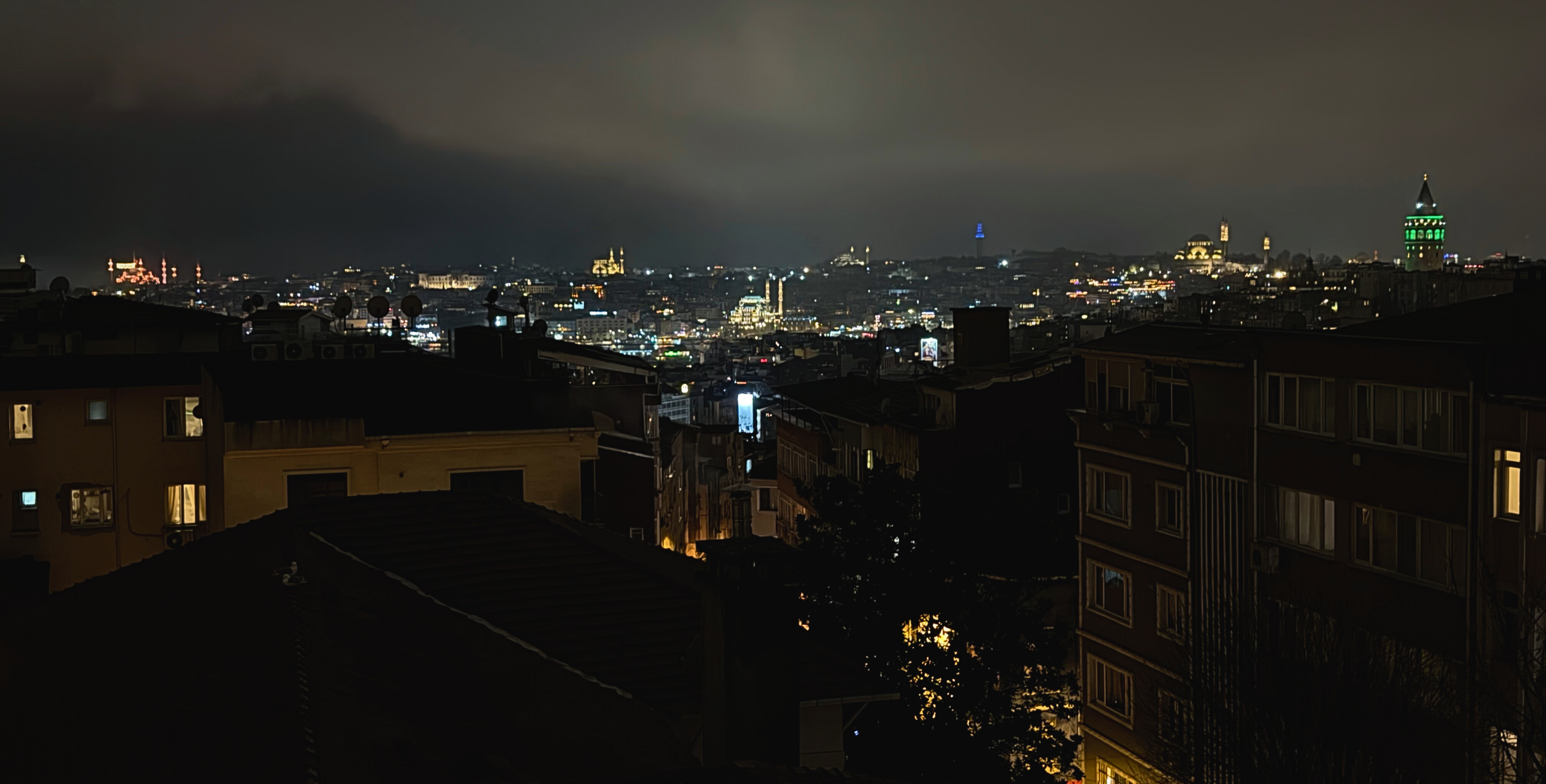
Istanbul, Turkey

2 articles

We spent 16 nights in Beyoğlu, based on a steep residential-commercial street within reach of Taksim, İstiklal Avenue, Galata, the Bosphorus, and several major transit lines. Istanbul was highly workable for a stay of this length, but it never became effortless. The city's scale, hills, uneven pavement, dense public life, and constant movement required attention every day. In return, it offered one of the richest combinations of transportation, neighborhood life, religious continuity, food culture, and historical depth encountered on the journey. Ferries, buses, trams, and trains made it possible to move between districts and continents at low cost, while the apartment supported remote work and weekday meals at home. Istanbul best suits travelers who value large-city energy, sacred architecture, markets, layered history, and strong public life. Its principal trade-offs are physical fatigue, crowded transit, uneven English access, relatively high prices near major landmarks, and the difficulty of establishing stable fitness and domestic routines during a two-week stay.

At a Glance

Length of stay
16 nights
Neighborhood
Beyoğlu, on a steep mixed residential and commercial street with a corner shop, tea house, cafés, and access toward Taksim, İstiklal Avenue, Galata, and the Bosphorus
Cost level
Moderate to high; Istanbul was not a budget destination, especially in well-known districts and near major landmarks; local tea, Turkish coffee, neighborhood meals, and public transportation offered better value
Walkability
Good within individual districts, but physically demanding; hills, interrupted sidewalks, uneven paving, and long distances made district-by-district planning essential
Transportation
Extensive and inexpensive; ferries, buses, trams, trolleys, and trains covered most of the city for about $1 per ride, although the network was crowded and not consistently English-friendly
Workability
Adequate for apartment-based remote work; we completed regular work and filed U.S. taxes remotely, but illness, sightseeing, and the short stay limited the development of a stable long-term routine
Cultural depth
Exceptional, with Greek, Roman, Byzantine, Ottoman, Islamic, Christian, republican, and contemporary Turkish histories layered across the city
Principal strength
The concentration of sacred architecture, public transportation, neighborhood commerce, waterfront movement, and nearly three thousand years of urban history
Principal limitation
The city's size, hills, density, and fragmented fitness options make short stays physically tiring and logistically demanding

Practical Highlights

Accommodation
The Beyoğlu location placed groceries, tea houses, cafés, and major walking routes close at hand, while the apartment supported home cooking, remote work, tax filing, and recovery during several days of illness; two weeks was enough to understand how the area functioned, but not enough to establish the settled pattern of a month-long stay
Cost
A flat white or cappuccino in Beyoğlu generally cost 200 to 240 TRY, approximately $4.50 to $5.50; Turkish coffee was usually 40 to 90 TRY, around $1 to $2, while neighborhood tea commonly cost 50 to 70 TRY, around $1 to $1.50; prices near major landmarks could be three or four times higher, and meals costing $15 to $20 in visitor-heavy areas were often available for roughly half that amount a few blocks away; weekday meals at home, a larger midday meal, and a simpler dinner reduced costs materially
Gym
A monthly membership did not make sense for the length of the stay, while day passes at better-equipped gyms were more expensive than expected; available facilities tended to fall into two categories, polished fitness clubs with high prices or small personal-training studios operating from converted residential spaces; we relied on park workouts and extensive walking instead
Connectivity
The apartment supported remote work without a reported connectivity failure; we also completed U.S. tax filing remotely with an accountant in the United States, confirming that the setup was functional for administrative and professional work
Groceries
A neighborhood CarrefourSA became the dependable grocery anchor; cooking at home on weekdays helped control spending and energy, while the surrounding bakkal shops, bakeries, tea houses, and street food made lighter meals easy to assemble; the short duration still limited how fully the pantry and routine could develop
Transportation
Public transportation was one of Istanbul's strongest practical assets; ferries, buses, trams, trolleys, and trains reached most districts for a standard fare of about $1 per ride, regardless of distance; the network connected Beyoğlu with Beşiktaş, Bebek, Sultanahmet, Fener, Balat, Üsküdar, Kadıköy, and the Bosphorus shoreline; it was crowded and sometimes difficult to interpret in English, but mistakes were recoverable, and a wrong-direction ferry still delivered us to Üsküdar and could be corrected through the broader network; airport arrival required care, as the indoor taxi booth charged a premium while regular yellow taxis were available outside; unsolicited luggage assistance and street guidance often carried an expectation of payment
Walks
Istanbul rewarded walking, but the terrain accumulated quickly; Beyoğlu, Galata, Balat, Fener, Sultanahmet, Beşiktaş, Bebek, and the Bosphorus each worked best as separate geographic units; proper shoes were necessary because hills were steep and sidewalks could be broken, narrow, or absent; the most successful days paired one district or major site with errands, meals, and transit, leaving enough margin to return home without turning every outing into an endurance exercise
Cultural highlights
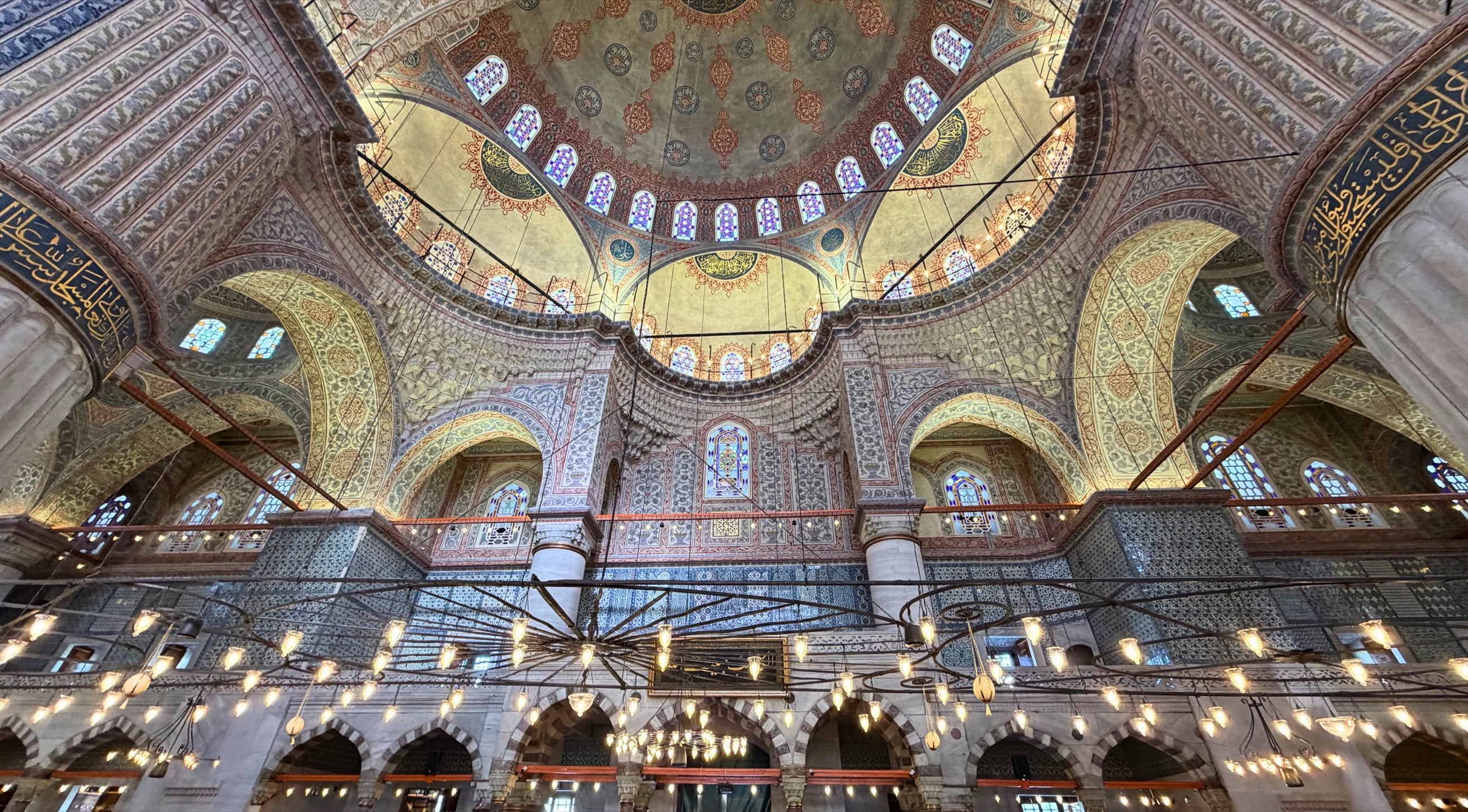
The central sites included the Blue Mosque, Hippodrome, Hagia Sophia museum, Grand Bazaar, Chora, the Theodosian Walls, Rumeli Fortress, Galata Tower, Saint Anthony of Padua, Saint Stephen's Bulgarian Church, Taksim Square, and İstiklal Avenue; Hagia Sophia was under substantial restoration, and much of the interior material we most wanted to see was obscured or restricted, so we chose the museum instead of paying for a partial visit; Chora provided the clearest surviving encounter with late Byzantine Christian art, while the Blue Mosque revealed the formal ambition of Ottoman sacred architecture
Religious life
The call to prayer shaped the entire stay; with more than 3,500 mosques across the city, the adhan arrived in overlapping sequences from different directions and divided the day into audible intervals; in Üsküdar, calls from two nearby mosques unfolded almost as a dialogue; Istanbul's religious inheritance also remained visible through active mosques, Catholic and Orthodox churches, former Byzantine churches, and buildings whose uses changed repeatedly across Christian, Ottoman, republican, and modern periods
Markets and public life
The Grand Bazaar was historically significant but uneven as a shopping experience; its interior corridors could narrow into repetitive tourist retail, while the surrounding outdoor lanes retained more practical trade and local movement; Beşiktaş Çarşı, neighborhood tea houses, Bosphorus ferry landings, fish counters, bakeries, and street commerce offered a more representative view of how Istanbul functions day to day
Hamam and social customs
A traditional hamam experience showed how bathing, architecture, ritual, and social life remain connected; Turkish tea functioned in a similar way at a smaller scale, served repeatedly across homes, shops, ferry districts, and cafés as part of hospitality and conversation; these practices mattered more to understanding the city than compiling a list of individual restaurants