Tenerife, Spain

4 articles

We spent 27 nights in San Cristóbal de La Laguna, dividing the month between two apartments because Carnival reduced availability. La Laguna offered a markedly different Tenerife from the southern resort belt: a walkable university city with a UNESCO-listed historic grid, working churches, neighborhood markets, reliable public transportation, and daily routines largely shaped by residents rather than visitors. It proved highly workable for a month because groceries, cafés, a gym, tram service, and daily errands were available on foot, while buses opened Santa Cruz, the northern towns, beaches, and parts of the Anaga massif without requiring a car. Tenerife best suits travelers who want mild winter weather, varied landscapes, substantial cultural history, and a stable urban base from which to explore an island gradually. Its principal trade-offs are the language barrier, uneven microclimates, occasional calima that can sharply reduce air quality and visibility, and the fact that the island's best-known beaches, mountain routes, and towns are dispersed rather than concentrated around one base.

At a Glance

Length of stay
27 nights
Neighborhood
San Cristóbal de La Laguna, split between a calmer apartment outside the historic core and a second accommodation on a calm street within the UNESCO-listed district
Cost level
Moderate; the two La Laguna stays averaged about $56 per night, while groceries, coffee, local transportation, and gym access remained comparatively affordable; visitor-heavy areas and Carnival dates carried noticeably higher prices
Walkability
Excellent within La Laguna; the historic center could be crossed in roughly twenty minutes, and groceries, markets, bakeries, cafés, churches, the gym, and most daily errands were manageable without a car
Transportation
Reliable buses and trams connected La Laguna with Santa Cruz, the northern coast, beaches, and other towns; the network was inexpensive and sufficient for most excursions, although multi-stop days required planning and the earliest airport departures could not be reached by public transport
Workability
Strong; both apartments supported home-based work, and the second provided a dedicated workspace; reliable internet, a personal router and VPN, U.S.-aligned afternoon work hours, and a repeatable morning routine made La Laguna a sustainable remote-work base
Cultural depth
High, with Guanche history, the Castilian conquest, colonial urban planning, courtyard architecture, active Catholic life, Canarian food traditions, and the major civic culture of Santa Cruz Carnival
Principal strength
A highly livable historic city with dependable infrastructure and access to markedly different parts of the island
Principal limitation
Tenerife's varied coastlines, mountains, and towns are dispersed, while calima, language limitations, and Carnival-season accommodation pressure can complicate an otherwise easy base

Practical Highlights

Accommodation
We divided the month between two La Laguna apartments because Carnival tightened availability; together, the stays averaged approximately $56 per night across 27 nights; the first apartment was calmer and farther from the historic center but remained walkable; the second cost more because of its location and Carnival timing, but provided a calmer street, dedicated workspace, and shared courtyard spaces within the historic district; moving between the two required a taxi and created several days of packing, workspace reconstruction, and readjustment
Cost
The first week cost €595 for two people, including €217 for accommodation, €140 for groceries, €77 for four meals out, €24 for coffee, €82 for two monthly gym memberships, €17 for local transportation and an airport taxi, and €38 for household items and protein powder; that week included initial setup expenses, and costs moderated once pantry supplies, grocery habits, and local routines were established; by the final week, groceries and home meals cost approximately €100, while daily coffee averaged about €3 for two
Gym
Laguna Sport Fitness Center cost €41 per person for the month; it was approximately twenty minutes from the first apartment and ten minutes from the second; the facility was clean, adequately equipped, and became one of the principal anchors of the month's routine
Connectivity
We configured our own router and VPN immediately, tested both apartments' connections, and worked primarily from home; the six-hour difference from U.S. Eastern Time allowed mornings for errands and exploration, followed by afternoon and evening work blocks aligned with American business hours; no material internet failure disrupted the month
Groceries
La Laguna's supermarkets were small and neighborhood-oriented, with narrower selections than large American stores; produce followed the season, bread was usually bought from bakeries, and unfamiliar products often required translation apps; the Mercado Municipal and smaller neighborhood markets became useful repeat stops; cooking at home was essential for both budget and routine, although compact kitchens, limited cookware space, line-dried laundry, and changing inventory required adjustment
Transportation
La Laguna itself required little transportation beyond walking; the tram offered frequent service to Santa Cruz, while buses connected the north coast, Anaga, Playa de las Teresitas, Puerto de la Cruz, Icod de los Vinos, and La Orotava; local transportation cost only €17 during the first week, including one airport taxi; a two-town outing to Puerto de la Cruz and Icod was manageable entirely by bus; for the 6:00 AM departure from Tenerife South Airport, however, public transport did not run early enough, so we checked out one day early and stayed in Los Abrigos near the airport
Beaches and swimming
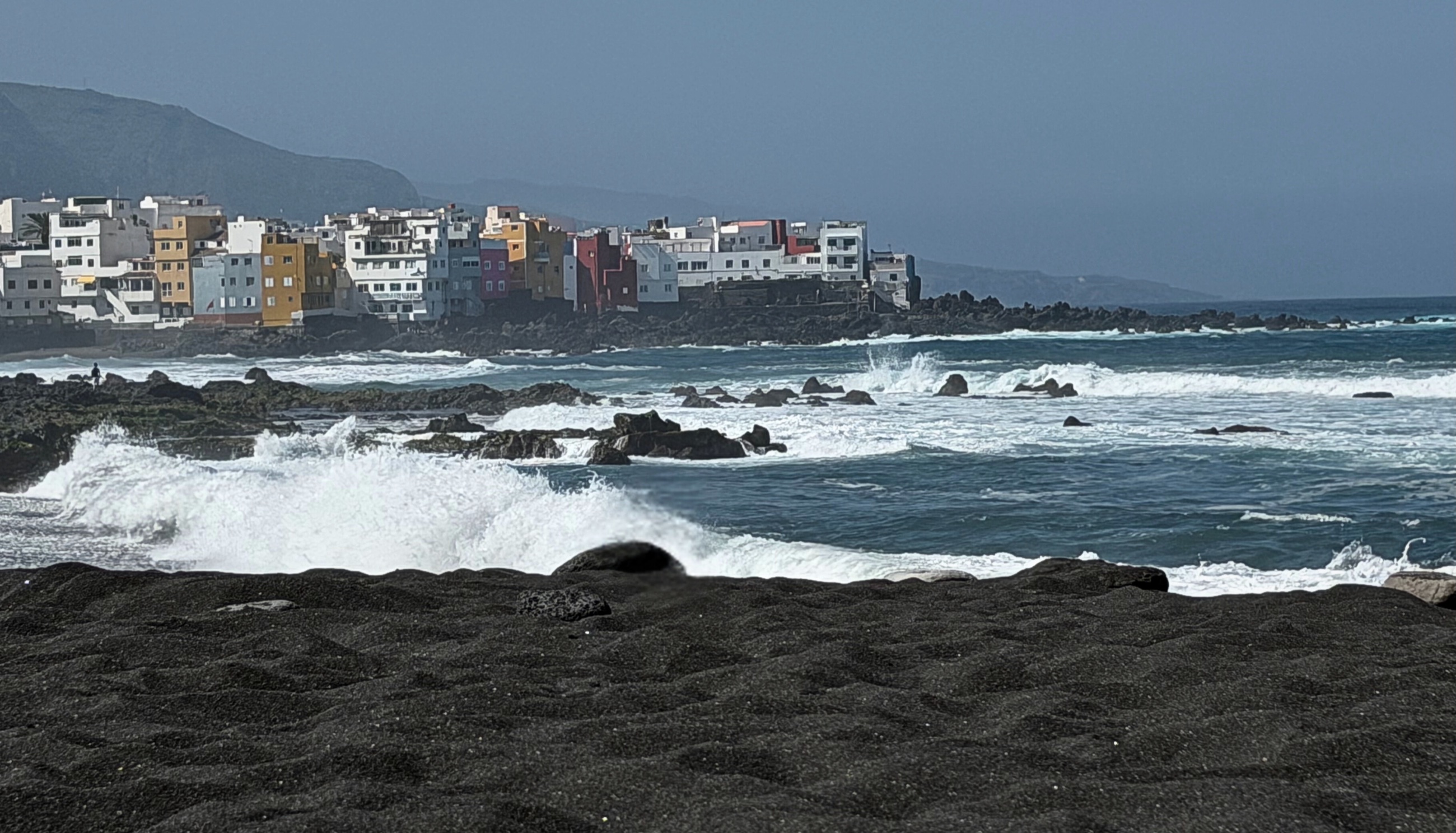
Playa de las Teresitas offered pale imported Saharan sand, calm water protected by a breakwater, palm shade, and heavy local use rather than a resort enclosure; Playa Jardín in Puerto de la Cruz provided black volcanic sand and a more exposed Atlantic setting, and during our visit, high surf produced red-flag conditions and prevented swimming; the island's beach experience varied substantially by coast, with the north more exposed and the southern resort areas warmer, busier, and more oriented toward international tourism
Walks and hikes
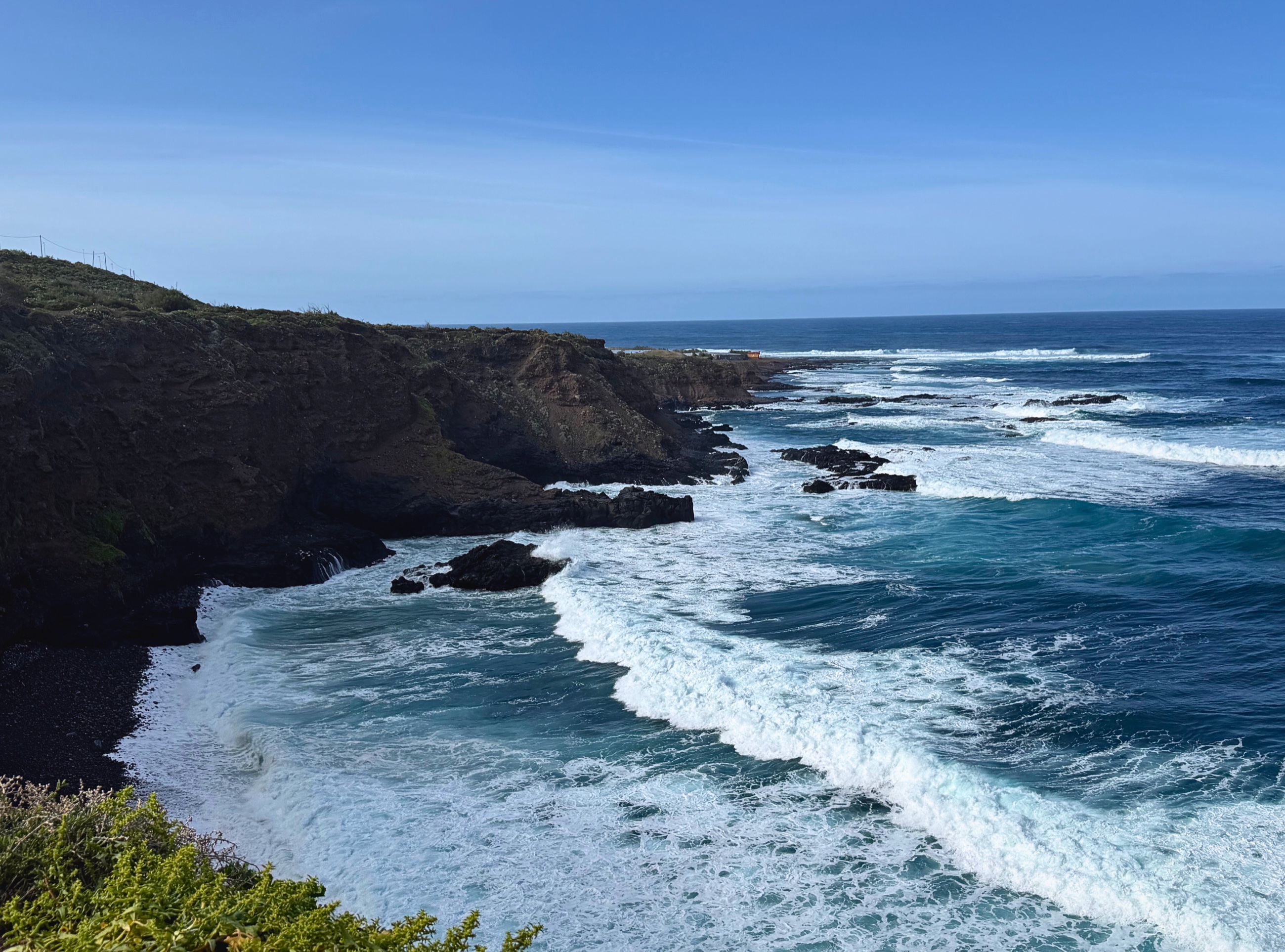
The historic grid, Camino Largo, plazas, and surrounding neighborhoods supported everyday walking without much planning; the Anaga massif provided the month's most substantial hike, descending through laurel forest, volcanic terrain, terraced hillsides, and open coastal landscape toward the Atlantic; Tenerife's mountain routes are highly dependent on elevation and weather, with conditions that can differ sharply from those in La Laguna or along the coast
Day trips
Santa Cruz was easily reached by tram for the waterfront, central shopping streets, public squares, the auditorium, and Carnival; Playa de las Teresitas worked as a separate beach outing north of the capital; Puerto de la Cruz and Icod de los Vinos could be combined by bus for botanical gardens, historic streets, the ancient dragon tree, banana-growing history, and local wine culture; La Orotava added preserved seventeenth-century architecture, formal gardens, wooden balconies, and broad views toward the coast and Mount Teide; Anaga provided the strongest mountain and hiking day
Cultural highlights
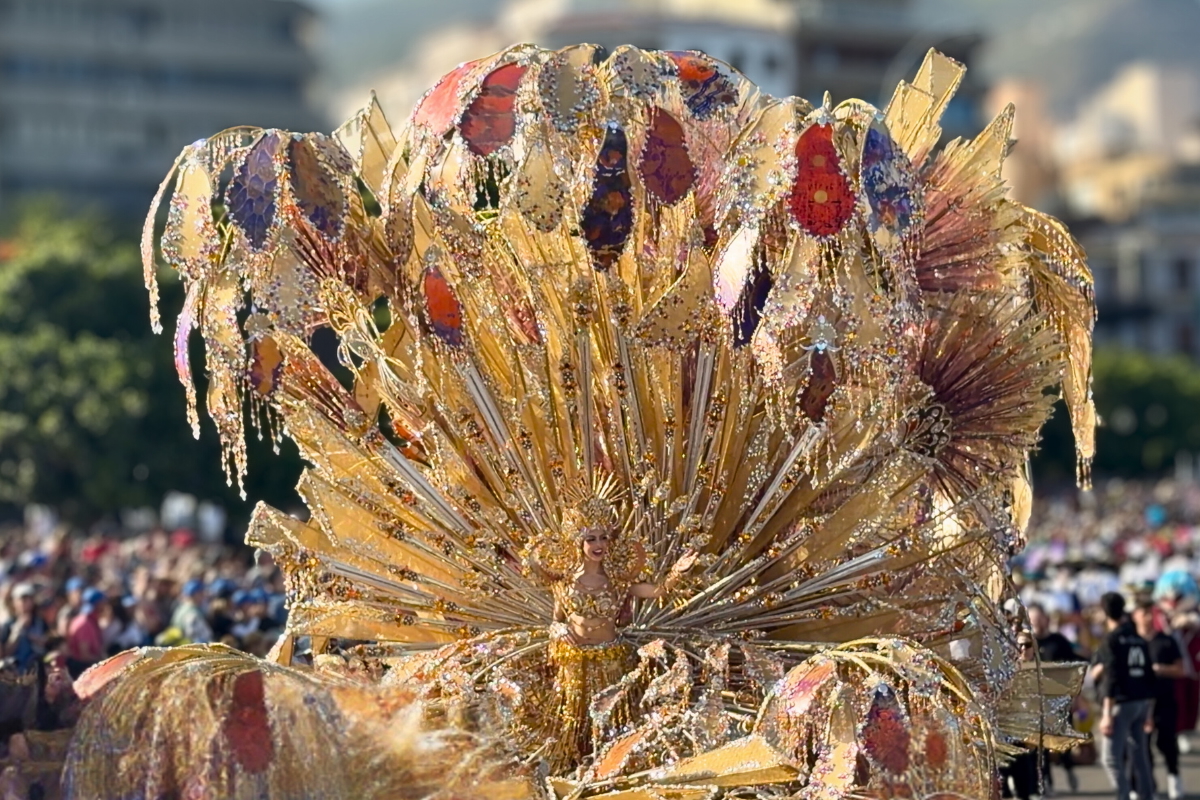
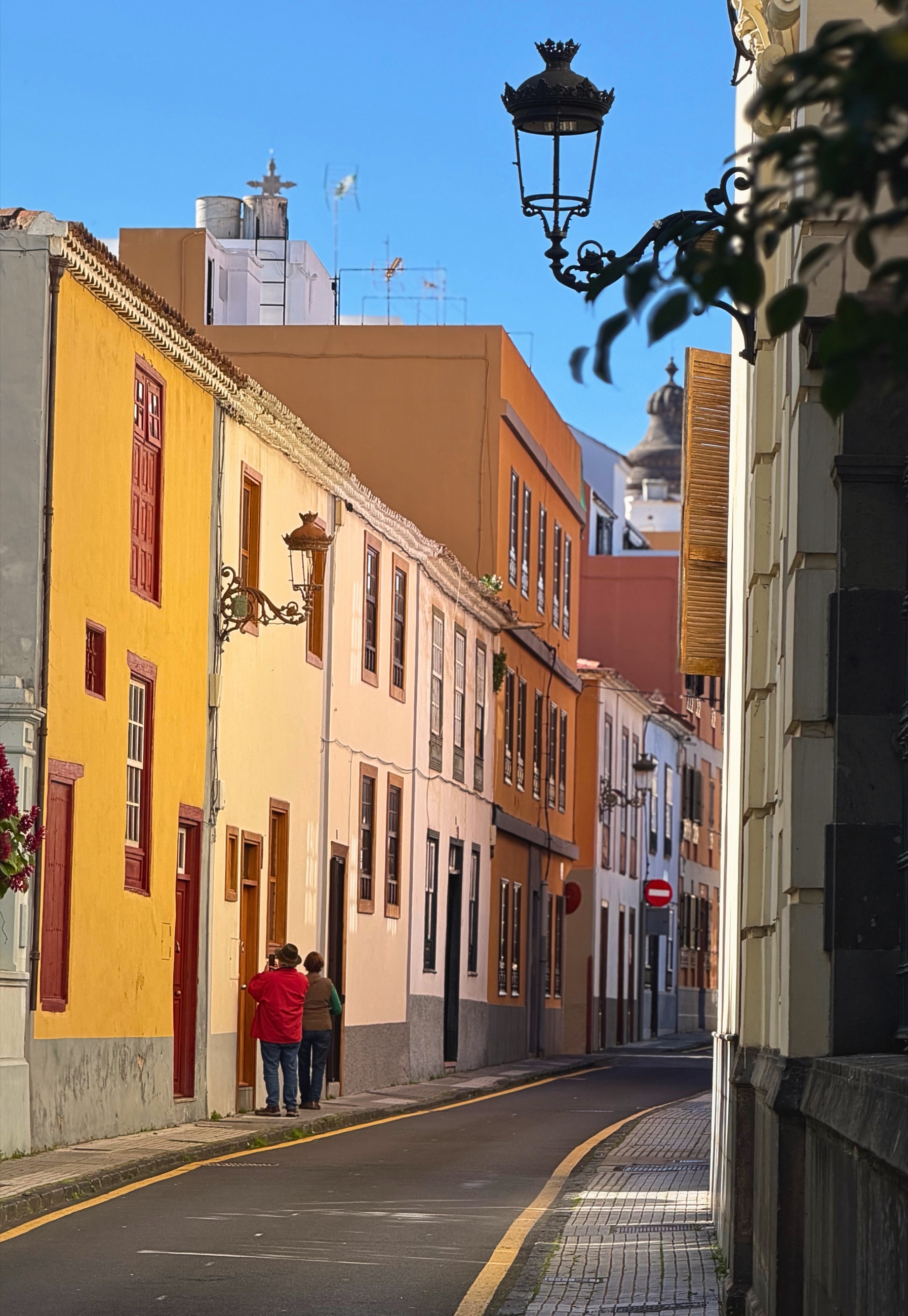
La Laguna's principal cultural value lay in the city itself; founded after the Castilian conquest of Tenerife, its unfortified grid, public squares, churches, convents, courtyard homes, and timber balconies influenced later Spanish colonial planning in the Americas; the Cathedral of La Laguna and Church of Nuestra Señora de La Concepción remained active religious anchors; Santa Cruz Carnival supplied the month's largest civic event, with the Coso Apoteosis bringing floats, comparsas, murga groups, elaborate costumes, music, and more than one hundred thousand spectators into the capital's streets; the contrast between La Laguna's ordered academic and ecclesiastical life and Santa Cruz's port-city energy was central to understanding the island
Weather and seasonality
February generally offered mild temperatures, strong walking conditions, and enough warmth for beach days, while Mount Teide remained snowcapped at higher elevation; conditions varied sharply across the island, with greener northern slopes, a drier south, cooler uplands, and exposed coastal weather; a calima during the final week brought Saharan dust, ochre haze, reduced air quality, closed windows, and several days of curtailed outdoor activity; Carnival also tightened accommodation supply and increased prices during the middle of the month